UPDATED · News · 25 May 2026 · Michael Harrison
How Auto Tariffs Are Reshaping New Car Prices in the UK 2026.
Tariffs and post-Brexit trade rules have become one of the most consequential price-setting forces in the UK new car market in years. Whether you welcome the policy direction or oppose it, the practical reality for British buyers in 2026 is that list prices, model availability and the comparative value of one nameplate versus another are all being reshaped by trade policy in ways that did not exist three years ago.
CDE looked at SMMT registration data, manufacturer trading statements and the latest What Car? and Auto Express transaction figures to map what is actually happening on UK forecourts. This is an editorial that takes no position on the trade policy itself; it is an explanation of what buyers should expect when they walk into a dealership in 2026.
The policy landscape, briefly
Since Brexit took full effect, the UK has operated under the UK-EU Trade and Cooperation Agreement (TCA) with its rules-of-origin requirements, plus a separate set of WTO-tier tariffs on cars from countries without a UK trade deal. The big shifts in 2024 and 2025 included tightened rules of origin for EVs under the TCA (45 percent local content needed to qualify for zero tariffs between the UK and EU), the UK government’s decision to monitor , though not yet match , the EU’s anti-subsidy duties on Chinese EVs, and a 10 percent MFN tariff that still applies to finished cars arriving from countries outside our trade-deal framework.
The combined effect is a layered duty regime that varies by where the vehicle was assembled, where the battery and major components originated, and which agreement (TCA, the rolled-over Japan and Korea deals, or plain WTO terms) applies. The duty on a 2026 Nissan Qashqai built in Sunderland with UK and EU sourced parts is different from the duty on a Toyota RAV4 imported from Japan and different again from a BYD Seal arriving from Shanghai.
Who feels the price impact first
Brands that import most of their UK lineup felt the impact fastest. Chinese newcomers (BYD, MG, GWM Ora, XPeng) and certain Japanese nameplates with limited UK or EU assembly footprints saw the largest list-price effects. European premium brands built in Germany (BMW, Mercedes-Benz, Audi, Porsche) saw 4 to 8 percent list-price increases on most models since 2024, partly duty-related and partly input-cost related.
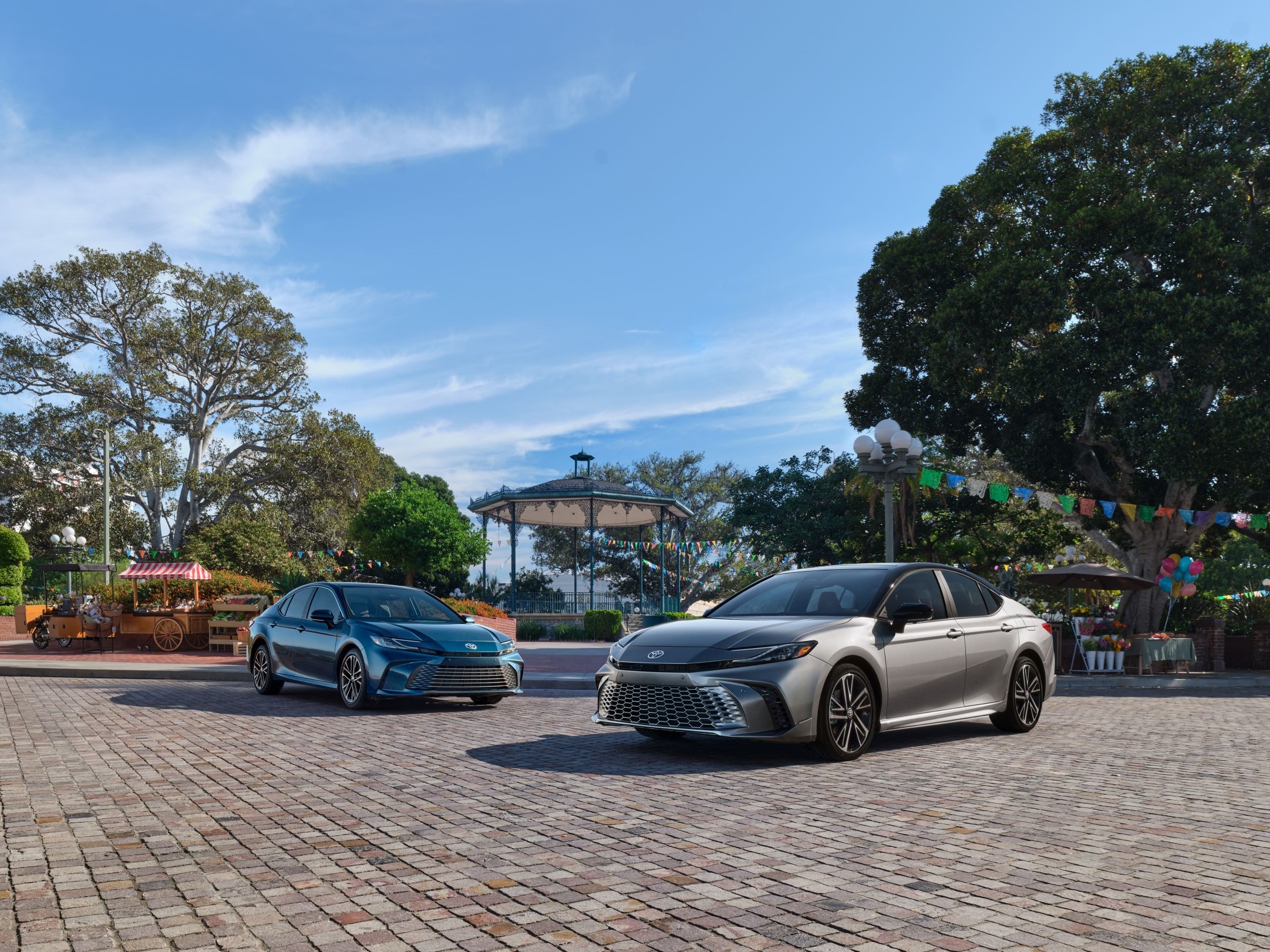
Brands with substantial UK assembly footprints absorbed less direct impact. Nissan (Sunderland), Toyota (Burnaston with Deeside engines), Jaguar Land Rover (Solihull, Halewood, Castle Bromwich), Mini (Oxford), Bentley (Crewe) and Rolls-Royce (Goodwood) all build significant volumes of UK-sold vehicles domestically. Tariffs raise their input costs on imported parts and steel, but the finished car does not face an import duty into our market.
The European mainstream brands (Volkswagen, Stellantis marques, Renault, Hyundai-Kia) sit in the middle, with significant EU production that flows tariff-free under the TCA provided rules-of-origin thresholds are met. When those thresholds are missed , most commonly on EVs with Asian-sourced battery cells , the duty bill lands quickly.
The pound amounts buyers actually see
The average new car transaction price in the UK rose roughly £2,400 from late 2023 to early 2026 according to SMMT and What Car? Target Price figures, a climb that broadly exceeds CPI inflation over the same period. Not all of that rise is tariff-driven, but manufacturer trading statements have explicitly cited duties as one of the three or four largest price-input drivers.
On specific models the visible effects vary widely. A Lexus RX 350h imported from Japan went up about £2,000 between 2024 and 2026. A UK-built Toyota Corolla Hybrid saloon went up about £1,100. A Subaru Forester (built in Japan with significant import-duty exposure) went up about £1,500. A Mercedes-Benz GLE 300 d (built in the United States and shipped via Bremerhaven) went up about £1,700. These are list-price changes; actual transaction prices vary with dealer discount, PCP deposit contribution and inventory.
The model availability effect
Beyond list price, tariffs are reshaping what gets sold here at all. Several manufacturers have quietly pulled lower-margin imported trims from UK allocation because the duty makes them uneconomic. Mazda has trimmed certain colour and specification combinations on the CX-30. Volkswagen has slimmed the entry ID.3 range. Some Land Rover and Mini overseas-built specifications have been quietly delayed or dropped from UK price lists.
The most visible effect is at the entry-price end of the market. New cars priced below £18,000 have largely disappeared from UK showrooms, and tariffs are one (but not the only) reason. The Fiat 500, Hyundai i10, Kia Picanto and several Dacia trims that historically anchored the sub-£15,000 segment have either been discontinued, repriced upmarket or moved into higher-specification variants only. New cars below £18,000 are increasingly rare on UK forecourts.
Industry winners and losers
UK and EU built nameplates with limited finished-vehicle import exposure (Sunderland Nissans, Burnaston Toyotas, JLR’s Solihull and Halewood output, Oxford Mini, Crewe Bentleys, Polestar’s growing European production) face less direct price pressure on the car itself. They have inflation in input costs but no import-duty line on the bill of materials for the finished vehicle.
Nameplates with substantial UK or EU assembly but Asia-imported sub-components (Honda Civic e:HEV imported from Japan, certain Hyundai-Kia variants, some BMW and Mercedes models built in Germany but with non-EU battery cells) face moderate input-cost pressure and are passing through 2 to 5 percent of it to list prices.
Nameplates with primarily imported finished vehicles from outside the trade-deal framework (Chinese EV brands, certain US-built Tesla and Ford specifications shipped here, much of the Lexus range, some Subaru and Mitsubishi imports) face the most direct tariff impact and have absorbed less of it, passing more to UK buyers.
What UK buyers should do about it
Three practical takeaways for UK buyers in 2026.
First: the value calculation between nameplates has shifted. A UK-built Toyota Corolla Hybrid and a Japanese-built Mazda 3 used to compete on similar transaction prices for similar feature content. The duty-driven price difference now favours the UK or EU assembled product noticeably. Cross-shop with origin in mind, and ask the dealer where the specific car on the forecourt was actually assembled.
Second: nearly-new and manufacturer approved-used has become a genuinely better-value proposition than new for many buyers, because used vehicles are not subject to import duties. A two-year-old import that previously sat at a 20 percent discount to new now sits at 28 to 33 percent discount, because the new-vehicle price has climbed faster than the used market. The approved-used maths has rarely been better on tariff-affected nameplates , Honest John and What Car? approved-used guides are worth a look.
Third: PCP and PCH (personal contract hire) maths has changed meaningfully. Manufacturers that lease aggressively to manage residual risk have been absorbing some of the tariff impact via the captive finance arm, meaning PCH rates on certain affected models are sometimes better-value than equivalent PCP. This is unusual historically and a buyer-friendly anomaly. Worth checking on any tariff-affected nameplate you are considering , and on EVs, the Salary Sacrifice route with its low BIK rate often makes the monthly cost surprisingly competitive even when the list price has climbed.
The CDE outlook
Tariffs and post-Brexit trade rules are now a structural feature of the UK car market for the foreseeable future. The price rises buyers have absorbed since 2024 are unlikely to reverse meaningfully, and additional duty actions , particularly around Chinese EV imports if the UK chooses to follow the EU lead , may add to them over the next 12 to 24 months. The market response (more UK and EU assembly, more domestic battery and parts sourcing, reduced model variety at the low end) is reshaping what is available to buy, in ways that some buyers will find helpful (more UK manufacturing jobs, more domestic supply chain) and others will find harmful (fewer choices, higher prices).
What buyers control is the comparison process. Walk in knowing which models are UK or EU built, which are imported under WTO terms, and what the price gap looks like for the specification you actually want. The trade policy will not change because of your purchase decision; the price you pay can change a great deal based on it.
Buyer action
Where to check next
Use this as the final check before paying a deposit, signing finance paperwork or relying on a headline monthly figure.