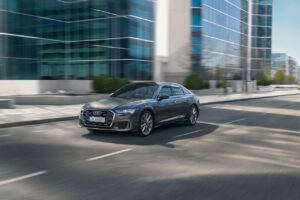
Four per cent does not sound like much until you multiply it by a sixty-thousand-pound list price and then by your marginal tax rate. That is the real 2026/27 company-car conversation for pure electric cars: not the brochure BiK band in isolation, but the cash that leaves a basic-rate, higher-rate or additional-rate pay packet every month. HMRC’s company-car tax rules still fix the charge as list (P11D) value × the appropriate percentage × your income-tax rate — and for zero-emission cars the 2026/27 percentage is 4%.
I wrote this for the reader told an EV company car is “cheap tax” who wants the actual pounds around that £60k mark, plus one above and one below. Every figure below runs the same published HMRC method, so none of it is a personal tax bill; the P11D values are illustrative UK list prices for each model, and your employer reports the exact figure for the build you order.
The only formula that matters for BiK cash cost (company-car BiK)
HMRC’s expenses-and-benefits guidance on company cars and the standard fleet walk-through (including Alphabet’s BiK calculation explainer) land on the same arithmetic:
Annual BiK tax = P11D × BiK % × income-tax rate
Monthly BiK tax = annual BiK tax ÷ 12

Income-tax bands for the worked rows follow the published structure on GOV.UK income-tax rates: basic 20% (earnings up to £50,270), higher 40% (£50,270–£125,139), additional 45% (above £125,139). Employer-facing thresholds for the 2026/27 tax year sit in HMRC’s 2026 to 2027 employer rates guidance; your own code and allowances still sit with payroll.
Zero-emission percentages step up: 3% in 2025/26, 4% in 2026/27, 5% in 2027/28, 7% in 2028/29 and 9% in 2029/30. That ladder is the multi-year column later — same cars and P11D assumptions, higher rate applied, so the cash climb is visible without pretending 4% lasts forever. For band context, see company car tax 2026/27 BiK bands for electric and PHEV and pure-EV BiK rates 2026/27.
P11D pins for the three EVs (illustrative UK list prices)
Three zero-emission models bookend an “about £60k” company-car shortlist, with a fourth Model Y trim where the Long Range RWD sits under the sixty-grand line:
| Car (illustrative P11D) | Taxable benefit @ 4% | Basic 20% — annual | Basic 20% — monthly | Higher 40% — annual | Higher 40% — monthly | Additional 45% — annual | Additional 45% — monthly |
|---|---|---|---|---|---|---|---|
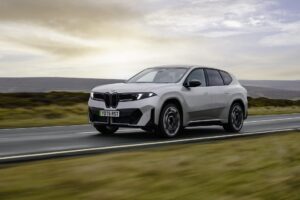
| BMW iX3 50 xDrive (£58,755) | £2,350.20 | £470.04 | £39.17 | £940.08 | £78.34 | £1,057.59 | £88.13 |
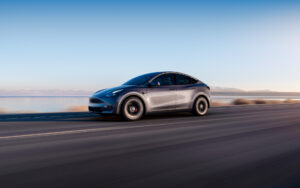
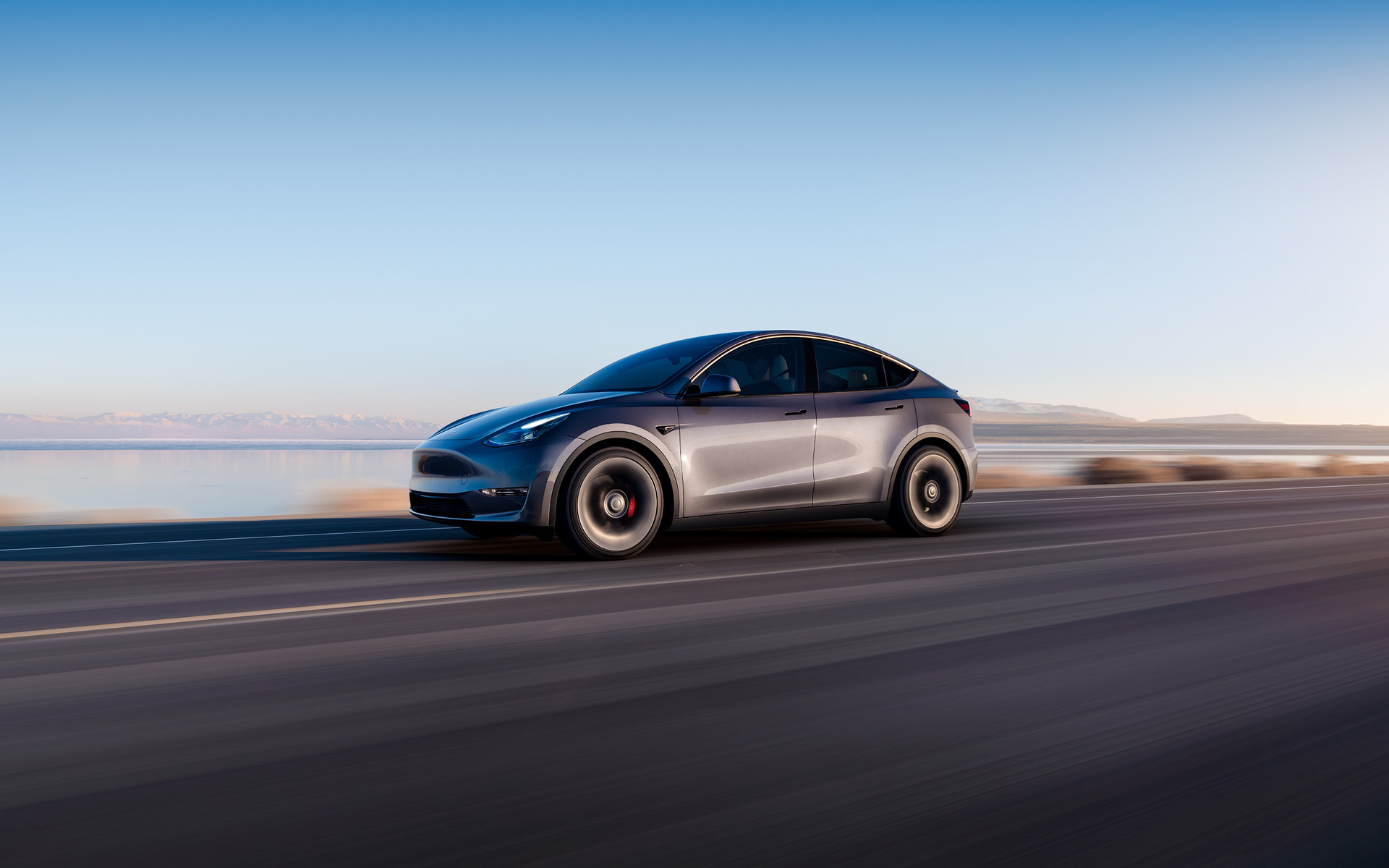
| Tesla Model Y Performance (£59,935) | £2,397.40 | £479.48 | £39.96 | £958.96 | £79.91 | £1,078.83 | £89.90 |
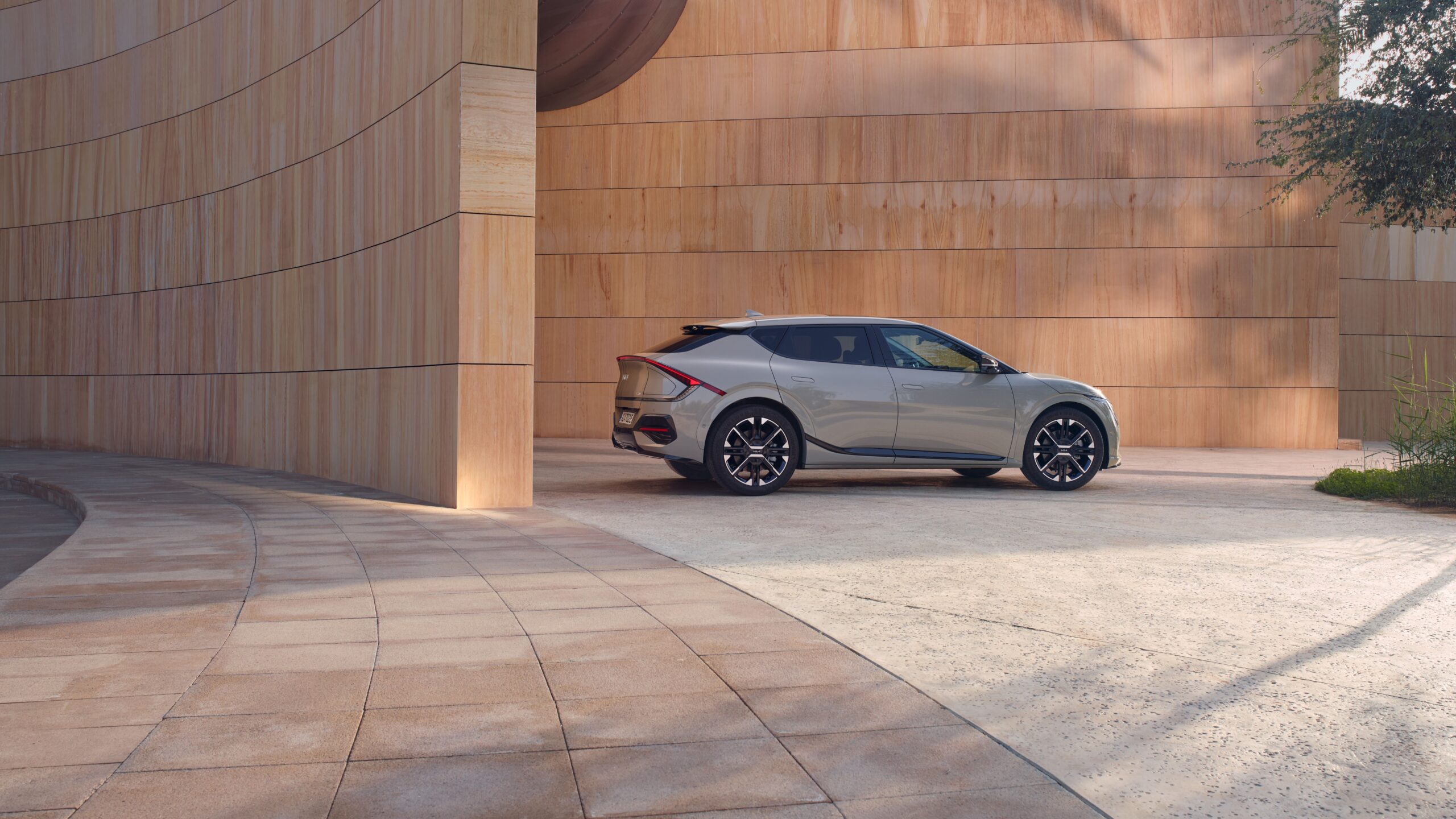
| Mercedes-Benz EQE SUV 350+ AMG Line (£76,870) | £3,074.80 | £614.96 | £51.25 | £1,229.92 | £102.49 | £1,383.66 | £115.31 |
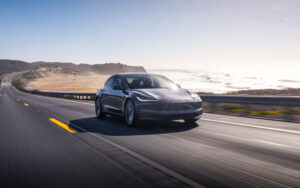
| Tesla Model Y Long Range RWD (£44,935) | £1,797.40 | £359.48 | £29.96 | £718.96 | £59.91 | £808.83 | £67.40 |
Outputs in plain English. Park a near-£60k EV as a company car in 2026/27 and the higher-rate monthly BiK sits in the high seventies (iX3 £78.34; Model Y Performance £79.91). The additional-rate row adds roughly a tenner a month on those two. The EQE SUV, at a £76,870 pin, clears £100 a month for the 40% taxpayer and £115 for the 45% taxpayer. Drop to the Model Y Long Range RWD at £44,935 and the higher-rate monthly figure falls to £59.91 — still not free, but a clear step down from the sixty-grand pair.
That is why I refuse to talk about “EV BiK” as a single number. The percentage is national; the cash is personal.
Side columns: the same cars as BiK steps from 3% to 9%
A three-year company-car cycle that starts in 2026/27 will not stay at 4% for the whole life of the car. Using the published zero-emission steps, here is higher-rate (40%) annual and monthly BiK on the same P11D pins — the column set I would print next to any proposal that only quotes year one.
| Car (P11D) | 2025/26 @ 3% | 2026/27 @ 4% | 2027/28 @ 5% | 2028/29 @ 7% | 2029/30 @ 9% |
|---|---|---|---|---|---|
| BMW iX3 (£58,755) — annual / monthly | £705.06 / £58.75 | £940.08 / £78.34 | £1,175.10 / £97.93 | £1,645.14 / £137.10 | £2,115.18 / £176.26 |
| Model Y Performance (£59,935) | £719.22 / £59.94 | £958.96 / £79.91 | £1,198.70 / £99.89 | £1,678.18 / £139.85 | £2,157.66 / £179.80 |
| EQE SUV 350+ (£76,870) | £922.44 / £76.87 | £1,229.92 / £102.49 | £1,537.40 / £128.12 | £2,152.36 / £179.36 | £2,767.32 / £230.61 |
| Model Y Long Range RWD (£44,935) | £539.22 / £44.94 | £718.96 / £59.91 | £898.70 / £74.89 | £1,258.18 / £104.85 | £1,617.66 / £134.80 |
On the iX3 pin alone, higher-rate annual BiK roughly trebles from the 3% year to the 9% year (£705 to £2,115) — still modest against double-digit petrol BiK, but not set-and-forget. For scheme-level trade-offs beyond pure BiK, see best salary-sacrifice cars UK 2026 and the BMW i5 salary-sacrifice case for 2026.
What the tax-band gap actually decides
Look again at the iX3 row for 2026/27: £470 a year at 20%, £940 at 40%, £1,058 at 45%. Doubling the tax rate almost doubles the BiK cash; the extra five points from higher to additional add another £118 a year on that pin. On the EQE SUV the same band jump is £154 a year (£1,230 vs £1,384).
So when someone says a £60k EV “only costs eighty a month in tax,” they almost always mean a higher-rate driver in the 4% year. A basic-rate driver on the same car is closer to forty a month. An additional-rate driver is nearer ninety. I would rather see those three numbers on the same slide than a single hero monthly figure.
Two caveats I will not paper over. First, this is BiK tax on the car benefit only — not the full cost of a salary-sacrifice package, which also reduces gross pay and can change pension and student-loan arithmetic. Second, P11D moves with options; a loaded iX3 or Performance Model Y will not stay on the base pins above. Use the manufacturer configurator, then re-run P11D × 0.04 × your rate before you sign.
When the 4% year still earns its place on a premium shortlist
I am not talking anyone out of a zero-emission company car. At 4%, a near-£60k BMW iX3 or Tesla Model Y Performance still posts higher-rate BiK under £80 a month on these pins — a figure that would have looked absurd against diesel executives a decade ago. The EQE SUV costs more because the list price is higher, not because the percentage changes. The Long Range Model Y shows how hard list price still works in your favour when the rate is flat across pure EVs.

My position for 2026/27 is blunt: if you are choosing between these cars as a company-car or salary-sacrifice driver, rank them first by the monthly BiK on your tax band using the table above, then by residual risk on the multi-year 5% / 7% / 9% steps, and only then by brand theatre. The tax system no longer differentiates pure EVs from each other on percentage — only on price. That makes the £44,935 Model Y Long Range RWD the quiet cash winner in this set, the iX3 and Model Y Performance near-identical BiK twins at ~£60k, and the EQE SUV the premium list-price choice you justify with space and badge, not with a lower BiK rate.
If your employer’s proposal only shows one monthly number and one tax year, ask for the three-band 2026/27 grid and the stepped 2027–2030 column before you commit. The arithmetic is simple enough that anyone can check it against HMRC’s tax-on-company-benefits pages. That inspectable check is the point — not a slogan about EVs being “tax efficient,” but the pounds that actually leave the payslip.
Buyer action
Where to check next
Use this as the final check before paying a deposit, signing finance paperwork or relying on a headline monthly figure.