UPDATED · News · 25 May 2026 · Michael Harrison
Range Rover Electric 2026: the latest on the EV flagship, the reservation list, and whether it'll qualify for salary sacrifice.
Range Rover Electric: where the launch sits in May 2026
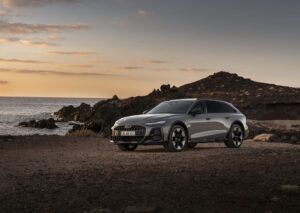
JLR opened the British summer season at the RHS Chelsea Flower Show on 19 May 2026 by previewing the Range Rover Electric in launch specification for the first time, finished in a new Belgravia Green metallic. The car sat at the heart of “The Range Rover Cloister”, a sponsorship installation designed by garden designer Alexandra Noble. It was the closest the public has come to a finished Range Rover Electric , and notably, it was a preview, not the global reveal.
According to JLR, the global reveal still sits “later in 2026”, with order books opening after that and customer deliveries to follow. New CEO PB Balaji confirmed in February 2026 that the car will be built at Solihull, the home of every Range Rover since 1970, and that JLR has logged roughly 78,000 expressions of interest on the reservation list that opened in late 2024.
For a model originally pencilled in for 2024 customer deliveries, that timeline matters. The car has been pushed twice , first into 2025, then into 2026 , and JLR’s messaging has shifted from “on sale” language to “preview” and “launch later this year”. If you are a P2 salary-sacrifice buyer hoping to be in one by Christmas, the honest answer is: probably not on the first wave, and possibly not in 2026 at all unless you are one of the 78,000 reservation holders already in the queue.
What JLR has confirmed (and what it hasn’t)
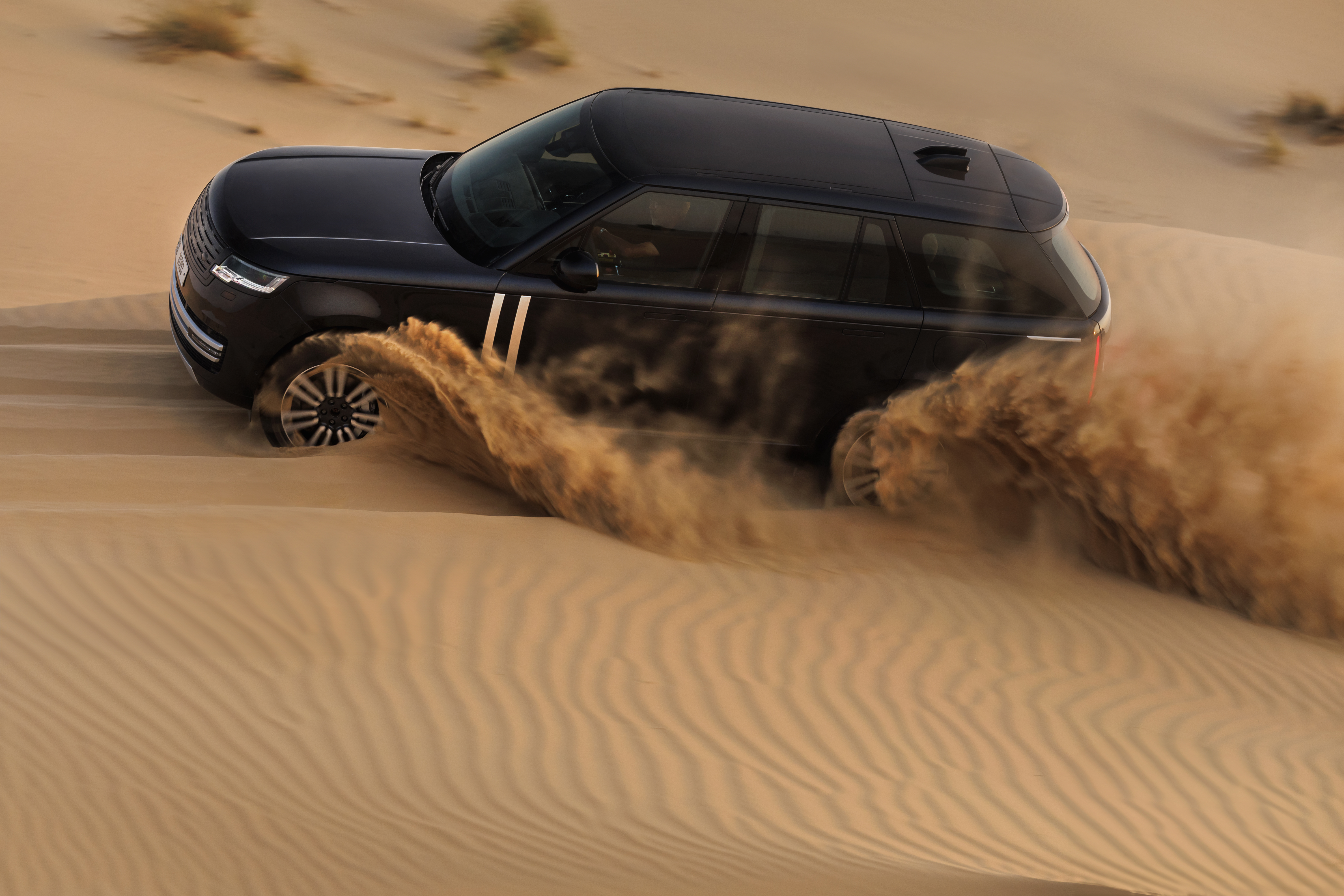
Strip out the rumour and what JLR has put on record is a fairly tight engineering picture. The Range Rover Electric uses an in-house 117kWh high-voltage battery built from 344 prismatic cells in a double-stacked layout, paired with an 800V electrical architecture. JLR’s own engineers say the car has been validated against the same off-road, towing and refinement benchmarks as the V8-engined Range Rover, with a switchable twin-chamber air suspension and an all-wheel-drive system that can vary rear torque between 0 and 100%.

JLR has also confirmed its new ThermAssist thermal-management system, which the company claims reduces heating energy consumption by up to 40% and can recover heat to warm the cabin and propulsion system in ambient temperatures as low as -10°C. Thomas Müller, JLR’s Executive Director of Product Engineering, said in the company’s 25 April 2025 winter-testing release that “rigorous testing in extreme conditions like Arjeplog is crucial to reliability. Our new ThermAssist technology has surpassed expectations.”
What JLR has not confirmed, as of 25 May 2026: a UK on-the-road price, a confirmed WLTP range figure, a confirmed towing rating, the exact UK trim walk (SE, HSE, Autobiography, SV), the first-delivery date for UK customers, and whether the car will be eligible for the Plug-in Car Grant successor scheme. Any number you see in a UK newspaper or YouTube review attributed to JLR but not sourced from a JLR press release should be treated as estimate, not fact.
Salary sacrifice eligibility: the price-cap reality
This is the part most reservation-list dreaming will run aground on. The favourable bit first: HMRC has confirmed (and the Autumn 2025 Budget reiterated) that the Benefit-in-Kind rate for a pure-electric car in 2026-27 is 4% of P11D value, rising 1% to 5% in 2027-28 and stepping up to a 9% cap by 2029-30. For an additional-rate (45%) taxpayer on a £130,000 EV, a 4% BIK works out at around £2,340 of income tax per year , genuinely trivial against the value of the car.

But the BIK rate is only one half of the sal-sac equation. The other half , the half that kills the Range Rover Electric for most readers , is what the scheme provider will fund. In a salary sacrifice scheme, the provider (Octopus EV, Loveelectric, Tusker, The Electric Car Scheme, Fleet Alliance, and the rest) carries the lease risk on behalf of your employer. They publish their own eligibility rules, and almost all of them apply two filters that will trip up a £130k+ Range Rover:
- Salary headroom. Your post-sacrifice salary cannot drop below National Minimum Wage. On a £130,000 list-price car, a typical 4-year sal-sac gross monthly cost runs comfortably above £1,400 , even with the BIK saving baked in. Most schemes will simply refuse to quote you unless your gross salary supports that deduction with NMW headroom. Loveelectric publishes a £27,000 minimum-salary floor as its lowest threshold, and that is for a sub-£35,000 car, not a £130k+ one.
- Provider funder caps. Sal-sac providers source vehicles from a panel of funders (LeasePlan, Lex, ALD, Arval and the like). Those funders set their own maximum-list-price ceilings for sal-sac risk. Industry-standard funder ceilings sit around £75,000-£100,000 P11D for most schemes, with a small number of premium-focused providers stretching to £120,000-£150,000 for senior-band employees only. The Range Rover Electric , even at the very bottom of its likely SE pricing , will sit above that line for most schemes.
The result, in plain English: if you are on £60-90k and were planning to sal-sac a Range Rover Electric on Octopus EV or Loveelectric, the maths almost certainly will not work, regardless of the 4% BIK rate. A C-suite executive on a £300k+ package, going through a high-cap scheme administered alongside their employer’s company-car policy, has a fighting chance. Everyone else should plan around the next category down.
Critical caveat: published P11D-cap rules vary by employer-scheme and change frequently. Always confirm your specific scheme’s price cap with your HR or benefits portal before you put a reservation deposit on a Range Rover Electric.
If you want a sal-sac premium SUV EV instead: the actually-eligible alternatives
The good news for a P2 / P3 reader is that the same 4% BIK rate that makes the (theoretical) Range Rover Electric tax-efficient also applies to three premium electric SUVs that are actually on sale, in production, and sit comfortably inside most sal-sac providers’ P11D caps:

| Model (2026) | Launch P11D (approx.) | BIK 2026-27 | Claimed WLTP range |
|---|---|---|---|
| Range Rover Electric (when launched) | Est. £130,000-£175,000 , not yet JLR-confirmed | 4% | “Over 300 miles real-world” (JLR claim) |
| BMW iX xDrive45 Sport (replaces xDrive40) | c.£70,000 (from £69,905 OTR per Fleet News) | 4% | Up to 380 miles |
| Mercedes EQS 580 SUV 4MATIC | c.£139,415 P11D | 4% | Up to c.380 miles |
| Polestar 3 Long Range Single Motor (MY26) | From £69,845 | 4% | Up to 438 miles |
Of those three, the BMW iX and Polestar 3 are the ones that will actually clear typical sal-sac funder caps without drama. The Mercedes EQS 580 SUV sits in roughly the same territory as a base Range Rover Electric and is similarly out of scope for most lower-tier schemes , but at least it is on sale today and Mercedes will publish a confirmed P11D for it. If you want the cheapest tax-efficient route into a premium electric SUV via sal-sac, the maths still points at the iX xDrive45 or Polestar 3 Long Range, not the Range Rover Electric.
For wider context, our guides on the best electric SUVs under £30k in the UK for 2026 and our breakdown of company car tax 2026-27 for UK EVs sit alongside this piece. If you are weighing JLR product but want diesel capability and towing instead, our review of the best diesel SUVs for towing in the UK 2026 covers the Discovery D300 in detail.
The Range Rover Electric is genuinely interesting engineering , an 800V Range Rover, built at Solihull, designed to look “almost virtually indistinguishable” from a V8 in JLR’s own words from its Chelsea release. But interesting engineering and “buy it on sal-sac” are two different conversations. The painful truth for a P2 buyer is that the price band JLR is steering at, combined with the way UK sal-sac funder caps and NMW floors work, is going to put this car out of reach on every mainstream scheme. Reservation-list optimism is fine; budgeting around it is not. If your employer’s scheme has a £75-100k P11D cap (most do), the Range Rover Electric is a 2027-onwards used-market conversation for you, not a 2026 sal-sac one. The smarter 2026 move for the same tax efficiency is a BMW iX xDrive45 or Polestar 3 Long Range , both at 4% BIK, both inside the cap, both on sale today.
FAQ
When can I buy a Range Rover Electric in the UK?
As of 25 May 2026, JLR has previewed the car in launch specification at the RHS Chelsea Flower Show but has not opened order books or confirmed a UK first-delivery date. JLR CEO PB Balaji said in February 2026 that order books would open and deliveries begin “later in 2026”, but no public UK on-the-road price or specific date has been announced. Treat anything more specific as estimate.
Will the Range Rover Electric qualify for salary sacrifice?
Technically yes , it is a pure-electric car and so qualifies for the 4% BIK rate for 2026-27 confirmed by HMRC. In practice, no, for most readers: sal-sac providers apply funder-level P11D caps that typically sit between £75,000 and £120,000, below the Range Rover Electric’s expected list price of £130,000+. You also need significant salary headroom above National Minimum Wage post-sacrifice, which a £1,400+/month deduction will eat into hard. Always check your specific scheme’s cap with HR before committing.
How much will the Range Rover Electric cost?
JLR has not published a confirmed UK price as of 25 May 2026. Industry estimates from outlets including The Electric Car Scheme and Autocar put the starting price “north of £130,000” for an SE-grade car, with Autobiography and SV variants expected to climb above £170,000. We will update this article when JLR publishes the official UK price list.
Related reading
Buyer action
Where to check next
Use this as the final check before paying a deposit, signing finance paperwork or relying on a headline monthly figure.