Buying a Porsche 718 used in 2026 comes down to one fork in the road: the turbocharged flat-four 2.0 and 2.5 cars, or the naturally aspirated 4.0 flat-six in the GTS 4.0, GT4 and Spyder. Both are brilliant mid-engined sports cars, but they suit different buyers and different budgets. Our view, after reading the owner record and the known faults, is that a well-kept flat-four S is the value sweet spot, while the flat-six is the keeper you will not want to sell.
What real owners say (CDE data)
- Most-praised aspects: chassis and steering feel, build quality, and running costs lower than owners expected for a Porsche.
- Most-criticised aspects: the flat-four engine note, firm low-speed ride on 20-inch wheels, and dated PCM infotainment on early 2016 to 2017 cars.
- Reliability signal: owner-reported bore-scoring chatter centres on a minority of early high-mileage 2.5 turbo cars; the historic IMS bearing worry does not apply to the 718 at all, as these engines use a different architecture. Treat bore-scoring as a pre-purchase check, not a generation-wide defect.
Flat-four or flat-six: which 718 engine to buy
The 982 line splits cleanly. Per Porsche GB’s published figures, the 2.0-litre turbo flat-four makes 300 PS and covers 0 to 62mph in 4.7 seconds with Sport Chrono; the 2.5-litre S with variable turbine geometry makes 350 PS and trims that to 4.2 seconds. Then there is the 4.0-litre naturally aspirated flat-six in the GTS 4.0, Spyder and GT4, producing 394 PS at launch (later cars 400 PS), a 0 to 62mph time of 4.5 seconds with the manual and a top track speed of 182mph. The flat-four is the cleverer engine and the quicker-feeling everyday car; the flat-six is the one enthusiasts cross-shop against a used 911. Our view: if your budget reaches a clean GTS 4.0, the six is worth the stretch for sound and resale alone. If it does not, a 2.5 S is no consolation prize.
Cayman or Boxster: coupe versus convertible
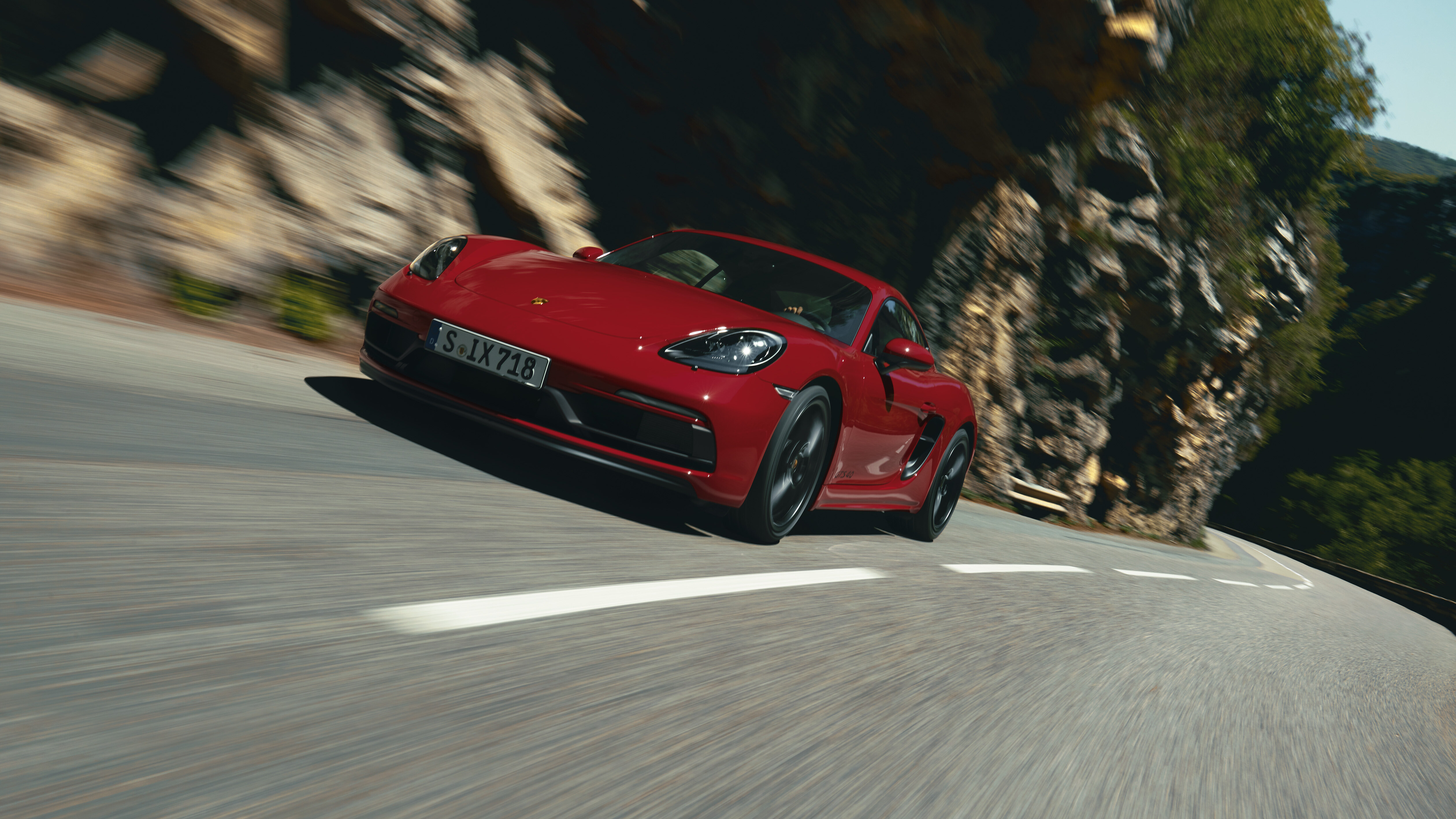
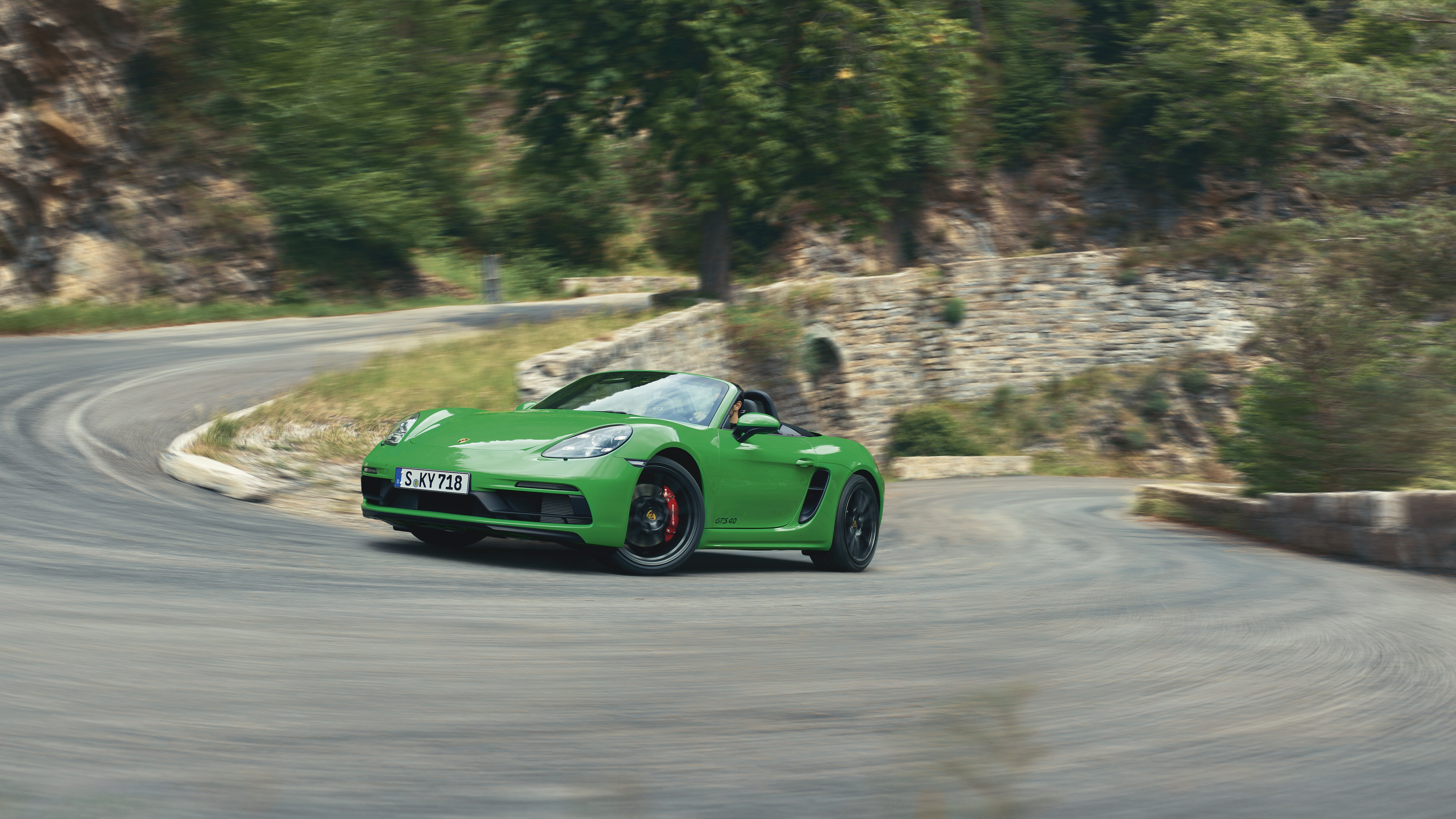
Mechanically the Cayman coupe and Boxster roadster are near-identical twins, so the choice is about use rather than engineering. The Cayman is fractionally stiffer and tends to hold a small price premium on the GTS 4.0 and GT4 trims because of its harder-edged reputation. The Boxster opens up to weather and, in our experience of the used market, often represents slightly better value because buyers fixate on the coupe. If you do a lot of B-road blasts and the occasional track day, the Cayman makes sense; if summer touring matters more, the Boxster loses almost nothing dynamically. Both share the same flat-four and flat-six engine choices, so the engine decision above applies equally. The compact Cayman is also a sensible step up from something like a Jaguar F-Type, and our notes on Jaguar F-Type insurance show how a Porsche can actually undercut a British rival on cover.
PDK or manual: the gearbox debate
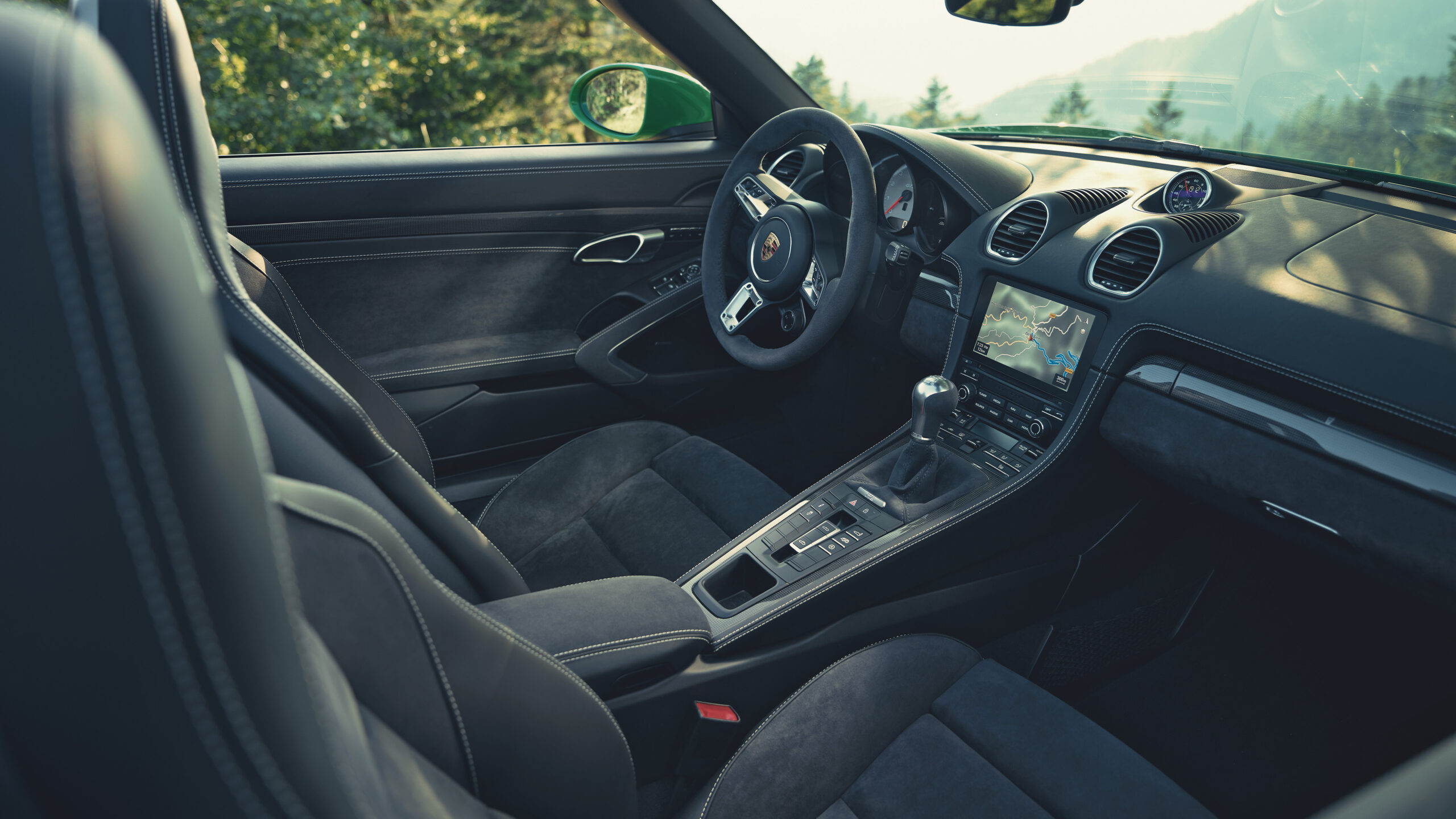
The seven-speed PDK dual-clutch is the faster, more relaxed choice and the one most flat-four cars were ordered with. The six-speed manual is rarer, especially on the 2.0 and 2.5 turbo cars, and it is the only gearbox offered on the GTS 4.0 in its original launch form. For a daily-driven 718, PDK is the pragmatic pick and is easier to sell on. For a weekend flat-six, the manual adds engagement and increasingly commands a premium as buyers chase the analogue experience. Our view is that a manual GTS 4.0 is the connoisseur’s 718 and the one most likely to hold value; a PDK 2.5 S is the better all-rounder for real annual mileage. Neither gearbox is a known weak point on the 982 if serviced on schedule.
What a Porsche 718 used buyer should check before deposit
The pre-purchase routine is straightforward but non-negotiable. Insist on a full Porsche or specialist service history with stamps at the correct intervals, and budget for an inspection that includes a bore-scope on the flat-four turbo cars, which settles the bore-scoring question for a specific vehicle rather than the model in general. Check tyre brand and date codes, because a matched set of premium tyres on staggered 19 or 20-inch wheels is a four-figure cost if it is due. Inspect front-end paint and the radiators behind the front intakes for stone damage and debris, a common and pricey 718 weak spot. Confirm the MOT history and advisories on gov.uk, and run a finance and write-off check. For the wider warranty picture once the car is yours, our guide to used car warranty exclusions explains what aftermarket cover routinely leaves out on a performance Porsche.
UK used prices and depreciation in 2026
Early 2.0 and 2.5 turbo cars from 2016 to 2018 now sit broadly in the £30,000 to £42,000 band for clean, well-documented examples, while flat-six GTS 4.0, Spyder and GT4 cars trade well above that and, in the case of the GT4 and limited models, have flattened out or appreciated rather than fallen. Depreciation on the turbo cars has largely done its worst, which is precisely why they make sense now: you let the first owner absorb the steep early drop. The flat-six cars behave more like collectables than depreciating assets, so the buying logic is different. If you are funding the purchase, the way the balloon is set matters; our explainer on guaranteed future value PCP shows why a car that holds value changes the monthly maths. Buyers cross-shopping a used 911 should also read our Porsche 911 used buyer’s guide before deciding which Porsche fits.
Running costs: insurance, servicing and tyres
A 718 is cheaper to run than its badge suggests, but it is not a hatchback. Servicing follows Porsche’s published interval of roughly every two years or 20,000 miles for the minor service, with intermediate checks, and an OPC or trusted independent is the right home for the work. Tyres are the recurring big cost given the staggered fitment, and brakes on track-used cars wear faster. Insurance sits below the level of a hot saloon for many buyers: a mid-engined two-seater driven by a settled, higher-mileage owner often groups more kindly than people expect, and it is usually cheaper to cover than a comparable BMW M or Audi RS. Always price the cover before you commit, because a young driver or a city postcode flips that picture quickly.
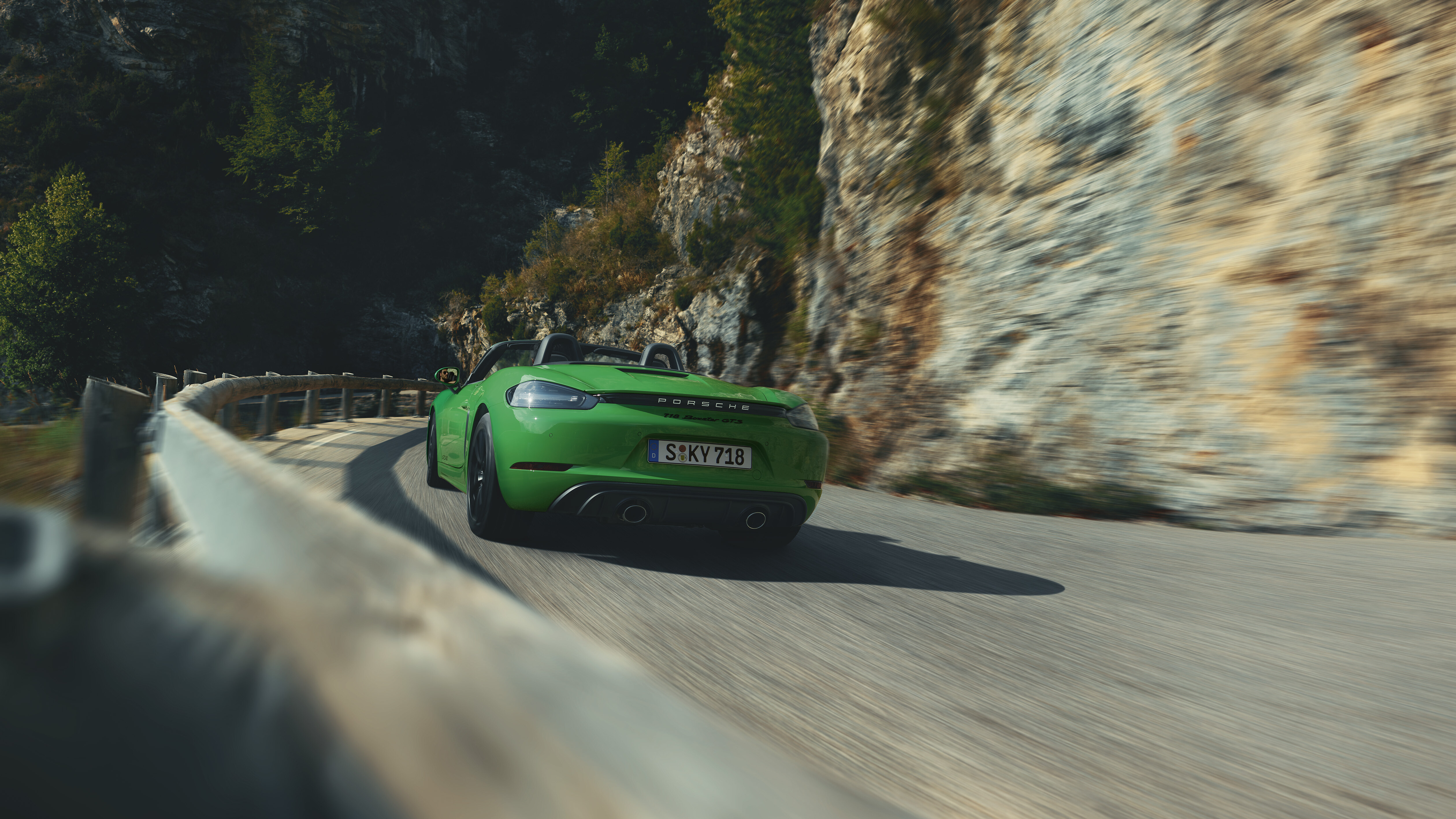
718 engine line-up: the numbers that matter
| Model | Engine | Power | 0-62mph | Top speed |
|---|---|---|---|---|
| 718 Cayman / Boxster 2.0 | 2.0 turbo flat-four | 300 PS | 4.7s | 171mph |
| 718 Cayman S / Boxster S 2.5 | 2.5 turbo flat-four (VTG) | 350 PS | 4.2s | 177mph |
| 718 GTS 4.0 / Spyder | 4.0 naturally aspirated flat-six | 394 PS | 4.5s | 182mph |
According to Auto Express’s 718 Cayman engine review, the flat-four delivers strong real-world pace and economy, while the flat-six is the unit that finally answered the criticism the four-cylinder cars attracted at launch. That gap in character, more than outright speed, is what splits the used market today.
A note on scope: CDE has not road-tested this specific car. Our guidance draws on manufacturer data, UK regulator records, owner-reported faults and our used-buyer inspection checklist rather than a hands-on test of an individual vehicle. Commission an independent inspection and a full history check before you pay a deposit.
The Porsche 718 used market gives you two honest answers. For the buyer who wants the most car for sensible money, a 2017 to 2019 Cayman S or Boxster S in the £35,000 region, with full history and a clean bore-scope, is one of the best handling sports cars you can own and the depreciation pain is already spent. For the buyer chasing the keeper, a flat-six GTS 4.0 or GT4 is the 718 that will not bore you and is most likely to hold its money, which makes the higher price easier to justify. Who should walk away? Anyone expecting a soft GT cruiser, or anyone unwilling to pay for a proper inspection, because a bore-scope and history check is the cheapest insurance on the transaction. What would change our view: patchy stamps, mismatched tyres or fresh front-end stone damage and no price adjustment to reflect it. Buy the boring paperwork, not the shiny advert.
Is the Porsche 718 flat-four reliable?
Should I buy a Cayman or a Boxster?
How much is a good used Porsche 718 in 2026?
PDK or manual on a used 718?
Is the Porsche 718 expensive to insure in the UK?
Where to start your 718 search
Work through these checks before you part with money on a 718. Browse Porsche Approved Used stock first for cars with a manufacturer warranty and a documented history, then widen to PistonHeads and Auto Trader for independent and private examples. Cross-reference the registration on the gov.uk MOT history service to read every advisory, and run a DVSA recall lookup to confirm any outstanding actions are closed. Commission an independent pre-purchase inspection that includes a bore-scope on flat-four cars. Run an HPI-style finance and write-off check so you are not buying someone else’s outstanding agreement. If you are financing, weigh the deal against the car’s strong residuals rather than the headline monthly figure, and read the early-exit terms before you sign. For mileage planning on a finance deal, our notes on PCP mileage limits and excess charges are worth a look.
How we researched this guide
Every pick here is shortlisted from hands-on testing and time spent living with the hardware by the CDE desk, then sanity-checked against current UK pricing, manufacturer specs and real-world performance before it makes the cut. We never rank for commission — affiliate links don't change the order.
Buyer action
Where to check next
Use this as the final check before paying a deposit, signing finance paperwork or relying on a headline monthly figure.