UPDATED · News · 25 May 2026 · Michael Harrison
Tesla Cybertruck Recall 26V-255: Wheel Stud Risk UK 2026.
CDE may earn a commission when you click affiliate links. This does not change what we recommend.
What recall 26V-255 actually covers
The Part 573 Safety Recall Report 26V255 filed by Tesla on 27 April 2026 lists 173 potentially involved vehicles, with an estimated 5 percent defect rate. Affected units are 2024 to 2026 model-year Cybertrucks built between 21 March 2024 and 25 November 2025 that carried 18-inch steel wheels either from the factory (production of that wheel option began 28 August 2025) or as a service-installed replacement. The Tesla manufacturer recall number is SB-26-33-003.
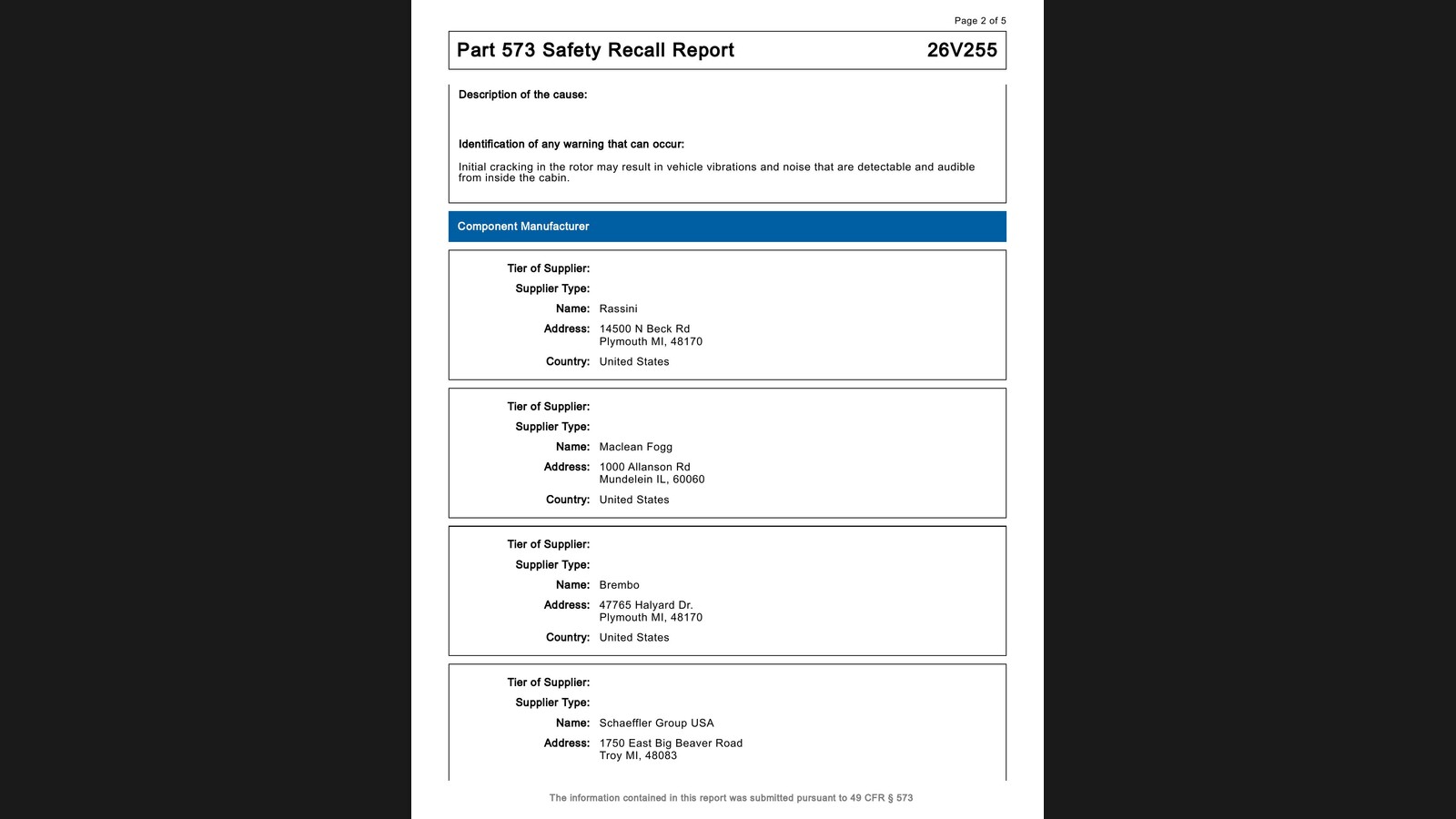
The relevant Tesla part numbers, taken straight from the filing, are lug nut 1027002-00-B (M14x1.5), hub-and-bearing units 1250121-00-A and 1250171-00-E, rear rotor 1250631-00-A (356 mm OD cast iron) and front rotor 1250611-00-A (351 mm OD cast iron). Component suppliers named are Rassini, Maclean Fogg, Brembo and Schaeffler Group USA. If a North American buyer took delivery of an 18-inch steel-wheel Cybertruck inside that production window, the VIN is in scope. The handful of UK enthusiasts who privately imported a Cybertruck via a VCA Personal Import scheme should run the same check.
The defect, in the regulator’s own words
NHTSA records the defect as follows: “On affected vehicles, higher severity road perturbations and cornering may strain the stud hole in the wheel rotor, causing cracks to form. If cracking propagates with continued use and strain, the wheel stud could eventually separate from the wheel hub.” The safety risk: “Wheel stud separation may affect vehicle controllability, increasing the risk of a collision.” That is regulator-grade language, not enthusiast paraphrasing, so we are quoting it directly.
Tesla’s chronology tells the rest. Pre-production analysis in August 2025 flagged that the hub-and-bearing mount geometry contributed to rotor cracking observed in lab testing. Tesla started validating a higher-friction lug-nut coating and a brake-rotor durability improvement, but a “change management error” meant the rotor improvement was not incorporated when production of 18-inch steel-wheel trucks began on 28 August 2025. On 5 November 2025 a customer brought a Cybertruck in for “braking pulsations”, and Tesla service found cracks on the brake rotor faces. That remains the only field occurrence to date, but Tesla escalated to a voluntary recall on 14 April 2026 “out of an abundance of caution”.
Recall facts table
| Item | Value | Source |
|---|---|---|
| NHTSA recall ID | 26V-255 | NHTSA Part 573 |
| Tesla manufacturer recall number | SB-26-33-003 | Same filing |
| Submission date | 27 April 2026 | Same filing |
| Recall determination date | 14 April 2026 | Same filing, chronology section |
| Vehicles potentially involved | 173 | Same filing, population section |
| Estimated defect rate | 5 percent | Same filing |
| Affected model years | 2024 to 2026 Tesla Cybertruck | Same filing |
| Production date range | 21 March 2024 to 25 November 2025 | Same filing |
| Triggering hardware | 18-inch steel wheels (factory or service-installed) | Same filing |
| Remedy | Replace front and rear brake rotors, hubs and lug nuts at no charge | Same filing |
| Consumer advisories | Do Not Drive, Park Outside | NHTSA recall record 26V-255 |
| Owner notification by | 20 June 2026 | NHTSA recall record 26V-255 |
| Warranty claims linked to defect | 3 (as of 14 April 2026) | Same filing |
| Reported crashes, fatalities, injuries | None known | Same filing |
| UK availability | Cybertruck not sold; no VCA type approval lodged | Tesla UK price list, May 2026 |
How to tell if a Cybertruck is affected
Two checks. First, the wheel: this recall only applies to 18-inch steel wheels. The standard Cybertruck wheel is a 20-inch alloy, so the vast majority of trucks on the road are out of scope. The 18-inch steel option was a low-volume choice that Tesla discontinued on 25 November 2025 due to weak demand. Second, the VIN: enter it on the NHTSA recall lookup tool, which will return any open recalls associated with the vehicle, including 26V-255 where applicable. UK private imports should also check the DVSA recall service, though DVSA only mirrors a campaign once a UK manufacturer notice is filed.
If the VIN is in the population, NHTSA confirms the consumer advisory is currently set to Do Not Drive and Park Outside on the recall record. Tesla’s stated early-warning signs are “vibrations and noise that are detectable and audible from inside the cabin”. In plain English: a new steady vibration through the steering wheel, or a metallic rasp from a corner under braking, on an 18-inch-steel-wheel truck is not normal break-in noise. Ring the nearest Tesla service centre, do not drive the vehicle, and ask for a mobile inspection or flat-bed collection.
Why this matters more than the headcount suggests
One hundred and seventy three trucks is a tiny recall by population. A Toyota or Ford airbag campaign would have six zeros after that number. The reason this filing carries weight is the chronology Tesla itself supplies. Pre-production testing in August 2025 already showed rotor cracking under the chosen hub geometry. Tesla had a durability fix designed. A change management error kept the fix out of the 18-inch steel-wheel build. That is exactly the kind of process slip regulators, claimant solicitors and parliamentary committees love to dig into. The UK’s DVSA, the Vehicle Certification Agency and the European Commission’s Safety Gate system will all log this against Tesla’s compliance file should the brand ever apply for UK or EU type approval on the Cybertruck.
The wider context: this is the eighth NHTSA recall affecting Cybertruck since launch, joining earlier campaigns on accelerator pedal trim, exterior light bar accessory delamination, controller software (parking light brightness, rear-view camera delay) and trim panel adhesive. Cumulatively the model has been recalled across well over 100,000 service events. Set against a US sales base that is a fraction of original projections, the recall-to-sales ratio is exactly what UK and EU regulators will be tracking when Tesla files for European type approval on any global Cybertruck variant. Read our Tesla Cybercab vs Waymo One 2026 comparison for the wider Tesla product trajectory and the Tesla Model Y Juniper refresh global review for the more mainstream side of the fleet.
What Cybertruck owners should do today
Three actions in order. First, run the VIN through the NHTSA recall lookup. If 26V-255 appears, follow the Do Not Drive advisory NHTSA has posted, and arrange Tesla collection rather than self-drive transport. Second, if 26V-255 does not appear but the truck is an 18-inch steel-wheel delivery inside the production window, contact Tesla service directly with the VIN and request confirmation in writing. Tesla’s owner-notification letters are not scheduled to post until 20 June 2026, so the database update lags the public recall. Third, used buyers whose title transfer has not yet propagated to NHTSA can miss owner notification entirely. Update the contact address with Tesla and check the NHTSA tool monthly until the campaign closes.
Reimbursement: Tesla’s filing confirms the remedy will be at no charge to the customer. If an owner has already paid out of pocket for a rotor, hub or lug-nut replacement related to this defect, the Part 573 filing references a reimbursement plan. Keep service invoices and submit a claim through the Tesla service app.
What this means for the UK Cybertruck rollout
Cybertruck is sold in the United States, Canada and Mexico only. UK, EU and Australian buyers cannot order one today, and Tesla has not lodged an application with the VCA for UK type approval. A safety recall determination of this kind, with Do Not Drive and Park Outside consumer advisories on the record, will be cited by the DVSA recall service, the European Commission Safety Gate system and Australian ACCC product safety if Tesla ever files for cross-market approval. Right-hand-drive markets watching for a Cybertruck launch should treat this filing as one more reason the engineering programme is not yet on a global trajectory.
For UK families looking at large EVs that are actually on the price list, the more interesting comparison is the Model Y refresh against Hyundai’s offering. We covered that in Tesla Model Y vs Hyundai Ioniq 5 2026: Verdict. For wider 2026 recall context, GM’s 2026 wheel lockup recall is the comparable safety story from a US legacy manufacturer, and Toyota and Hyundai have both had high-profile campaigns this month covered in our Toyota Corolla Hybrid saloon and Corolla Cross hybrid recall coverage and the Hyundai i30 and Tucson airbag sensor recall.
Recall 26V-255 is small in headcount but unusually clean in its paper trail. Tesla itself documents that pre-production testing flagged the rotor cracking, that a durability fix was designed, and that a change management error left the fix out of the build that reached customer hands. That is a textbook process failure, and it is the kind of admission that gets pulled into class certification briefs and regulator enforcement orders months down the line. For affected owners the immediate path is clean: stop driving the truck, run the VIN through NHTSA, and accept the free hub-rotor-lug-nut replacement when Tesla calls. For Cybertruck-curious UK buyers, this is another data point arguing that Tesla’s most polarising product is still working through its early-life teething phase, and that any international rollout including UK type approval is, at best, on hold.
Which Tesla Cybertrucks are affected by recall 26V-255?
What will Tesla replace under recall 26V-255 and is it free?
What are the warning signs of the defect?
When will owner notification letters arrive?
Related reading on CDE
Buyer action
Where to check next
Use this as the final check before paying a deposit, signing finance paperwork or relying on a headline monthly figure.