Salary sacrifice EV hidden costs are the part of the deal the provider quote wall keeps quiet, and they decide whether a premium electric car on payroll is the bargain it looks. The headline net monthly figure is real, but it sits on a stack of assumptions about how you charge, what you drive, when you leave, and a benefit-in-kind rate that climbs every April. Get those wrong and a brilliant deal turns ordinary. Here is what to budget for before you sign.
What real owners say (CDE data)
- Most-praised aspects: the income tax and National Insurance saving for higher-rate earners, the all-in nature of a bundle that wraps insurance and servicing, and access to premium EVs that would be costly to lease privately.
- Most-criticised aspects: shock at public charging cost when home charging is not possible, tyre bills on big wheels, and confusion over what happens on leaving the employer.
- Reliability signal: the recurring complaint theme is cost surprise, not mechanical failure; owners who modelled charging and exit terms before signing report far fewer regrets.
What the headline net monthly figure includes and excludes
The number a scheme quotes you is a net monthly cost: the gross salary you give up, minus the income tax and National Insurance you no longer pay on it, plus the benefit-in-kind tax you owe on the car. On a premium EV through Octopus EV, that monthly figure typically bundles the lease, maintenance, servicing, tyres, breakdown cover and motor insurance, with either roughly 4,000 charging miles or a home charger thrown in, per the provider’s own salary sacrifice scheme page (checked June 2026). That is genuinely generous. What it does not include is the electricity to run the car beyond any bundled miles, the tax effect of your benefit-in-kind rate rising each year, and the cost of leaving early. Two schemes quoting an identical net monthly can carry very different real costs once those three lines are added. If you are weighing this against taking the cash instead, our salary sacrifice versus car allowance comparison sets out where each one wins.
Public charging versus home charging is the biggest hidden gap
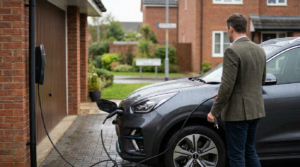
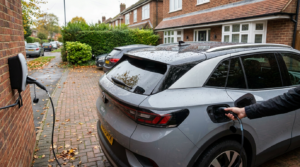
This is the line that catches most people. Charge at home overnight on a dedicated EV tariff and you pay very little: Intelligent Octopus Go runs an off-peak rate of 8p/kWh between 11:30pm and 5:30am, per Octopus Energy’s tariff page (checked June 2026). Charge in public on a rapid or ultra-rapid unit and you pay a great deal more. Zapmap’s price index put the weighted average pay-as-you-go cost at 79p/kWh for 50kW-plus charging in May 2026, against 54p/kWh for slower public units (Zapmap EV charging price index, June 2026). On a 70kWh usable battery that is roughly £5.60 to fill at home versus about £55 on a rapid charger, a tenfold difference. If you live in a flat or have no driveway and cannot install a home charger, model your running cost at the public rate, not the home one, before you decide the deal stacks up. Our home EV charger comparison covers the kit that unlocks the cheap rate.
Tyres: heavy, powerful EVs wear them fast
Most schemes bundle tyres, which softens this, but it is worth understanding why providers price it in. Premium EVs are heavy and torquey, and they run large alloys, so they chew through rubber faster than an equivalent petrol car. Replacement cost on big wheels is steep: a premium 20-inch EV tyre runs well into three figures, with one UK retailer pricing a 20-inch Tesla fitment at £211 to £342 per tyre and an SUV run-flat at £284 to £448 each (TotalLossGap UK tyre cost guide, 2026). If your scheme caps the number of bundled tyres, or excludes them above a certain wheel size, a hard-driven car on 21-inch rims could leave you paying out of pocket. Read the fair-wear-and-tear and tyre-allowance wording, not just the brochure line that says tyres are covered.

Insurance: bundled or separate, and why premium EV cover runs high
Whether insurance is part of the deal varies by provider. Octopus EV folds fully comprehensive motor insurance into the monthly figure, while some schemes leave you to arrange your own cover, which is a real cost you must add back. Either way, premium EV insurance is expensive, and the reason is repair economics. Thatcham Research reports that battery electric vehicle repairs have historically run around 25% higher than comparable petrol or diesel models, with repair times roughly 14% longer, and that with the battery accounting for up to 40% of a car’s value even minor collision damage can trigger a write-off (Thatcham Research EV Blueprint, 2026). A scarce approved repair network for some marques pushes premiums higher again. If your scheme does not bundle insurance, price up cover on your own registration before signing; the gap between schemes can be larger than the headline monthly difference. We dig into this in our premium EV insurance guide.
BiK rises over the term and excess mileage bites
The benefit-in-kind tax on a salary sacrifice EV is low today but it does not stay still. HMRC’s published schedule sets the appropriate percentage for a zero-emission company car at 4% in 2026/27, rising to 5% in 2027/28 and 7% in 2028/29 (see HMRC’s company car appropriate percentage guidance, rate read June 2026; CDE reads all tax rates from a dated source-of-truth file rather than hardcoding them). On a £70,000 P11D EV, the taxable benefit climbs from £2,800 at 4% to £4,900 at 7%, so a 40% taxpayer’s annual BiK bill rises from roughly £1,120 to about £1,960 across a typical lease. Your net monthly creeps up year on year even though nothing about the car changes. The other moving line is mileage: schemes set an annual limit, and going over it brings an excess-mileage charge, just as on a personal contract hire. The mechanics are the same as the PCP excess mileage charges that catch out finance buyers, so set a realistic annual figure rather than the cheapest one.

Early exit, redundancy and family leave: the term you must read
A salary sacrifice car is tied to your employment, so what happens if that changes mid-term is the single most important clause in the agreement. If you resign, are made redundant, go on a period of unpaid leave, or the arrangement ends early, many schemes apply an early-termination charge to cover the provider’s loss on returning the car early. Better schemes carry built-in protections that waive or cap that charge for life events such as redundancy, long-term sickness, maternity or paternity leave, often funded by a small insurance premium baked into the monthly cost. Octopus EV, for example, markets cover for events “from resignations to sick leave,” but the precise terms and any early-termination figure are in the scheme documentation, not the quote wall. Ask for the exact wording: what triggers a charge, how it is calculated, and which life events are protected. The same early-exit risk runs through any premium EV decision, which is why our Porsche Taycan salary sacrifice risk breakdown treats it as a make-or-break check.
Salary sacrifice EV hidden costs: what to ask before you sign
Treat the quote as the start of the conversation, not the answer. Ask for the early-termination charge in pounds for leaving at month 12, 24 and 36, and which life events are protected. Confirm whether insurance is included and on what excess, and whether tyres are capped or limited by wheel size. Check the annual mileage limit and the excess-mileage rate per mile. Ask the provider to show your net monthly in each tax year of the term, not just year one, so the rising BiK is visible. And model your charging honestly: if you cannot charge at home, redo the sums at the public rate. Comparing two providers on these lines, rather than on the headline figure, is where the real decision sits; our guides to Octopus EV versus Loveelectric and the three-way Tusker, ElectriX and Octopus EV comparison line the scheme rules up side by side, and the wider EV salary sacrifice section collects the model-by-model maths.
| Hidden cost line | Indicative figure (2026) | Source |
|---|---|---|
| Home off-peak charging | 8p/kWh (11:30pm to 5:30am) | Octopus Energy Intelligent Octopus Go |
| Public rapid charging (50kW+) | 79p/kWh weighted average | Zapmap price index, May 2026 |
| Premium 20in EV tyre (each) | £211 to £342 | TotalLossGap tyre guide |
| EV repair cost premium | ~25% higher than petrol/diesel | Thatcham Research |
| Zero-emission company car BiK | 4% (2026/27), 5% (2027/28), 7% (2028/29) | HMRC |
A premium salary sacrifice EV remains one of the best deals in UK motoring for a higher-rate taxpayer, and the salary sacrifice EV hidden costs we have set out do not change that for most drivers. They change it for some. If you can charge at home overnight, drive within your mileage limit, and intend to stay with your employer for the term, the maths is hard to beat and the bundled insurance, servicing and tyres make it close to all-in. If you cannot charge at home, the running cost is several times higher and the case weakens fast. If your job is uncertain, the early-termination charge is the line that matters most, so weight a scheme with strong redundancy and family-leave protection over one that is a few pounds cheaper a month. Our view: the right scheme is not the lowest quote, it is the one whose paperwork answers the charging, exit and mileage questions in your favour. Get those three nailed before you sign.

Does salary sacrifice EV cost include charging?
Usually only partly. Most premium schemes bundle either a home charger or a number of charging miles (Octopus EV quotes around 4,000), but the electricity beyond that is yours to pay. At home on an 8p/kWh off-peak tariff that is cheap; on public rapid chargers at a 79p/kWh average it is roughly ten times more. If you cannot charge at home, budget at the public rate.
What happens to my salary sacrifice car if I leave my job?
The car is tied to your employment, so leaving mid-term usually triggers an early-termination charge unless your scheme protects that event. Many providers waive or cap the charge for redundancy, long-term sickness and maternity or paternity leave, often via a small insurance premium in the monthly cost. Ask for the exact early-termination figure at months 12, 24 and 36 before signing.
Why does the benefit-in-kind cost rise over the term?
HMRC sets the appropriate percentage for a zero-emission company car on a rising schedule: 4% in 2026/27, 5% in 2027/28 and 7% in 2028/29. Because your BiK tax is the P11D value multiplied by that percentage and your tax rate, the bill climbs each year even though the car is unchanged. On a £70,000 EV a 40% taxpayer goes from about £1,120 to £1,960 a year across a typical lease.

Is insurance included in an EV salary sacrifice scheme?
It depends on the provider. Octopus EV includes fully comprehensive motor insurance in the monthly figure, but some schemes leave you to arrange and pay for your own cover separately. Premium EV insurance is expensive because repairs run around 25% higher than petrol equivalents per Thatcham Research, so if cover is not bundled, add that real cost back before comparing quotes.
Are tyres covered on a salary sacrifice EV?
Most premium schemes bundle tyres, but check for caps or wheel-size limits. Heavy, powerful EVs on 20 or 21-inch alloys wear tyres quickly, and a premium 20-inch EV tyre can cost £211 to £342 each. If your scheme caps the number of bundled replacements or excludes larger sizes, a hard-driven car could leave you paying out of pocket. Read the fair-wear-and-tear wording.

What should I ask before signing a salary sacrifice EV deal?
Ask for the early-termination charge in pounds at months 12, 24 and 36; whether insurance is included and at what excess; whether tyres are capped or size-limited; the annual mileage limit and excess-mileage rate; and your net monthly cost shown for every tax year of the term, not just year one. Then model your charging at the public rate if you cannot charge at home.
Buyer action
EV and salary-sacrifice checks
Use this as the final check before paying a deposit, signing finance paperwork or relying on a headline monthly figure.