The 2026 data is reassuring: a Geotab study of 22,700+ EVs found average degradation of about 2% a year, and UK fleet data puts average state of health at around 95%.
Mileage is a poor predictor of battery health. UK data shows many 100,000-mile cars still holding 88-95% of capacity.
Rapid DC charging matters more than miles: heavy 100kW-plus use runs nearer 3% a year, gentle home charging around half that.
Your safety net is the warranty: typically 8 years or 100,000 miles to around 70% of capacity. Check it transfers before you buy.
EV battery degradation is the fear that keeps used buyers out of cars they would otherwise love, and in 2026 the data finally lets me tell you to relax, with conditions. A Geotab study of more than 22,700 electric vehicles, published in January 2026, put average degradation at roughly 2.3% a year, and UK fleet figures reported this spring found average state of health sitting around 95%. The headline that should change how you shop is this: mileage is a poor predictor of battery health. A 100,000-mile EV can easily be healthier than a pampered low-miler. I am on the buyer’s side here, so I want you to stop fearing the odometer and start checking the things that actually matter, because that is where a used EV is won or lost.
What the 2026 numbers actually say
Two datasets are worth knowing. The Geotab 2026 study of 22,700-plus EVs found average annual degradation of about 2.3%, a touch higher than the 1.8% it reported in 2024, with the rise driven mainly by faster charging habits rather than any flaw in modern cells. UK fleet analysis reported in early 2026 put the average state of health at around 95.15%, with four-to-five-year-old cars near 93.5% and eight-to-nine-year-old cars holding a median of about 85%. Note the careful wording: these are medians across thousands of cars, not a promise about any single example. The individual car in front of you still needs checking, but the population it comes from is in far better shape than the scare stories suggest.
EV battery degradation by age and mileage
Here is the rough shape of what a healthy EV’s battery should be holding, drawn from the 2026 UK and Geotab figures. Use it as a sanity check against any car you are viewing: if a car is well below the band for its age, ask why before you ask the price.
Age / mileage
Typical state of health
What it means for you
1-3 years
around 96-98%
Near-new range; degradation barely noticeable
4-5 years
around 93-94%
A few percent off; still comfortably usable
8-9 years
median around 85%
Noticeable but far from the warranty floor
100,000-plus miles
often 88-95%
High miles do not mean a tired battery
Warranty floor
around 70%
Below this, most makers refurbish or replace
Indicative bands from the Geotab 2026 study and UK fleet state-of-health data, 2026. Any individual car can sit above or below; always test the specific vehicle.
Stop reading the odometer as a battery gauge. How a car was charged tells you far more about its cells than how far it has been driven.
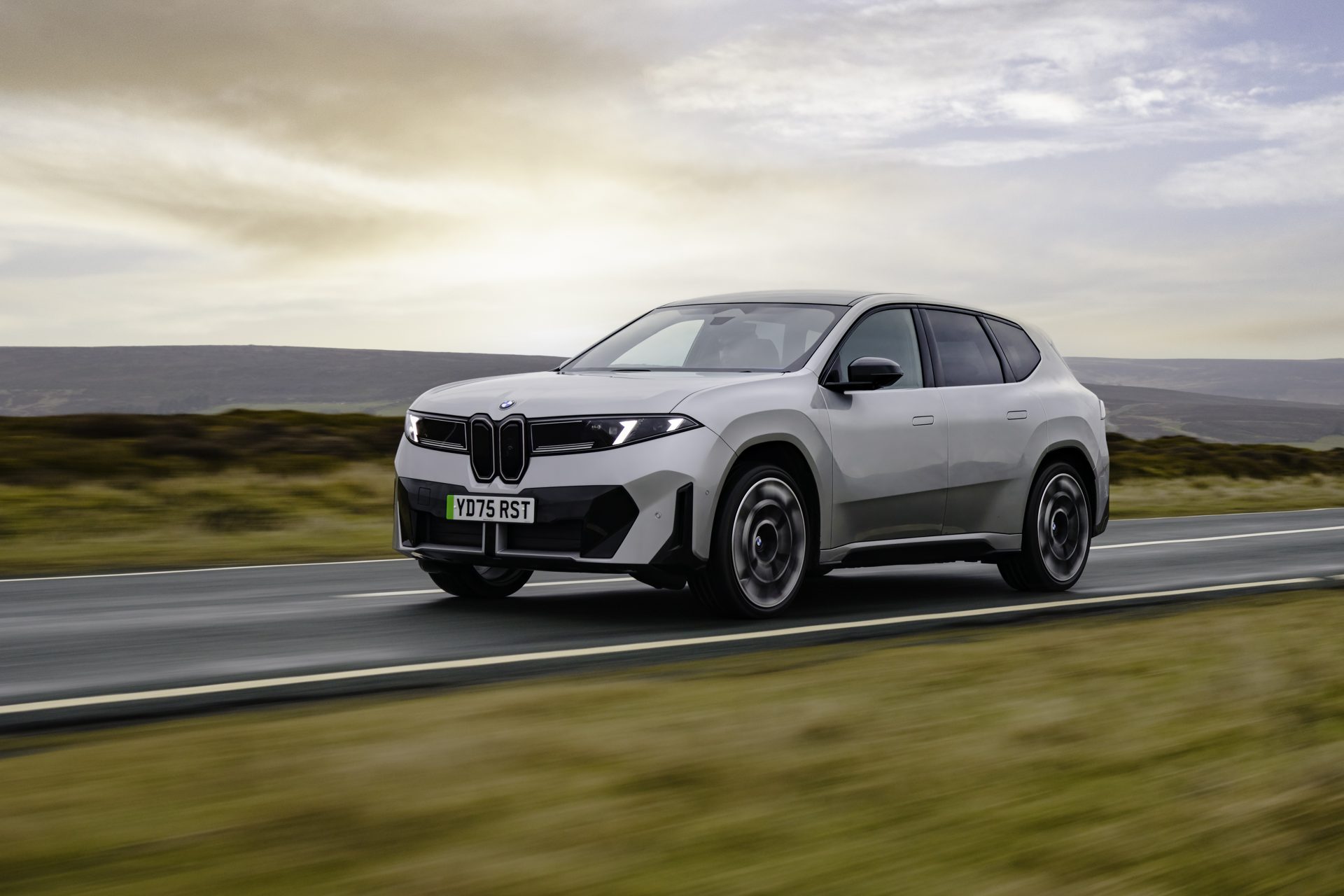
The new BMW iX3 on UK roads — the 2026 state of the art that used-EV batteries get measured against. Image: BMW Group
That charging point is the one most buyers miss. The Geotab data is clear that EVs leaning heavily on 100kW-plus rapid charging degrade nearer 3% a year, while those mostly charged gently at home sit closer to half that, and a hot climate adds a little more again. So a high-mileage car owned by someone who charged at home overnight can be in better health than a low-mileage car that lived on motorway rapids. When you are weighing a used EV, the ownership history matters as much as the number on the dash, a theme we return to in our guide to what an 8-year battery warranty really covers.
What 85% of a battery really feels like
Percentages are abstract, so translate them. Take a used EV that left the factory with a 250-mile range. At a healthy 85% state of health, eight or nine years in, it will cover around 210 miles on a full charge in mild conditions, and less in a cold snap. For most drivers, whose daily mileage is a fraction of that, the loss is invisible: you plug in at home and never see the bottom of the battery. It only bites if you regularly drive close to the car’s limit or rely on it for long motorway runs in winter, when a 15% haircut on range plus cold-weather losses can turn a one-stop journey into a two-stop one. The honest question is not “how degraded is it?” but “is the range it has left comfortably more than I need?”
That reframing stops you overpaying for headroom you will never use. A five-year-old EV at 93% costs more than an eight-year-old one at 85%, but if your commute is 40 miles a day, both have range to spare and the older car is the better buy. Battery health is a floor to check, not a number to maximise. The one exception is buying near the end of the warranty term: a car at 72% with two years of cover left is a very different risk to one at 90%, because if it slips below the threshold while still warranted the maker pays for the fix, and if it slips the week after cover ends, you do. That single timing point is worth more than any seller’s reassurance, and it is why the warranty paperwork matters as much as the battery reading.
A modern EV pack is built to outlast the car’s first decade — the right charging habits keep it that way. Image: BMW Group
The three checks I would not skip
Your protection comes down to three things, and I would treat them as non-negotiable. First, get an independent state-of-health certificate; plenty of specialists now read the battery management system and give you a percentage, and a seller refusing one is a seller telling you something. Second, confirm the warranty transfers to you and check exactly what triggers it: most makers, Nissan included, guarantee the battery for around eight years or 100,000 miles down to roughly 70% capacity (terms correct as of 2026), and a battery that falls below is refurbished or replaced. Third, match the real-world range to your actual need with a margin for winter, because a healthy 85% battery is still a smaller battery. Do those and the degradation question is answered. Our pieces on the Volvo XC40 Recharge battery checks and why summer 2026 favours the used EV buyer take the same evidence further.
How to keep the battery you buy healthy
Once the car is on your drive, the pack’s future is largely in your hands, and the habits are not complicated. I would charge to 80% for daily use and save a 100% charge for the morning of a long trip, because time spent sitting at full is what lithium chemistry resents most. Lean on a home wallbox or workplace charger for the bulk of your miles and treat rapid charging as a motorway tool rather than a routine, which is exactly the pattern behind the gentler degradation figures above. In winter, pre-condition the cabin while the car is still plugged in, so the battery warms itself on mains power rather than its own reserves. And keep the software current: updates refine how the battery management system balances the cells, and an accurate BMS is what makes your next state-of-health reading trustworthy when the time eventually comes to sell the car on.
Buyer action
Where to check next
Use this as the final check before paying a deposit, signing finance paperwork or relying on a headline monthly figure.
We use cookies to make this site work, measure how it is used, and (with your consent) personalise advertising. Strictly necessary cookies always run. Analytics and advertising cookies run only if you accept. See our Cookie Policy and Privacy Policy.
Car Deal Expert is a trading name of Greyline Technologies Limited. Registered in England & Wales, company no. 16673047. Registered office: 71-75 Shelton Street, London WC2H 9JQ.