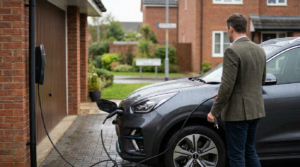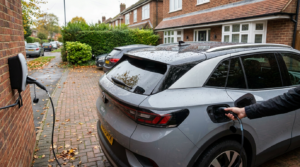
Genesis GV60 salary sacrifice is the quietest strong play on a 2026 payroll shortlist: the same 800V e-GMP underpinnings as a Hyundai Ioniq 5 or Kia EV6, wrapped in a genuinely premium cabin and a five-year care plan, at a 4 percent benefit-in-kind rate that a higher-rate taxpayer can turn into a net cost near £597 a month on a representative £894 gross sacrifice. We show the working for the 20, 40 and 45 percent bands, flag the early-exit traps, and explain why this underrated badge can undercut a Tesla or BMW on take-home pay.
What real owners say (CDE data)
CDE cross-referenced published Genesis GV60 owner discussion on the Genesis Owners forum and Speak EV, plus the DVSA recall database and the GV60’s What Car and DrivingElectric road-test notes, checked 1 June 2026.
- Most-praised aspects: cabin quality and material feel (the recurring “feels above its price” theme), the 800V rapid-charging speed, and Genesis dealer/collection service.
- Most-criticised aspects: firm low-speed ride on the 21-inch wheels, real-world motorway range falling well short of the WLTP figure, and a thin UK dealer/Studio network outside the big cities.
- Reliability signal: the GV60 shares its e-GMP mechanicals with the high-volume Ioniq 5 and EV6, a known and well-supported platform; we found no GV60-specific DVSA safety recall outstanding at the date checked, though owners should always run the live lookup before signing.
Why the GV60 is the left-field pick on a payroll scheme
Most sal-sac shortlists default to a Tesla Model Y, a BMW iX1 or an Audi Q4 e-tron. The Genesis GV60 rarely makes the list, and that is the opportunity. It sits on the same 800V Electric Global Modular Platform (e-GMP) as the Hyundai Ioniq 5 and Kia EV6, so the engineering is proven and parts-supported, but Genesis dresses it in a quilted-Nappa cabin and a service package that the mainstream Korean siblings do not offer. For a salary-sacrifice driver, who never owns the car and hands it back at the end of term, that combination of low operating risk and high perceived value is exactly what you want. You are effectively leasing a near-£60,000 premium EV through your payroll while the taxman funds a large slice of it.
For a wider view on how the same badge behaves in the used market, our Genesis GV70 used buyer’s guide shows the brand’s depreciation and ownership pattern, which matters even on a scheme because the residual value is baked into your monthly rental.

What salary sacrifice is, and who actually qualifies
Salary sacrifice swaps an agreed slice of your gross (pre-tax) salary for a non-cash benefit, in this case a fully maintained EV. Because the sacrifice comes out before Income Tax and National Insurance are calculated, you pay tax and NI on a smaller salary, and the saving is the difference. To run a scheme your employer has to offer one (through a provider such as Octopus EV, loveelectric or The Electric Car Scheme) and you have to be a PAYE employee, not a sole trader paying yourself by dividend.
The hard floor is the National Minimum Wage. A sacrifice cannot drag your gross pay below the statutory minimum, which from April 2026 is £12.71 an hour for workers aged 21 and over, per gov.uk National Minimum Wage rates. On a near-£60,000 car the gross sacrifice is around £894 a month, so this floor only bites for lower earners; a senior employee clears it comfortably. If you are weighing providers rather than cars, our comparison of Octopus EV vs loveelectric vs Tusker scheme rules sets out what each bundles in.
How the tax works: P11D, BiK and the NI saving
You pay a small company-car tax, Benefit-in-Kind (BiK), on the car you drive. For a fully electric, zero-emission car the BiK appropriate percentage is 4 percent for the 2026/27 tax year, per HMRC’s published company-car appropriate-percentage schedule (last checked by CDE on 1 June 2026). The rate is legislated to rise to 5 percent in 2027/28, then in 2-point steps, so over a four-year term your BiK bill climbs; we treat the 4 percent only as the current-year figure and never as a fixed multi-year cost.

The cash benefit is simply P11D value x BiK rate x your marginal Income Tax rate. Using the GV60 Sport’s £58,515 on-the-road price as a representative P11D proxy (the true P11D excludes the first-year VED and the small registration fee, so it is marginally lower; figure from the Genesis UK GV60 price list), the taxable benefit is £58,515 x 4 percent = £2,341 a year. A 40 percent taxpayer therefore pays roughly £936 a year, about £78 a month, in BiK. On top of the Income Tax you save on the sacrifice, you also save employee National Insurance: 8 percent on earnings between the primary threshold and the Upper Earnings Limit, dropping to 2 percent above it, per gov.uk National Insurance rates. That UEL detail is why a basic-rate driver’s NI saving is far larger than a higher earner’s.
Three worked case studies: 20, 40 and 45 percent bands
The tables below take a representative £894 a month gross sacrifice for a GV60 Sport on a 48-month, 5,000-mile-a-year deal (the published example figure from the loveelectric GV60 scheme page, with maintenance, servicing and tyres bundled, insurance optional). We then apply the rest-of-UK Income Tax bands, the NI rates above, and the 4 percent BiK cost. Every rate cell carries its source. Your own quote will differ with salary, provider and options.

| 20% basic-rate taxpayer | Monthly |
|---|---|
| Gross sacrifice (inc VAT) | £894.00 |
| Income Tax saving (20%) | £178.80 |
| Employee NI saving (8%) | £71.52 |
| BiK cost (£2,341 x 20% / 12) | £39.01 |
| Net monthly cost | £682.69 |
| 40% higher-rate taxpayer | Monthly |
|---|---|
| Gross sacrifice (inc VAT) | £894.00 |
| Income Tax saving (40%) | £357.60 |
| Employee NI saving (2%, above UEL) | £17.88 |
| BiK cost (£2,341 x 40% / 12) | £78.02 |
| Net monthly cost | £596.54 |
| 45% additional-rate taxpayer | Monthly |
|---|---|
| Gross sacrifice (inc VAT) | £894.00 |
| Income Tax saving (45%) | £402.30 |
| Employee NI saving (2%, above UEL) | £17.88 |
| BiK cost (£2,341 x 45% / 12) | £87.77 |
| Net monthly cost | £561.59 |
Scottish taxpayers, read this: Scotland sets its own Income Tax bands and rates, including an advanced and a top rate, per gov.uk Scottish Income Tax. A Scottish higher or top-rate payer relieves the sacrifice at a different marginal rate, so the Income Tax saving column above will not match; the NI and BiK columns are UK-wide and unchanged. Use your own Scottish marginal rate in the first saving line.
The saving versus a personal lease, and your take-home hit
The honest comparison is sal-sac against a personal contract hire (PCH) you would pay from net, taxed income. The Electric Car Scheme’s own published GV60 example puts a retail lease at £766 a month against £504 through salary sacrifice, a saving of roughly £262 driven by £306 of Income Tax relief and £15 of NI, per The Electric Car Scheme’s Genesis explainer. Our own higher-rate model lands in the same territory: about £597 net through the scheme against a £894-equivalent if you funded it from take-home pay. The trade-off is the reduction in gross salary, which can touch pension contributions, mortgage-affordability assessments and any benefits tied to salary, so check those before you commit.
The e-GMP hardware: 800V charging, AWD and Boost
The GV60’s case is not just badge and service; the platform is genuinely quick to live with. Its 800V architecture supports DC rapid charging up to 240kW, so a 10 to 80 percent top-up is a coffee stop rather than a lunch break, and all 2026 trims now use an 84kWh battery (Genesis UK price list). The rear-drive Pure makes 229PS for a WLTP-combined 348 miles; the dual-motor AWD Sport produces 318PS (234kW) for 318 miles; the AWD Performance pushes 490PS (360kW) for 311 miles. Performance and Sport AWD models add a Boost button that delivers a 10-second power surge of an extra 20kW per motor. For a payroll driver the sweet spot is the Sport: all-wheel drive, the most usable balance of range and pace, and the £58,515 list that anchors the maths above.

Genesis ownership perks the spreadsheet misses
The numbers above ignore what Genesis bolts on, and it is the real reason the GV60 reads as a premium choice rather than a rebadged Hyundai. Every new Genesis carries a 5-Year Care Plan: five years of scheduled servicing, a courtesy car when yours is collected, at-home collection and return within 50km of a Genesis Studio or retail partner, five years of roadside assistance, and free over-the-air software and map updates. The manufacturer warranty runs five years with unlimited mileage on passenger cars, per the Genesis UK warranty terms. On a four-year sal-sac you are inside that cover for the whole term, with the provider handling maintenance on top.
Common misconceptions that cost drivers money
Three traps catch sal-sac drivers. First, leaving your employer mid-term: most schemes are early-termination liable, and you may face an exit fee or have to hand the car back, so read the early-exit clause before you sign, not after. Second, assuming the BiK rate is frozen: it is 4 percent now but legislated to rise, so model the later years of a four-year deal at the higher percentages, not today’s. Third, assuming insurance and home charging are always bundled: loveelectric lists insurance as an optional add-on on the GV60, and not every provider includes a home charger, so confirm exactly what your monthly figure covers before you compare it with a personal lease.
Run these checks before you sign the sacrifice agreement
Before you commit a slice of gross salary for four years, work through the following:

- Confirm the live BiK rate and your marginal band on HMRC’s company-car appropriate-percentage page, and recompute the later years at the rising rate.
- Check your gross stays above the National Minimum Wage after the sacrifice, and ask payroll how it affects your pension contribution.
- Read the provider’s early-exit and redundancy terms in full; compare the GV60 quote against the Octopus EV scheme rules and the loveelectric terms for what is bundled.
- Run the live DVSA recall and vehicle lookup on the exact trim, and confirm the Genesis warranty and care-plan cover spans your full term via Genesis UK.
- Get the quote in writing with the insurance and charging position stated, so your net figure is like-for-like against a personal lease.
Genesis GV60 salary sacrifice is one of the strongest value plays on a 2026 payroll, precisely because so few drivers consider it. You get proven 800V e-GMP hardware, a cabin that genuinely reads as premium, a five-year care plan with courtesy car and collection, and a 4 percent BiK rate that drops a higher-rate driver’s net cost to roughly £597 a month on our representative figures. We would take the AWD Sport: it anchors the sensible maths, adds all-wheel-drive security, and avoids the Performance’s range and tyre penalties. The driver who should walk away is anyone likely to change jobs inside the term without checking the early-exit clause, or a lower earner for whom the NMW floor and smaller higher-rate relief weaken the case. Verify the BiK rate, the bundled insurance position and the early-exit terms in writing, and the left-field badge becomes the smart one.
How much is Genesis GV60 salary sacrifice a month for a higher-rate taxpayer?
What is the BiK rate on a Genesis GV60 in 2026?
Which GV60 trim is best for salary sacrifice?
Does salary sacrifice on a GV60 affect my pension or mortgage?
What happens to my GV60 sal-sac if I leave my job?
Is the Genesis GV60 reliable enough for a four-year scheme?
Related reading on CDE
Buyer action
EV and salary-sacrifice checks
Use this as the final check before paying a deposit, signing finance paperwork or relying on a headline monthly figure.