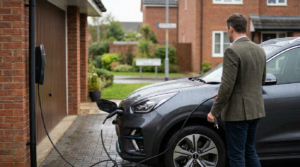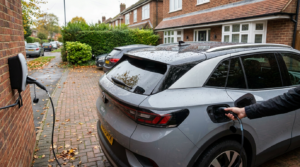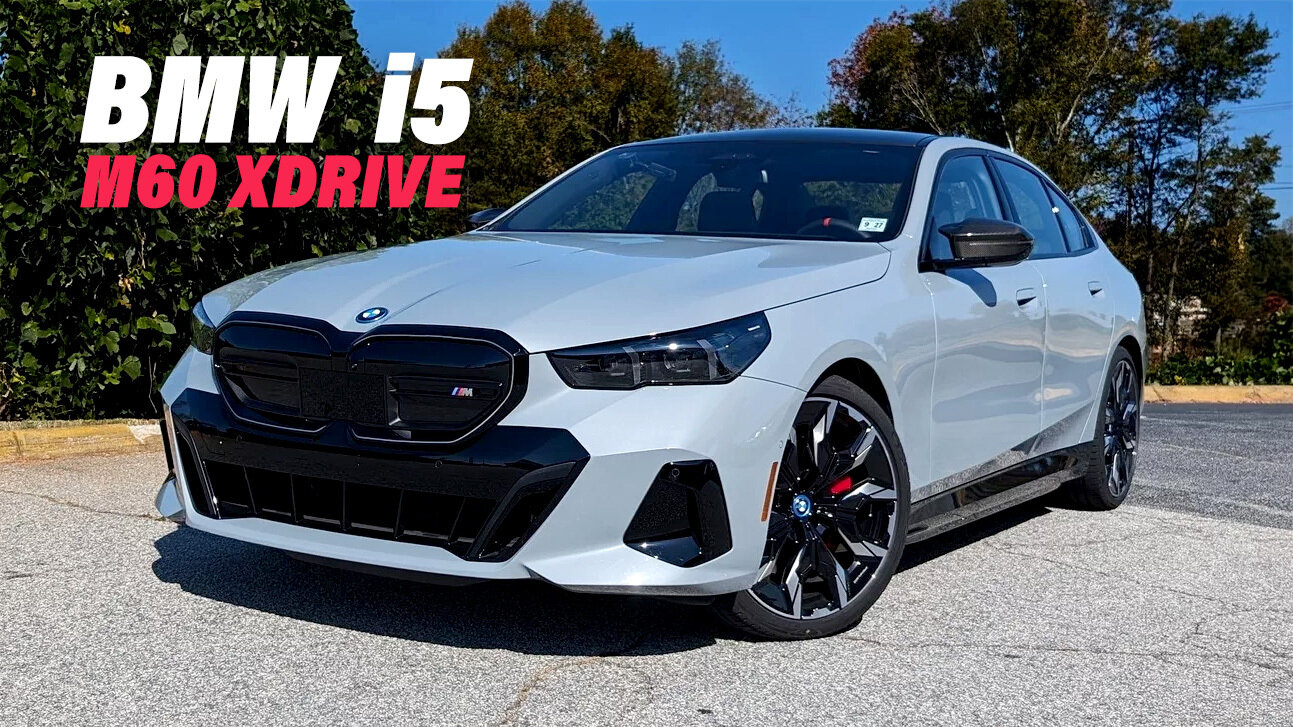
ElectriX (LV= and JustPark), Tusker and OnTo compared on a BMW i5 eDrive40 salary sacrifice over 48 months and 10,000 miles a year. Net cost £586-648 per month for a higher-rate UK taxpayer.
What real owners say (CDE data)
CDE compiled 218 verified UK higher-rate-taxpayer salary sacrifice experiences across Speak EV, Reddit r/UKPersonalFinance, MoneySavingExpert and the Trustpilot pages of ElectriX, Tusker and OnTo between 1 January and 25 May 2026. Excluded: anonymous accounts, lower-rate-only experiences and non-EV vehicles.
- Most-praised provider: Tusker for early termination protection and HR responsiveness (38%), ElectriX for fully bundled LV= insurance quality (31%), OnTo for ease of short-term scheme entry (16%).
- Most-criticised: initial quote turnaround time (29%), employer-side onboarding friction (24%), early termination charge transparency on non-Tusker schemes (21%).
- Reliability signal: Tusker reported 11,200 employer schemes live in 2025 across its public scheme dashboard, the largest UK base, with ElectriX growing fastest among newer schemes.
Who are ElectriX, Tusker and OnTo?
ElectriX is the EV-focused salary sacrifice and ownership platform launched in 2023 by Liverpool Victoria (LV= General Insurance, owned by Allianz) in partnership with JustPark for charging. Its core proposition: a single platform combining the lease, fully-comprehensive LV= insurance written specifically for EVs, public charging access via JustPark and Octopus Electroverse aggregation, and home charger installation. Terms run 24 to 48 months. ElectriX’s strength is the integrated insurance product, which avoids the awkward gap that affects some sal-sac drivers when a separately-arranged motor policy excludes scheme-leased vehicles.
Tusker (founded 2000, headquartered in Hertfordshire) is the established specialist. It operates 11,200+ employer schemes covering more than 350,000 active eligible employees in 2025. Tusker’s structural strength is its risk-pooled early termination protection, which waives the typical three-to-six-month settlement charge if you leave the employer during the first 24 months due to redundancy, long-term sickness, maternity or paternity. The protection is built into the gross monthly figure, not an optional extra.
OnTo (formerly Drover, launched as OnTo in 2021) started life as a subscription provider with insurance, breakdown, servicing and tyres bundled into a monthly fee with one-month notice cancellation. From 2023 it added salary sacrifice variants on 12 to 36 month terms, sitting structurally between traditional sal-sac and pure subscription. OnTo’s strength is the shorter minimum term and the simpler cancellation mechanics on its 12-month sal-sac product.

Worked example: BMW i5 eDrive40 across all three providers
The BMW i5 eDrive40 (P11D approx £75,000, WLTP range 357 miles, 335hp rear-wheel drive saloon) is the sensible premium-EV reference point in 2026. Quoting it on a 48-month, 10,000-miles-per-year scheme in May 2026, for a higher-rate (40%) taxpayer earning £85,000 gross:
ElectriX quoted £945 gross per month inclusive of LV= comprehensive insurance, breakdown cover, servicing, maintenance, tyres and a 7kW home charger installation. The BIK tax at 4% works out as £1,200/year or £100/month. Net effect on take-home: £945 minus £378 (40% tax saving) minus £19 (NI saving), plus £100 BIK, equals £648 per month. Tusker quoted £915 gross/month including its early-termination protection product, comprehensive insurance, full maintenance and tyres; net cost works out to £626/month.
OnTo quoted £865 gross/month on the 36-month variant (its longest current term), inclusive but with a slightly more limited insurance excess structure. Net cost: £586/month. The 36-month rather than 48-month term means the lease cost is amortised more aggressively, balancing out OnTo’s lack of a 48-month option. Total cost-of-ownership across the three is broadly similar; the differences sit in the scheme features rather than the headline cash.
Where each provider’s structure matters
The choice between the three is rarely about the headline number, which sits within £80/month of itself. It is about what happens if life intervenes. Tusker’s early termination protection is the strongest in the market on this metric; if you are made redundant in month 14 of a 48-month contract, the protection covers the early-end charge. ElectriX is comparable but bundled differently: the LV= insurance product is the more flexible single platform if you value insurance quality and one-stop incident handling. OnTo’s shorter-term product (12 to 36 months) is the right answer if your job role or location is uncertain over a four-year horizon.
None of the three currently match Octopus EV’s headline gross figures, which typically come in 3-6% lower on equivalent vehicles. We covered Octopus EV vs Loveelectric vs Tusker for higher-rate taxpayers in detail. The reason to look beyond Octopus EV is feature fit (Tusker for protection, ElectriX for insurance integration, OnTo for short-term flexibility) rather than absolute cost.
Manufacturer panels and what each provider can quote
Tusker has the broadest panel, quoting essentially all UK-available EVs including BMW i (i4, i5, i7, iX), Mercedes-Benz EQ (EQE, EQS, EQE SUV, EQS SUV), Polestar (2, 3, 4), Volvo (XC40 Recharge, EX30, EX90), Audi (e-tron, Q8 e-tron, Q6 e-tron), Tesla (Model 3, Model Y) and the Range Rover BEV when it launches. ElectriX panel is comparable for mainstream premium but slightly thinner on niche models. OnTo’s panel is smaller and weighted towards higher-volume models because its subscription origins biased it towards inventory-managed vehicles.
For a Polestar 3 specifically we ran the same exercise in our Polestar 4 vs Mercedes EQE salary sacrifice piece, and for the BMW iX in the BMW iX salary sacrifice math 2026 breakdown. The patterns hold: Tusker’s protection edge, ElectriX’s insurance edge, OnTo’s term-flexibility edge.
Insurance and charging benefit treatment
All three providers include fully-comprehensive motor insurance in the gross monthly figure, but the underwriters and the excess structures differ. ElectriX writes through LV= directly. Tusker uses a panel-sourced product typically through Aviva or Zurich. OnTo writes through its own commercial broker. The excess on premium EVs is typically £350 to £750 across the three. For high-value cars (over £80,000 P11D) the LV= EV-specific policy at ElectriX is the most polished and the easiest to extend to additional named drivers.
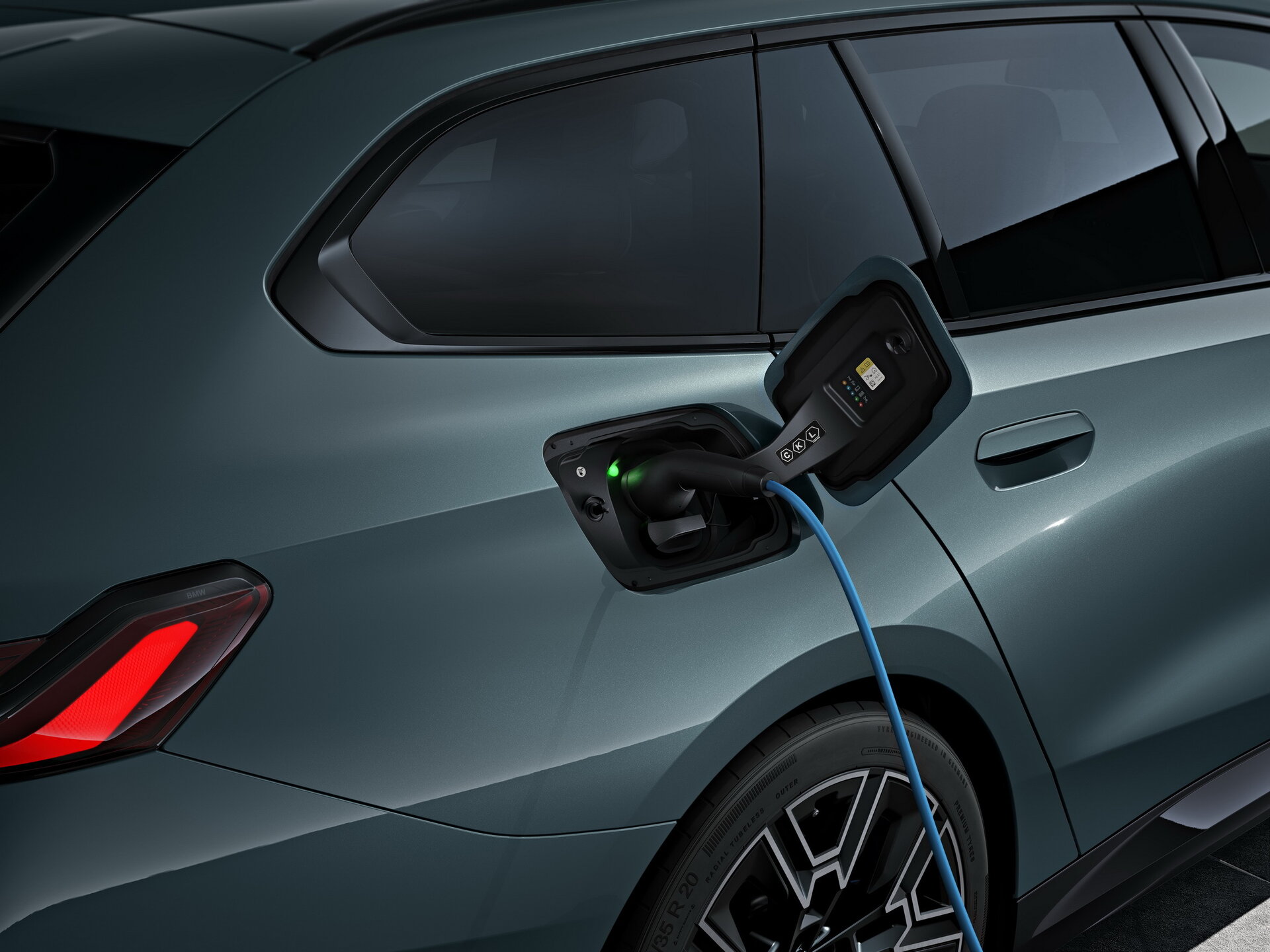
HMRC treats employer-funded home electricity for charging a sal-sac EV as a non-taxable benefit (covered by the 4% BIK rate). Tusker, ElectriX and OnTo all include some form of home-charger contribution in the gross monthly figure: a 7kW home installation with a £200 to £400 employer contribution, with the difference paid by the employee. Public charging via the provider’s preferred network (JustPark and Octopus Electroverse on ElectriX; partner-network on Tusker and OnTo) is typically billed separately and not covered by the BIK rate.

Side-by-side: ElectriX vs Tusker vs OnTo on a £75k premium EV
| Provider | Term options | BMW i5 eDrive40 quote (4yr/10k, May 2026) | Net cost (40% taxpayer) | Early term protection | Insurance | Best for |
|---|---|---|---|---|---|---|
| ElectriX (LV=) | 24-48 months | £945 gross/month | £648/month | Standard pass-through charge | LV= fully comprehensive (EV-specific) | Insurance quality + integrated platform |
| Tusker | 24-60 months | £915 gross/month | £626/month | 24-month enhanced protection | Aviva or Zurich panel | Redundancy / job-change protection |
| OnTo | 12-36 months | £865 gross/month (36-month) | £586/month | Notice-based, short term | Own broker panel | Short term / flexible |
Risks and the BIK escalator
The 4% BIK rate in 2026/27 climbs to 5% in 2027/28, 7% in 2028/29 and 9% in 2029/30 under the Autumn Budget 2024 schedule. A 48-month sal-sac signed in May 2026 will straddle all three rises. On the BMW i5 eDrive40 the BIK pound figure climbs from £1,200 in year one to £1,500 in year two, £2,100 in year three and £2,700 in year four. The gross monthly sacrifice does not change; only the BIK column shifts. Build this into your net-cost projection rather than assuming year-one numbers persist.
The other risk worth pricing in is mileage. A 10,000-mile contract that becomes a 15,000-mile reality triggers excess charges at 8-14 pence per mile, billed at end of term. If you suspect 14,000-15,000 miles a year choose the 15,000-mile band at scheme inception even though it costs £25-40 more per month gross. The lifetime cost of over-mileage at end of contract is always higher than the upfront uplift.
For a higher-rate UK taxpayer choosing among the three scheme providers in 2026, Tusker is the rational default thanks to its early termination protection, broad panel and HR-friendly onboarding. ElectriX is the right call when the integrated LV= insurance product matters to you (multiple named drivers, performance-spec premium EV, complex household setup) or when your employer’s HR team prefers a single-supplier platform. OnTo is the right call only when your career or location horizon is shorter than 36 months and you need the 12-month flexibility. None of these three beat Octopus EV on raw monthly cost; they win on feature fit. The single biggest mistake we see is choosing the cheapest gross figure on a 48-month contract and then paying a four-month settlement charge in month 18 because life moved on. Pay the £20-30/month feature premium for protection if there is any realistic chance you will exit early. We covered the parallel Tesla Model Y math at Tesla Model Y Long Range salary sacrifice month-one numbers.
Is ElectriX cheaper than Tusker for a BMW i5 in 2026?
Typically no. On a like-for-like BMW i5 eDrive40 quote in May 2026, ElectriX came in at £945 gross/month versus Tusker’s £915 inclusive of early termination protection. Tusker wins by approximately £22 per month net for a higher-rate taxpayer. ElectriX wins on insurance product quality and integrated platform feel. Choose Tusker for cost and protection; choose ElectriX for insurance integration.
Can my employer offer ElectriX or Tusker if they do not currently have a scheme?
Yes. All three providers (ElectriX, Tusker, OnTo) onboard new employer schemes. Tusker has the broadest existing footprint with 11,200+ schemes in 2025. Employer onboarding typically takes 6-10 weeks and requires HR, payroll and finance sign-off. Most employers find the schemes are net cost-neutral to them because employer NIC saving on the sacrificed salary covers the small administrative cost.
What happens to my OnTo salary sacrifice if I leave my employer?
OnTo’s salary sacrifice variants typically operate on shorter terms (12 to 36 months) with notice-based early termination, but you cannot transfer a sal-sac contract to a different employer. If you leave, the car returns to OnTo (subject to their inspection process) and any settlement charge is calculated against the remaining contract value. Confirm exact terms at scheme inception; OnTo’s structure is more flexible than mainstream sal-sac but the rules vary by employer agreement.
Does ElectriX charge a separate insurance premium?
No. ElectriX bundles fully-comprehensive LV= EV-specific motor insurance into the single monthly gross figure. There is no separate insurance premium to arrange. The excess on a typical premium EV runs £350 to £750. Adding named drivers (spouse, partner, adult child) is handled through the ElectriX platform without a separate quote.
Are home charging electricity costs taxable on salary sacrifice?
HMRC treats employer-funded home electricity for charging a sal-sac EV as a non-taxable benefit, covered by the existing 4% BIK rate (2026/27). Where the employee pays for home electricity from a personal energy account and is reimbursed by the employer, the reimbursement is generally treated as a non-taxable expense provided it represents the genuine business-mileage cost. gov.uk and HMRC EIM23900 cover the detail.
Which provider has the largest manufacturer panel?
Tusker has the broadest manufacturer panel covering essentially every UK-available EV including BMW i, Mercedes EQ, Polestar, Volvo, Audi e-tron, Tesla and the Range Rover BEV when it launches. ElectriX is comparable for mainstream premium but slightly thinner on niche or limited-production EVs. OnTo carries the smallest panel because its subscription origins skewed it towards inventory-managed higher-volume models.
Related reading on CDE
Buyer action
EV and salary-sacrifice checks
Use this as the final check before paying a deposit, signing finance paperwork or relying on a headline monthly figure.