
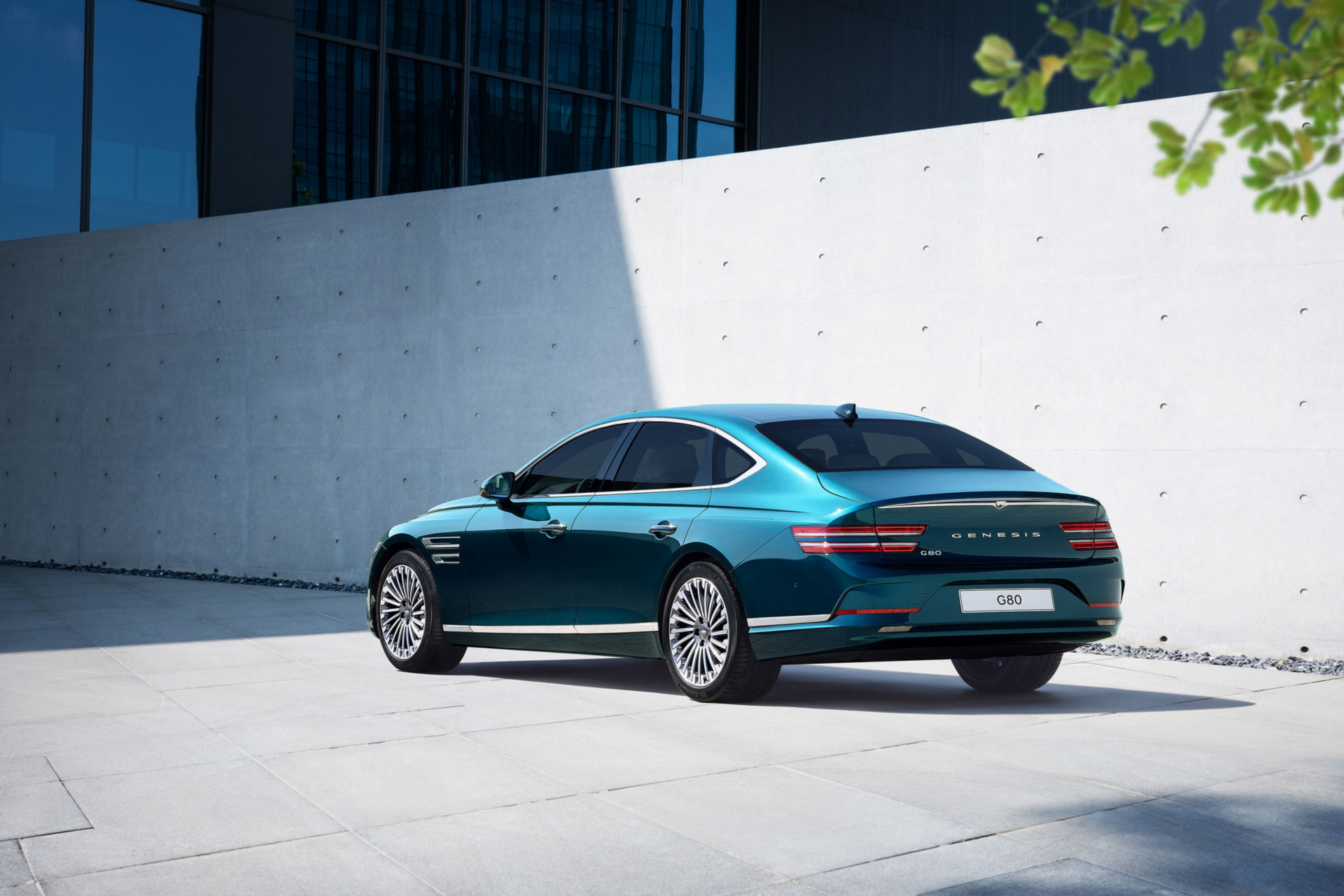
Genesis Electrified G80 salary sacrifice is the executive-saloon wildcard most UK payroll shortlists never reach, and the numbers explain why it deserves a look: at the 4 percent benefit-in-kind rate for the 2026/27 tax year, a higher-rate taxpayer can run this £75,615 electric saloon for a net cost close to £515 a month, against a personal lease nearer £713. It is the under-the-radar alternative to a BMW i5, a Mercedes EQE or an Audi A6 e-tron, and the standard kit plus Genesis Care Plan make the case stronger than the badge suggests.
What real owners say (CDE data)
- Most-praised aspects: the ride and cabin hush, the five-year Genesis Care ownership package, and a level of standard equipment that German rivals charge options money for.
- Most-criticised aspects: a small UK dealer network, slower used-value data than the established premium badges, and a boot squeezed by the saloon body versus the GV70 crossover.
- Reliability signal: UK fleet data is still thin on this low-volume saloon, but Genesis draws on Hyundai Motor Group EV powertrain and battery engineering, and Genesis UK covers the high-voltage battery under its published warranty, so the early signal is cautiously positive rather than proven.
Who can use salary sacrifice, and the minimum wage floor
Salary sacrifice lets you give up part of your gross pay in exchange for a fully insured, maintained electric car leased through your employer’s scheme provider. You qualify if your employer offers a scheme (Octopus EV, Loveelectric, Tusker and others run them), you are on PAYE, and the sacrifice does not drag your pay below the National Minimum Wage. That floor is the only hard eligibility test for most people, and on a car at this level it rarely bites: a gross sacrifice of around £713 a month needs a comfortable senior salary to clear the minimum wage threshold, which is exactly the audience Genesis is chasing. If you are weighing a scheme against taking the cash instead, our breakdown of salary sacrifice versus a car allowance for a higher-rate EV buyer sets out where each one wins.
How the tax works: P11D, BiK rate and the NI saving
Three numbers drive the benefit. The P11D value is close to the on-the-road price: the Electrified G80 lists from £75,615, so after deducting the £10 first-year VED for a zero-emission car and the £55 first-registration fee, the P11D lands at roughly £75,550. The appropriate percentage for a fully electric company car is 4 percent in 2026/27, per HMRC’s published company-car appropriate percentages (checked 7 June 2026). That gives a taxable benefit of about £3,022 a year. You then pay Income Tax on that benefit at your marginal rate, while the gross sacrifice itself saves you both Income Tax and National Insurance. The result for a 40 percent taxpayer with the Genesis nets out far below the personal-lease figure, which is the whole point of running an EV this way rather than buying with taxed income.
Genesis Electrified G80 salary sacrifice: three worked case studies
The tables below take a representative £713.43 a month gross sacrifice inc VAT, the published personal-lease figure for the Electrified G80 from Nationwide Vehicle Contracts (checked 7 June 2026); a real scheme quote will differ with term, mileage and your provider, so treat these as the shape of the deal rather than a binding figure. Income Tax saving uses your marginal rate; the NI saving uses 8 percent for a basic-rate earner and 2 percent for higher earners above the upper earnings limit, on rest-of-UK 2025/26 rates from gov.uk (Scottish bands differ). Every row ties out: net monthly cost equals gross sacrifice minus the Income Tax saving minus the NI saving plus the monthly BiK cost.

| 20% basic-rate taxpayer | Monthly |
|---|---|
| Gross sacrifice (inc VAT) | £713.43 |
| Income Tax saving (20%) | minus £142.69 |
| NI saving (8%) | minus £57.07 |
| BiK cost (4%, 2026/27) | plus £50.37 |
| Net monthly cost | £564.04 |
| 40% higher-rate taxpayer | Monthly |
|---|---|
| Gross sacrifice (inc VAT) | £713.43 |
| Income Tax saving (40%) | minus £285.37 |
| NI saving (2%) | minus £14.27 |
| BiK cost (4%, 2026/27) | plus £100.73 |
| Net monthly cost | £514.52 |
| 45% additional-rate taxpayer | Monthly |
|---|---|
| Gross sacrifice (inc VAT) | £713.43 |
| Income Tax saving (45%) | minus £321.04 |
| NI saving (2%) | minus £14.27 |
| BiK cost (4%, 2026/27) | plus £113.33 |
| Net monthly cost | £491.44 |
The pattern is the one every sal-sac EV shares: the higher your marginal rate, the larger the relief and the lower your net monthly cost. A 45 percent earner runs the Genesis for roughly £491 a month net against a £713 lease, a saving of about £222 a month before you count the insurance and maintenance the scheme usually folds in. The same maths drives our BMW i5 salary sacrifice net cost by tax band and the Mercedes EQE saloon salary sacrifice figures, the two cars most G80 shoppers cross-shop.
WLTP range, charging and the saloon-versus-SUV split
On the everyday numbers the Genesis holds its own with the German set. Genesis UK quotes 354 miles WLTP from the 94.5 kWh battery, and the 800V electrical architecture allows a 10 to 80 percent rapid charge in about 25 minutes on a 350 kW charger. The dual-motor all-wheel-drive powertrain produces 365 hp (272 kW / 370 PS) and 700 Nm, enough to make this a genuinely quick saloon as well as a quiet one. The body style is the real fork in the road for a sal-sac buyer: the Electrified G80 is the saloon, lower, longer and aimed at executive-car drivers, where the closely related crossover suits family duty. If a higher driving position and bigger boot matter more, the maths in our Genesis Electrified GV70 salary sacrifice guide covers the SUV sibling, and the smaller Genesis GV60 salary sacrifice breakdown sits a tier below on price.
What the Genesis Care Plan adds to the deal
The differentiator that does not show up in the headline lease figure is ownership cost. Genesis UK packages ownership through its five-year Genesis Care offer alongside the manufacturer warranty, a more inclusive starting point than the German rivals that often meter servicing out or push you towards a paid service pack; confirm the exact inclusions and any mileage cap with your dealer, as the detail can change. On a salary-sacrifice car the scheme provider typically handles maintenance anyway, but a generous care package reduces the risk of unexpected bills if you keep the car beyond the lease or your scheme passes through real servicing costs. It also matters for the high-voltage battery: Genesis covers it under its published warranty, and our explainer on what an eight-year EV battery warranty actually hides is worth reading before you sign, because the small print on degradation thresholds varies more than the headline year count suggests.

The saving versus an equivalent personal lease
Set the scheme against funding the same car with taxed income and the gap is stark. A 40 percent taxpayer paying £713 a month from a personal lease is using money that has already been taxed at 40 percent plus National Insurance; the sal-sac route nets the same car at roughly £515 a month because the sacrifice comes out of gross pay. Over a four-year term that difference is close to £9,500 before you factor in the insurance, maintenance and breakdown cover most schemes include. Whether the Genesis or a German rival wins on take-home comes down to the published lease rate each provider can secure, which is why it pays to compare scheme quotes directly; our look at Octopus EV against Loveelectric on scheme rules shows how much the provider, not just the car, moves the final number.
Misconceptions and the early-exit risk
Three things trip up sal-sac drivers, and the Genesis is no exception. First, the benefit-in-kind rate is not frozen: HMRC has the EV appropriate percentage rising to 5 percent in 2027/28, then 7 percent in 2028/29 and 9 percent in 2029/30, so the BiK line in your net cost roughly doubles for a higher-rate taxpayer over a four-year term, from about £101 a month today to nearer £176. It still beats a petrol company car comfortably, but build the rise into your planning rather than assuming today’s 4 percent holds. Second, leaving your employer mid-term can trigger early-exit charges, because the lease sits with the employer, not you; check the scheme’s early-termination protection before you commit. Third, insurance and home charging are not always inside the package, so confirm what is bundled. None of this is unique to Genesis, but the smaller dealer network makes the early-exit and servicing terms worth reading twice.
Where to check the Genesis before you commit
Before you put a Genesis on your payroll, run these checks so the deal that looks good on a spreadsheet survives contact with the small print.
- Confirm the live P11D and WLTP figure on the Genesis UK Electrified G80 page, as trim and wheel choice shift both.
- Read the current EV benefit-in-kind percentages on gov.uk and check whether a Budget has moved them since this was written.
- Get a real scheme quote from your provider (Octopus EV, Loveelectric, Tusker) with your exact term and mileage, not an online estimate.
- Ask your employer for the early-exit and redundancy protection wording, and whether it covers leaving voluntarily.
- Check what the quote includes: insurance, tyres, servicing and home-charging support are not always bundled.
- Compare the net monthly against a personal lease for the same car and term so you can see the true saving.
- Browse the broader CDE electric-car coverage for rival sal-sac maths on the BMW i5, Mercedes EQE and others before you decide.
Our view on Genesis Electrified G80 salary sacrifice: the tax case is genuinely strong, and the standard equipment plus the five-year Care Plan make it a smarter buy than the badge’s low profile suggests. For a 40 or 45 percent taxpayer who wants an executive saloon and is happy to look past the German trio, a net cost around £491 to £515 a month for a 354-mile, 800V luxury EV is hard to argue with. We would buy it if the saloon body suits your life, your employer’s scheme has clear early-exit protection, and a Genesis dealer is within sensible reach for servicing. We would walk away if you need the boot space and ride height of an SUV, in which case the GV70 is the better Genesis, or if your scheme cannot beat a German rival’s lease rate on the day. The strongest version of this deal is the one with boring paperwork: confirmed early-exit terms, a clear inclusion list, and the BiK rise built into your sums.
This article is general guidance, not personal tax, financial or legal advice. Salary-sacrifice outcomes depend on your salary, tax band, employer scheme rules and current HMRC rates, which can change at each Budget. Confirm the figures that apply to you with your employer, scheme provider and a qualified adviser, and check the current rates on gov.uk before committing.
How much does a Genesis Electrified G80 cost on salary sacrifice in 2026?
On a representative £713 a month gross sacrifice, a higher-rate (40 percent) taxpayer nets out around £515 a month in 2026/27, and a 45 percent taxpayer around £491, after the Income Tax and National Insurance savings and the small benefit-in-kind charge at the 4 percent EV rate. A real scheme quote varies with term, mileage and provider, so treat these as the shape of the deal.

What is the benefit-in-kind rate on the Electrified G80?
As a fully electric car it sits at the zero-emission appropriate percentage, which HMRC has set at 4 percent for 2026/27, rising to 5 percent in 2027/28, 7 percent in 2028/29 and 9 percent in 2029/30. On a roughly £75,550 P11D that is a taxable benefit of about £3,022 this year. Always check the current figure on gov.uk, as Budgets can change it.
What is the Genesis Electrified G80’s range and charging speed?
Genesis UK quotes 354 miles on the WLTP cycle from the 94.5 kWh battery. The 800V architecture supports a 10 to 80 percent rapid charge in about 25 minutes on a 350 kW charger, which is among the quickest in the executive-EV class and well ahead of many 400V rivals.
How does the Electrified G80 compare with the BMW i5 and Mercedes EQE?
It undercuts the German pair on standard equipment and matches them on the core sal-sac maths, since net cost is driven by P11D, the 4 percent BiK rate and your provider’s lease rate rather than the badge. The Genesis adds a five-year Care Plan as standard. The trade-offs are a smaller dealer network and thinner used-value data.

What happens to my Genesis salary-sacrifice car if I leave my job?
The lease sits with your employer, so leaving mid-term can trigger early-exit charges unless the scheme includes early-termination protection. Many providers offer cover for redundancy, long-term sickness or parental leave, but voluntary resignation is often treated differently. Read the scheme’s early-exit wording before you commit.
Is the Electrified G80 or the GV70 better for salary sacrifice?
The maths is similar because both use the 4 percent EV BiK rate and a comparable P11D. Choose on body style: the G80 is the lower, longer executive saloon, while the GV70 is the crossover with more boot space and a higher driving position. If family practicality matters most, the GV70 wins; if you want a traditional executive saloon, the G80 is the pick.