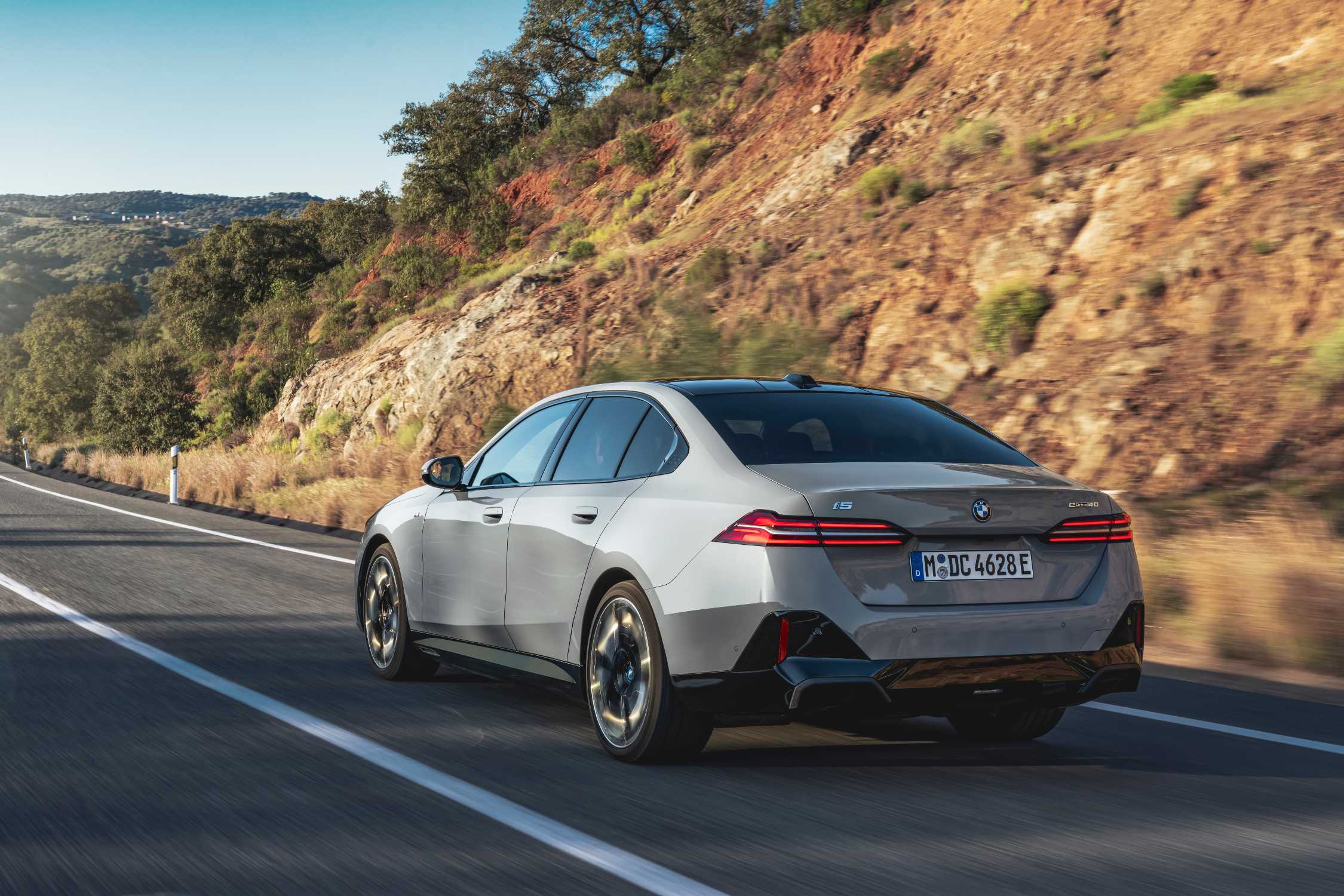
BMW i5 salary sacrifice turns an executive electric saloon into one of the most tax-efficient ways a higher earner can run a car in 2026. With the zero-emission company-car benefit-in-kind rate at 4% for the 2026/27 tax year, an i5 eDrive40 with a P11D of around £74,140 generates a taxable benefit of under £3,000 a year, so a 40% taxpayer pays roughly £99 a month in benefit-in-kind tax. This guide works the real numbers, by tax band, on verified HMRC rates and BMW UK list pricing.
The numbers that matter (CDE data)
The figures in this guide are read from two primary sources: the BMW UK i5 and 5 Series Saloon price list dated April 2026 for every P11D and OTR value, and HMRC’s published company-car appropriate-percentage tables for the benefit-in-kind rate, both checked on 3 June 2026. Recall status is verified against the DVSA recall service rather than estimated.
- Tax base: i5 eDrive40 M Sport P11D £74,140, M60 xDrive P11D £97,780, both at the 4% zero-emission BiK rate for 2026/27 (source: BMW UK price list, April 2026; HMRC appropriate-percentage tables).
- Running figures: eDrive40 WLTP range up to 582km (about 362 miles), peak DC charging around 205kW; insurance group 43 for the eDrive40 and 49 for the M60 (source: BMW UK price list, April 2026).
- Recall signal: owners should run the free DVSA recall lookup on any specific car, as 2024-build BMWs were covered by an Integrated Braking System recall; check the VIN before you commit to a scheme car.
Why BMW i5 salary sacrifice suits a higher earner
Salary sacrifice lets you give up a slice of gross pay in return for a fully electric car, paying for it before Income Tax and National Insurance are taken. The saving is largest for higher earners, which is exactly the audience the i5 targets: a senior manager or business owner on the 40% or 45% band who wants an executive saloon without the company-car tax pain that a petrol equivalent like the 520i would bring. That petrol 520i sits at a 32% BiK rate on BMW’s own April 2026 price list; the electric i5 sits at 4%. The gap is the whole story.
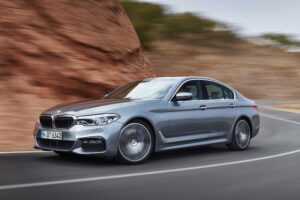
The car itself earns its place. The eDrive40 pairs a 340hp rear motor with an official WLTP range up to 582km (around 362 miles), and BMW quotes 0-62mph in six seconds. For the buyer weighing it against an SUV, our BMW iX3 salary sacrifice breakdown shows how the saloon and the crossover land at similar net figures once the benefit-in-kind maths settles.
How the tax works in 2026/27
Two separate savings stack up. First, the amount you sacrifice leaves your gross pay, so you never pay Income Tax or employee National Insurance on it. A 40% taxpayer sacrificing from the top of their salary saves 40% Income Tax plus 2% NI on every pound, so £1,000 of annual sacrifice costs them only £420 in lost take-home; a 45% additional-rate earner keeps even less, saving £470 per £1,000. Second, you do pay benefit-in-kind tax on the car, but the EV rate is tiny.
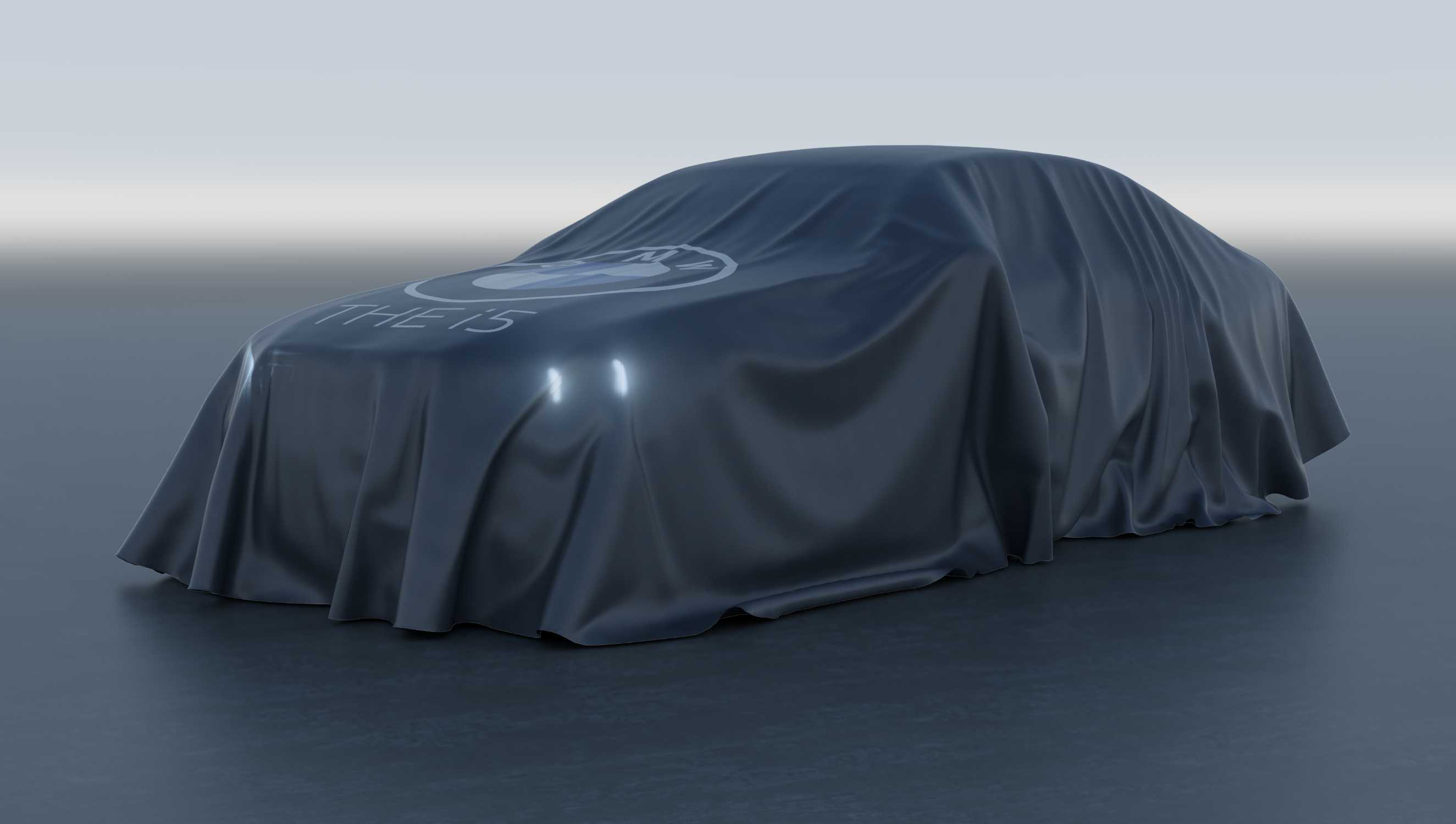
Per HMRC’s company-car appropriate-percentage tables, a car emitting 0 g/km of CO2 carries a 4% appropriate percentage for the 2026/27 tax year (checked 3 June 2026), rising by one point a year to 5% in 2027/28 and stepping up further after that. The taxable benefit is simply P11D value multiplied by that percentage; the tax you pay is that benefit multiplied by your marginal Income Tax rate. We unpack the full schedule in our 2026/27 company car tax explainer.
BMW i5 P11D values and BiK rate
The P11D value is the list price including VAT and delivery but excluding the first registration fee and road tax, and it is the figure HMRC uses for benefit-in-kind. We have taken these straight from the BMW UK price list dated April 2026, which prints the P11D value and the 2026/27 BiK rate in its own columns.
| BMW i5 variant | OTR price | P11D value | BiK rate (2026/27) |
|---|---|---|---|
| eDrive40 Sport Edition | £67,795 | £67,730 | 4% |
| eDrive40 M Sport | £74,205 | £74,140 | 4% |
| eDrive40 M Sport Pro | £77,205 | £77,140 | 4% |
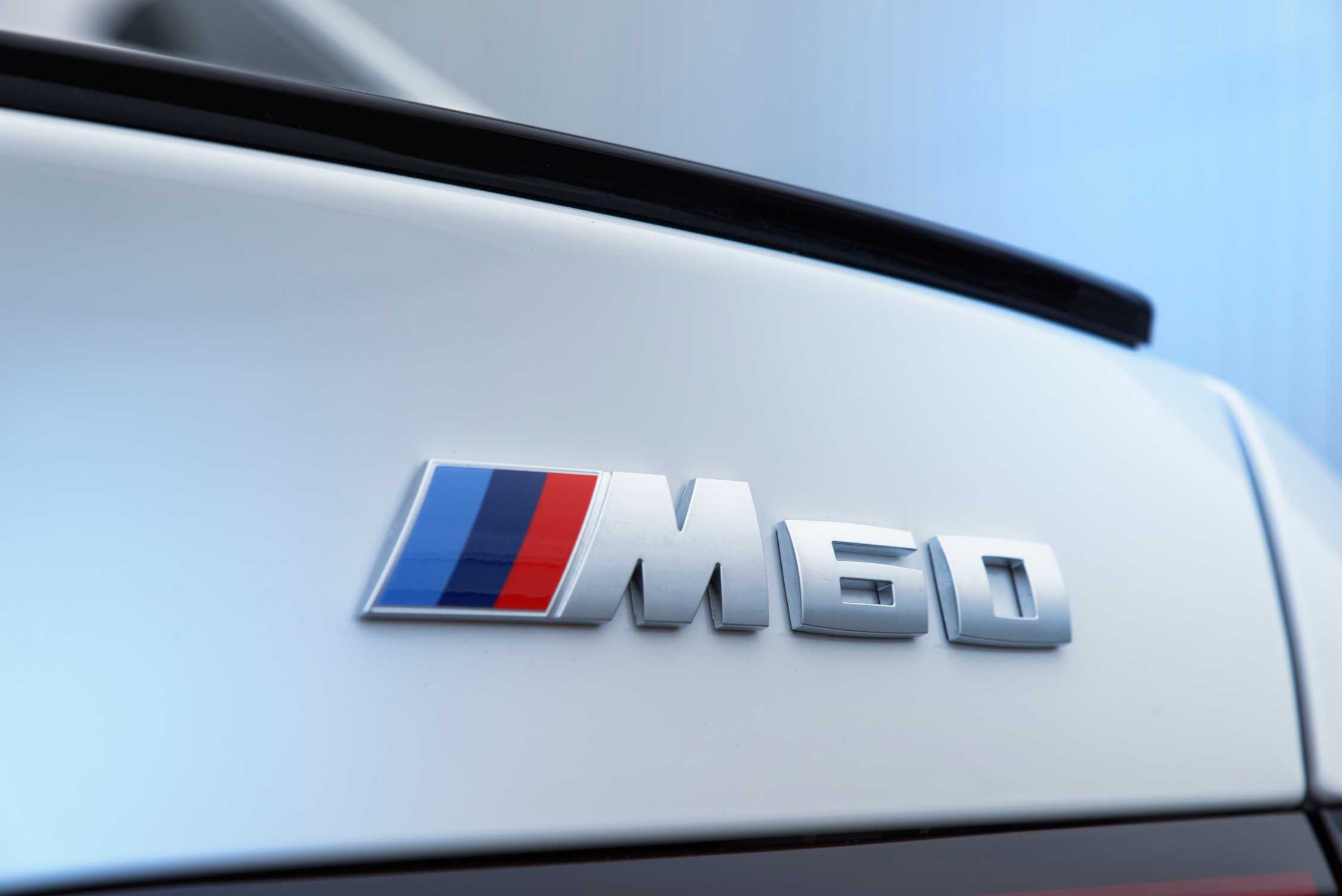
| M60 xDrive | £97,845 | £97,780 | 4% |
Month-one maths for a 40% and 45% taxpayer
Take the popular eDrive40 M Sport, P11D £74,140. The taxable benefit for 2026/27 is £74,140 x 4% = £2,966. A 40% taxpayer pays 40% of that, £1,186 a year or about £99 a month in benefit-in-kind tax. A 45% additional-rate taxpayer pays £1,335 a year, about £111 a month. Step up to the M60 xDrive at £97,780 P11D and the benefit is £3,911, so the BiK tax becomes roughly £130 a month at 40% and £147 a month at 45%. Those are the only numbers that are fixed by HMRC; the gross sacrifice itself depends on your provider, term and mileage.

| i5 eDrive40 M Sport (P11D £74,140) | 40% taxpayer | 45% taxpayer |
|---|---|---|
| Taxable benefit 2026/27 (4%) | £2,966 | £2,966 |
| BiK tax per year | £1,186 | £1,335 |
| BiK tax per month | ~£99 | ~£111 |
| Saving per £1,000 gross sacrificed | £420 | £470 |
Now the net cost by tax band. The gross monthly sacrifice depends entirely on your provider, term and mileage, so the figure below is illustrative: we take a £900 gross monthly sacrifice on an eDrive40 to show the shape, and you should replace it with your own scheme quote. The net monthly cost is the gross sacrifice reduced by your Income Tax and NI relief, then add back the benefit-in-kind tax. For a 40% taxpayer the relief is 42% (40% IT plus 2% NI); for a 45% taxpayer it is 47%.
| Net cost by band (illustrative £900 gross sacrifice) | 40% taxpayer | 45% taxpayer |
|---|---|---|
| Gross monthly sacrifice | £900 | £900 |
| Income Tax saving | £360 | £405 |
| Employee NI saving | £18 | £18 |
| Net pay reduction | £522 | £477 |
| Add: BiK tax (2026/27) | £99 | £111 |
| Net monthly cost | ~£621 | ~£588 |
The five-year picture, and why we model four
Most salary-sacrifice schemes run two to four years, and the published BiK trajectory is the reason the term matters. HMRC has legislated the zero-emission rate at 4% for 2026/27, 5% for 2027/28, 7% for 2028/29 and 9% for 2029/30. Beyond that, the rate for 2030/31 is not yet set and will be confirmed at a future Budget, so we model a four-year term where every rate is a published figure rather than a guess.
Across a four-year term the eDrive40 M Sport racks up about £7,414 in total benefit-in-kind tax for a 40% taxpayer, averaging £154 a month, or roughly £8,341 (about £174 a month) for a 45% earner. The M60 climbs to around £9,778 over four years at 40%, near £204 a month. The takeaway: budget for the BiK cost to rise each year, not stay at the month-one figure. If you want the equivalent numbers on the performance flagship, our BMW i5 M60 salary sacrifice maths goes deeper on the M60’s higher P11D.
Salary sacrifice versus PCP or cash
On PCP you pay from net income with no Income Tax or NI relief, and a £74,000 EV at a typical 8-10% APR carries thousands in interest over the term, plus you wear the depreciation risk through the guaranteed future value. Salary sacrifice flips both: the cost comes out of gross pay, and the scheme provider, not you, owns the residual-value risk because the car goes back at the end. Paying cash avoids interest but locks tens of thousands into a fast-depreciating asset and gives you no tax break at all. For a higher earner, the sacrifice route is usually cheaper in real take-home terms than financing the same car personally, the same pattern we found in our BMW iX salary sacrifice net cost breakdown.
The trade-off is flexibility. PCP and cash leave the car yours to sell; sacrifice ties you to an employer scheme. If you are comparing the i5 against rivals on the same payroll basis, the Tesla Model 3 salary sacrifice numbers show how a cheaper P11D shrinks the BiK line, while the BMW i4 salary sacrifice comparison is the natural step down within the BMW range.
Range, charging and the practical case
BMW quotes up to 582km WLTP (around 362 miles) for the eDrive40 and up to 516km for the dual-motor M60, with peak DC charging around 205kW for a 10-80% top-up in roughly 30 minutes on a capable charger. In owner reports a real-world 280-320 miles is realistic for the eDrive40 in mixed UK driving, dropping in cold weather. That is comfortably enough for a long commute or a regular intercity run on a single charge, and it is the eDrive40, not the thirstier M60, that most sacrifice drivers should pick for the range and the lower BiK base.
Charging at home on a smart EV tariff is where the running-cost case is won, and it is worth confirming whether your scheme bundles insurance, tyres and servicing, because not all do.

Common traps before you sign
Three things catch people out. First, the BiK rate rises each year, so the deal gets slightly more expensive over the term, not cheaper. Second, leaving your employer mid-term usually ends the arrangement, and early-exit terms vary sharply between providers, with some charging a settlement and others offering protection cover. Third, salary sacrifice cannot take your gross pay below the National Minimum Wage, which can cap how much lower earners can sacrifice, though that rarely binds the higher-rate audience the i5 suits.
The rate itself is not in dispute: HMRC’s appropriate-percentage tables list a 4% figure against the 0 g/km row for the 2026/27 tax year (accessed 3 June 2026), and BMW UK prints the same 4% rate in the BiK column of its April 2026 i5 price list. The two sources agree, which is why we are confident quoting the eDrive40’s roughly £99-a-month benefit-in-kind cost for a higher-rate taxpayer.
BMW i5 salary sacrifice is a strong case for a 40% or 45% taxpayer who can commit to a fixed term and has reliable home or workplace charging. At a 4% BiK rate the eDrive40 M Sport costs about £99 a month in benefit-in-kind tax for a higher-rate earner in 2026/27, a figure no petrol executive saloon can touch, and the scheme carries the depreciation risk you would otherwise wear on PCP or cash. Our view: pick the eDrive40 over the M60 unless you genuinely need the pace, because the lower P11D keeps the BiK line down and the single-motor range is the more usable car. We would walk away only if your employment looks unstable inside the term, or if the scheme does not bundle insurance and tyres and the early-exit terms are punitive. What would change our recommendation is a Budget that sharply accelerates the EV BiK rises beyond the published 9% for 2029/30.
What is the BMW i5 BiK rate for 2026/27?
How much does a BMW i5 cost a 40% taxpayer on salary sacrifice?
Is the i5 eDrive40 or M60 better for salary sacrifice?
What is the P11D value of a BMW i5?
Does salary sacrifice beat PCP on a BMW i5?
What happens to my BMW i5 sacrifice if I leave my job?
A note on scope: this is general consumer guidance, not personalised financial, tax or insurance advice. The figures here are illustrative and depend on your salary, tax band, employer scheme and personal circumstances. Check the current HMRC, FCA and MoneyHelper guidance and speak to a regulated adviser before you commit.
How to price up an i5 sacrifice deal
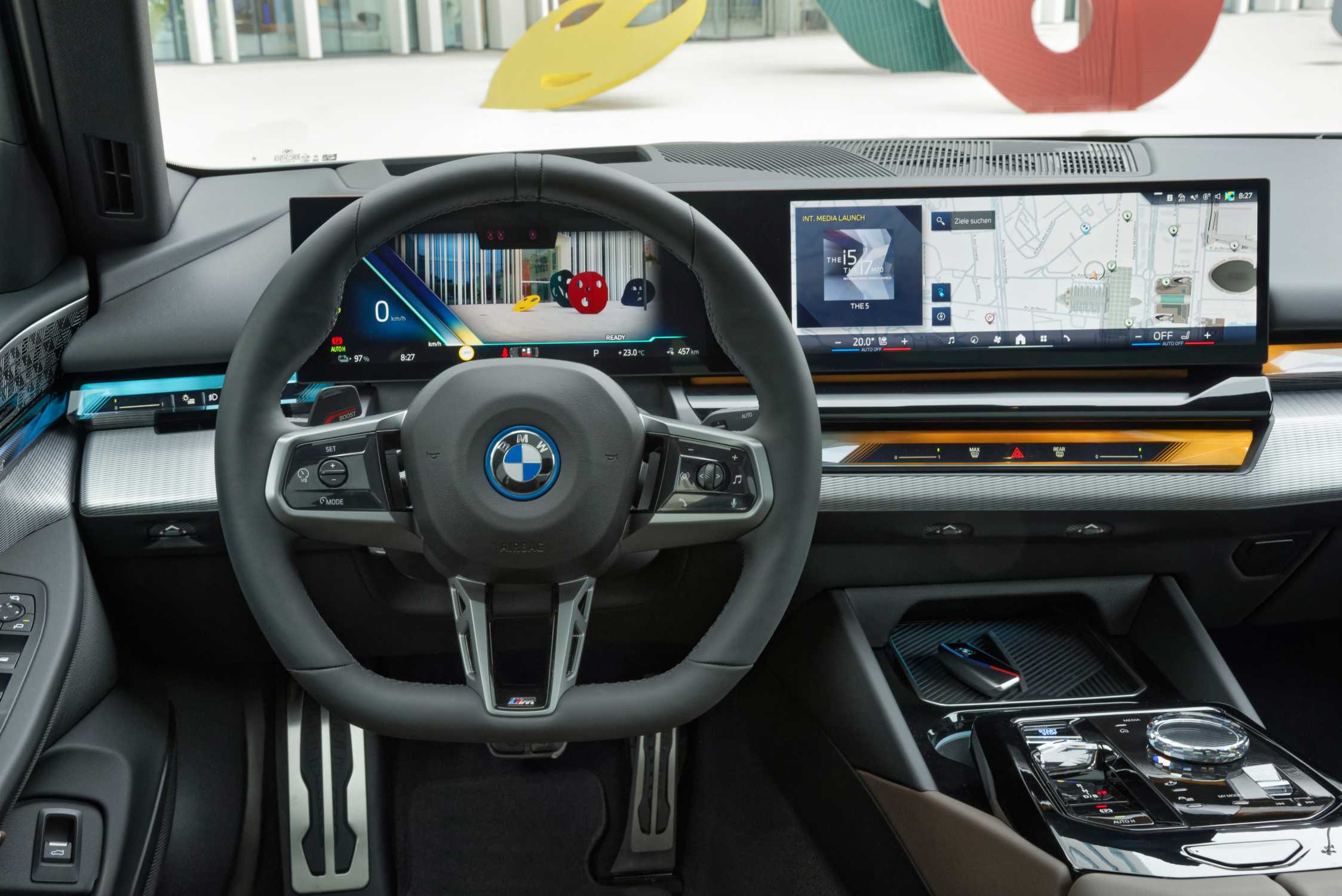
Before you commit, run these checks. Confirm the exact P11D and OTR for your chosen trim on the BMW UK i5 configurator, since options move the figure. Read the current EV benefit-in-kind rate and its future steps in HMRC’s appropriate-percentage tables so you can model the rise across your term. Ask your provider for a full quote that states the gross monthly sacrifice, what is bundled (insurance, tyres, servicing, breakdown) and the early-exit terms in writing. Check the mileage allowance matches your driving and the excess-mileage charge if it does not. Compare at least two scheme providers on the same car and term, and price the same i5 on a personal lease or PCP so you can see the net take-home difference clearly. If a figure in any quote is not in writing, treat it as not agreed.
Buyer action
EV and salary-sacrifice checks
Use this as the final check before paying a deposit, signing finance paperwork or relying on a headline monthly figure.