Audi Q4 e-tron salary sacrifice puts the entry premium Audi EV on payroll for roughly £383 to £449 net a month in 2026/27, depending on your tax band, once the 4% benefit-in-kind charge and the income tax and National Insurance relief are netted off a representative gross sacrifice. The maths leans hardest in favour of higher and additional-rate earners, but the trap sits in the early-exit terms, not the headline number. This guide shows the working for all three bands, names the rates and their sources, and flags where a personal lease still beats the scheme.
What real owners say (CDE data)
CDE cross-referenced owner posts on Q4 e-tron salary sacrifice and ownership across PistonHeads and Speak EV, plus DVSA recall records for the model, checked 1 June 2026.
- Most-praised aspects: cabin quality and the 11.9-inch interior, real-world efficiency near the WLTP claim on the 82 kWh battery, and the low BiK cost on payroll.
- Most-criticised aspects: the older 135 kW peak DC charging on pre-facelift cars, firm ride on 20-inch wheels, and laggy early MMI software.
- Reliability signal: the Q4 e-tron and related Q8 e-tron were subject to a 2026 UK brake-servo recall, so a VIN check on the DVSA recall service is worth running; owner-reported drivetrain faults otherwise stay low on PistonHeads, with most threads about software updates rather than hardware failures.
Why the Q4 e-tron is the value pick on a sal-sac shortlist
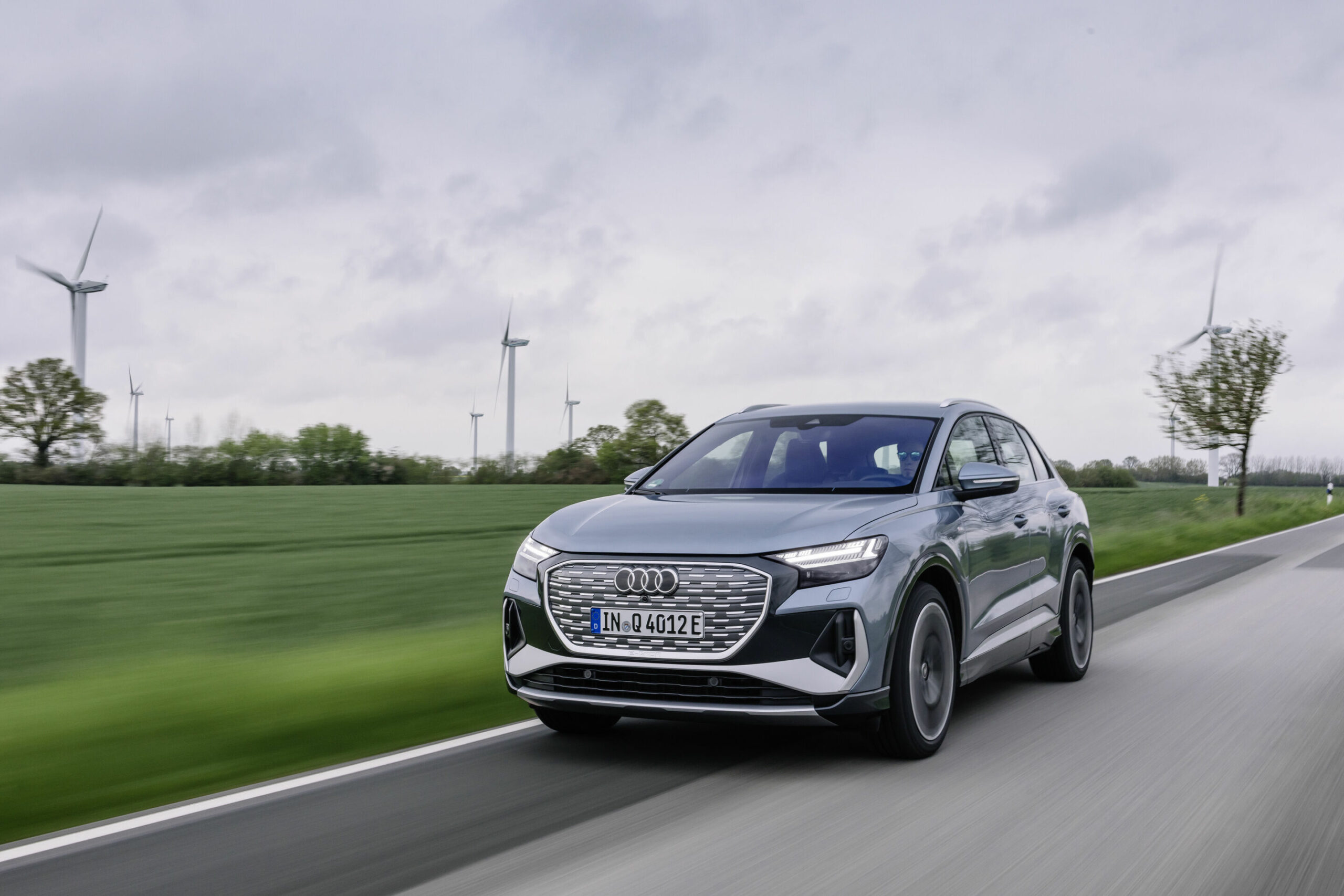
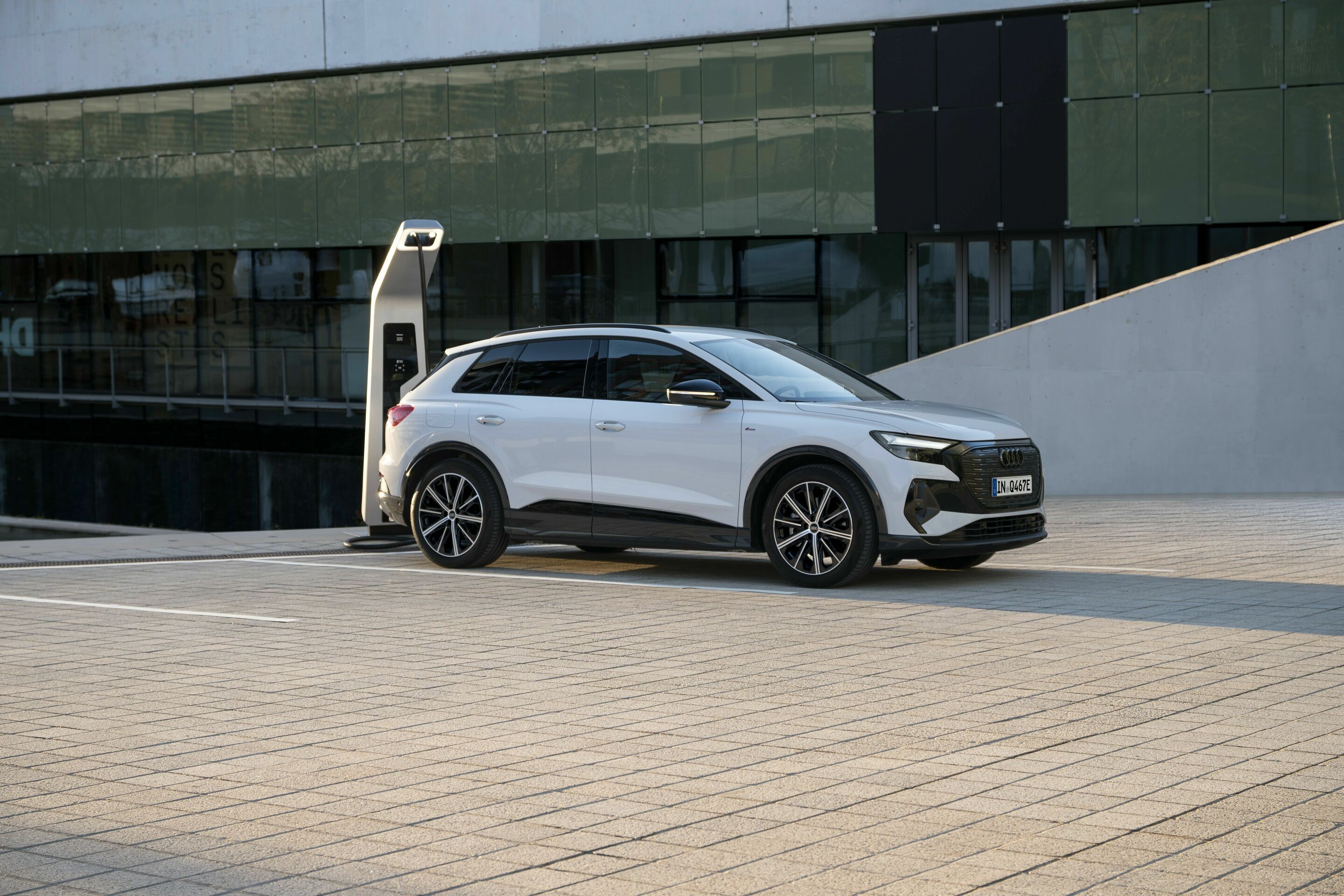
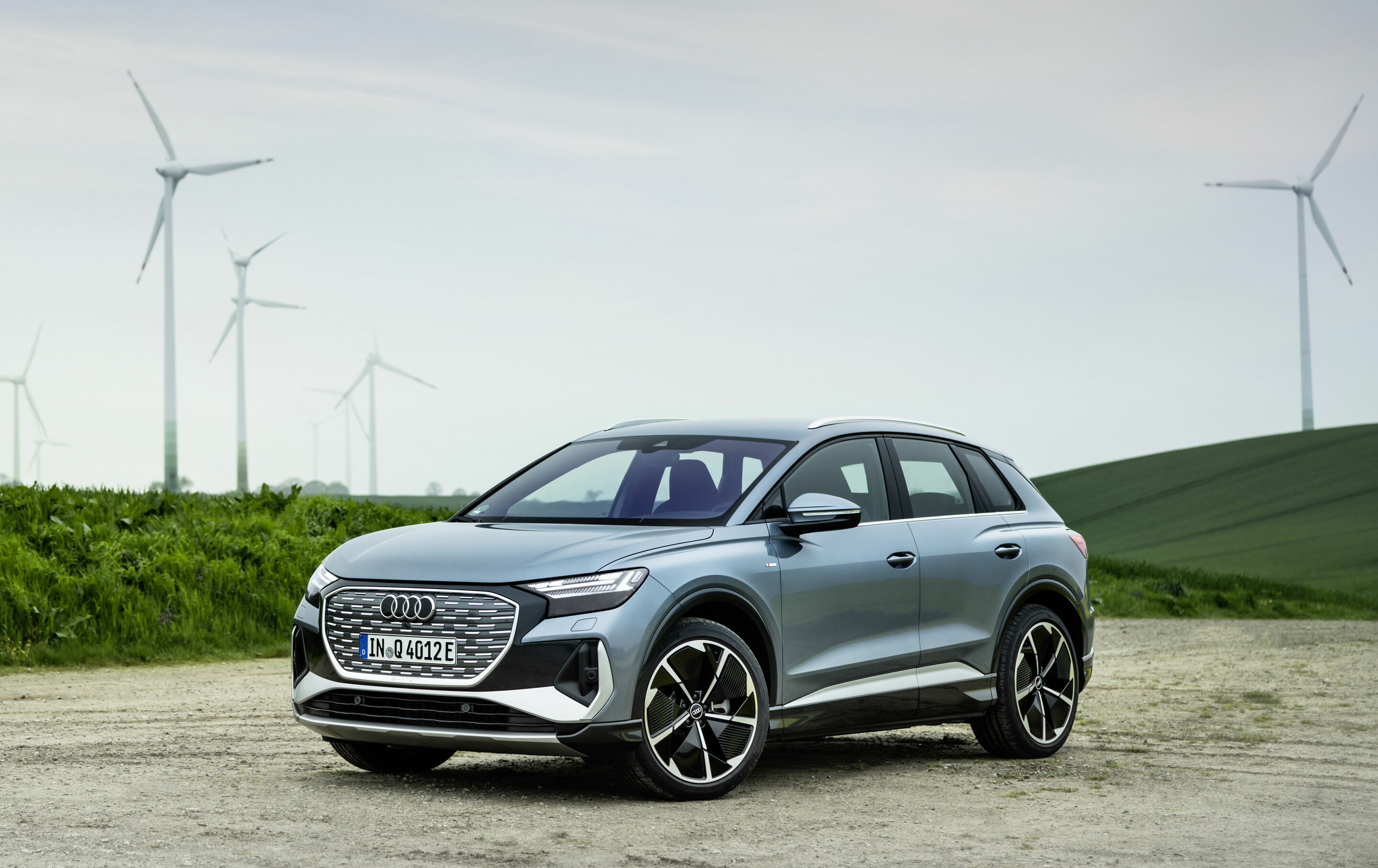
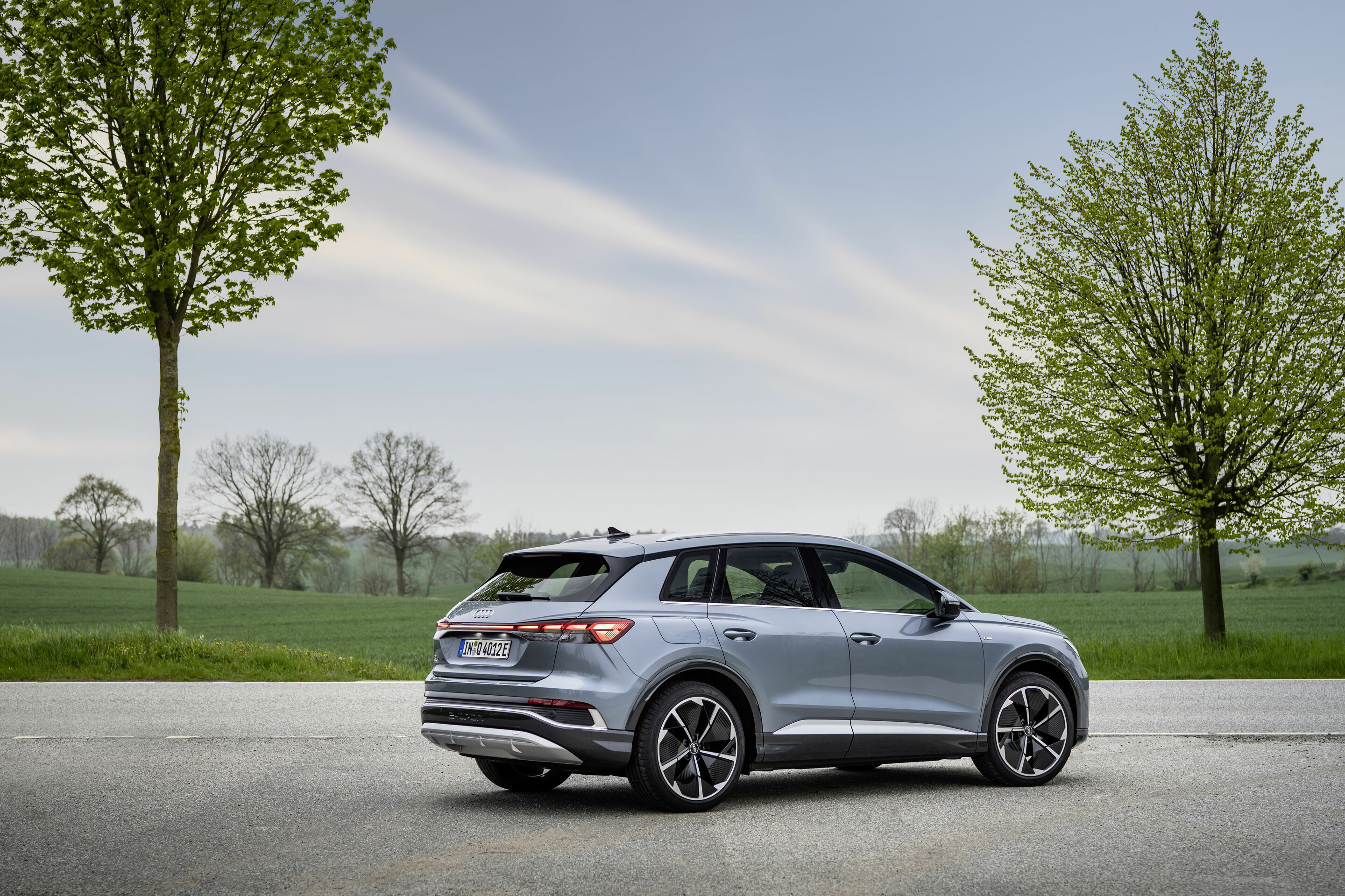
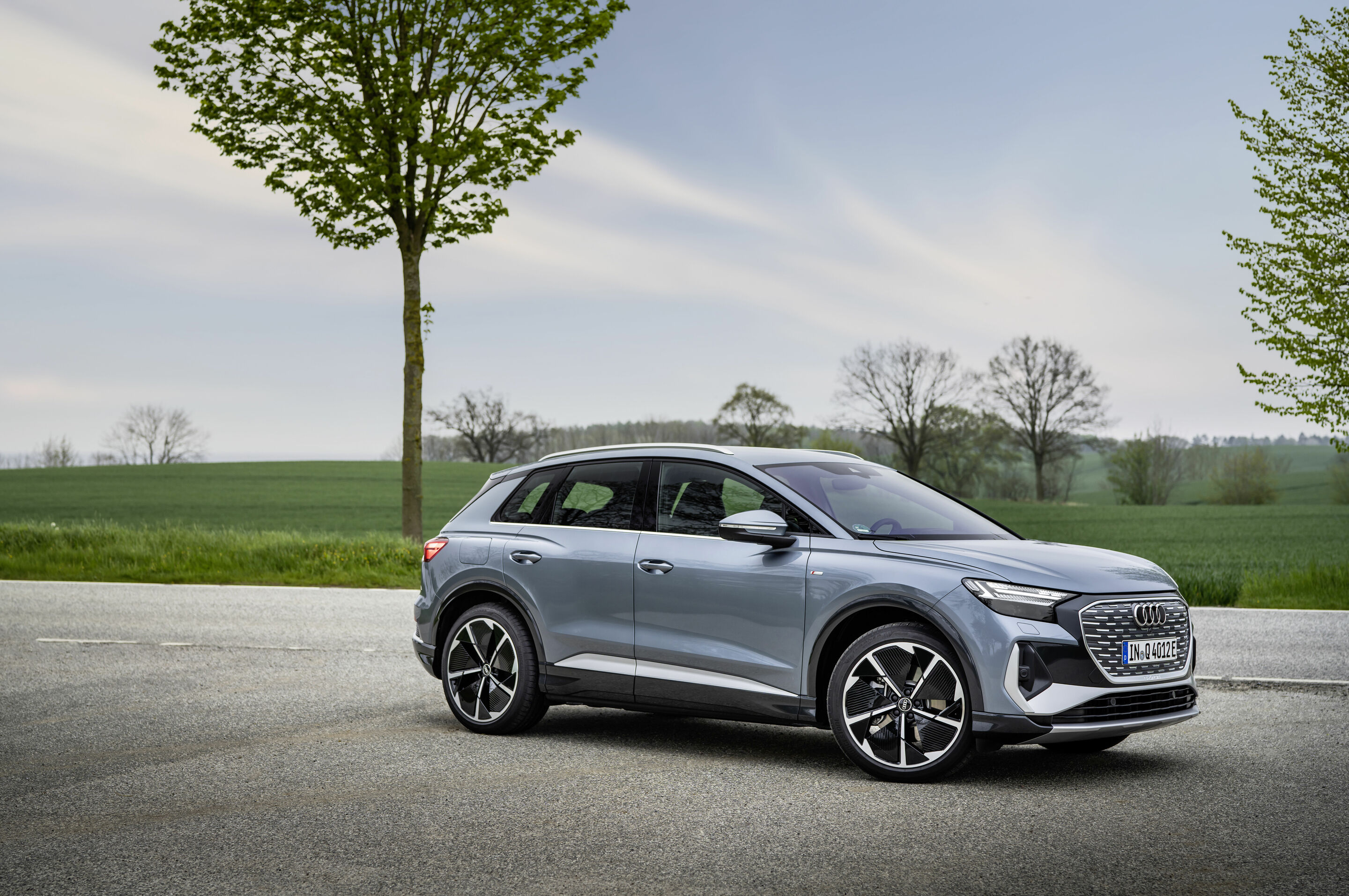
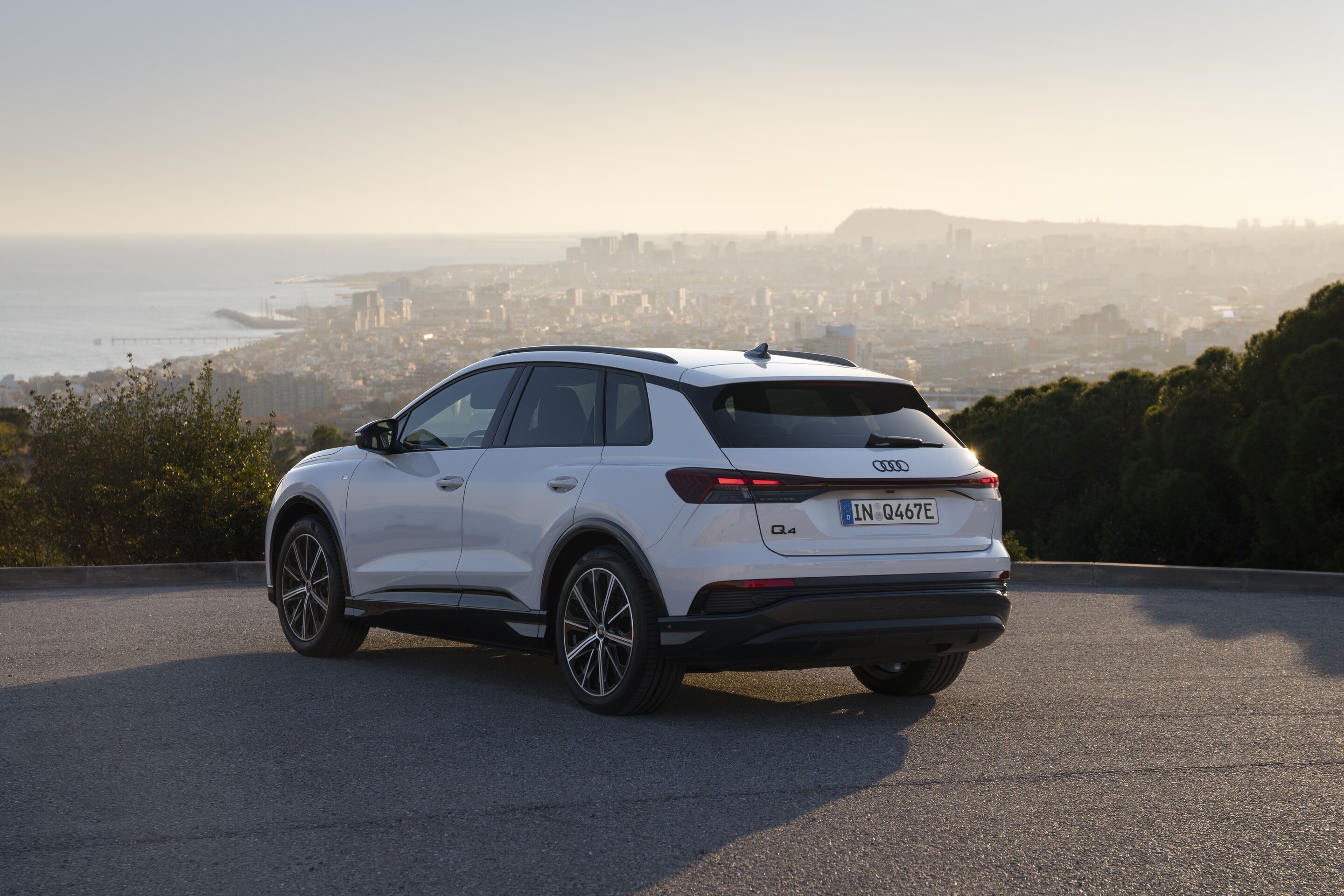
The Q4 e-tron is Audi’s entry point into electric, sitting below the Q6, Q8 and the e-tron GT, and that matters on payroll because the benefit-in-kind charge scales with the car’s P11D value. A Q4 sits roughly £15,000 to £30,000 below a Q8 e-tron on list, so the taxable benefit, and the income tax you pay on it, is proportionally smaller. The range runs from the rear-drive Q4 40 through the 45 to the dual-motor 50 quattro, in both the upright SUV and the lower-roof Sportback body. Audi quotes two batteries, 63 kWh and 82 kWh gross, with the larger pack giving up to 592 km (about 368 miles) WLTP on the most efficient Sportback, per the Audi MediaCenter. For most sal-sac buyers the 82 kWh 45 is the sweet spot: enough range to make a 4% BiK charge worthwhile without paying quattro money you do not need.
What salary sacrifice is, and who actually qualifies
Salary sacrifice is an arrangement where you give up an agreed slice of gross pay in exchange for a non-cash benefit, here a fully insured, maintained electric car leased through your employer’s scheme provider. Because the sacrifice comes out before income tax and National Insurance, you fund the car from pre-tax earnings, which is the whole saving. It only works if your employer runs a scheme, and there is a floor: the sacrifice cannot drop your gross pay below the National Minimum Wage. For workers aged 21 and over that floor is £12.71 an hour from 1 April 2026, per gov.uk. On a full-time 37.5-hour week that is roughly £24,785 a year you must clear after the sacrifice, so a Q4-sized monthly amount rules the scheme out for lower earners but is a non-issue for the senior staff and business owners these schemes target.
How the tax works: P11D, the 4% BiK rate and NI relief
Two tax effects run in opposite directions. First, the saving: you avoid income tax and employee NI on the sacrificed salary. Second, the cost: you pay company-car benefit-in-kind tax on the car. For a zero-emission EV the BiK appropriate percentage is 4% for 2026/27, read from CDE’s dated tax source-of-truth and confirmed against HMRC’s company-car appropriate-percentage tables (checked 1 June 2026). The taxable benefit is P11D value times 4%. Using a representative Q4 Sportback e-tron 40 P11D of £52,075 (Fleet News company-car data, 1 June 2026; verify the exact trim on the Audi UK configurator as P11D runs from roughly £50,000 to £62,000 across the range), the benefit is £52,075 x 4% = £2,083 a year. You then pay income tax on that benefit at your marginal rate. The EV rate is legislated to rise to 5% in 2027/28 and beyond, so treat 4% as this year’s figure, not a fixed multi-year trajectory.
The NI relief is where the bands diverge, and most rival explainers get this wrong. Employee Class 1 NI runs at 8% on earnings between the primary threshold and the upper earnings limit of £50,270, then drops to 2% above it, per gov.uk. A basic-rate employee sacrifices inside the 8% band, so saves NI at 8%. A higher or additional-rate employee is sacrificing earnings that sit above the upper earnings limit, so their NI saving is only 2%. That single point shifts the net cost by tens of pounds a month, so the tables below state the assumed salary position for each band.
Worked case study: 20% basic-rate taxpayer
This assumes a basic-rate employee whose whole sacrifice falls inside the basic income-tax band and the 8% main NI band, on a representative £575 a month gross sacrifice (inc VAT) for an 82 kWh Q4 on a typical four-year, 10,000-mile term. Scheme quotes sit behind a login, so treat the gross figure as representative; your provider’s quote is the authority. The BiK cost is £2,083 x 20% = £417 a year, or £35 a month.
| Monthly gross sacrifice (inc VAT) | Income Tax saving (20%) | NI saving (8%) | BiK cost (4% over term) | Net monthly cost |
|---|---|---|---|---|
| £575 | £115 | £46 | £35 | £449 |
Worked case study: 40% higher-rate taxpayer
This assumes a higher-rate employee whose salary sits comfortably above the £50,270 upper earnings limit, so the sacrifice comes from earnings taxed at 40% income tax but only 2% NI. The income tax saving jumps to £230 a month, but the NI saving falls to £11.50, and the BiK cost rises because the benefit is now taxed at 40%: £2,083 x 40% = £833 a year, or £69 a month. This is the band where Q4 e-tron salary sacrifice makes the strongest case, since the income-tax relief outweighs the higher BiK charge.
| Monthly gross sacrifice (inc VAT) | Income Tax saving (40%) | NI saving (2%) | BiK cost (4% over term) | Net monthly cost |
|---|---|---|---|---|
| £575 | £230 | £11.50 | £69 | £403 |
Worked case study: 45% additional-rate taxpayer
An additional-rate employee earning above £125,140 sacrifices from income taxed at 45%, again with NI relief at only 2% because the earnings are above the upper earnings limit. The income tax saving rises to £258.75 a month and the BiK cost to £2,083 x 45% = £937 a year, or £78 a month. The net cost lands lowest of the three bands, which is the pattern across every premium EV on payroll, not a quirk of the Q4.
| Monthly gross sacrifice (inc VAT) | Income Tax saving (45%) | NI saving (2%) | BiK cost (4% over term) | Net monthly cost |
|---|---|---|---|---|
| £575 | £258.75 | £11.50 | £78 | £383 |
A note for Scottish taxpayers: Scotland sets its own income-tax bands, currently a six-band system that includes a 45% advanced rate and a 48% top rate, per gov.uk. NI is UK-wide, so a Scottish employee’s NI saving matches the figures above, but the income-tax relief differs band by band. Run your own marginal rate through the same working rather than borrowing the rest-of-UK numbers. The BMW iX comparison in our BMW iX salary sacrifice math 2026 uses the identical method on a higher P11D if you want to see how the sums scale.
Total saving versus an equivalent personal lease
The point of the scheme is the gap against funding the same car yourself. A personal contract hire on a comparable Q4 e-tron is paid from net income, so a higher-rate driver effectively earns roughly £1.67 gross for every £1 of lease they pay. On the £575 representative monthly figure, the sal-sac net cost of about £403 for a 40% taxpayer undercuts an equivalent personal lease by a meaningful margin once insurance, maintenance and breakdown cover are bundled in, which a personal lease rarely includes. The take-home-pay hit is smaller than the headline sacrifice too: your monthly pay falls by the net figure, not the gross, because the tax and NI you no longer pay stays in your pocket. The scheme rarely wins for a basic-rate taxpayer paying for charging out of pocket, which is the case to check carefully.
Common misconceptions that catch sal-sac drivers out
Three things trip people up. First, leaving the employer mid-term: most schemes let you hand the car back if you resign or are made redundant, but early-exit terms vary, and some carry an early-termination fee or a lump-sum settlement if you simply change your mind. Read the exit clause before you sign, not after. Second, the BiK rising over the term: 4% is the 2026/27 rate, and HMRC has legislated 5% for 2027/28 and increases beyond, so the cost creeps up each tax year even though your gross sacrifice is fixed. Build that into a four-year view. Third, the assumption that everything is included: most schemes bundle insurance, servicing, tyres and breakdown, but home or public charging is usually yours to fund, and a few cap business mileage. Our ElectriX vs Tusker vs OnTo salary sacrifice 2026 breakdown shows how the inclusions differ by provider.
Checks to run before you sign a Q4 e-tron scheme agreement
Five things to confirm before any deposit or payroll instruction:
- Confirm the current EV BiK rate and your marginal income-tax band against HMRC’s company-car tables before trusting any quote.
- Check the exact P11D for your chosen Q4 trim on the Audi UK configurator, since it swings the BiK by hundreds of pounds across the 40, 45, 50 and Sportback range.
- Read the early-exit and redundancy clause in the provider’s scheme rules, for example the Octopus EV salary-sacrifice scheme pages, so you know the cost of leaving mid-term.
- Confirm whether your gross pay stays above the National Minimum Wage after the sacrifice, using the current gov.uk NMW rates.
- Look up any open recall on your VIN using the DVSA vehicle recall and MOT history service, including the 2026 Audi e-tron brake-servo action, before collection.
Our view on Audi Q4 e-tron salary sacrifice: it is the value entry into a premium EV on payroll, and the case is strongest for a 40% or 45% taxpayer who keeps the car the full term. At a net cost near £383 to £449 a month across the bands on our representative figures, it undercuts a comparable personal lease while folding in insurance and maintenance, and the 82 kWh 45 is the trim we would pick for range without quattro money. The buyer who should walk away is the basic-rate earner funding charging out of pocket, or anyone unsure they will stay with the employer, because the early-exit terms are where this goes wrong. Check three things before you sign: the exact P11D for your trim, the current EV BiK rate at HMRC, and the scheme’s exit clause in writing. What flips our recommendation is a punitive early-termination fee or a job you might leave inside two years; on stable footing, the Q4 is an easy yes.
How much does an Audi Q4 e-tron cost a month on salary sacrifice in 2026?
What is the BiK rate on an Audi Q4 e-tron for 2026/27?
Can salary sacrifice take my pay below minimum wage?
Why do higher-rate taxpayers save more on a Q4 e-tron sal-sac?
What happens to my Q4 e-tron sal-sac if I leave my job?
Is the Audi Q4 e-tron range enough for salary sacrifice?
Related reading on CDE
Buyer action
EV and salary-sacrifice checks
Use this as the final check before paying a deposit, signing finance paperwork or relying on a headline monthly figure.