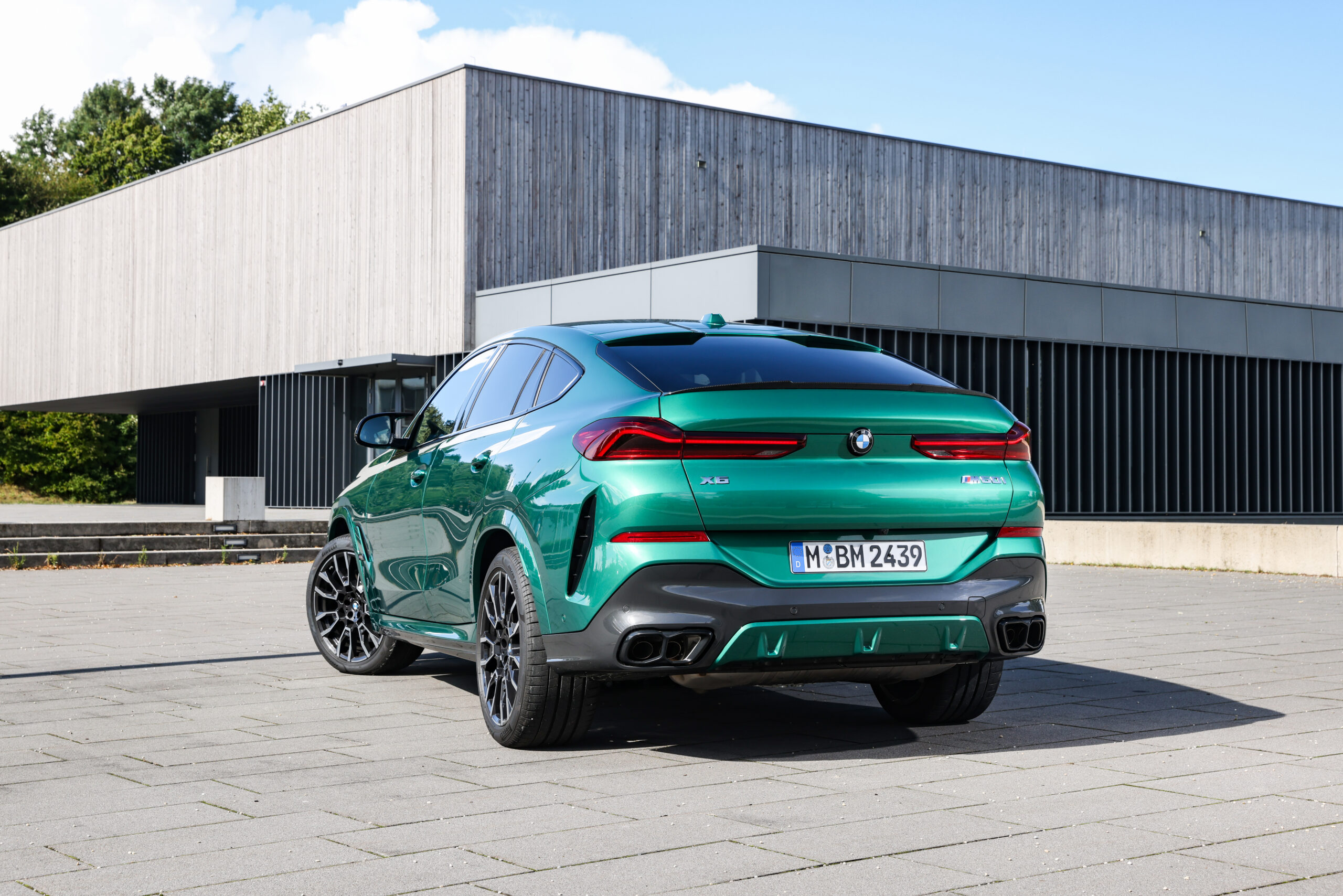
This BMW X6 G06 used buyer’s guide is for the buyer who wants the X5 underneath and the coupe roofline on top, and who knows the style tax shows up twice: once at purchase and again at resale. The short version is that a 2020 or 2021 xDrive30d with a full BMW history is the sweet spot, the petrol xDrive40i suits low-mileage urban use, and the M50i and X6 M are weekend toys with running costs to match. The faster depreciation that hurts the first owner is exactly what makes the used buyer’s case. The same exercise on the BMW X5 G05 used buyer’s guide arrives at a different answer.
What real owners say (CDE data)
- Most-praised aspects: the way it drives for its size, straight-six refinement on the 30d, and a cabin that owners rate above the X5’s for theatre (roughly the top three positive themes).
- Most-criticised aspects: tight rear headroom, poor rear visibility without the camera, and the cost of replacing 20-inch and 22-inch runflat tyres (the three complaints that recur most).
- Reliability signal: What Car reviews the X6 positively as a coupe SUV and flags a 48V mild-hybrid starter-generator battery-cable inspection on some early cars; BMW placed mid-table, 13th of 30 brands, in the 2021 What Car Reliability Survey.
Which G06 X6 to buy, and the one to leave
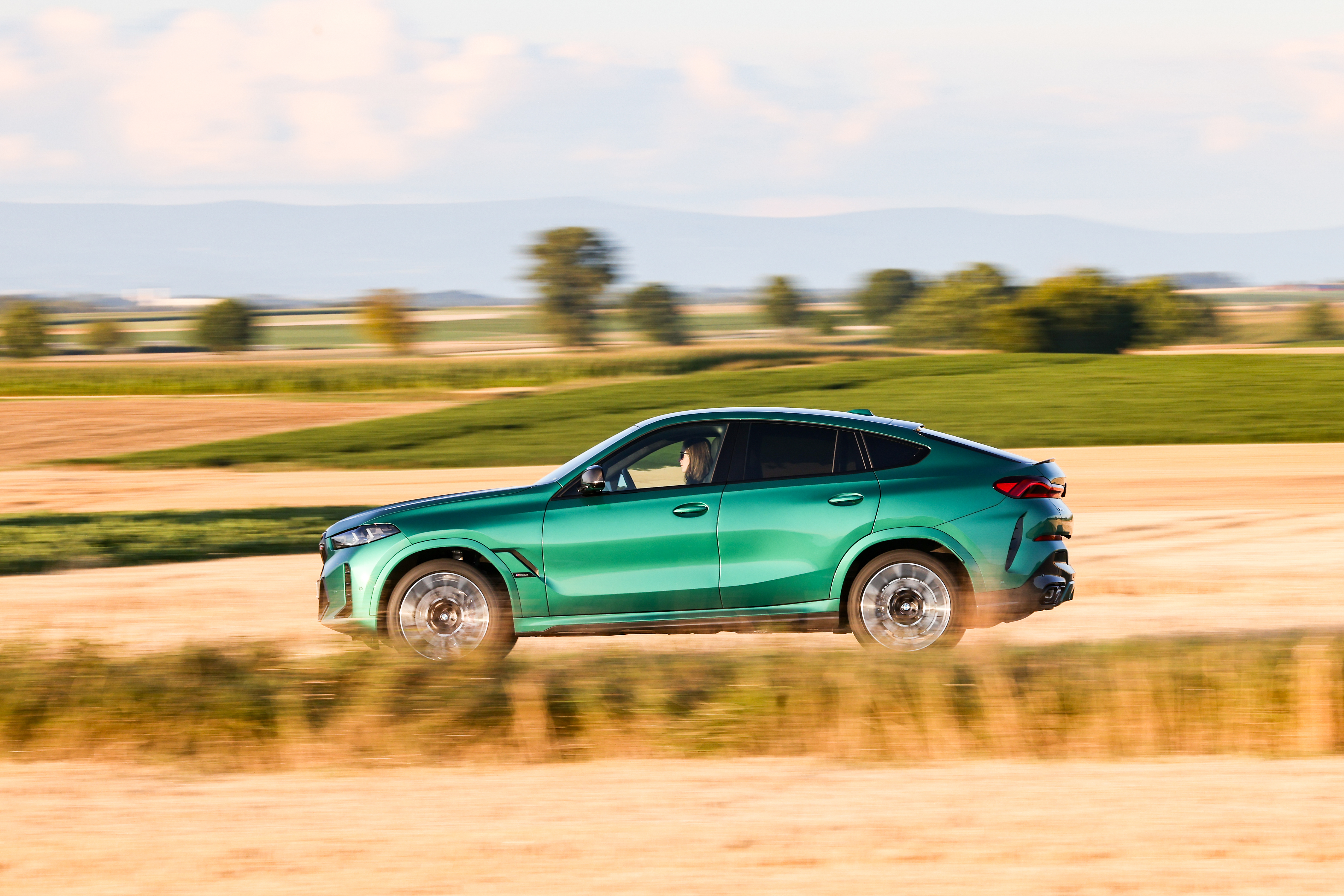
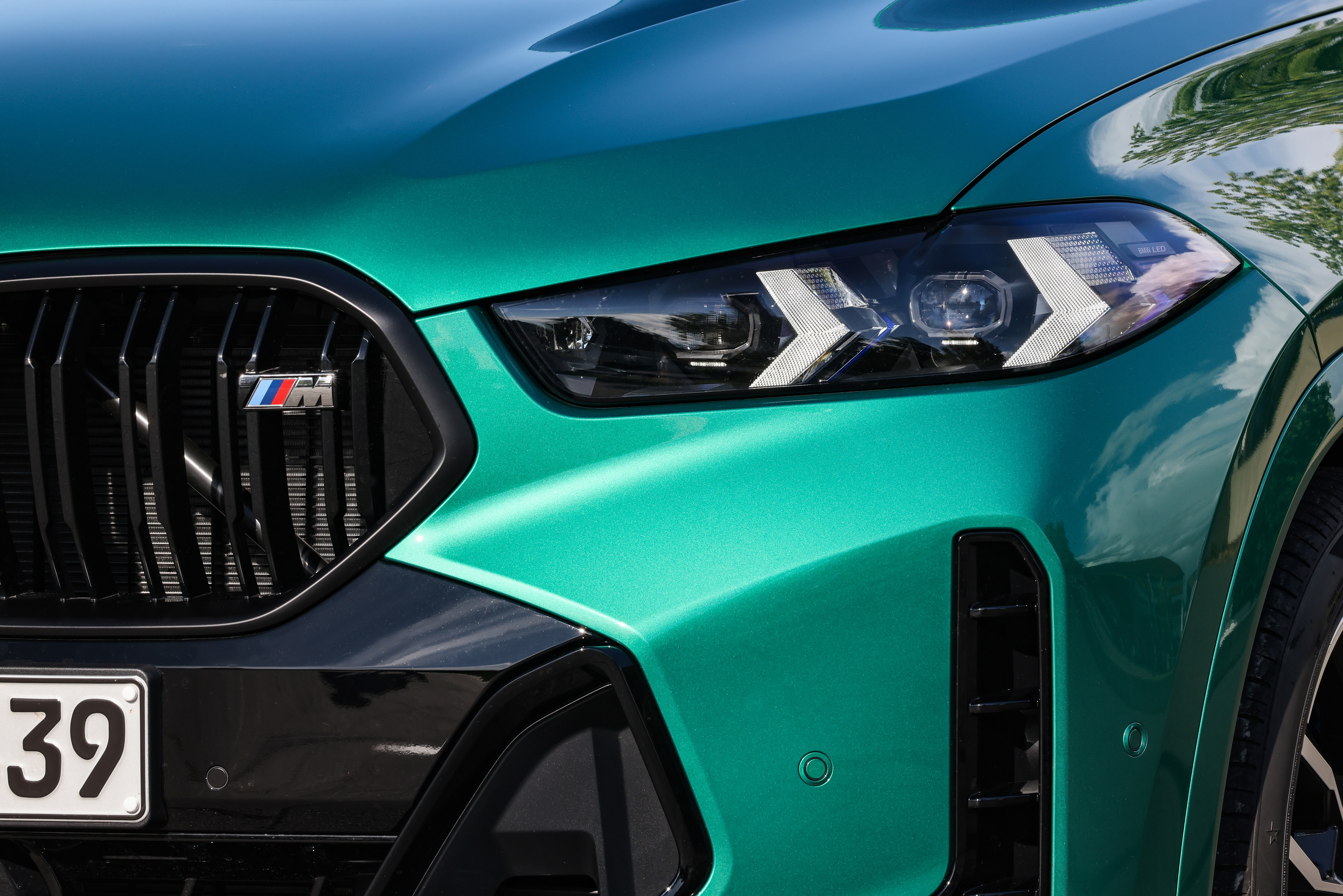
The G06 arrived in late 2019 on BMW’s CLAR platform, shared with the X5 G05 and X7 G07, with a Life Cycle Impulse facelift landing in 2023 that brought the slimmer split headlights and the curved twin display. For most UK buyers the BMW X5 G05 used buyer’s guide describes the better all-rounder, but the X6 buyer is choosing it deliberately. The xDrive30d, with the 286 PS (282 bhp) B57 straight-six diesel, is the volume choice and the one we would buy: strong real-world economy, the smoothest powertrain in the range, and the cheapest to insure and tax. The xDrive40i petrol suits lower-mileage drivers who want refinement without diesel particulate worries. The M50i and the full X6 M are V8 indulgences; brilliant, but only if you have budgeted for the fuel, brakes and tyres. The one to leave is any pre-facelift car with a patchy history and worn 22-inch wheels, where the saving up front is swallowed by the first round of bills.
What a used G06 X6 actually costs in 2026
Pricing is where the X6 rewards patience. Parkers lists the G06 xDrive30d Sport at a used range of roughly £25,470 to £34,405 depending on year and mileage (Parkers used-price guide, 2019-onwards generation, checked 2 June 2026), with M Sport trim and the 2023 facelift sitting at the upper end and beyond. Across the classified asking prices we reviewed on 2 June 2026, the broad G06 spread runs from the low £20,000s for a higher-mileage early 30d up to £40,000-plus for clean facelift cars and the rarer M50i. The X6 M Competition is a different market again, with Parkers quoting a used band well into the £60,000s and above. The pattern matters more than any single figure: a coupe SUV depreciates harder than the equivalent X5, so the second owner pays less for the same hardware. That is the whole used case.
Engine faults and the checks that matter on the B57 and N63
The B57 3.0-litre diesel is a strong unit, but it is not faultless. On a cold start, listen for a brief timing-chain rattle: light chatter is usually the tensioner rather than a stretched chain, and a snap is rare, but a noisy cold start on a higher-mileage car is a price-negotiation point and a reason to insist on evidence of servicing. EGR cooler leaks and DPF clogging are the other two diesel themes, the latter aggravated by short urban trips, so a 30d that has only ever done school runs deserves a longer test drive to confirm it gets hot enough to regenerate. The petrol N63 V8 in the M50i is quick but thirsty and runs warm; check coolant condition and service records closely. Whichever engine, a full BMW or specialist service history is the single most valuable thing on the advert, and a car without it should be cheaper to reflect the unknown.
Mild hybrid, air suspension and runflats: the pre-purchase list
From 2020 onward most six-cylinder G06 cars carry a 48V mild-hybrid system with an integrated starter-generator. What Car notes a manufacturing issue where the starter-generator battery cables on some mild-hybrid cars were not secured correctly, on some early cars and needing a dealer inspection, so confirm any related work has been done. Air suspension was standard on later and higher trims: bounce each corner, watch for a car that sits unevenly after standing, and budget realistically because a failed strut is not cheap. Tyres are the recurring owner gripe, since 20-inch and 22-inch runflats in staggered sizes are expensive to replace in pairs, so check tread and date codes and treat four tired corners as roughly a four-figure cost. Finally, run the registration through the gov.uk DVSA vehicle recall service and check the full MOT history before you put down a deposit.
iDrive, screens and the facelift cabin difference
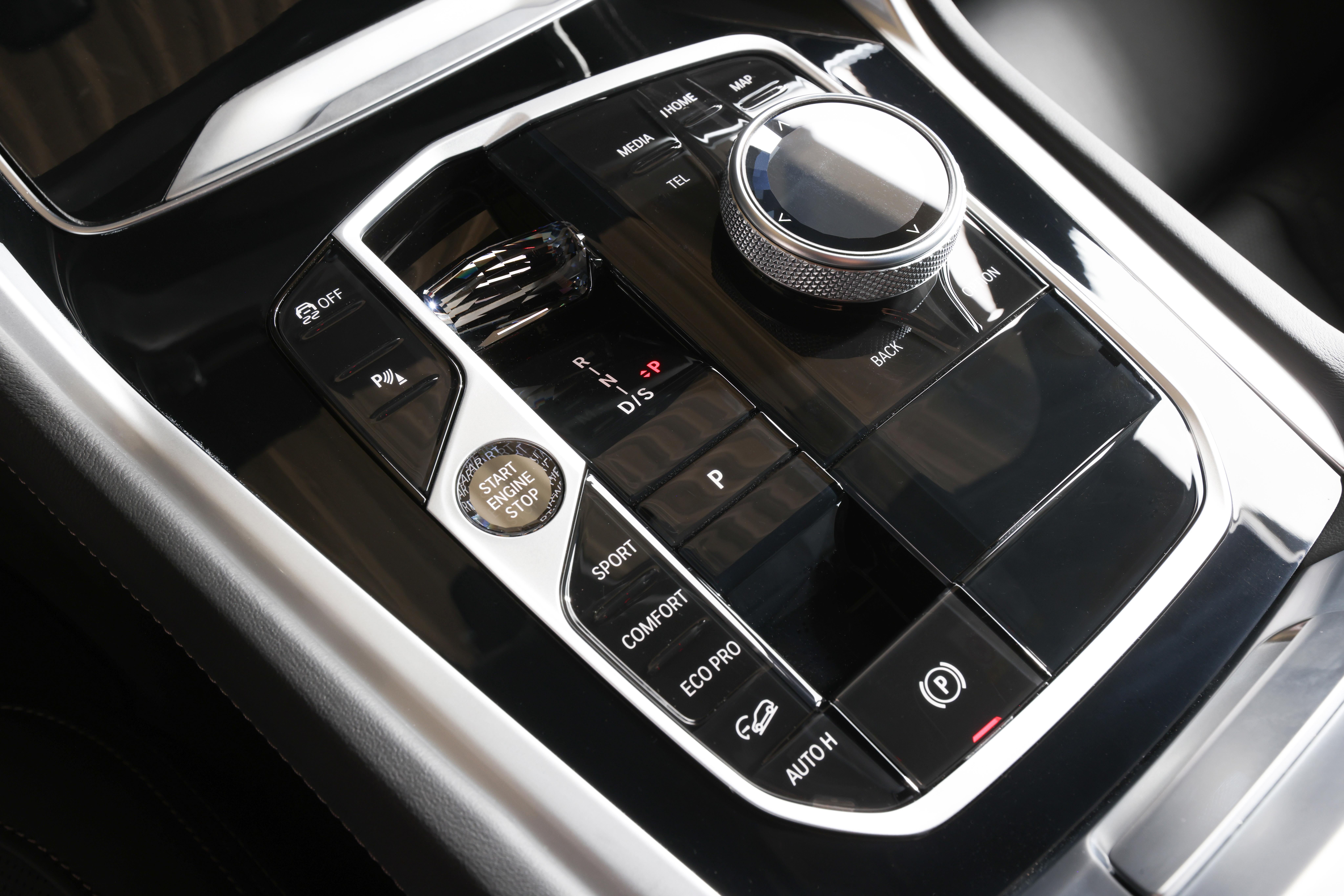
Pre-facelift G06 cars run iDrive 7 with two separate displays and the rotary controller, which most owners still prefer for use on the move. The 2023 facelift switched to the curved display with iDrive 8, a slicker look but a more menu-driven climate setup that splits opinion. On a test drive, work through the screens cold: confirm the reversing camera and parking sensors fire correctly, because rear visibility is genuinely poor and a faulty camera is both common and irritating to live without. Check that Apple CarPlay and Android Auto connect, that the digital cluster has no dead pixels, and that any head-up display is crisp. Software niggles and the occasional electronic gremlin are the most-reported non-mechanical complaints on this generation, so a car where everything works on the forecourt is worth paying a little more for.
Running costs: insurance, servicing, VED and depreciation
Insurance is firmly premium territory: the xDrive30d sits in the upper insurance groups and the M50i and X6 M climb into the highest brackets, which is why our BMW M and Audi RS insurance guide is worth reading before you commit to a V8. BMW uses condition-based servicing, so intervals flex with how the car is driven rather than a fixed mileage; a diesel doing motorway miles will stretch further between oil services than an urban petrol. VED is the sting on the performance cars: any G06 registered after April 2017 with a list price over £40,000 attracted the expensive-car supplement for years two to six, so an M50i or facelift M Sport can still be inside that surcharge window depending on registration date, check the current rate on the gov.uk vehicle tax tables. Depreciation, the X6’s weakness when new, is the used buyer’s friend. For a side-by-side, see our BMW X3 G01 used buyer’s guide.
According to the What Car used BMW X6 reliability review, the X6 is reviewed positively as a coupe SUV with the main flagged item being the 48V starter-generator cable inspection, and BMW finished 13th of 30 manufacturers in the wider 2021 What Car Reliability Survey. Treat that as a mid-table, not bullet-proof, score and buy on history rather than badge.
How the X6 stacks up against its BMW siblings
The honest internal comparison is the most useful thing a used X6 buyer can do. Against the X5, you lose boot height, rear headroom and a slice of resale value, and you pay for the privilege; the X6 only makes sense if the styling is the point. If you need three rows or maximum space the BMW X7 G07 used buyer’s guide covers the bigger seven-seater on the same platform, while downsizers should weigh the BMW X3 G01 used buyer’s guide for far lower running costs. The X6’s argument is narrow but real: it is the X5’s mechanical package wrapped in a body that drops faster in value, so a used buyer banks the difference. Just go in knowing that the same coupe roof that saved you money at purchase will cost you again when you sell.
G06 X6 key specifications
| Spec | BMW X6 G06 xDrive30d | Source |
|---|---|---|
| Engine | 3.0-litre B57 straight-six turbodiesel | BMW UK technical data |
| Power | 286 PS / 282 bhp (210 kW) | BMW UK technical data |
| 0-62mph | 6.1 seconds | Carwow BMW X6 |
| Drivetrain | xDrive all-wheel drive, eight-speed auto | BMW UK technical data |
| Mild hybrid | 48V from 2020 (six-cylinder) | What Car used review |
| Used price band (30d Sport) | £25,470 to £34,405 | Parkers used prices |
Our view on this BMW X6 G06 used buyer’s guide: buy the xDrive30d, buy on history, and let the styling tax work in your favour. The strongest car is a 2020 or 2021 30d in M Sport trim with a full BMW or specialist service record, recent runflats and a clean DVSA recall check, ideally the facelift if your budget reaches it for the better cabin tech. The petrol 40i is a sound low-mileage alternative; the M50i and X6 M are wonderful but only if the fuel, insurance and tyre bills are genuinely in the plan. What would flip our recommendation is a car with no history, a noisy cold start and tired air suspension, because that is where the savings on a depreciated coupe SUV quietly disappear into the workshop. Pay for boring paperwork over big wheels, and the X6 is one of the smarter used premium plays on the market.
Is the BMW X6 G06 reliable as a used buy?
Which G06 X6 engine should I choose?
How much does a used BMW X6 G06 cost in 2026?
What should I check before buying a used X6 G06?
Does the BMW X6 depreciate more than the X5?
Are X6 G06 tyres and servicing expensive?
How we researched this guide
Every pick here is shortlisted from hands-on testing and time spent living with the hardware by the CDE desk, then sanity-checked against current UK pricing, manufacturer specs and real-world performance before it makes the cut. We never rank for commission — affiliate links don't change the order.
Buyer action
Where to check next
Use this as the final check before paying a deposit, signing finance paperwork or relying on a headline monthly figure.