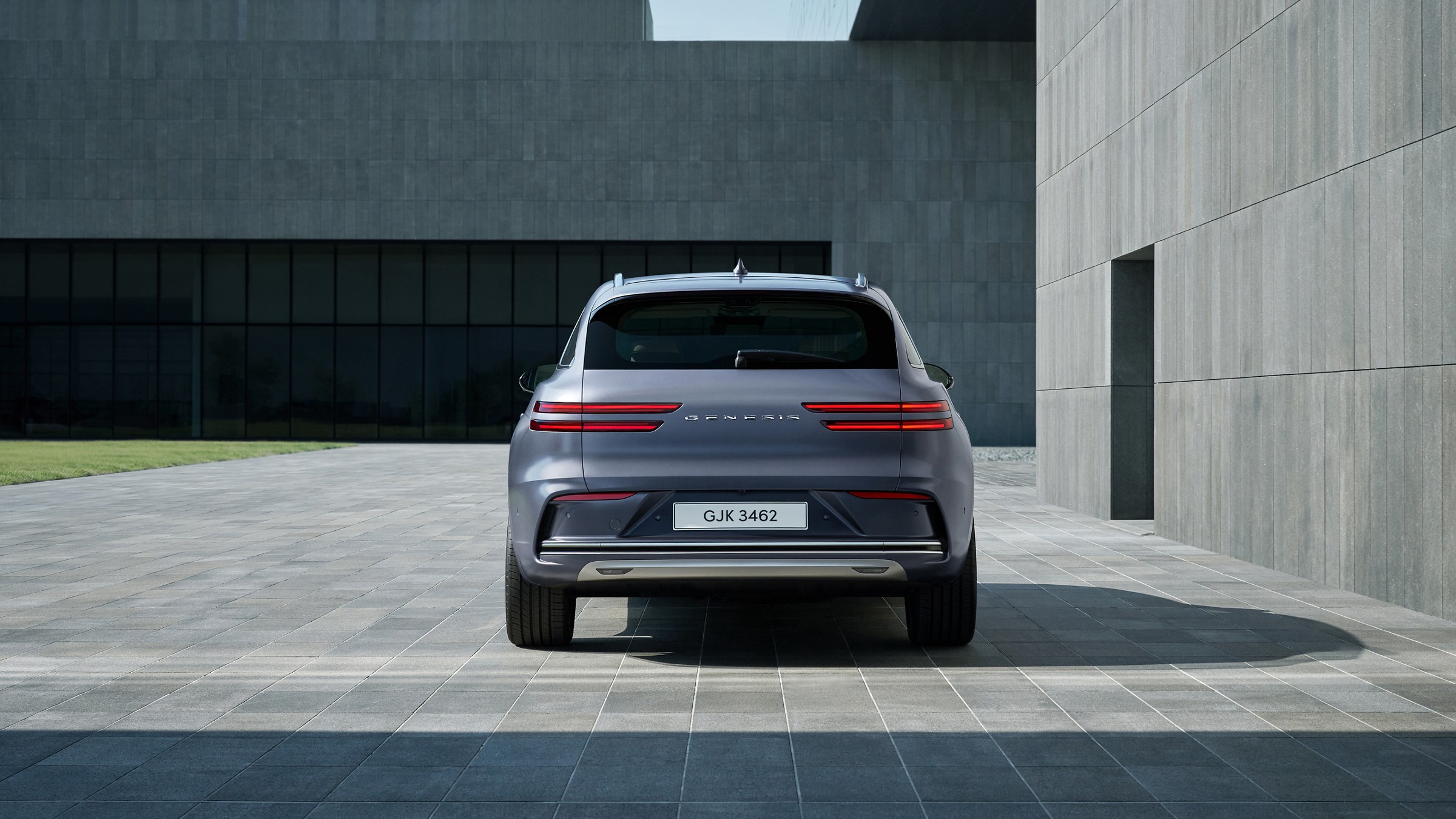
Genesis Electrified GV70 salary sacrifice is the quiet contrarian pick on a 2026 payroll shortlist, and the maths is the reason to take it seriously: at the 4 percent benefit-in-kind rate for electric cars, a higher-rate taxpayer can run this near-£66,000 premium SUV for a net cost close to £569 a month, against a personal lease around £829. We show the working for the 20, 40 and 45 percent bands, set out the National Minimum Wage floor, and explain why Genesis’s five-year servicing-inclusive care plan makes it a smarter hand-back proposition than the obvious German rivals.
What real owners say (CDE data)
CDE reviewed owner discussion on PistonHeads and the GV70 owners’ community alongside the What Car? Reliability Survey, Honest John ownership reports and the DVSA recall record for the Electrified GV70 (June 2026), then cross-checked the powertrain against its shared 800V e-GMP siblings, the Hyundai Ioniq 5 and Kia EV6.
- Most-praised aspects: the quilted-Nappa cabin and material quality, near-silent refinement, and 800V rapid charging that returns a 10 to 80 percent top-up in roughly 18 minutes on a suitable charger.
- Most-criticised aspects: real-world range falling short of the 298-mile WLTP figure in winter, a thin UK dealer network compared with Audi or BMW, and a firm low-speed ride on the larger wheels.
- Reliability signal: the e-GMP platform underneath is high-volume and well supported through the Ioniq 5 and EV6, and Genesis covers the car with a five-year unlimited-mileage warranty plus a five-year care plan including servicing and collection. Run the live DVSA recall lookup on your registration before you sign.
What salary sacrifice is, and the National Minimum Wage floor
Salary sacrifice swaps an agreed slice of your gross, pre-tax salary for a non-cash benefit, here a fully maintained electric car. Because the sacrifice comes out before Income Tax and National Insurance are worked out, you pay both on a smaller salary, and the difference is your saving. To use a scheme your employer has to offer one, through a provider such as Octopus EV, loveelectric or The Electric Car Scheme, and you have to be a PAYE employee rather than a director paid mainly in dividends. The car is leased, never owned, and handed back at the end of the term, which is why a low operating-risk badge matters.
The one hard limit is the National Minimum Wage: a sacrifice cannot drag your gross pay below the statutory minimum, which from April 2026 is £12.71 an hour for workers aged 21 and over, per gov.uk National Minimum Wage rates. On a car at this price the gross sacrifice is around £829 a month, so the floor only bites for lower earners; a senior employee on £60,000-plus clears it comfortably. For the wider PAYE comparison, our piece on salary sacrifice versus a car allowance for a higher-rate EV buyer sets out when each structure wins.

How the tax works: P11D, BiK rate and the NI saving
The taxable cash benefit is P11D value times the BiK appropriate percentage times your marginal Income Tax rate. For a fully electric, zero-emission car the appropriate percentage is 4 percent for the 2026/27 tax year, read from CDE’s dated tax-rates reference and confirmed against HMRC’s company-car appropriate-percentage schedule (last checked 5 June 2026). That rate is legislated to climb in steps in later years, so model the back end of a four-year term at the higher figures rather than assuming 4 percent throughout; we deliberately do not hardcode the full multi-year trajectory because Budgets move it.
Using the Electrified GV70’s £65,915 on-the-road price as a representative P11D proxy (the true P11D strips out the first-year VED and the small registration fee, so it is marginally lower; figure from the Genesis UK Electrified GV70 page), the taxable benefit is £65,915 times 4 percent, or £2,637 a year. On top of the Income Tax saved on the sacrifice you also save employee National Insurance: 8 percent on earnings between the primary threshold and the Upper Earnings Limit, dropping to 2 percent above it, per gov.uk National Insurance rates. That Upper Earnings Limit detail is why a basic-rate driver’s NI saving is far larger than a higher earner’s, and it is the thing most online sal-sac calculators get wrong.

Genesis Electrified GV70 salary sacrifice: three worked case studies
The tables take a representative £829 a month gross sacrifice, the published retail-lease figure from The Electric Car Scheme’s Genesis Electrified GV70 example, with maintenance, breakdown cover and a home charge point bundled. We apply the rest-of-UK Income Tax bands, the NI rates above, and the 4 percent BiK cost on the £65,915 P11D proxy. Every row ties out: net monthly cost equals gross sacrifice minus the Income Tax saving minus the NI saving plus the monthly BiK cost. Your own quote moves with salary, provider, term, mileage and options.

| 20% basic-rate taxpayer | Monthly |
|---|---|
| Gross sacrifice (inc VAT) | £829.00 |
| Income Tax saving (20%) | £165.80 |
| Employee NI saving (8%, below UEL) | £66.32 |
| BiK cost (£2,637 x 20% / 12) | £43.94 |
| Net monthly cost | £640.82 |
| 40% higher-rate taxpayer | Monthly |
|---|---|
| Gross sacrifice (inc VAT) | £829.00 |
| Income Tax saving (40%) | £331.60 |
| Employee NI saving (2%, above UEL) | £16.58 |
| BiK cost (£2,637 x 40% / 12) | £87.89 |
| Net monthly cost | £568.71 |
| 45% additional-rate taxpayer | Monthly |
|---|---|
| Gross sacrifice (inc VAT) | £829.00 |
| Income Tax saving (45%) | £373.05 |
| Employee NI saving (2%, above UEL) | £16.58 |
| BiK cost (£2,637 x 45% / 12) | £98.87 |
| Net monthly cost | £538.24 |
Scotland’s bands differ: a Scottish higher or advanced-rate taxpayer saves Income Tax at their own marginal rate, so the net figure shifts, check the gov.uk Scottish Income Tax rates before you model it. The shape holds, though: the higher your marginal rate, the larger the relief and the lower your net monthly cost.

The saving versus an equivalent personal lease
The honest comparison is sal-sac against a personal contract hire you would fund from net, already-taxed income. The Electric Car Scheme’s own published Electrified GV70 example puts the retail lease at £829 a month against £553 through salary sacrifice, a saving of roughly £276 driven by about £332 of Income Tax relief and £17 of NI for a higher-rate driver. Our worked higher-rate row lands at £569 net, a touch above their figure because we anchor BiK to the full on-the-road price rather than the slightly lower true P11D; the direction and scale are the same. Either way you fund a near-£66,000 premium EV at the cost of a mid-spec family car, with the taxman covering a large slice.

The trade-off is the cut to gross salary, which can touch pension contributions and mortgage-affordability assessments, so check those before you commit. Against the obvious German alternatives the GV70 holds up well: it broadly matches the net monthly maths of a comparably specified Audi Q4 e-tron on salary sacrifice while offering a more lavish cabin, and it sidesteps some of the running-cost worry of a larger BMW iX3 on the same payroll route once you factor in the bundled servicing.
Common misconceptions that trip up sal-sac drivers
Three traps catch payroll EV drivers. First, leaving your employer mid-term: most schemes are early-termination liable, so a resignation or redundancy can mean an exit fee or handing the car straight back, and the protection on offer varies by provider, so read the leaver clause before you sign. Second, assuming the BiK rate is frozen: it is 4 percent now but legislated to rise, so the later years of a four-year deal cost more than year one, and any sums that assume a flat rate understate the real cost. Third, assuming insurance and home charging are always bundled: some quotes include a charge point and breakdown cover but list comprehensive insurance as an optional add-on, so confirm exactly what your monthly figure covers before you set it against a personal lease.
There is also a badge misconception worth naming. Buyers assume an unfamiliar marque means weak resale, but on a sal-sac you never carry the residual risk, the provider does, so the GV70’s quieter used-market profile is the scheme’s problem, not yours. If you would rather own the car outright, our Genesis GV70 used buyer’s guide covers the depreciation and the checks that matter when the residual risk is yours.
Why the Genesis warranty and care plan is the real differentiator
The case for Genesis over an Audi Q6 e-tron or a BMW iX3 is not just the cabin; it is what comes bundled around the car. Genesis covers the Electrified GV70 with a five-year unlimited-mileage warranty and a five-year care plan that includes scheduled servicing, a courtesy car and collection-and-delivery, per the Genesis UK ownership terms. On a four-year sal-sac that keeps you inside manufacturer cover for the whole term with servicing handled, removing a variable that can make a premium EV’s running costs unpredictable. The German rivals typically charge for a service plan on top.
Against the other left-field option in the range, the smaller Genesis GV60 on salary sacrifice shares the same care-plan logic at a lower P11D, so the GV70 is the pick when you want the larger boot and the more upright SUV stance. If your decision is really about which scheme bundles the most, our comparison of Octopus EV, loveelectric and Tusker scheme rules sets out what each includes, and the wider CDE EV section tracks the rest of the premium payroll shortlist.
| Spec | Genesis Electrified GV70 (2026) | Source |
|---|---|---|
| OTR price (P11D proxy) | £65,915 | Genesis UK |
| Battery | 84 kWh | Genesis UK |
| WLTP range | 298 miles | Genesis UK |
| Power (Boost) | 490 PS (360 kW) | Genesis UK |
| CO2 / BiK rate 2026/27 | 0 g/km / 4% | HMRC |
| Warranty | 5 years, unlimited mileage | Genesis UK |
Our take
Genesis Electrified GV70 salary sacrifice is one of the strongest value plays on a 2026 payroll precisely because so few drivers consider it. A higher-rate taxpayer nets roughly £569 a month on our representative figures for a near-£66,000 premium SUV, the cabin genuinely reads as luxury, and the five-year servicing-inclusive care plan removes a running-cost variable the German rivals leave on the table. We would take the dual-motor AWD trim for the security and usable pace, and push the provider to confirm in writing what the monthly figure includes. The driver who should pause is anyone likely to change jobs inside the term without reading the early-exit clause, or a lower earner for whom the National Minimum Wage floor and the smaller higher-rate relief weaken the case. Verify the BiK rate for each year of your term, the bundled insurance position and the leaver terms before you sign, and the unfashionable badge quietly becomes the clever one.
How much is Genesis Electrified GV70 salary sacrifice a month for a higher-rate taxpayer?
What is the BiK rate on a Genesis Electrified GV70 in 2026?
What is the P11D value of the Genesis Electrified GV70?
How does the GV70 sal-sac compare with a personal lease?
What happens to my GV70 sal-sac if I leave my job?
Is the Genesis Electrified GV70 reliable enough for a four-year scheme?
Buyer action
EV and salary-sacrifice checks
Use this as the final check before paying a deposit, signing finance paperwork or relying on a headline monthly figure.