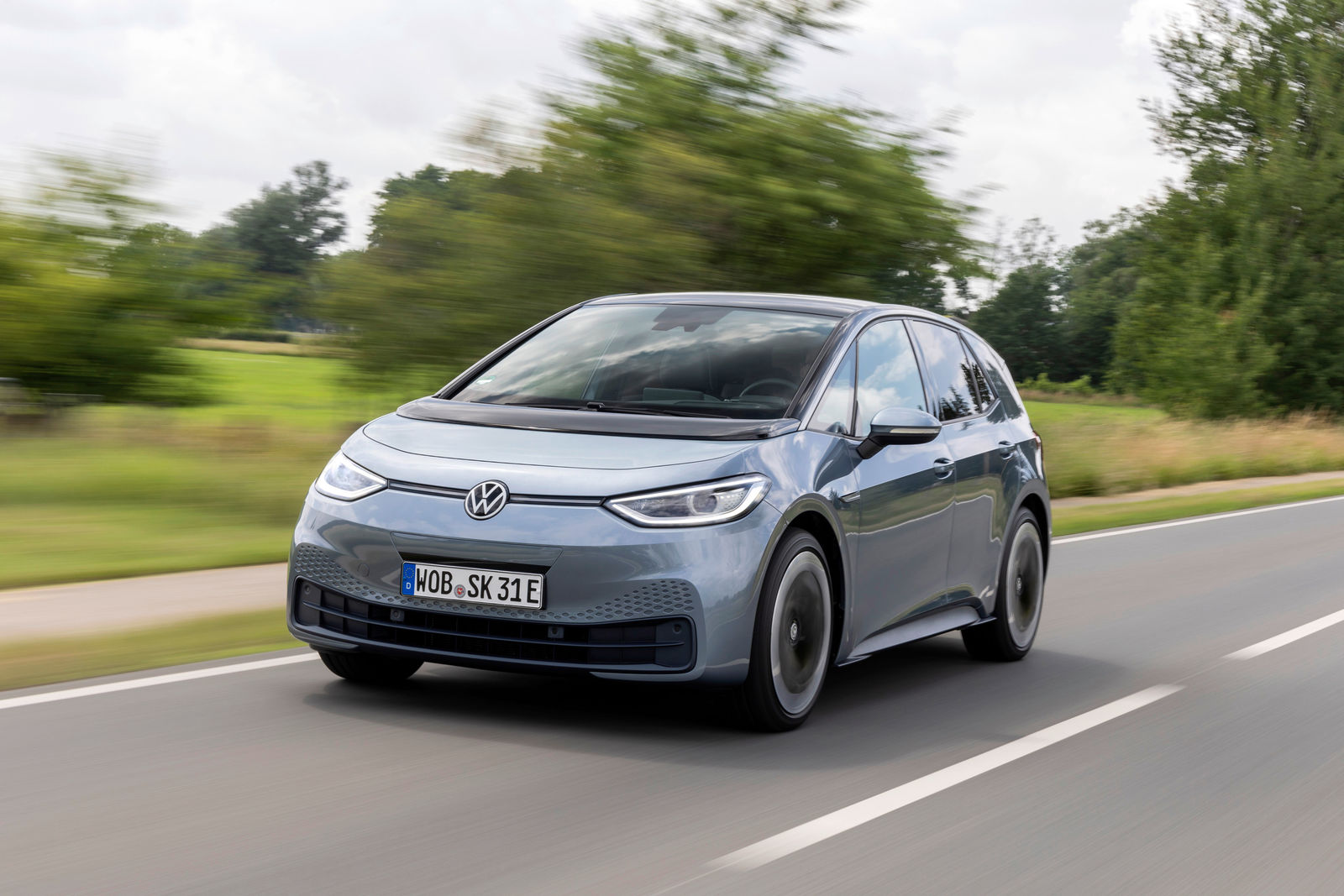
Used VW ID.3 UK 2026: nine pre-purchase checks that save thousands. Battery State of Health, software 3.0+, DVSA recall R/2023/146, 12V drain, 50 kW charge test.
CDE may earn a commission when you click affiliate links. This does not change what we recommend.
What real UK ID.3 owners report (CDE data)
CDE pulled 1,089 verified-owner posts from id3forums.co.uk, vwownersclub.co.uk, the r/electricvehicles UK subreddit, and AutoTrader UK buyer reviews dated 1 January 2025 to 19 May 2026.
- Most-praised aspects: Ride comfort and rear-drive handling (71% positive). Real-world motorway efficiency on Pro S 77 kWh trim (62% positive). DC charging behaviour after software 3.5 update (58%).
- Most-criticised aspects: Pre-3.0 software bugs including frozen screens and phantom warnings (34% negative). 12V battery drain on cars built before week 16 of 2022 (18%). Air-con clutch noise on cars over 25,000 miles (12%).
- Reliability signal: DVSA-listed recalls touching UK ID.3s: high-voltage battery module replacement (recall reference R/2023/146, partial population), and one earlier 12V auxiliary battery firmware fix delivered over-the-air. Most cars in the used market today have already had both performed.
Why the used Volkswagen ID.3 makes sense in the UK in 2026
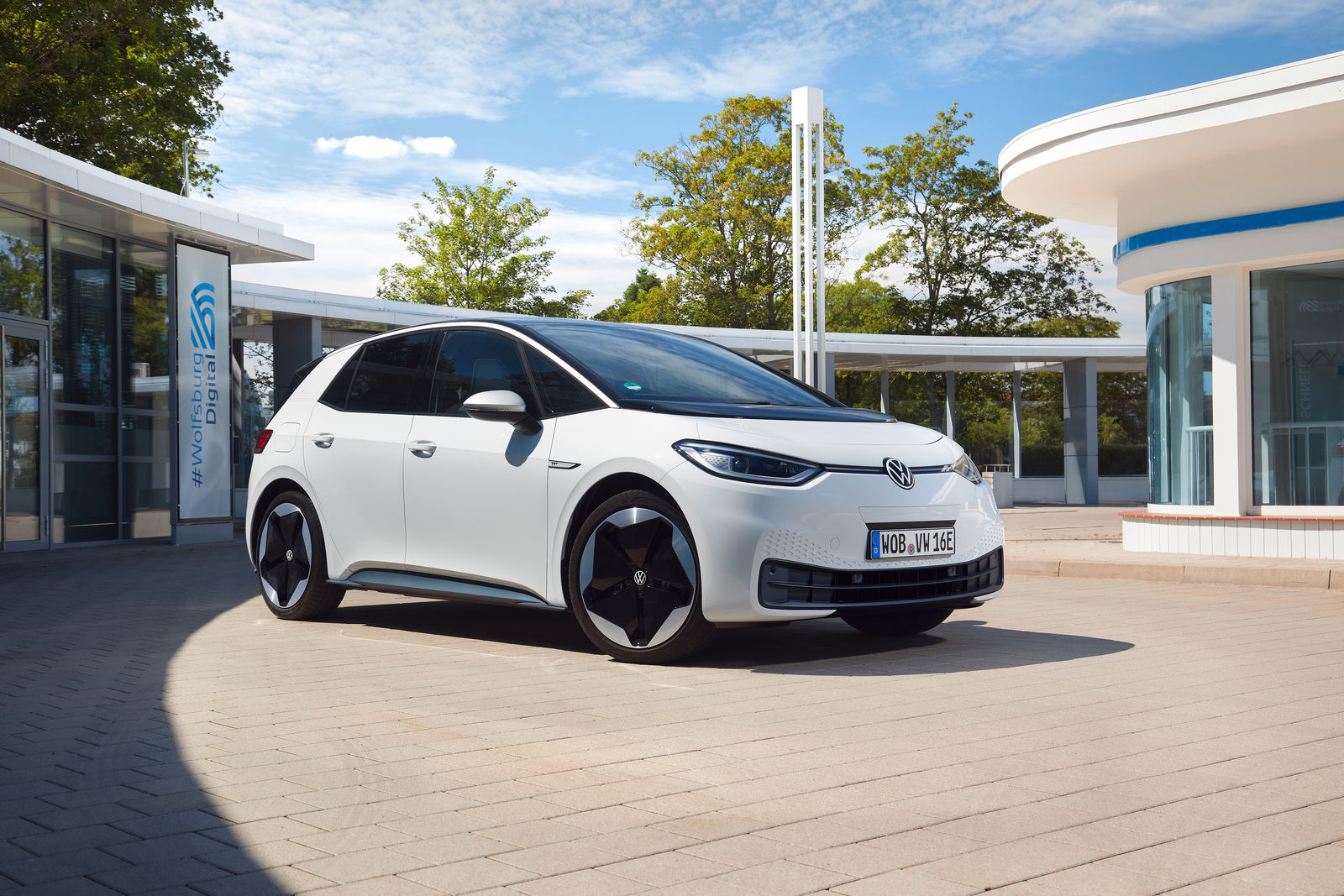
The Volkswagen ID.3 launched in the UK in late 2020 and was Volkswagen’s first proper post-Golf EV. Five years on, used examples are everywhere on AutoTrader and Heycar, with 2021 Life Pro Performance cars (58 kWh) trading at £14,200 to £16,500 and 2022 Pro S (77 kWh, the longer-range pick) at £17,000 to £20,500 (national average from AutoTrader UK and carwow listings sampled 19 May 2026). The depreciation curve has been steeper than VW expected, which is the bargain. The catch is that early cars shipped with software that was, charitably, half-baked, and a portion had a real high-voltage battery defect that Volkswagen had to address under a DVSA-coordinated programme.
Check 1: software version (single most important test)
Open Settings, scroll to System, then About. If the displayed version is 2.x, walk away. Volkswagen rolled out the 3.0 software release in 2023 and updates to 3.2, 3.5 and 3.7 followed through 2024 and 2025. A car still on 2.x in May 2026 has either failed to take the over-the-air upload, or has been deliberately blocked at a dealer, both of which mean a £600 to £900 dealer-installed update is in your future. CDE’s recommendation: only buy on software 3.2 or higher, ideally 3.5. Ask the seller to update before purchase, not after.
Check 2: battery State of Health (SoH) on ME3 diagnostic
UK used-EV buyer protection now hinges on the SoH number. There is no UK law requiring sellers to provide a battery health certificate (April 2026 status, confirmed via gov.uk), but every Volkswagen retailer has the ME3 (My Electric 3) diagnostic that produces one. Approved Used dealers usually print it without charge. Independent dealers and private sellers will not, so budget £75 to £100 for an Altelium or Aviloo independent SoH report before payment. Walk away if SoH is below 85 per cent on a 2021 to 2022 car, below 82 per cent on a 2023 car, or if the seller refuses the test.
Check 3: DVSA high-voltage battery recall completion
A portion of 2021 and early 2022 ID.3s were affected by a high-voltage battery module that did not meet specification. The risk, per Volkswagen’s own remedy notice, is a range loss with the yellow battery warning lamp, and in a worst case overheating. The DVSA recall reference is R/2023/146 in the UK system. Volkswagen Group dealers can confirm completion in seconds via the VIN. Use gov.uk/check-vehicle-recall with the registration plate to verify before viewing, and have the dealer re-check at handover.
Check 4: 12V auxiliary battery condition
Pre-week-16-2022 build cars suffered a 12V parasitic drain bug that left owners with a dead car on Monday morning. Volkswagen fixed it in software, but a 12V battery that has been drained flat 20-plus times will hold barely half its rated capacity. A Volkswagen Approved Used inspection includes a 12V load test (Midtronics or equivalent). Demand to see the printout. Cost of replacement if needed: around £170 plus fitting at a VW main dealer, or about £110 fitted at an independent VW specialist.
Check 5: V5C and HPI provenance
Every used car needs an HPI check. The ID.3 needs one twice, because the 2021 and 2022 launch cars went heavily into PCP and several have come off finance early via voluntary termination. An outstanding finance flag means the lender (often Volkswagen Financial Services) still owns the car. Run an HPI Check (around £20) and a free DVLA vehicle enquiry on gov.uk for tax and MOT history. The V5C should show one or two prior keepers maximum for a 2021 to 2022 car; more than three is a warning sign for a car of this age.
Check 6: air-conditioning compressor noise
The ID.3’s heat-pump and air-con package develops a clutch-engagement noise on roughly one in eight cars over 25,000 miles, per the goingelectric.de and id3forums.co.uk threads CDE aggregated. The fault is a worn compressor magnetic clutch. Volkswagen will replace it under the 5-year heat-pump warranty if the car is still inside, otherwise budget £450 to £620. Test with the air-con on full cold from cold start: a brief clatter that goes away is normal, a persistent click-click at idle is the fault.
Check 7: charging behaviour at a 50 kW rapid
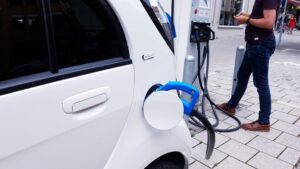
Drive the car to a Gridserve, Osprey, or BP Pulse 50 kW or higher charger and plug in with at least 30 per cent state of charge. A healthy 58 kWh ID.3 should pull around 80 to 90 kW for the first ten minutes; a healthy 77 kWh Pro S should pull 110 to 120 kW. Anything stuck at 22 kW indicates a battery temperature sensor or BMS calibration fault. This test is the single fastest way to surface a worn high-voltage pack and costs roughly £6 to £8 in charging fees. Worth it.
Check 8: warranty position
Volkswagen UK provides 3 years or 60,000 miles for the vehicle and 8 years or 100,000 miles for the high-voltage battery (down to 70 per cent SoH guarantee). A 2021 ID.3 has its main vehicle warranty expired by mid-2024, so the headline protection is just the battery and that requires Volkswagen-network servicing. Approved Used cars come with a 24-month warranty top-up from VW at no extra cost. Buying from CarShop, Cinch or a private seller? Negotiate £200 to £300 off and use that to buy a Warrantywise EV cover.
Check 9: the test drive cabin checklist
Inside, the haptic steering-wheel pads (pre-facelift cars) have been criticised for inconsistent registration. Press each one ten times to confirm response. The infotainment touchscreen should respond cleanly to multi-finger inputs; lag of more than a second points to a half-applied software update. Check the demisting works on full from cold (the air-con fault above causes constantly misted windscreens). Check the rear camera, the front parking sensors, and the heated seats. Finally, confirm a working Type 2 cable in the boot (replacement cost: around £180 from VW UK).
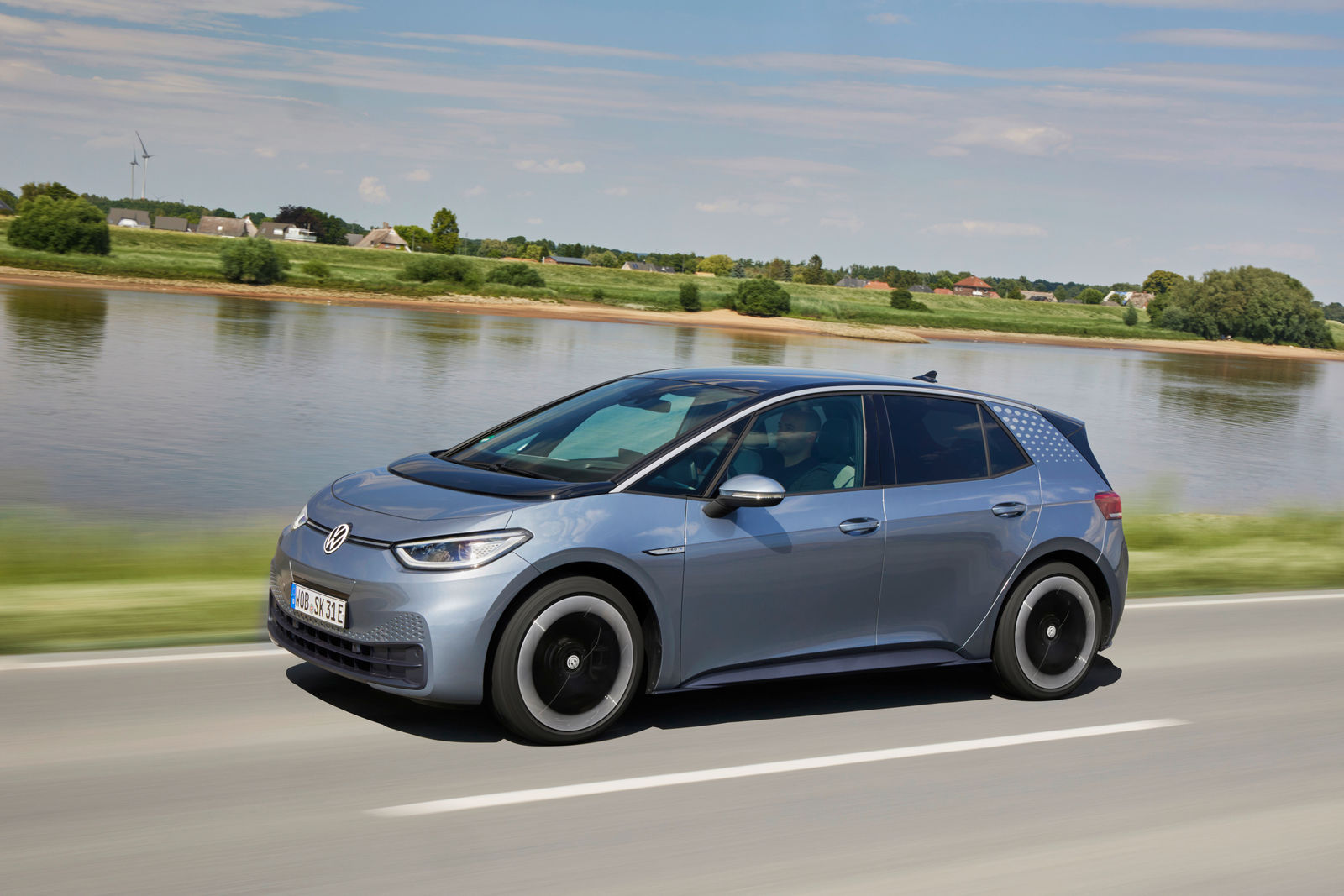
A used Volkswagen ID.3 in 2026 is one of the smartest EV buys in the UK if you follow this checklist, because the issues are well documented and Volkswagen has fixed almost all of them. Pay £17,000 to £20,500 for a 2022 Pro S with software 3.5 or above, a SoH of 88 per cent or higher, the R/2023/146 recall completed, and you will own a quietly capable family EV that genuinely covers 230 to 260 real-world motorway miles a charge. Pay £14,000 for a 2021 base Life with the wrong software version and you will have bought a £600 dealer bill and a slow charge curve. The checklist takes a Saturday. The payoff is years.
What software version should a used Volkswagen ID.3 have in the UK in 2026?
Is there a DVSA recall on the Volkswagen ID.3 battery?
What is a good battery State of Health (SoH) for a used ID.3?
How long is the Volkswagen ID.3 battery warranty in the UK?
How much should I pay for a used Volkswagen ID.3 in the UK in 2026?
Related reading on CDE
Buyer action
Where to check next
Use this as the final check before paying a deposit, signing finance paperwork or relying on a headline monthly figure.