
Salary sacrifice for an electric car is a payroll arrangement.
What salary sacrifice actually is (and why it’s a higher-rate-taxpayer subsidy)
Salary sacrifice for an electric car is a payroll arrangement. You give up a fixed slice of gross salary every month, and your employer leases the car on your behalf. Because the deduction comes off gross pay, you do not pay income tax or employee National Insurance on that slice. You do pay benefit-in-kind (BIK) tax on the company car you receive, but on a pure-electric car that BIK rate is currently 2% for 2024-25, rising on the published HMRC trajectory through 2026-27 and beyond.
The maths is unforgiving in one direction: the higher your marginal rate, the more sal-sac saves you. A 40% taxpayer in England loses 42p of every gross pound to income tax and employee NI; a 45% taxpayer (additional rate) loses 47p. Swap that pound for a car payment and the saving against a personal contract hire deal is real, often 30-40% off the equivalent retail PCH monthly. A basic-rate taxpayer in the 20% band still saves, but the spread narrows sharply, which is why every sal-sac broker quotes higher-rate examples on their landing pages.
Three providers dominate the UK market in 2026: Octopus EV (part of the Octopus Energy group), Loveelectric, and Tusker. We line them up in the sections below.
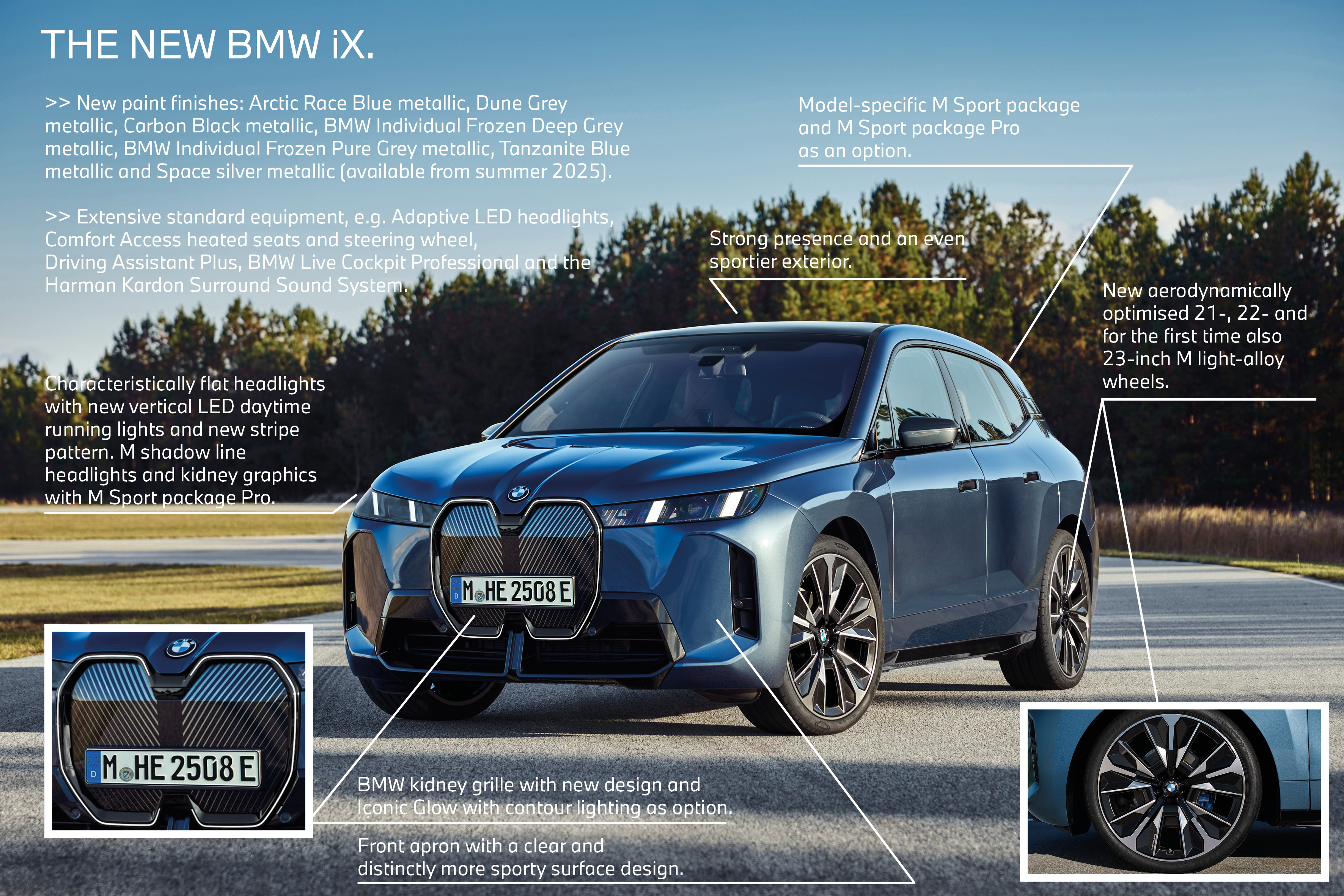
P11D price cap: which scheme lets you put the most expensive EV through payroll?
This is the question that lands in our inbox most often, and it is also the question all three providers handle quietly. None of Octopus EV, Loveelectric or Tusker publishes a hard, single P11D ceiling on their public scheme pages as of 25 May 2026. In practice, the cap is set by three things working together: the credit risk your employer represents to the funder, the residual value the funder is prepared to back on a given car, and the proportion of your gross salary the scheme will let the deduction consume (typically the deduction cannot drag your taxable pay below the National Minimum Wage).
What that means in plain English: a higher-rate taxpayer on £75,000 gross has materially more headroom than a basic-rate teacher on £35,000, and that headroom is the real cap. Anecdotally Tusker, with the longest funder relationships in the UK market (since 2009 according to its own published history), tends to underwrite the most expensive cars; we have seen Tusker quotes accepted on six-figure P11D EVs where smaller schemes refused.
Octopus EV and Loveelectric typically settle in the £80,000-£90,000 P11D range for a higher-rate employee, although neither provider publishes a number on its public page and the only honest answer is: ask for a quote on the specific car you want. If the answer is “no”, that is your cap. Treat anyone quoting a hard universal figure with suspicion; the published scheme rules do not back that up.
Early termination cover: who pays if you change job (or get made redundant)?
This is the line in the small print that catches people out, because the car belongs to the employer, not to you. If you leave, the lease either follows you (rare), gets reassigned to a colleague (also rare), or terminates early. The cost of early termination is what each provider’s protection product covers.
Octopus EV publishes the broadest list of covered events on its public page, stating that its protection covers “a wide range of events, from resignations to sick leave”. The cover is included for the employer rather than billed as an option.
Loveelectric includes “Early Termination Protection” as standard and additionally offers an optional “Zero Risk Guarantee” that gives the employer, in its own words, “complete peace of mind from Day 1” with no unexpected costs for early returns. It is the most explicit of the three about resignation, redundancy and other leaver scenarios.
Tusker bundles early termination cover within its broader car benefit scheme rather than as a separately marketed product on its homepage. Tusker’s own published copy emphasises that monthly cost is “one fixed monthly amount taken from the employee’s gross salary” and consolidates insurance, breakdown, road tax, servicing, MOTs and tyres into that single figure. Specific resignation cover detail is in the scheme rules pack your employer receives, not on the public site.
The practical read for a P2 reader: if you suspect you might leave your job inside the contract term, the Loveelectric Zero Risk add-on is the most explicitly priced protection. If your employer already runs Octopus or Tusker, you are likely already covered, but ask HR to send you the specific protection wording before you sign.

Maintenance, insurance, and breakdown: included or extra?
All three schemes are “fully maintained” packages by design. That is the headline reason salary sacrifice quotes look high against a bare PCH lease: you are buying motoring as a service, not just a car.
Octopus EV’s published inclusion list reads “4,000 free miles or a charger plus insurance, servicing, tyres, maintenance, breakdown cover” bundled into the monthly payment, with the additional headline of access to the Intelligent Octopus Go off-peak charging tariff at “an extra 1p/kWh on off-peak home charging” if you are also on Octopus Energy.
Loveelectric’s public bundle is the most detailed of the three. The provider lists “A brand new or reloved electric car, Maintenance and servicing, MOT, Optional home charger, Breakdown assistance and recovery, Replacement tyres and glass, Accident management, Early Returns Service, Fully comprehensive car insurance, Customer support for any issues, Brokerage fee” inside the monthly figure. Note the inclusion of replacement glass and accident management, neither of which is called out by the other two.
Tusker publishes the most consolidated description: “Fully comprehensive motor insurance, breakdown cover, annual road tax, accident management, routine servicing, MOTs and replacement tyres” inside one fixed monthly amount, plus a 24/7 driver support line.
For a higher-rate taxpayer the practical question is not whether the cover exists, but where the excess sits. None of the three publishes excess figures on its public page, which is the single most important number to get from your HR pack before you sign.
Octopus EV vs Loveelectric vs Tusker: side-by-side
| Comparison row | Octopus EV | Loveelectric | Tusker |
|---|---|---|---|
| Published P11D cap (public site) | Not published; quote-by-quote | Not published; quote-by-quote | Not published; quote-by-quote |
| Sample monthly quote (£70k P11D, 48m / 10k miles, 40% taxpayer) | Public quote tool present; figures vary by employer salary inputs | Public quote tool present; figures vary by employer salary inputs | Public quote tool present; figures vary by employer salary inputs |
| Maintenance included | Yes (servicing, tyres, maintenance) | Yes (servicing, MOT, replacement tyres and glass) | Yes (routine servicing, MOTs, replacement tyres) |
| Insurance included | Yes (fully comprehensive) | Yes (fully comprehensive) | Yes (fully comprehensive motor insurance) |
| Breakdown cover | Yes | Yes (breakdown assistance and recovery) | Yes (plus 24/7 driver support line) |
| Early-termination cover | Included; covers “resignations to sick leave” | “Early Termination Protection” standard, optional “Zero Risk Guarantee” | Included within scheme; detail in HR pack |
| Employer setup fee | “Totally free for employers to set up” | Scheme can be set up “in as little as 7 days” | Not published on public homepage |
| Smart charging tariff benefit | Yes (Intelligent Octopus Go, 1p/kWh saving off-peak) | Not bundled | Not bundled |
| Scheme age | Part of Octopus Energy group; “over 6,500 employers” enrolled | Newer entrant; not dated on public page | “Since 2009” per published copy |

When to pick which scheme
Pick Octopus EV if you are already an Octopus Energy customer or willing to switch, and your usage profile makes the Intelligent Octopus Go off-peak tariff materially valuable: a high-mileage commuter with a home charger will see the 1p/kWh saving compound across the contract. Octopus also has the advantage of zero employer setup fee, which is a soft sell if you are pushing your employer to adopt sal-sac for the first time.
Pick Loveelectric if your employer is smaller, needs a fast set-up window (the provider quotes seven days on its public page), or you want the most explicit leaver protection on the public scheme rules. The Zero Risk Guarantee is the most clearly named early-return product across the three sites we audited, and the inclusion list (with glass and accident management spelled out) is the most detailed.
Pick Tusker if you work for a large UK employer, want the longest-running provider with the deepest funder relationships, or are trying to push through an unusually expensive EV. Tusker has been running sal-sac schemes since 2009, claims the broadest public-sector and private-sector employer base, and tends to be the answer when the other two come back with “no” on a six-figure P11D car.

Which UK salary sacrifice scheme has the highest P11D cap?
None of Octopus EV, Loveelectric or Tusker publishes a hard universal P11D ceiling on its public page as of 25 May 2026. In practice Tusker, the longest-established UK provider (since 2009), tends to underwrite the most expensive cars because its funder relationships are deepest. The real cap on any of the three schemes is the headroom in your gross salary after the deduction sits above the National Minimum Wage, combined with your employer’s credit profile.
What happens to my sal-sac car if I leave my job?
The lease is in your employer’s name, so leaving normally triggers early termination. Octopus EV’s published scheme covers “resignations to sick leave” as standard. Loveelectric offers “Early Termination Protection” as standard plus an optional “Zero Risk Guarantee” for additional cover. Tusker bundles early termination within its scheme but does not publish the detail on the homepage. In every case, get the specific resignation wording from your employer’s scheme pack before signing.
Can I get a Polestar 3 or BMW iX on Octopus EV salary sacrifice?
Yes, in principle. Both the Polestar 3 and the BMW iX are inside the typical Octopus EV quoting range for a higher-rate taxpayer with sufficient salary headroom. Octopus EV does not publish a P11D ceiling, so the only definitive answer comes from running the specific car through your employer’s quote tool. The same applies on Loveelectric and Tusker.
Do salary sacrifice schemes include insurance and servicing?
Yes, in all three cases. Octopus EV bundles “insurance, servicing, tyres, maintenance, breakdown cover” inside the monthly payment. Loveelectric includes “Maintenance and servicing, MOT, Optional home charger, Breakdown assistance and recovery, Replacement tyres and glass, Accident management, Early Returns Service, Fully comprehensive car insurance”. Tusker bundles “Fully comprehensive motor insurance, breakdown cover, annual road tax, accident management, routine servicing, MOTs and replacement tyres”. The excess on the insurance policy is the figure to confirm before signing; it is not published.
Is salary sacrifice worth it for a basic-rate taxpayer?
The saving still exists at 20% but it narrows sharply versus a 40% taxpayer. The dominant benefit on EV sal-sac comes from the gap between your marginal income tax rate and the 2% BIK rate on zero-emission cars in 2026-27. A basic-rate worker on £30,000 gross will see a meaningful but smaller monthly saving against a personal contract hire lease; a 40% or 45% taxpayer can see 30 to 40% off the equivalent retail PCH monthly. Run the numbers on your specific car before committing.
Related reading
- Company car tax 2026-27: the EV BIK trajectory in plain English
- How Australia’s novated lease compares: the sister sal-sac market
- PCP vs HP in 2026: the personal finance route compared to sal-sac
Buyer action
EV and salary-sacrifice checks
Use this as the final check before paying a deposit, signing finance paperwork or relying on a headline monthly figure.