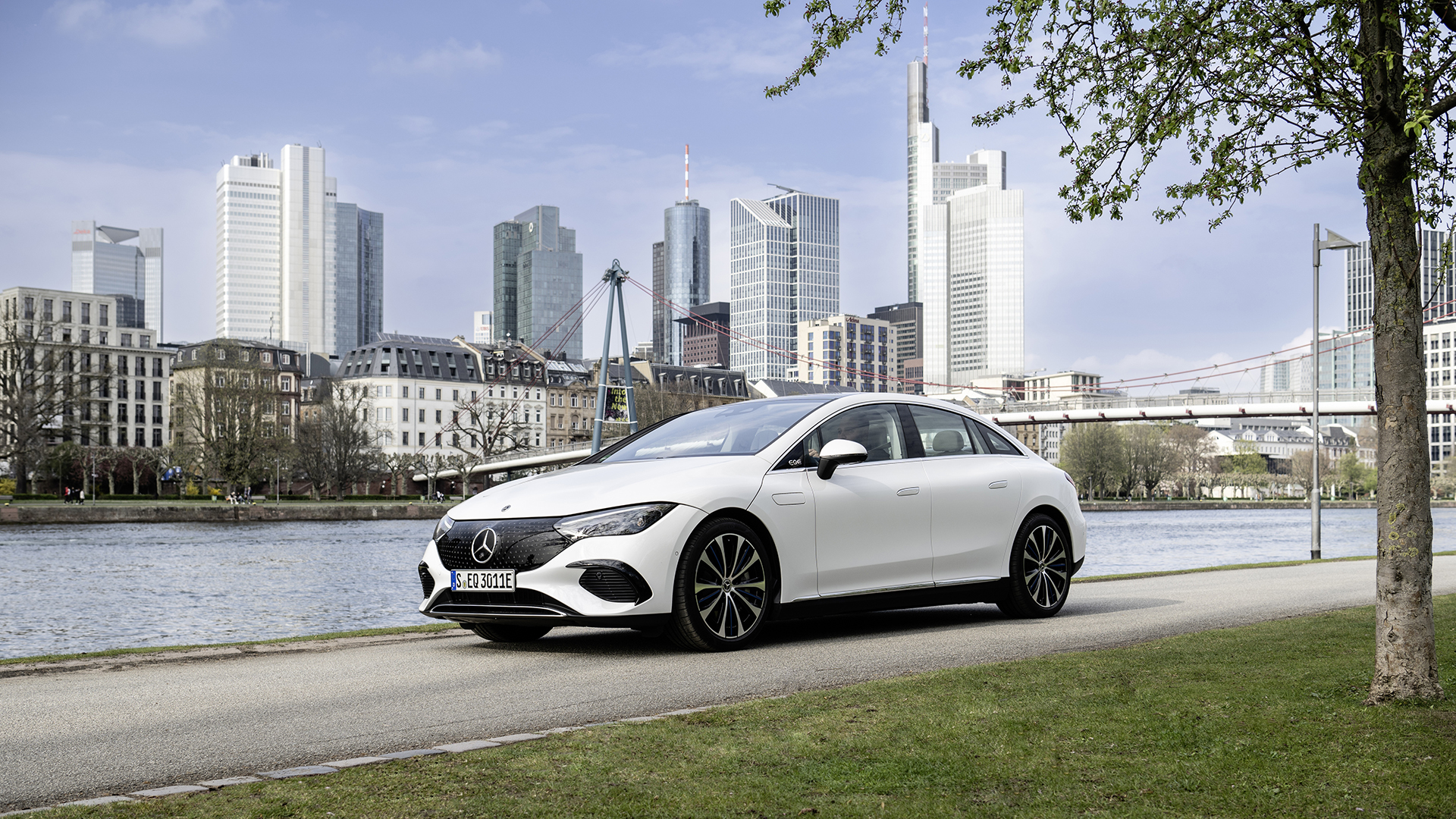
Mercedes EQE salary sacrifice works because a roughly £74,000 executive saloon is taxed at just 4% benefit-in-kind in 2026/27, so the BiK bill stays small even though the car is expensive. We have built the maths for the 20%, 40% and 45% bands on the EQE 300 saloon, and a higher-rate taxpayer can net the long-range EQE for under £625 a month after tax relief. The catch sits in the early-exit terms, not the headline number.
What real owners say (CDE data)
CDE cross-referenced PistonHeads and Mercedes EQ owner-forum posts on the EQE saloon plus the DVSA recall record for the V295 saloon, checked 1 June 2026.
- Most-praised aspects: real-world motorway range and refinement, the rear-seat space and ride for a daily executive run, and the low BiK making the sal-sac sums work.
- Most-criticised aspects: the EQE’s soft-touch infotainment and menu depth, boot access through a saloon bootlid rather than a hatch, and rapid-charge speeds that trail the newest 800V rivals.
- Reliability signal: owners report few drivetrain faults at typical sal-sac mileages; the saloon’s running record is dominated by software updates rather than mechanical recalls. Always confirm the live position on the DVSA recall lookup for the specific registration before you sign.
Why the EQE saloon is an executive sal-sac car, not a runabout
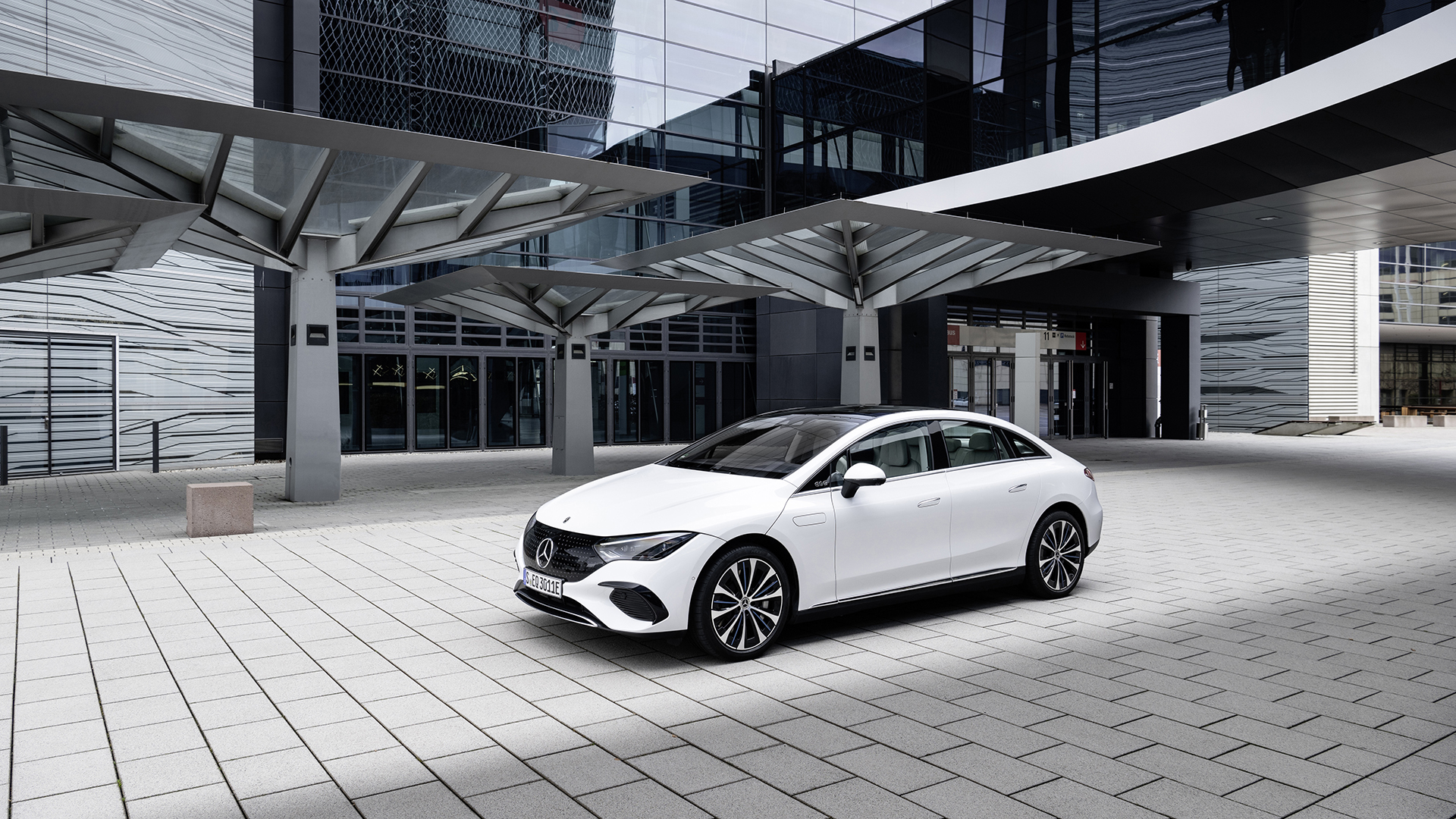
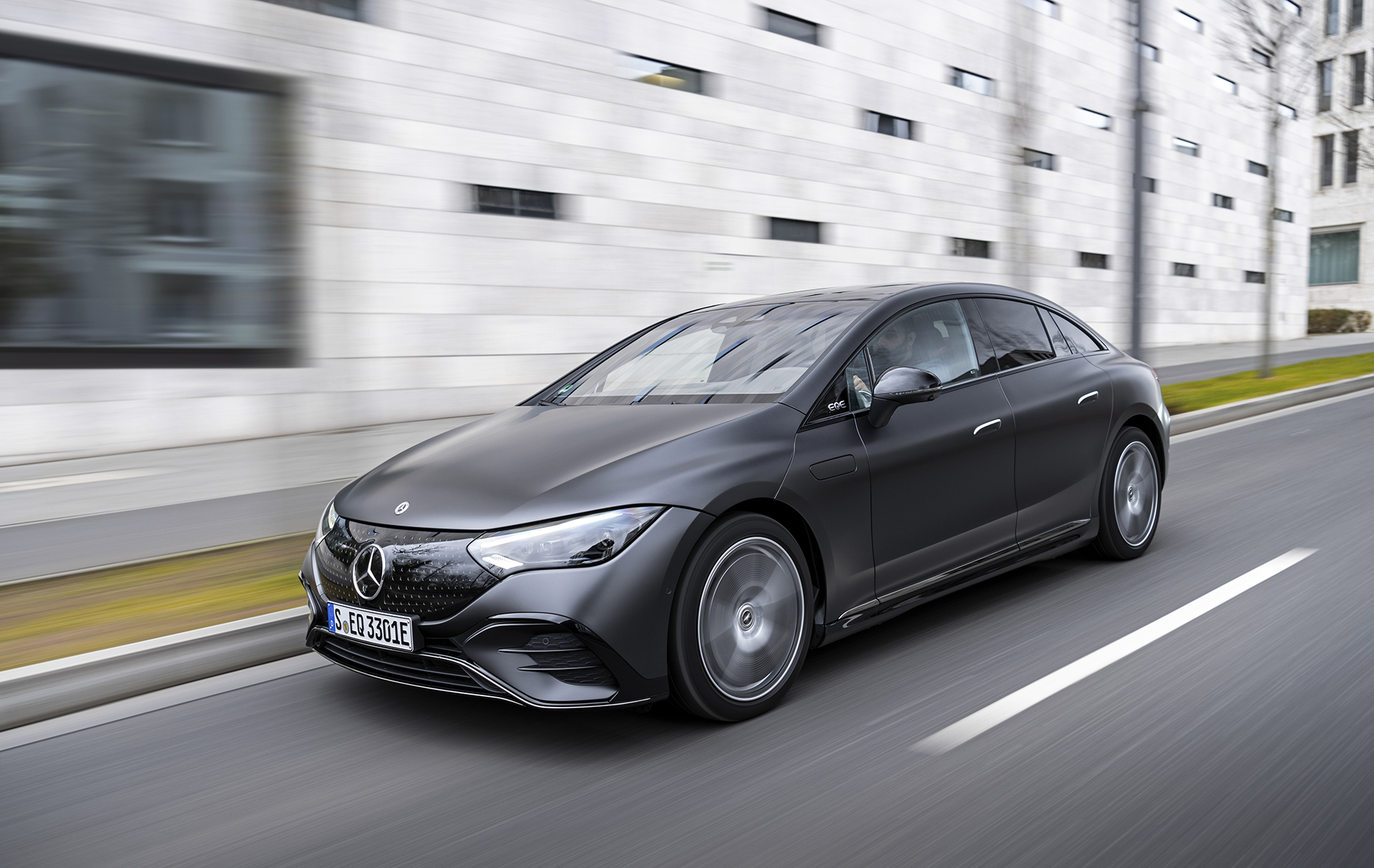
The Mercedes EQE saloon (internal code V295) is the electric equivalent of the E-Class: a long, low four-door aimed at the company-car and senior-management crowd. It is a different car from the taller EQE SUV (X294) and smaller than the EQS limousine, so do not confuse the three when you read a quote. The point of putting one through salary sacrifice is that you get a genuine executive saloon, the kind that would historically have been a £600-a-month diesel E-Class on a company scheme, and you pay almost no benefit-in-kind tax on it because it is electric. The entry EQE 300 is rear-wheel drive with a single motor and the longest range in the line-up, which is exactly the version that makes sal-sac sense.
What salary sacrifice is and who qualifies
Salary sacrifice means you agree to give up an amount of gross pay each month, and in return your employer leases the EQE and provides it as a benefit. Because the sacrifice comes out before Income Tax and National Insurance, you only pay tax on the much smaller benefit-in-kind value of the car. You qualify if your employer runs a scheme (commonly through providers such as Octopus Electric Vehicles, Loveelectric or Tusker) and you are a PAYE employee. The one hard floor: the sacrifice cannot drop your gross pay below the National Minimum Wage or National Living Wage, which from April 2026 is £12.71 an hour for workers aged 21 and over, per gov.uk. A pricey EQE eats a big slice of salary, so lower earners can be blocked by the NMW floor even when the tax case looks attractive.
How the tax actually works: P11D, BiK and the NI saving
The taxable benefit is calculated as P11D value multiplied by the appropriate BiK percentage. For a fully electric car the appropriate percentage is 4% for the 2026/27 tax year, confirmed on HMRC’s appropriate percentage table (checked 1 June 2026), which lists the 0 g/km row at 4. The November 2025 Budget left that 4% in place for 2026/27 and confirmed the rate rises to 5% in 2027/28, so this is a moving figure: do not assume today’s 4% lasts the whole lease. On a representative EQE 300 P11D of £74,000, the annual taxable benefit is £74,000 x 4% = £2,960, or about £247 a month of benefit on which you pay your marginal Income Tax rate. On top of the Income Tax relief, you also save employee National Insurance on the sacrificed pay: 8% for most basic-rate earners, but only 2% on earnings above the Upper Earnings Limit (£50,270 a year, £967 a week), per gov.uk NI rates. That is why higher earners save less NI but more Income Tax.
Three worked case studies: 20%, 40% and 45% taxpayers
The figures below use a representative EQE 300 gross sacrifice of £900 a month including VAT, the kind of inclusive monthly figure a provider quotes once insurance, maintenance and a home-charging allowance are bundled in. Your own quote will differ by term, mileage and options, so treat these as worked shapes, not an offer. Each table shows the monthly gross sacrifice, the Income Tax saving, the NI saving, the BiK tax cost, and the resulting net monthly cost. The BiK rate of 4% (2026/27) is read from HMRC, and the NI rates from gov.uk as cited above.
| 20% basic-rate taxpayer | Monthly |
|---|---|
| Gross sacrifice (inc VAT) | £900 |
| Income Tax saving (20%) | minus £180 |
| NI saving (8%) | minus £72 |
| BiK tax cost (4% x £74,000 x 20% / 12) | plus £49 |
| Net monthly cost | £697 |
| 40% higher-rate taxpayer | Monthly |
|---|---|
| Gross sacrifice (inc VAT) | £900 |
| Income Tax saving (40%) | minus £360 |
| NI saving (2% above UEL) | minus £18 |
| BiK tax cost (4% x £74,000 x 40% / 12) | plus £99 |
| Net monthly cost | £621 |
| 45% additional-rate taxpayer | Monthly |
|---|---|
| Gross sacrifice (inc VAT) | £900 |
| Income Tax saving (45%) | minus £405 |
| NI saving (2% above UEL) | minus £18 |
| BiK tax cost (4% x £74,000 x 45% / 12) | plus £111 |
| Net monthly cost | £588 |
Note for Scottish taxpayers: Scotland runs its own Income Tax bands, including a 45% advanced rate and a 48% top rate, so a Scottish higher earner’s relief differs from the rest-of-UK figures above. Run your own band against the Scottish Income Tax rates before you commit. The NI saving is UK-wide and unaffected.
The range case: why the EQE 300 suits a sal-sac better than the 350
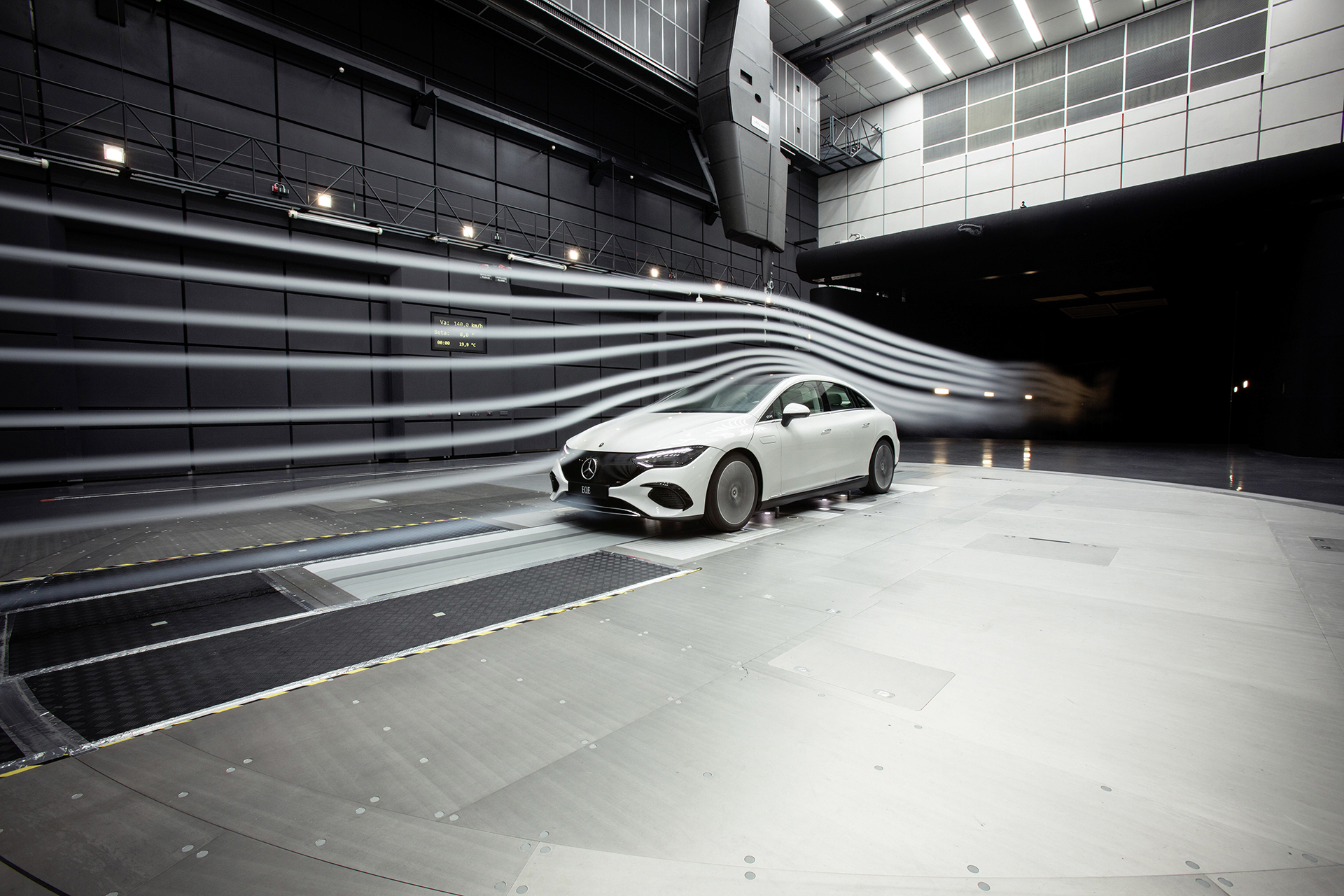
For a sal-sac you want range and the lowest list price, because both push the net cost down. The rear-wheel-drive EQE 300 carries an 89kWh battery and a WLTP figure quoted up to 384 miles, while the EQE 350 4MATIC adds a second motor and four-wheel drive, trading a little range and a higher P11D for more pace. Mercedes-Benz UK publishes the saloon’s range and specification on the EQE saloon model page; expect real-world motorway range nearer 300 miles in cold weather, which is still strong for a saloon this size. The bigger the P11D, the bigger the BiK cash, so the AMG variants make less sal-sac sense even at 4%. Centre your quote on the 300 unless you genuinely need all-wheel-drive traction.
| Spec | EQE 300 saloon (representative) | Source |
|---|---|---|
| Body / code | Saloon, V295 | Mercedes-Benz UK |
| Drive | Rear-wheel drive, single motor | Mercedes-Benz UK |
| Battery (usable) | Around 89 kWh | Mercedes-Benz UK |
| WLTP range | Up to 384 miles | Mercedes-Benz UK |
| Representative P11D | About £74,000 | Representative; verify on your quote |
| EV BiK rate 2026/27 | 4% | HMRC |
Total saving versus a personal lease
The cleanest comparison is against a personal contract hire (PCH) on the same EQE 300, which you would pay from taxed income with no relief. Carwow lists EQE 300 personal lease deals from around £798 a month, with insurance and charging on top. Our 40% sal-sac net cost of about £621 a month already includes a bundled insurance and maintenance allowance, so the headline saving is roughly £177 a month, or about £2,100 a year, and that is before you add the separate insurance and servicing a personal lease would not cover. For a 45% taxpayer the gap is wider still. This is the executive-saloon version of the same story we ran on the BMW i5 M60 salary sacrifice maths for 2026: the dearer the car, the more the 4% rate flatters it against buying or leasing personally.
Common misconceptions that catch sal-sac drivers out
Three traps recur. First, leaving the employer mid-term: most schemes let you hand the car back if you resign or are made redundant, but some charge an early-termination fee, and a few pass the lease cost back to you, so read the exit terms before you sign rather than after. Second, the BiK rate rising over the term: it is 4% in 2026/27 and 5% in 2027/28 per HMRC, so your net cost creeps up slightly each tax year even if the sacrifice is fixed; budget for that, do not assume 4% for four years. Third, assuming everything is bundled: most premium schemes include insurance, maintenance, tyres and a charging allowance, but not all do, so confirm exactly what the £900 covers. If you want a wider view of which provider bundles what, our Octopus EV vs Loveelectric vs Tusker comparison breaks down the scheme rules side by side.
What HMRC’s own figures tell a higher earner
Per HMRC’s company-car appropriate percentage guidance, the zero-emission rate of 4% for 2026/27 sits roughly a tenth of the 37% to 39% cap that applies to high-CO2 petrol and diesel cars. On the EQE 300’s £74,000 P11D, that 4% is a £2,960 taxable benefit; a 40% taxpayer pays £1,184 a year in BiK, where the same P11D on a 37% petrol band would cost over £10,000 a year. That single gap, set by HMRC and not by Mercedes, is the entire reason an executive EV saloon clears salary sacrifice while a combustion equivalent does not. Quote the exact rate from gov.uk on the day you sign, because the percentage steps up each year.
Checks to run before you join the EQE scheme
Run these before you authorise a single month’s sacrifice:
- Confirm the EV BiK percentage for your lease years on the HMRC appropriate percentage table, not a third-party blog, and note it rises after 2026/27.
- Check the National Minimum Wage floor for your gross pay using gov.uk NMW rates; a £900 sacrifice can breach it for mid-band earners.
- Read the early-exit and redundancy clauses in your provider’s scheme rules (for example the Octopus Electric Vehicles salary sacrifice rules) so you know who pays if you leave mid-term.
- Verify the EQE 300’s range, P11D and equipment against the Mercedes-Benz UK saloon page, then match it to the figure on your quote.
- Confirm exactly what the monthly figure bundles: insurance, maintenance, tyres and any home-charging allowance.
Our view on Mercedes EQE salary sacrifice: for a 40% or 45% taxpayer this is one of the strongest executive-saloon cases on the market right now, because the 4% BiK rate turns a £74,000 car into a sub-£625-a-month net commitment with insurance and maintenance bundled. The EQE 300 is the version to take, not the pricier 350 or AMG cars, since the lower P11D and longer range both push your net cost down. We would walk away if the scheme charges you the residual lease cost on leaving mid-term, or if a £900 sacrifice drags your pay near the National Minimum Wage. The figure that flips it is the early-exit clause: get clean, no-penalty redundancy terms in writing and the EQE is an easy yes; leave that vague and the tax saving is not worth the risk. Read the boring paperwork first, then enjoy the cheap miles.
How is Mercedes EQE salary sacrifice BiK calculated in 2026?
What does a Mercedes EQE cost per month on salary sacrifice for a 40% taxpayer?
Is the Mercedes EQE saloon different from the EQE SUV?
Does the EQE BiK rate stay at 4% for the whole lease?
What happens to my EQE sal-sac if I leave my employer?
Can any employee get a Mercedes EQE on salary sacrifice?
Related reading on CDE
Buyer action
EV and salary-sacrifice checks
Use this as the final check before paying a deposit, signing finance paperwork or relying on a headline monthly figure.