Scrape a bumper, crack a battery casing, and you could be looking at a £12,000 repair bill on a car that no longer fetches that on the forecourt. That is the uncomfortable arithmetic behind the rise in electric write-offs, and as of 2026, with the average UK electric-car insurance premium sitting close to £1,344, it is feeding straight into what owners pay at renewal. It is exactly the problem Thatcham Research set out to tackle when it launched its EV blueprint to stop perfectly repairable cars being scrapped. The maths around a damaged EV has quietly turned against owners, and in 2026 a knock that would barely register on a petrol hatchback can end an electric car’s life outright.
Here is the bit that would stop me before I signed for an EV on finance: the trigger is almost never the dent you can see. It is the pack underneath.
Why a minor knock totals an electric car (EV Insurance)
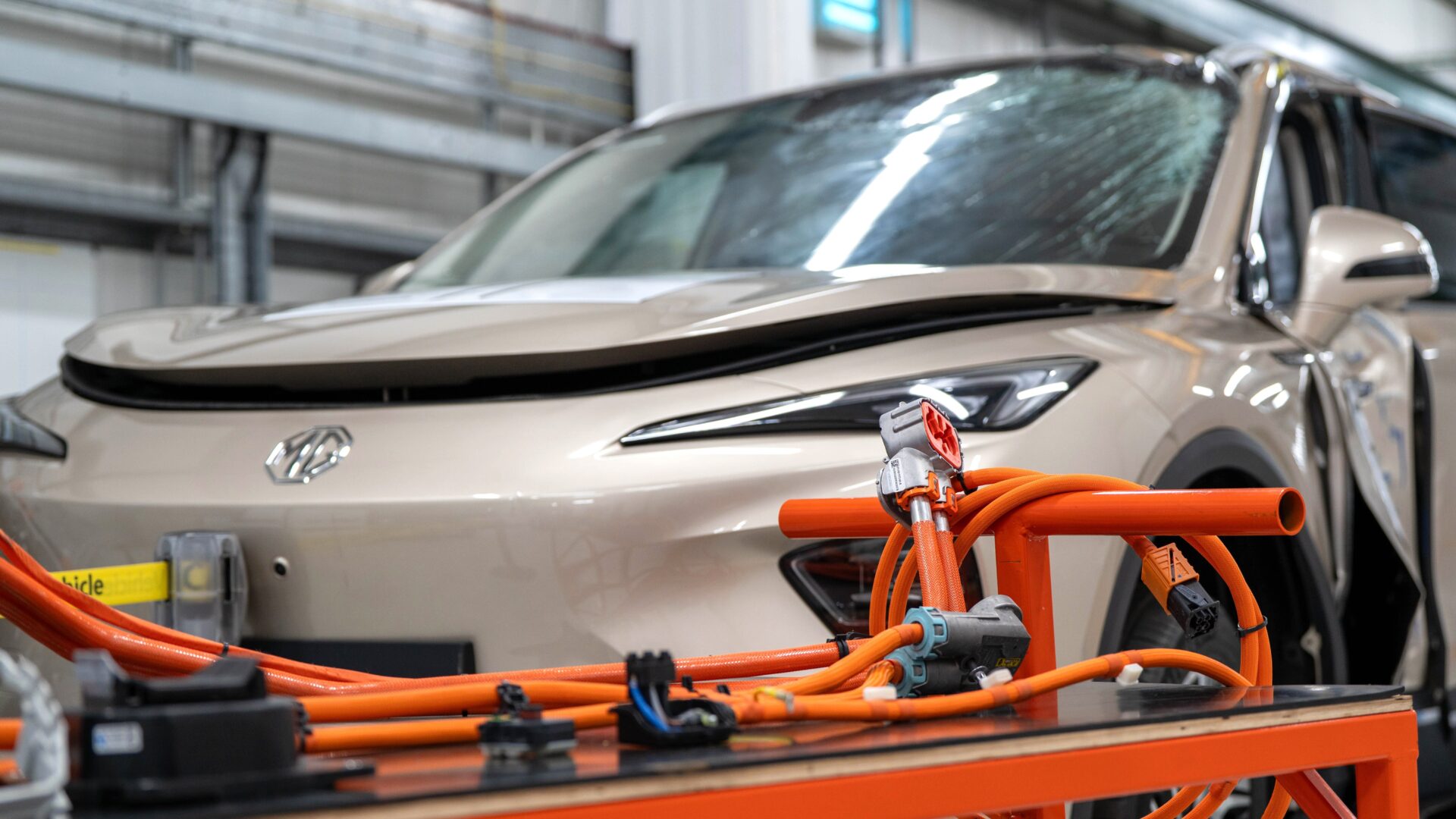
The headline figures explain a lot. The Association of British Insurers found EV repair costs running 37% higher than petrol and diesel equivalents, with repairs taking 14% longer to complete — a double hit on both the claim value and the courtesy-car bill. On a conventional car, a low-speed shunt is a panel, a bit of paint, maybe a sensor. On an EV, the same impact can intrude on the battery, and that is where the economics fall apart.
Allianz Commercial has been blunt about this: even minor damage to a battery casing can force a full pack replacement, and those run from £10,000 to £20,000 and up. Once a single repair line crosses that threshold, the insurer’s total-loss calculation is effectively decided. The car is written off not because it is wrecked, but because the one component you cannot easily inspect or repair has been compromised.
What makes me uneasy is how invisible the trigger is. There is often no quick way for a bodyshop to confirm a pack is undamaged after an impact without manufacturer data and diagnostics many still cannot access — so the cautious, liability-safe call is to condemn the battery. That caution is rational for the insurer. It is expensive for you.

The write-off rate is low — until the battery is involved
It would be easy to read all this as panic. It is not. Cap HPI data shows EVs under five years old were written off at just 0.9%, against 1.89% for petrol and diesel cars — so on the whole, electric cars are less likely to be totalled. The catch is in the cause. When an EV does get written off, battery damage is repeatedly the decisive factor rather than the spread of smaller faults that finishes off an older combustion car.
That distinction is the whole story. A low overall write-off rate masks a brutal binary: most prangs are fine, but the ones that reach the pack are close to unsurvivable. There is little middle ground, and that is what the Innovate UK and Thatcham Research report set out to address — building the repair standards, data sharing and diagnostics that would let a damaged pack be assessed and salvaged rather than automatically scrapped.
The car is written off not because it is wrecked, but because the one component you cannot inspect or cheaply repair has been compromised.
What it costs when the sums stop adding up
Put real numbers on it and the threshold problem becomes obvious. WeCovr cited replacement quotes of £12,000 to £14,000 for a 40kWh Nissan Leaf and £10,000 to £13,000 for a 64kWh Hyundai Kona Electric. Those are not exotic performance EVs — they are mainstream family cars, the sort sitting on thousands of UK driveways.

Now layer on what has happened to used values. CarHealth reported a 28% drop in used EV prices, which means battery repair costs now clear 60% of a car’s value far more easily than they did even a year ago. When the repair is worth more than half the car, the insurer writes it off — and a falling market drags that tipping point lower every quarter. A three-year-old electric Kona that has shed a chunk of its value is suddenly a car where a five-figure pack quote is game over.
The premium you pay for all of this
None of this stays on the bodyshop ramp. It lands on your renewal. FWD Research found the average UK EV insurance premium had reached £1,344 in 2026 — close to double the typical petrol or diesel figure — driven directly by those repair costs and write-off risks. WeCovr put the gap at 25% to 50% above equivalent combustion cars.
The roundtable that thrashed this out — total loss in transition — framed it as a capacity and cost problem the whole market is still learning to price. That is the honest read: insurers are charging for uncertainty as much as for risk, and until the diagnostics and salvage standards Thatcham is pushing for become routine, that uncertainty premium does not go away. For the avoidance of doubt, every figure here is an industry data point as of 2026, not a quote you can hold an underwriter to, and any premium you are actually offered will reflect your own car, postcode and claims history rather than these averages.
What I’d actually do before buying electric
I am not telling anyone to abandon EVs — the running-cost case and the sub-1% write-off rate are both real, and for most drivers most of the time, electric still makes sense. But I would go in with my eyes open on three things.
First, I would treat the battery’s repairability as a buying criterion, not an afterthought. Ask whether the manufacturer shares diagnostic and repair data with independent bodyshops — the brands that do are the ones whose cars are least likely to be condemned on a precautionary write-off. Second, I would not over-finance a depreciating EV: if you owe more than the car is worth and it gets totalled over a pack you cannot see, GAP cover stops being optional. Third, I would read the policy small print on battery damage specifically, because that single clause now decides more EV claims than anything else.
The car I would walk away from is the cheaply-financed, fast-depreciating used EV with no clear battery-repair pathway behind it — that is the profile most exposed to a write-off from a knock that would cost a combustion owner a long weekend and an excess. Buy the EV whose maker has actually invested in keeping it repairable, insure it knowing the premium reflects a market still finding its feet, and the write-off risk stops being the thing that keeps you up at night. Get that wrong, and a kerbed bumper becomes a cheque you never expected to write.
Buyer action
Where to check next
Use this as the final check before paying a deposit, signing finance paperwork or relying on a headline monthly figure.