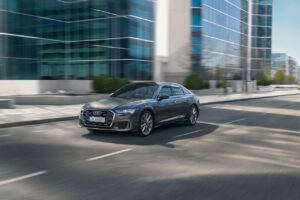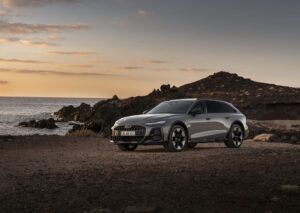
£8,760. That is what HMRC will bolt onto a company saloon driver’s taxable income in 2026/27 for the privilege of free petrol, before they have squeezed a single mile of pleasure out of it. The figure flows straight from the fuel benefit multiplier HMRC has fixed at £29,200 for 2026/27, up from £28,200 the year before, as the government’s own company car tax guidance confirms: on a typical 30% petrol band that is £29,200 × 30% = £8,760 added straight to your income. For a 40% taxpayer that one perk costs £3,504 a year in tax. The driver in the identical situation behind the wheel of an electric car pays nothing for the equivalent benefit. That gap is the single sharpest line in UK company-car tax right now, and it is worth understanding before you sign anything.
The fuel benefit charge is a tax on a perk most people forget they have
If your employer pays for the fuel you burn on private journeys in a company car, that “free” fuel is a taxable benefit. The maths is brutally simple and has nothing to do with how much you actually pump. HMRC takes that fixed £29,200 multiplier for 2026/27 and applies the same CO₂-based Benefit-in-Kind percentage that already governs the car itself, as the government’s company car tax guidance sets out.
So a petrol car sitting in a 30% BiK band produces a fuel benefit of £29,200 × 30% = £8,760. That is added to your income on top of the car benefit. A higher-rate taxpayer hands over 40% of it; an additional-rate taxpayer 45%. And here is the part that catches people out: the charge is all-or-nothing. Whether you do 2,000 private miles a year or 20,000, the bill is identical. Unless you are racking up serious private mileage, the free-fuel perk is frequently a worse deal than simply buying your own petrol, which is exactly why a lot of employers and drivers quietly hand it back.
Electricity is not “fuel” — and that is the whole game
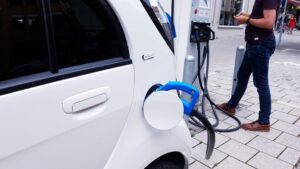
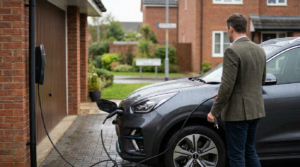
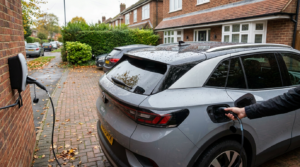
The reason an EV driver escapes this entirely is almost a technicality, but it is a technicality worth thousands. HMRC does not class electricity as a road fuel for company-car purposes. There is no electric equivalent of the £29,200 multiplier. Employer-provided charging at the workplace, and employer-paid charging of a company EV, fall outside the fuel benefit charge altogether.
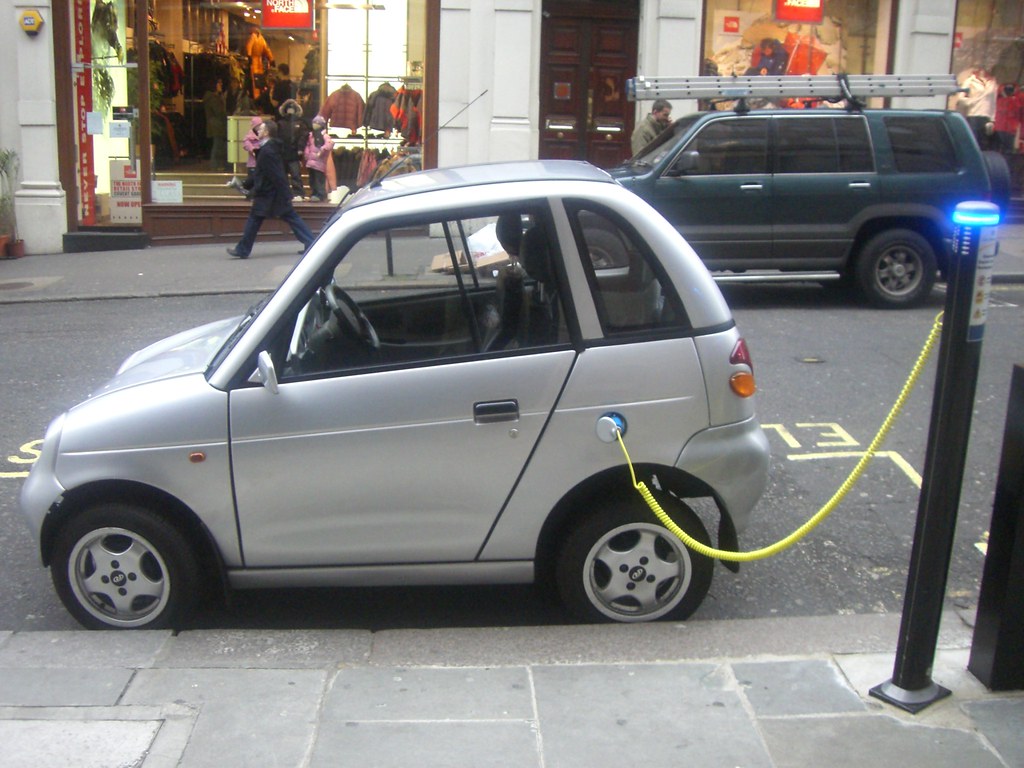
The most expensive line item on a petrol or diesel arrangement simply does not exist on the electric one.
That is not a loophole anyone needs to be nervous about — it is settled treatment, set out in the gov.uk company benefits guidance. The practical effect is that the most expensive line item on a petrol or diesel arrangement simply does not exist on the electric one.
There is one nuance I would not gloss over. Where an employer pays for electricity used on genuinely private motoring in a way that goes beyond the standard charging exemptions, that cost can still be a reportable benefit on the P11D, and mixed business-and-private charging needs sensible apportionment to keep it clean. It is a reporting question, not a £29,200-shaped sledgehammer. The distinction matters: electricity can be a taxable benefit, but it is never taxed as “fuel”.
The BiK percentages still tilt the table
The fuel charge is only half the story, because the BiK percentage drives both the car benefit and the fuel benefit. And on that front the electric car is still sitting pretty in 2026/27, with the appropriate percentages set by HMRC (gov.uk):
- Pure EVs (0 g/km): 4% BiK — up from 3% the previous year, per salarytax.uk’s P11D and BiK breakdown.
- Plug-in hybrids: 4% to 16%, banded by how far they travel on electricity alone.
- Petrol and diesel: up to 37% for the higher-emission models.
Put those side by side and the contrast is stark. The electric car is taxed on 4% of its list price; the thirsty executive saloon on as much as 37% of its — and then, if free fuel is in the package, on 37% of £29,200 on top. A premium EV and a premium combustion car can carry similar showroom tickets and land in completely different tax universes.

What the spec sheet won’t tell you: the rates are climbing
The 4% figure is not permanent, and anyone signing a three- or four-year salary-sacrifice arrangement should price that in. The electric BiK rate rises by one percentage point a year — reaching 5% in 2027/28 and 9% by 2029/30, in line with HMRC’s published appropriate-percentage schedule, as both salarytax.uk and Tripbook set out.
That sounds ominous until you hold it against the alternative. Even at 9% in 2029/30, an electric company car is taxed at roughly a quarter of the rate of a high-emission petrol one — and it still carries no fuel benefit charge. The trajectory is upward, but the head start is so large that the gap stays decisively in the EV’s favour across any realistic lease term. I would not let the rising rates spook me out of an electric arrangement; I would simply do the four-year sum at the future percentages rather than today’s.
Run the numbers on your own band before you decide
If you want to translate any of this into a real monthly figure, the inputs you need are your car’s P11D list price, its BiK band, your marginal tax rate, and whether free fuel is on the table at all. The salarytax.uk P11D calculator will do the arithmetic, and I would urge anyone weighing a company car to run their own band rather than trust a salesperson’s headline. The fuel benefit charge in particular is so often left in a package out of habit, costing a driver four figures a year for a perk they would never miss.
If the choice landed on my desk
For a UK employee offered a company car in 2026/27, the financial case for going electric is not close — and the fuel benefit charge is the reason it is not close. A petrol or diesel car can saddle you with up to 37% BiK and an £8,760-ish fuel benefit if free fuel is included; the EV sits at 4%, with the electric equivalent of that fuel charge simply not existing. The one person who should pause is the very high private-mileage driver in an unusually efficient combustion car where free fuel genuinely earns its keep — a shrinking niche. For nearly everyone else, I would take the electric car, decline free fuel on any combustion option as a matter of course, and budget for the BiK rate ticking up to 9% by the end of the decade. What would change my mind is a wholesale reform of how EV running costs are taxed — and on the current confirmed rates, there is no sign of that landing before 2029/30.
Figures relate to the 2026/27 UK tax year and are general information, not personal tax advice; your liability depends on your own circumstances and marginal rate.
Buyer action
Where to check next
Use this as the final check before paying a deposit, signing finance paperwork or relying on a headline monthly figure.