Car Deal ExpertIndependent UK car-buying guidance: premium used cars, finance, salary-sacrifice EVs, insurance, recalls and consumer protection since 2008.
Best PCH lease deals UK 2026: the electric cars worth leasing now
With free EV road tax gone and the £3,750 grant capped at £37k, here's why I'd lease , not buy , a premium electric car in 2026, and the Tesla, Polestar and…
The £3,750 the government will knock off a new electric car? On the EVs actually worth leasing in 2026, you will never see a penny of it. The RAC sets out exactly why: the Electric Car Grant, live since 16 July 2025, only bites on cars with a headline list price of £37,000 or under (with higher trims of an eligible model line stretched to a £42,000 cap). The Polestars, the BMW i4s, the long-range Teslas — the cars I think genuinely earn a three-year personal contract hire (PCH) — sit comfortably the wrong side of that line. So if you are shopping the premium end, forget the grant. The case for leasing in 2026 is built on three other numbers entirely, and once you see them, the maths gets interesting.
Why I’d lease, not buy, a premium EV right now
Start with depreciation, because it is the silent killer of the buy-it-outright case. Electric cars have shed value faster than almost anything else on the road over the past two years, and a personal lease quietly hands that entire risk to the funder. You agree a fixed monthly figure, you hand the keys back after three years, and whatever the car is worth on that day is somebody else’s problem. On a £55,000 EV, that is not a small favour: it is the whole game.
The second number is road tax, and it is a perk that quietly died on 1 April 2025. As the RAC explains, free Vehicle Excise Duty for EVs is gone: a new electric car now pays £10 in its first year and then the £200 standard rate every year after. Worse, the Expensive Car Supplement now applies to EVs too — £440 a year on top, for five years, taking the bill to £640 annually on a qualifying car. The one piece of good news is that, in November 2025, the threshold for that supplement was lifted to £50,000 for electric cars specifically (petrol and diesel stay at £40,000). On a lease, though, the registered keeper is the leasing company, so on the right contract the supplement is folded into a rental that someone else administers, rather than a separate bill landing on your doormat each spring.
The third number is the one people get wrong. PCH is a personal lease, which means there is no Benefit-in-Kind tax at all — none. That matters because BiK on company and salary-sacrifice EVs is climbing: carwow reports the rate sits at 3% in 2025/26, rises to 4% from 6 April 2026, and again to 5% in 2027/28. Still trivial, but rising. If you have no access to a workplace scheme (a self-employed driver, or someone whose employer doesn’t offer salary sacrifice), PCH sidesteps that whole conversation.
Leasing a premium EV in 2026 isn’t about getting a car cheaply. It’s about renting your way around three risks — depreciation, a tax perk that’s been withdrawn, and a residual value nobody can confidently predict — and letting the funder carry all three.
Image: Arnoldclarkleasing
The salary-sacrifice caveat I can’t ignore
I edit the salary-sacrifice coverage here, so let me be straight: if your employer runs a scheme, that almost certainly beats PCH on pure cost. You pay for the car out of gross salary, saving income tax and National Insurance, and the only offset is that rising BiK charge, which, at 4% for 2026/27, is a rounding error against the gross-pay saving for a 40% taxpayer. The arithmetic is lopsided enough that I’d struggle to recommend personal contract hire to anyone who can get salary sacrifice instead.
But plenty of people can’t. If you’re a sole trader, a contractor outside any scheme, or simply at a firm that hasn’t set one up, PCH is the next-best route into a premium EV without buying the depreciation. That’s the reader I’m writing for here, and for them the question becomes purely: which cars are worth the monthly figure?
The cars I’d actually put on the drive
One caveat before the shortlist: every monthly figure below is an advertised personal-contract-hire rental at the time of writing, not a finance offer, and it moves with contract term, annual mileage, the size of the initial payment and your status. Treat them as a guide; the figure you are actually quoted will depend on your circumstances. With that framing in place, here is how the four I’d consider stack up.
Car
From, per month*
Initial payment
Range / standout
The trade-off
Tesla Model 3 Long Range RWD
~£402
~£2,400
466 miles WLTP, Supercharger network
Cabin a notch below the rivals
Polestar 4
~£481
Not stated
Most design-led cabin in the class
No rear window; residuals an unknown
BMW i4 eDrive40 M Sport
~£574
Not stated
Best to drive, proper BMW steering
The priciest here by some margin
VW ID.7 Tourer GTX Plus
under £500
~£2,700
Fast, long-legged electric estate
Niche bodystyle
Where I’d land
Model 3 for range and charging, Polestar 4 for occasion; the i4 only if you’ll feel the drive every morning.
*Advertised personal lease rentals at the time of writing, sourced as linked below; not finance offers, subject to status, and dependent on term, mileage and your circumstances.
For range-per-pound, nothing in this bracket touches the Tesla Model 3 Long Range RWD. A genuine 466-mile WLTP figure is the headline, and the Supercharger network remains the least stressful way to do real distance in Britain. Auto Express had it advertised at around £402 a month with a roughly £2,400 initial payment at the time of writing; carwow’s listings run from lower depending on spec and mileage. For a car that will swallow a 400-mile day without drama, that is the most defensible monthly number on this page.
Image: Selectcarleasing
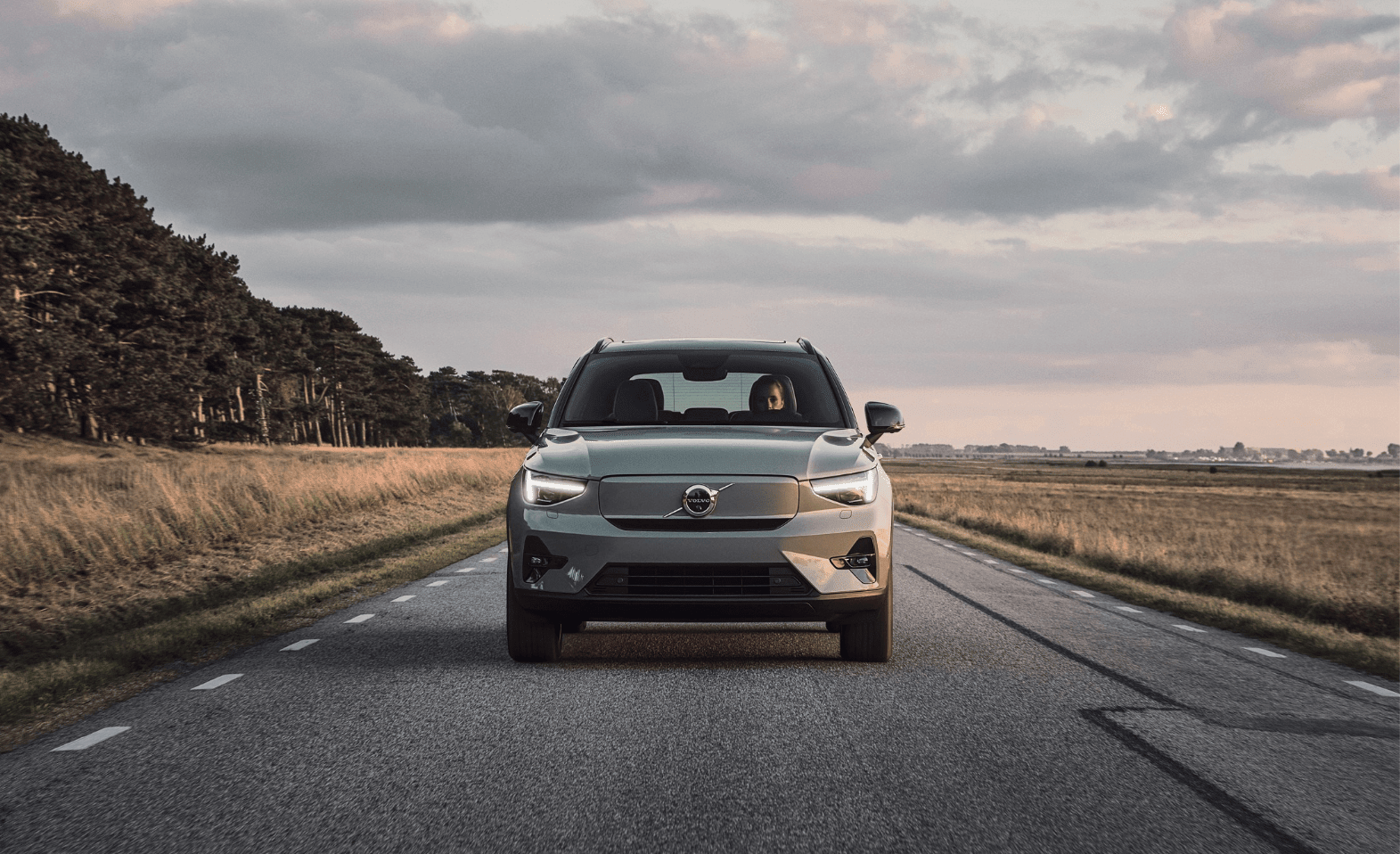
If you want the Model 3’s sense and a lot more occasion, the Polestar 4 is where I’d look. It’s the most design-led thing in the segment — yes, the one without a rear window — and it feels a clear notch above the Tesla inside. carwow lists personal deals from around £481 a month, though sharper short-term offers surface regularly; treat the headline as a ceiling, not a floor. As a lease it makes far more sense than as a purchase, precisely because Polestar residuals are exactly the kind of unknown you want off your own balance sheet.
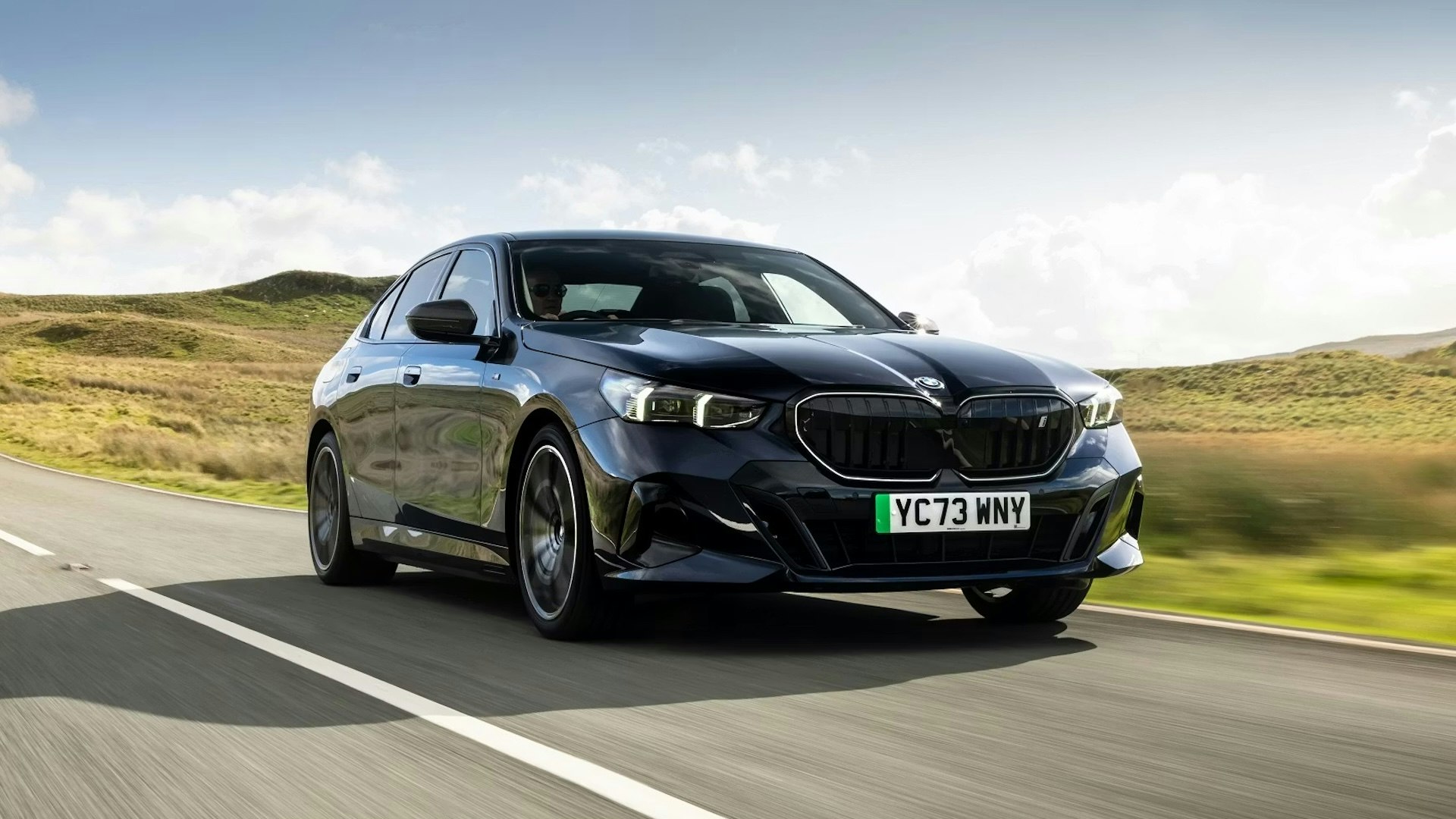
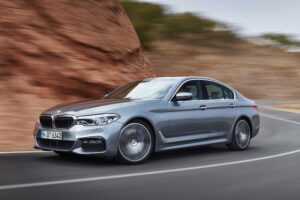
The BMW i4 is the driver’s pick, and it’s priced like it: carwow shows personal deals from roughly £574 a month for the eDrive40 M Sport. It’s the most polished thing to actually drive of the three, with proper BMW steering and a cabin that still shames most rivals. The premium over the Tesla is real, and you’re paying it for feel rather than figures, which is a perfectly good reason, just go in knowing that’s the trade.
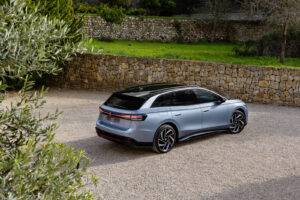
One left-field shout: the Volkswagen ID.7 Tourer GTX. Auto Express had the Plus version at under £500 a month on a three-year deal with about £2,700 down, a fast, properly long-legged electric estate, which is a genre that barely exists. If you need the boot of an estate and the manners of a saloon, it’s quietly one of the smartest leases going.
Image: Selectcarleasing
Who should skip the whole idea
If you keep cars for eight or ten years and rack up the miles, leasing is the wrong tool: you’ll pay three years of rentals and own nothing, and the depreciation protection that makes a lease clever stops mattering once you’re planning to drive a car into the ground. Buy instead, ideally something a year or two old where the first owner already absorbed the steepest part of the curve. And if you genuinely can get salary sacrifice, use it; PCH is the consolation prize, not the headline act.
For everyone in between (three-year horizon, no workplace scheme, wants a premium EV without betting on its 2029 resale value) leasing is the right call this year, and it isn’t close.
The two I’d shortlist, and the one I’d skip
If it were my money and my drive, I’d shortlist the Tesla Model 3 Long Range and the Polestar 4: one for the range and the charging network, the other for the design and the sense that you’re driving something with a point of view. The i4 is the better car to steer, but at around £574 a month I’d want to be sure I’d feel that difference every single morning, and most people, honestly, won’t. The thing that would change my mind on all of it? A salary-sacrifice scheme landing in my inbox. Until then, on a personal lease, the premium electric car has rarely made cleaner sense than it does right now.
Buyer action
Where to check next
Use this as the final check before paying a deposit, signing finance paperwork or relying on a headline monthly figure.
We use cookies to make this site work, measure how it is used, and (with your consent) personalise advertising. Strictly necessary cookies always run. Analytics and advertising cookies run only if you accept. See our Cookie Policy and Privacy Policy.
Car Deal Expert — independent UK automotive publisher since 2008.