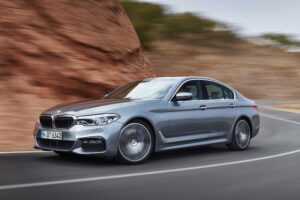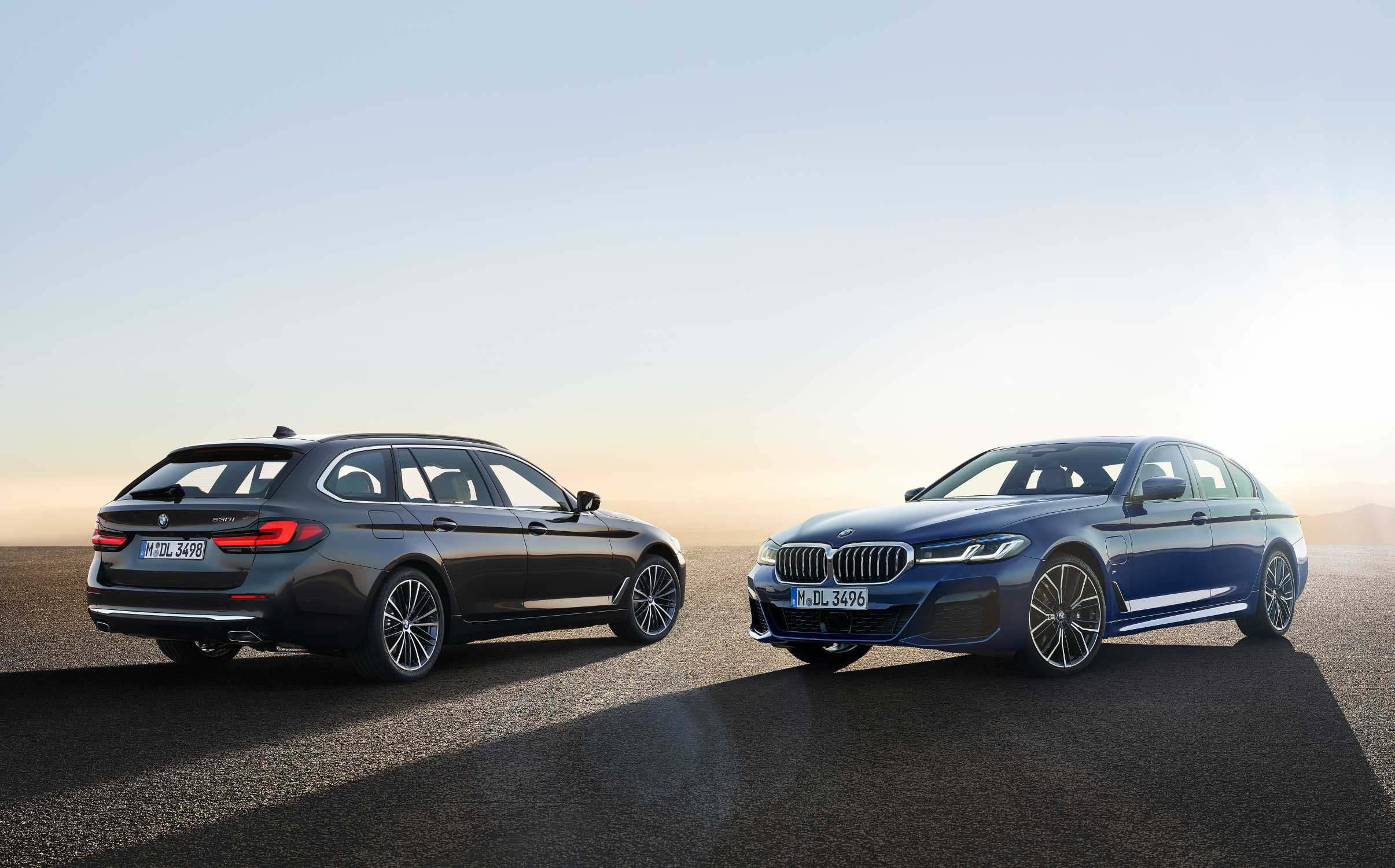
BMW 5 Series G30 (2017-2024) used buyer's guide: the year to buy, the engine that holds up, and what to avoid.
What real G30 owners report at 60-80k miles
Cross-referenced Honest John Real MPG owner data for the BMW 5 Series (2016 on, 592 owner submissions, accessed 25 May 2026); What Car Reliability Survey commentary on the 2017-2023 saloon; PistonHeads BMW 5 Series owner threads; BimmerForums UK G30 sub-section; DVSA vehicle recall checker on gov.uk run against G30 VINs. Sample is enthusiast-skewed and not representative of the full UK parc.
- 520d (B47 2.0 diesel) strengths: Honest John Real MPG records the 520d automatic at 47.1 mpg owner-submitted (72% of the optimistic NEDC quote, but the volume figure UK fleet drivers actually see). The 520d MHEV (post-2020 LCI) lifts that to 53.5 mpg – 95% of WLTP, one of the best real-world hits in the segment.
- 520d weaknesses: timing-chain wear on the very early 2017-2018 B47 examples (mostly resolved by service-history software work); EGR cooler heat-soak and recall history (verify on gov.uk); DPF regen interrupted by short-trip ownership patterns; occasional vanos solenoid faults on 60,000+ mile cars.
- 530d (B57 3.0 inline-six diesel) strengths: the sweet spot for fast UK motorway cruising, 265 PS pre-LCI and 286 PS post-LCI with 48V mild-hybrid. Honest John records 42.6 mpg owner-submitted on the pre-MHEV automatic, 47.8 mpg on the LCI MHEV xDrive (96% of WLTP).
- 530d weaknesses: the same EGR cooler family was recalled across multiple BMW B57-engined platforms; check that any G30 530d you view has had the corrective work logged. Carbon build-up on intake valves at 80,000+ miles is a documented six-cylinder diesel pattern.
- 530e (PHEV 2.0 petrol + electric) strengths: the salary-sacrifice and BIK darling of 2019-2022; smooth in town on electric, frictionless to drive. The 545e xDrive (post-LCI inline-six PHEV) is the rarer halo PHEV.
- 530e weaknesses: Honest John records the 530e at 47.1 mpg owner-submitted – just 25% of the 176.6-201.8 mpg WLTP, evidence that most owners aren’t charging consistently. PHEV battery degradation is the biggest 60-80k-mile risk; out-of-warranty cell-pack replacement is £8,000-£12,000 at independent specialist rates.
- 540i (B58 3.0 inline-six petrol) strengths: the enthusiast pick; the B58 is one of the best 6-cylinder petrols of the decade. 340 PS, smooth, and surprisingly tax-efficient for a petrol-six. Honest John records 27.9 mpg owner-submitted – 74% of the 36.2-39.2 NEDC.
- 540i weaknesses: rare in the UK (most UK G30 530i and 540i went to lease and end up in higher-mileage condition). Oil consumption on higher-mileage cars; PCV valve faults reported on B58s past 80,000 miles.
- Cross-platform issues to inspect on any G30: Touring (estate) air suspension at the rear axle – shorter bag life than the SUV equivalents, plan £600-£900 per side at an independent; iDrive 7 (post-2020 LCI) vs iDrive 6 (pre-facelift) – iDrive 7 is materially better, both for usability and for resale. Adaptive cruise / Driving Assistant Plus calibration drift after windscreen replacement.
The G30 in two sentences: 2017-2024, LCI facelift 2020
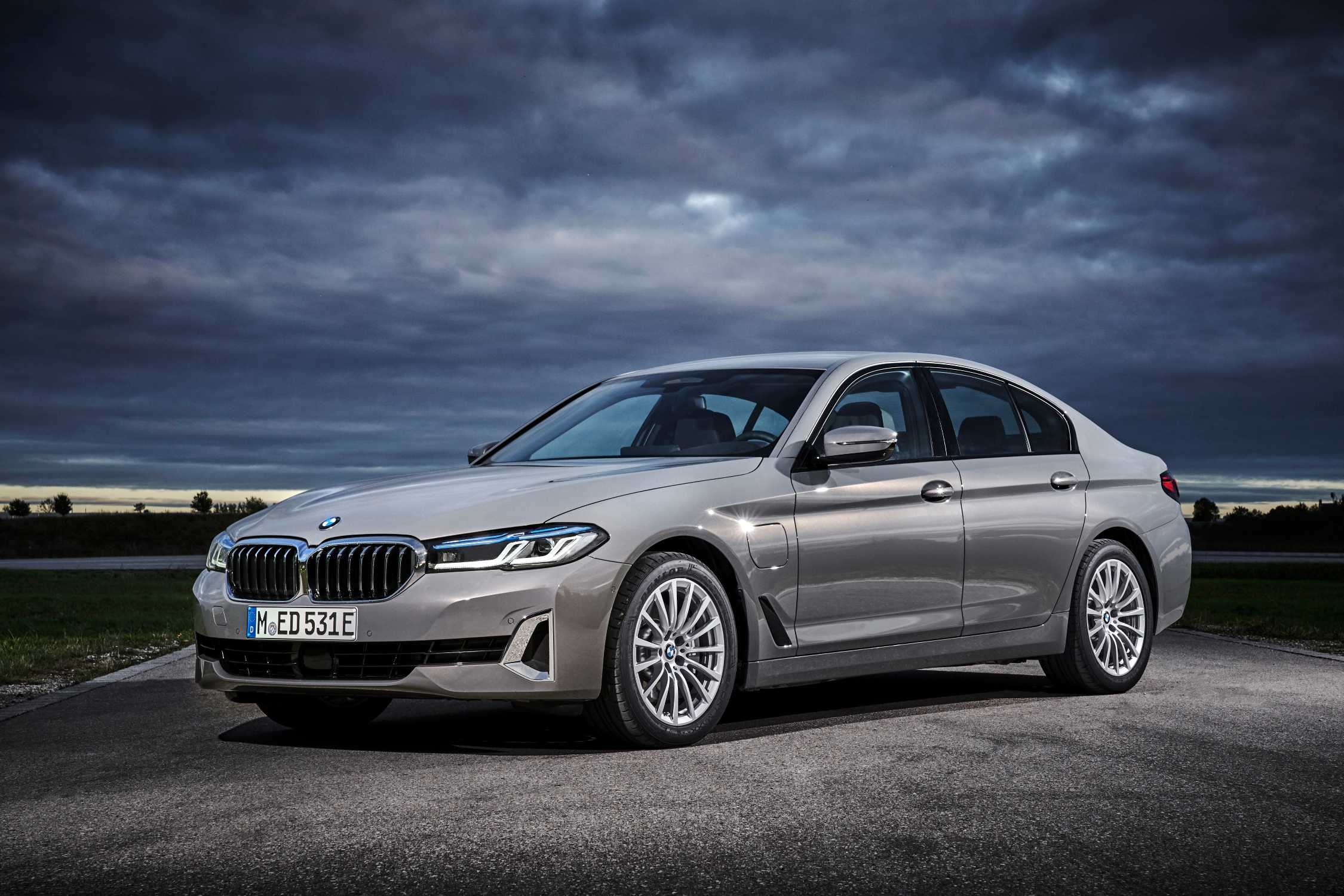
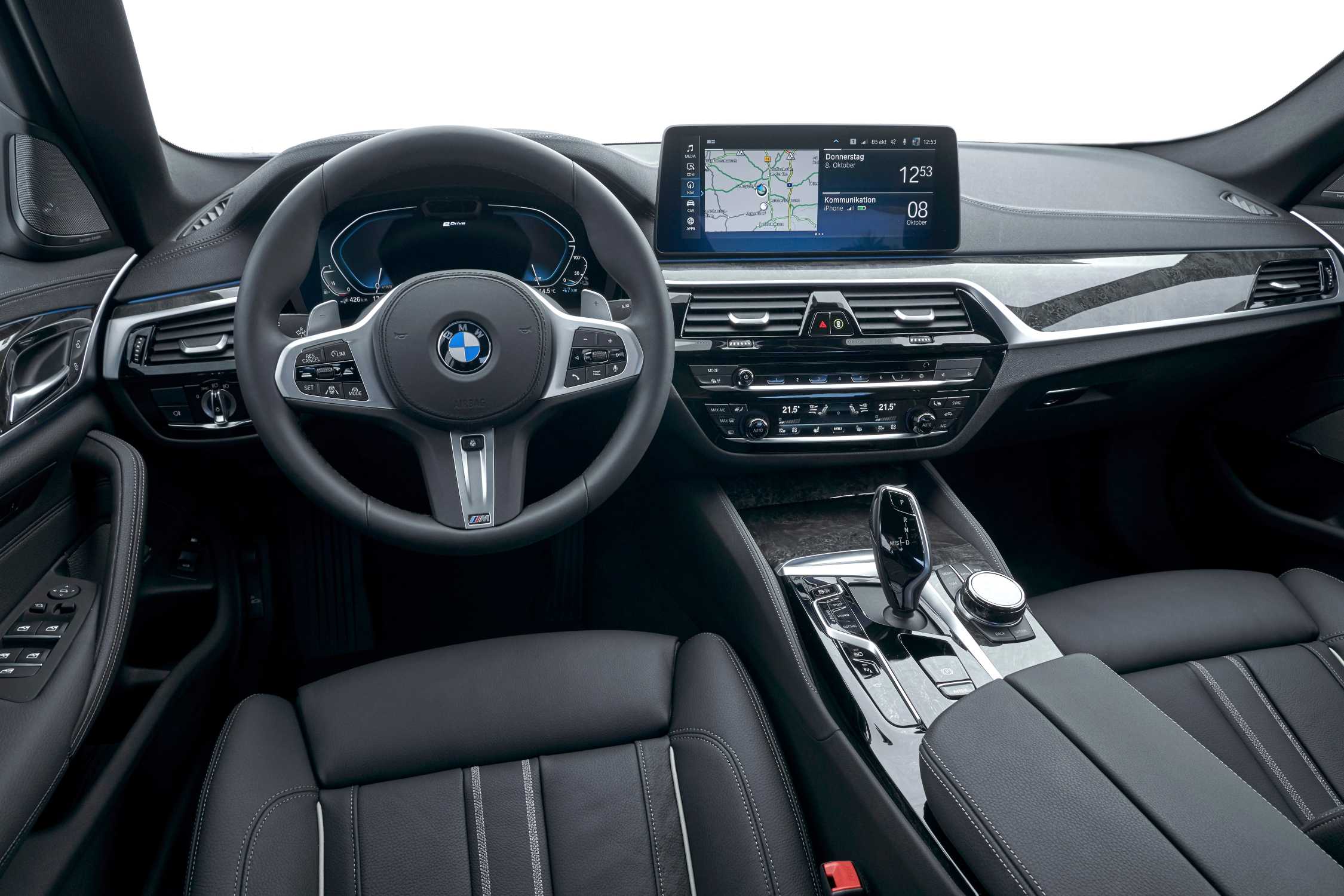
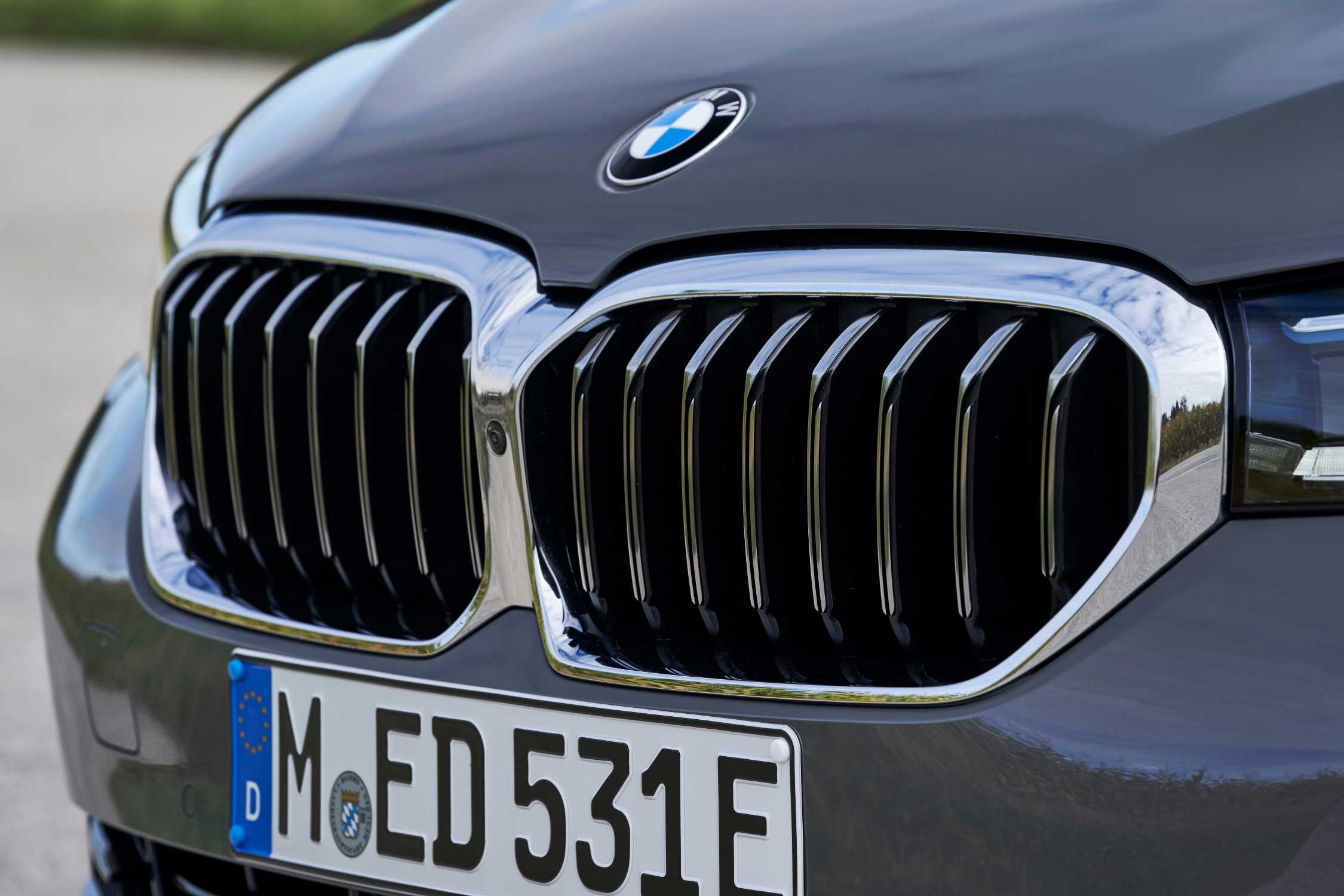
The G30 is the seventh-generation BMW 5 Series, on sale in the UK from February 2017 to late 2023 (with 2024 carryover stock and registration at some dealers) before the G60 replaced it. It ran in two clear phases: pre-facelift 2017-2020 with iDrive 6, the launch B47 2.0 diesel and B57 3.0 diesel without 48V mild-hybrid, the original 530e PHEV with a smaller battery, and a saloon and Touring body; and LCI facelift 2020-2023 (UK on-sale from July 2020), which added iDrive 7 / BMW Operating System 7, 48V mild-hybrid technology across all four- and six-cylinder engines except the PHEVs and the M550i, the 545e xDrive inline-six PHEV, a redesigned front end with a single-piece kidney grille and matrix LED headlamps, and L-shape three-dimensional tail-lights. The F90 M5 (4.4-litre V8, 600 PS) is the halo car and a separate purchasing decision; we cover it as a contrast point rather than the main used-buy target.
For a UK used buyer in May 2026, that means three pricing tiers. Around £15,000-£22,000 buys you a 2018-2019 pre-facelift 520d SE or M Sport with 50,000-80,000 miles. Around £25,000-£35,000 buys you a 2020-2022 LCI 530d M Sport or a low-mileage 530e M Sport. £40,000-£60,000-plus is the M5 F90 territory, with the LCI Competition cars at the top end. The sweet spot for almost every buyer profile we see at CDE is the LCI 530d M Sport with full BMW Premium Selection history at the £27,000-£31,000 bracket.
Engines compared: 520d vs 530d vs 530e vs 540i vs M5 F90
The volume UK G30 engine is the 520d – 2.0-litre B47 four-cylinder diesel, 184 PS pre-LCI and 190 PS with the 48V mild-hybrid from 2020. Honest John records the 520d automatic at 47.1 mpg owner-submitted and the LCI 520d MHEV at 53.5 mpg (95% of WLTP) – the latter is one of the best real-world hits any 2.0 diesel achieves in this segment. Insurance group runs 34-37. The B47 is durable but reads as a “fleet” engine in owner data – the population is short-trip-heavy and the DPF / EGR maintenance bills cluster.
The 530d is the 3.0-litre B57 inline-six diesel – 265 PS pre-LCI, 286 PS post-LCI with the 48V mild-hybrid. Honest John records 42.6 mpg owner-submitted pre-MHEV and 47.8 mpg on the LCI MHEV xDrive (96% of WLTP); insurance group is typically 41-44. This is the engine you buy if you do 20,000+ miles a year – the inline-six diesel torque and refinement are still the segment standard. The B57’s known issue (EGR cooler heat-soak with a recall family across multiple BMW models) is checkable via gov.uk’s DVSA vehicle recall lookup; run the VIN before deposit.
The 530e is the PHEV – 2.0-litre B48 petrol with an integrated electric motor, around 30-36 miles of real-world EV range depending on pre-LCI vs LCI battery size, and the salary-sacrifice favourite of 2019-2022. The 545e xDrive (LCI only) is the rarer inline-six PHEV sibling. Honest John records 47.1 mpg owner-submitted (25% of WLTP), which tells you most owners are not charging regularly; the 530e xDrive sits even lower at 33.0 mpg. As the UK shifts to full EVs, the 530e’s residuals have softened. Buy a 530e only if you can plug in at both ends and you can verify battery health.
The 540i is the B58 3.0-litre inline-six petrol, 340 PS, smooth and fast – the enthusiast pick of the range and rare in the UK used market. Honest John records 27.9 mpg owner-submitted; insurance group 42-45. The M5 F90 halo car (4.4 V8 twin-turbo, 600 PS / 625 PS Competition) is a separate purchasing decision at £40,000-£60,000+ in May 2026; the rest of this guide assumes you are buying a 520d, 530d, 530e or 540i.
BMW 5 Series G30 engine comparison: real-world economy, insurance and towing (accessed 25 May 2026)
| Engine (LCI 2020-2022) | Power | Real MPG (Honest John, owner-submitted) | % of WLTP achieved | Insurance group (UK) | Braked towing capacity |
|---|---|---|---|---|---|
| 520d MHEV automatic | 190 PS | 53.5 mpg | 95% | 34-37 | 2,000 kg |
| 520d MHEV xDrive | 190 PS | 50.2 mpg | 96% | 35-38 | 2,000 kg |
| 530d MHEV xDrive | 286 PS | 47.8 mpg | 96% | 41-44 | 2,000 kg |
| 530e PHEV automatic | 252 PS combined | 47.1 mpg | 25% | 38-41 | 2,000 kg |
| 530e xDrive PHEV | 292 PS combined | 33.0 mpg | 19% | 40-43 | 2,000 kg |
| 540i xDrive automatic | 340 PS | 27.9 mpg | 74% (vs NEDC) | 42-45 | 2,000 kg |
| 545e xDrive PHEV | 394 PS combined | 35.9 mpg | 22% | 43-46 | 2,000 kg |
Sources: Honest John Real MPG database (BMW 5 Series 2016-2023, 592 owner submissions, accessed 25 May 2026); BMW UK G30 specification guides 2020-2022; ABI / Thatcham group ratings. Real MPG is owner-submitted and skews toward enthusiast use patterns. PHEV figures assume patchy charging, not optimal daily use.
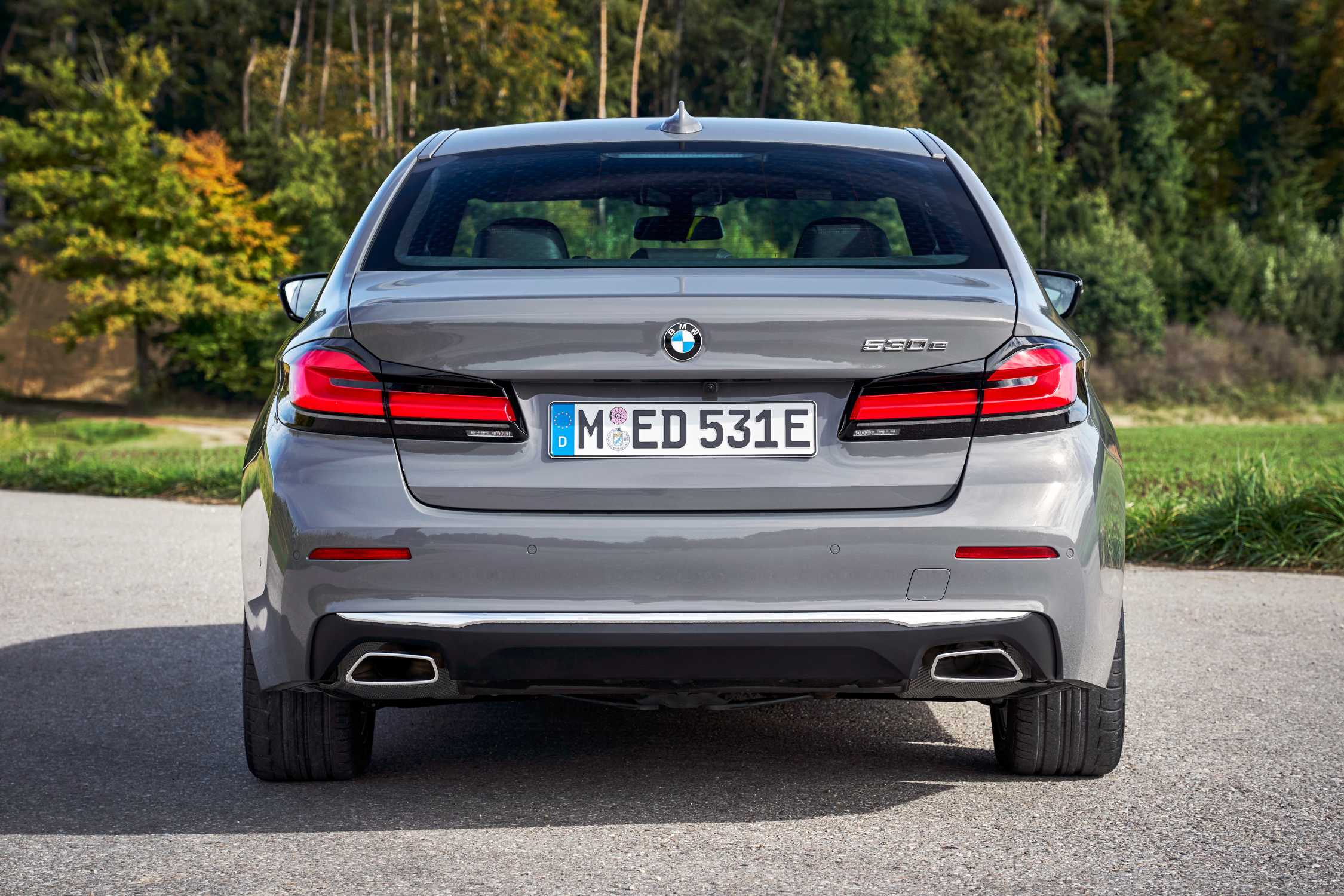
The year and trim to buy: LCI 2020-2022 530d M Sport
For the broadest UK buyer profile – someone doing 12,000-25,000 miles a year, motorway-heavy, wanting refinement and the option of towing or long European trips – the buy in May 2026 is a 2020-2022 LCI 530d M Sport saloon with full BMW Premium Selection (BMW UK’s approved-used programme) history. The combination delivers the LCI’s iDrive 7 / Operating System 7 cabin (genuinely the threshold of “modern enough” infotainment in 2026), the post-facelift styling that does not immediately date the car, the B57 inline-six diesel’s class-leading torque and motorway refinement, the M Sport’s standard adaptive damping, and Premium Selection’s minimum 24-month warranty (BMW UK extends approved-used cover beyond the original 36-month new-car warranty).
Budget £27,000-£32,000 for a 2020-2021 530d M Sport with 30,000-50,000 miles and full BMW history; £30,000-£35,000 for the rarer 2022 LCI Competition Edition specs. Touring versions are typically £1,000-£2,000 above the saloon equivalent and bring the air-suspended rear axle – useful if you tow or load heavy but the bags are a documented wear item past 60,000 miles. If you cannot stretch to a 530d, the LCI 520d MHEV M Sport at £22,000-£27,000 is the rational fall-back; the four-cylinder gives up motorway refinement compared to the six but hits the same 95-96% of WLTP in owner data.
What we would not reach for at the top of the £25-35k budget: the pre-facelift cars (iDrive 6 ages visibly compared to iDrive 7, and the headline saving over an LCI is typically just £3,000-£5,000 – the smart trade-up is the LCI); the 530e PHEV unless you can verify a battery health certificate from a BMW dealer or a reputable independent EV specialist; and the air-suspended Touring at 70,000+ miles unless the bags and the rear shocks have been replaced or recently inspected.
Common faults to inspect: timing chain, EGR, PHEV battery, air suspension
B47 timing chain (early pre-LCI 520d, 2017-2018): the B47 generation that preceded the 5 Series in other BMW platforms had a documented timing-chain wear pattern. The G30 launch B47 received iterative chain-tensioner updates through 2017-2018 production. Listen for a “rattle on cold start” that fades after a few seconds – that is the classic early symptom. Most affected cars have had chain work logged in service history by 2026; check the file. If there is no chain documentation on a 2017-2018 520d above 80,000 miles, factor a £1,500-£2,500 precautionary chain job into your offer.
B57 EGR cooler (530d / 540d xDrive across pre-LCI): BMW issued recall and service-action work on the B57 EGR cooler family across multiple platforms (X3, X4, X5, 5 Series, 7 Series, X6, X7) due to a small risk of cooler failure leading to fire. Verify on gov.uk’s DVSA vehicle recall lookup using the VIN, and confirm the dealer has fitted the updated cooler. This is the single most important check on a B57 530d G30. Most cars have had the work done by 2026 but it remains the standard fact-check question.
530e PHEV battery degradation: the original pre-LCI 530e battery (~9.2 kWh useable) is now seven to nine years old on launch cars. PHEV cells degrade slower than full-EV traction batteries but the typical UK G30 530e at 60,000-80,000 miles shows 10-20% capacity loss versus new. BMW UK will provide a battery health report at any BMW Premium Selection dealer; insist on this in writing before deposit. Out-of-warranty cell-pack replacement is £8,000-£12,000 at independent specialist rates, which can wipe out the price advantage you thought you were buying. The LCI 530e (larger battery, post-2020) is in materially better shape on this measure.
Air suspension (Touring 5 Series, all engines, rear axle): the G31 Touring runs air bags at the rear (saloons are coil-spring throughout). Bag life is typically 80,000-120,000 miles, sometimes less if the car has lived in coastal salt or has been used heavily for towing. Symptoms: rear sitting low overnight, audible compressor cycling at standstill, “EHC fault” message on dash. Plan £600-£900 per side at an independent, more at BMW.
iDrive 6 vs iDrive 7 and Driving Assistant Plus: not faults, but the most common buyer’s-remorse on a pre-LCI G30. iDrive 7 (LCI 2020+) is materially better than iDrive 6 and ages much more gracefully; the 12.3-inch Live Cockpit Professional cluster is standard on LCI M Sport but an option on pre-LCI. The G30’s active safety suite is reliable but sensitive to windscreen-replacement calibration – if the windscreen has been replaced, confirm camera and radar were recalibrated; if not, factor £200-£350.
What it costs to run: insurance group, servicing, mpg vs Audi A6 / E-Class
Insurance groups for the G30 saloon in May 2026: 520d M Sport sits at 34-37, 530d M Sport at 41-44, 530e M Sport at 38-41, 540i xDrive at 42-45. That is roughly identical to the equivalent Mercedes E-Class W213 (E220d AMG Line ~33-36, E350d ~41-44) and slightly cheaper than the Audi A6 C8 40 TDI S Line (~36-39). The 530d in particular costs less to insure than its inline-six diesel power figures suggest – BMW UK’s data feeds the ABI Thatcham group calculation favourably because of the active safety standard kit.
Servicing at a BMW main dealer on a 530d runs £450-£650 for an oil service / inspection alternation in 2026 – in line with the A6 and E-Class. A BMW Service Inclusive plan (sold new, typically transfers with the car on Premium Selection used purchases) covers all scheduled work to five years or 50,000 miles and is the single thing most worth checking the file for; a transferable Service Inclusive plan is worth £700-£1,200 on the offer.
Real MPG bottom-line (Honest John, 25 May 2026, 592 owner submissions): LCI 520d MHEV hits 53.5 mpg (95% of WLTP); LCI 530d MHEV xDrive hits 47.8 mpg (96% of WLTP); 530e hits 47.1 mpg (25% of WLTP, the gap that tells you owners are not charging). On a like-for-like 2020-2022 comparison the G30 LCI 520d MHEV is within 1-2 mpg of the W213 facelift E220d (52.1 mpg owner-submitted) and within 5 mpg of the A6 C8 40 TDI (48.3 mpg owner-submitted) – the G30 is the slight winner on the four-cylinder diesel real-world measure, with the inline-six diesel 530d uniquely refined.
G30 vs Mercedes E-Class W213 vs Audi A6 C8
The three premium executive saloons that share the £25-35k used bracket in May 2026 are the G30 5 Series, the W213 E-Class facelift, and the A6 C8. They are close on price-for-equipment and split decisively on character. The G30 is the driver’s car of the three – the chassis is more communicative, the steering is sharper, and the inline-six 530d is materially more refined than either four-cylinder rival at long-distance pace. The W213 facelift is the cruiser – quieter at speed, the rear bench is plusher, and the OM654 four-cylinder diesel returns the best real-MPG of any executive diesel we track (108% of WLTP). The A6 C8 is the digital cabin – dual-touchscreen MMI Touch with haptic feedback ages better than iDrive 6 (though not iDrive 7), and the 48V mild-hybrid is well-integrated.
What Car’s Reliability Survey on the 2017-2023 5 Series notes that the petrol cars finished in third place out of 20 in the executive class at 96.7%, while the diesel cars finished last at 79.8%. Owners reported “a range of reliability issues, particularly with the infotainment system and electrical components, including faulty sensors and persistent warning lights”; “some diesel owners experienced costly problems with the EGR valve and DPF systems, leading to repeated visits to the dealership”. That distribution matches what we see on PistonHeads and BimmerForums UK threads – the petrol G30 (540i, M550i, M5) population is materially less stressed than the diesel population, mostly because the diesel population is heavier on short-trip and high-miles fleet use. The lesson is not “buy petrol” – the diesels are perfectly buyable if you do the EGR / DPF inspection – but to weight the inspection list more heavily on a 520d or 530d than on a 540i.
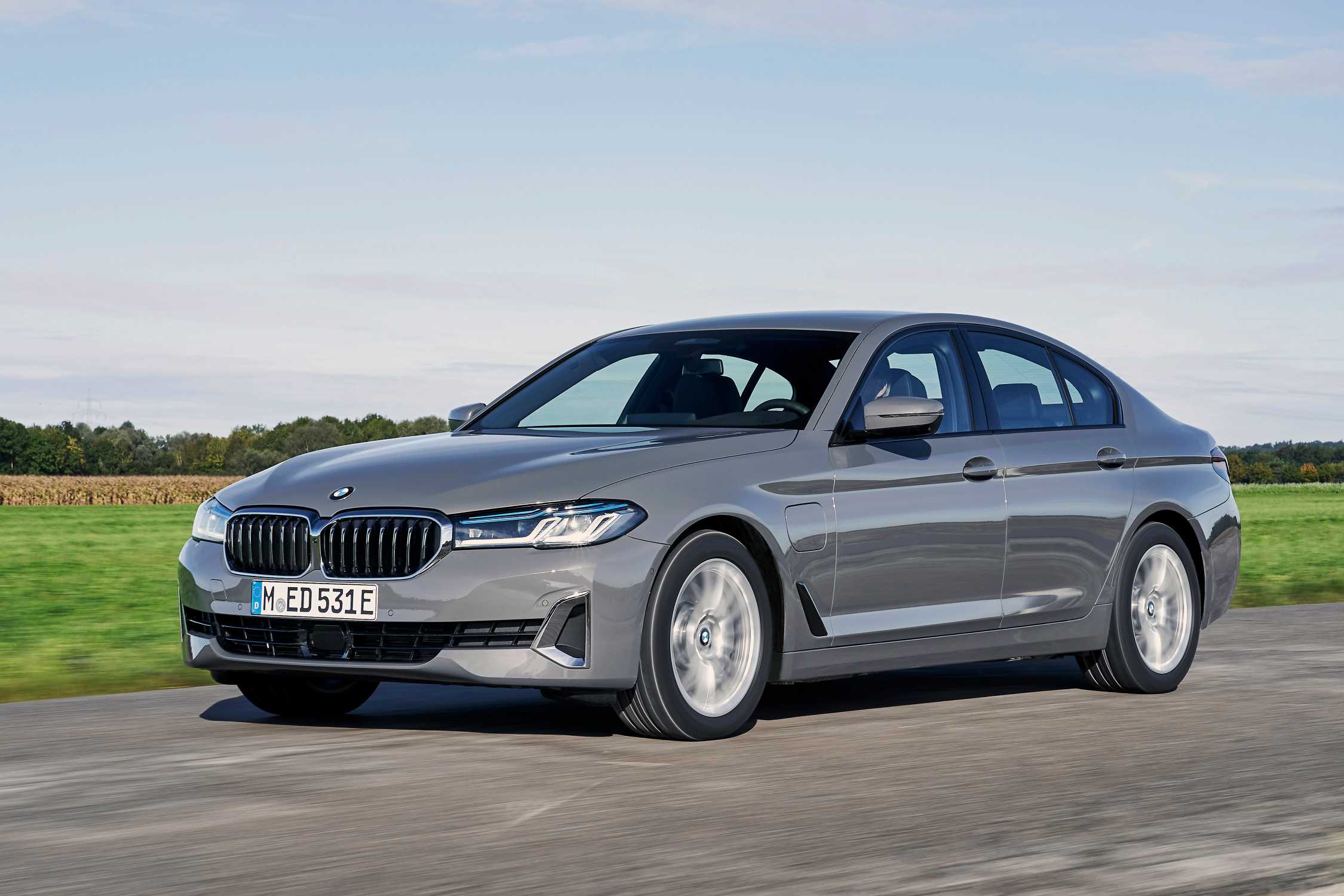
The G30 is the safer used premium saloon than either German rival on the maths most buyers will actually care about, but only at the right year and engine. A 2020-2022 LCI 530d M Sport with full BMW Premium Selection history at £27,000-£31,000 is the buy of the segment – the inline-six diesel is the last good one BMW will ever build, the LCI cabin still feels current in 2026, and the Premium Selection 24-month warranty buys you the time to discover any sensor quirks before you wear them yourself. The 520d MHEV at £22,000-£27,000 is the rational fall-back. What we would NOT pay top money for is a pre-LCI G30 – the £3,000-£5,000 saving over an LCI car is wiped out by the iDrive generation gap. The 530e PHEV is buyable second-hand only if you can plug in at both ends and verify battery health on paper; otherwise the 520d MHEV wins on every other measure. Run the VIN through the gov.uk DVSA recall checker before deposit, ask for the BMW service portal printout in full, and read the last two services in detail. The G30 rewards Approved Used; the BMW service-network depth that Premium Selection guarantees is genuinely worth the £500-£1,500 premium it commands.
Is the BMW 5 Series G30 reliable at 60,000 miles?
Mostly yes, with a clear split by fuel type. What Car’s Reliability Survey on the 2017-2023 5 Series ranked the petrol cars third of twenty in the executive class at 96.7%, but the diesel cars finished last at 79.8% – owners reported costly EGR / DPF dealer visits and infotainment / electrical faults. In Honest John Real MPG data, 592 owners across the 2016-2023 G30 returned the LCI 520d MHEV at 95% of WLTP and the LCI 530d MHEV at 96% of WLTP – both excellent real-world hits. The takeaway: a clean BMW Premium Selection 530d or 520d MHEV with a documented EGR cooler recall fix and a service-portal printout is reliably buyable at 60,000 miles; a private-sale pre-facelift 520d with patchy service history at the same mileage is the higher-risk end of the spectrum.
Which 5 Series G30 engine is the most reliable used buy?
The B58 3.0-litre inline-six petrol (540i) on the What Car Reliability Survey petrol cohort, and the B57 3.0-litre inline-six diesel (530d) on the LCI mild-hybrid post-2020 cars in Honest John Real MPG owner data. The 540i is the rarer find in the UK used market because most UK G30 buyers took the diesel; the 530d is the segment’s last great inline-six diesel and gives the closest match between “best engine” and “most-available used car”. The 520d MHEV is the volume fall-back and hits 95% of WLTP – the four-cylinder gives up six-cylinder smoothness but is materially cheaper to insure and run.
Should I buy a pre-facelift G30 or pay the premium for the 2020 LCI?
Pay the premium for the LCI. The £3,000-£5,000 typically separating a 2018-2019 pre-LCI 520d M Sport from a 2020-2021 LCI 520d MHEV M Sport at the same miles buys you iDrive 7 / BMW Operating System 7 (materially better than iDrive 6 and ages far better), the 48V mild-hybrid system (lifting real-MPG from 47.1 to 53.5 on Honest John data), the redesigned single-piece kidney grille and matrix LED headlamps (visual sweet spot), and the 12.3-inch Live Cockpit Professional cluster standard on M Sport. The LCI is the better car on every measure except sticker price, and the depreciation curve from 2026 onwards favours the LCI by a clear margin.
Is the BMW 530e PHEV worth it as a used buy in 2026?
Only if you can plug in at both ends of your commute and you can verify the battery state-of-health on paper. Honest John Real MPG records the 530e at 47.1 mpg owner-submitted – 25% of the 176.6-201.8 mpg WLTP claim, which is direct evidence that most owners are not charging regularly. PHEV battery degradation is the dominant 60-80,000-mile risk; out-of-warranty cell-pack replacement runs £8,000-£12,000 at independent specialist rates, which can wipe out the price advantage the PHEV looked like over a 520d. BMW UK will provide a battery health report at any Premium Selection dealer; insist on it before deposit. The LCI 530e (larger battery, post-2020) and the rarer 545e xDrive inline-six PHEV are in materially better shape on this measure than the original pre-LCI 530e.
Does the BMW Premium Selection used warranty cover the air suspension?
Yes – BMW Premium Selection (BMW UK’s approved-used scheme) carries a minimum 24-month unlimited-mileage warranty that covers the Touring’s rear air-suspension system as a documented mechanical component, subject to the standard wear-and-tear exclusions. In practice: if a bag fails outright within the warranty period, BMW will replace it; if it is showing gradual ride-height degradation that has not yet caused a fault code, the dealer is unlikely to act pre-emptively. Ask for the full warranty terms in writing at point of purchase and, on a high-mileage Touring (70,000+ miles), ask the dealer to confirm both rear bags and the compressor are within their service intervals. An independent pre-purchase inspection that includes a ride-height check across all four corners is £150-£250 well spent on any Touring G31 over 70,000 miles.
Related reading
- PCP vs HP in the UK in 2026 – structuring finance on a £25,000-£35,000 Approved Used BMW.
- UK GAP insurance after the FCA pause lifted in 2026 – whether the dealer’s GAP top-up makes sense on a premium saloon you are financing on PCP.
- New MOT rules in the UK for 2026 – the emissions checks that bite the G30 520d and 530d harder than the petrol cars.
- PCP early settlement in the UK in 2026 – exit maths if you are carrying finance on a used premium saloon.
- Best diesel SUV for UK towing in 2026 – if you need to tow more than 2,000 kg, the SUV options that out-tow the G30 Touring.
- Company car tax in 2026-27 – whether the 530e PHEV BIK band still works for you as a sal-sac driver in 2026-27.
- All CDE buying guides.
How we researched this guide
Every pick here is shortlisted from hands-on testing and time spent living with the hardware by the CDE desk, then sanity-checked against current UK pricing, manufacturer specs and real-world performance before it makes the cut. We never rank for commission — affiliate links don't change the order.
Buyer action
Where to check next
Use this as the final check before paying a deposit, signing finance paperwork or relying on a headline monthly figure.