About this article: Car Deal Expert is an independent publisher, not a lender, credit broker or insurance intermediary. We do not arrange finance or insurance, we hold no commercial relationship with the providers mentioned, and nothing here is financial advice. Figures are illustrative and change — always confirm against the provider's own written quote. If you have a complaint about a finance or insurance provider, the Financial Ombudsman Service is free to use.
From 6 April 2026 the pure-electric company-car Benefit in Kind rate moves from 3% to 4%. That single percentage point is not a rounding error on a payslip — it is the start of a published climb that takes zero-emission company cars to a 9% cap by 2029/30. The charge itself is no mystery: HMRC’s company-car tax rules set the mechanism (your car’s list price, an appropriate percentage, then your income tax rate), and Alto Accounting’s 2026/27 EV company-car briefing lays the year-by-year ladder out clearly. The arithmetic is what I want UK drivers to sit with before they sign another three-year salary-sacrifice or fleet order form.
If you already run a battery company car, or you are deciding whether one still makes sense against private finance, this tax year is where the “almost free” BiK story thins. The EV still wins against petrol or diesel on the same list price. What it no longer does is freeze the tax cost while everything else in your household budget moves. I am not here to talk you out of an electric company car — only to show what you actually pay under the 2026/27 rules, so the quote you accept matches the cash that leaves your salary.
The pure-EV BiK ladder from 2025/26 through 2029/30
For vehicles at 0g/km CO₂, the official BiK percentages are now a known path. In 2025/26 the rate sits at 3%. From 6 April 2026 — the 2026/27 tax year — it rises to 4%. That step is confirmed across the specialist tax and fleet briefings, including The Tax Lead’s company-cars tax note for 2026/27 and the Alto material already cited, and it tracks the schedule HMRC set out at successive Budgets.
The path after that is equally plain: 5% in 2027/28, 7% in 2028/29, and 9% in 2029/30 — described as the cap in the same briefings. That is a trebling of the pure-EV BiK rate if you measure from the 3% floor. It is still far below the rates that apply to higher-CO₂ cars, which is why fleets keep pushing battery metal. But if your personal maths assumed “3% forever”, you need a fresh spreadsheet before the next scheme window closes.
Too many salary-sacrifice conversations treat BiK as fixed wallpaper. It is not. It is a percentage of list-price value, applied each tax year, and that percentage is rising on a published schedule. For 2026/27 pure EVs, the car remains the efficient company-car choice; the tax rate is no longer static.
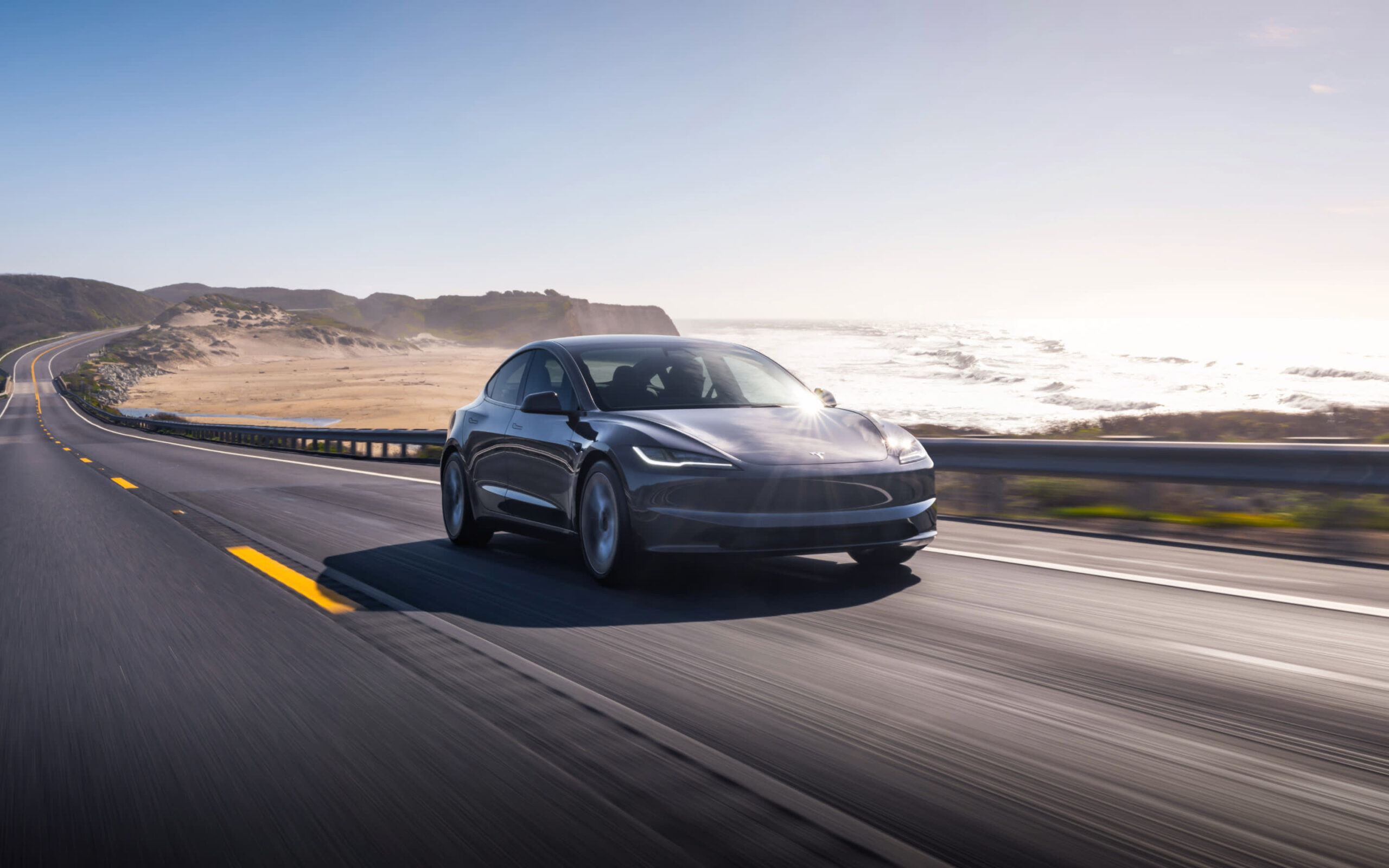
Image: Tesla
What a £40,000 EV actually costs each month in 2026/27
The charge is not mysterious once you write it down. The formula used across the fleet and payroll guides, and set out on HMRC’s own company-car pages, is P11D value × BiK percentage × your income tax rate.
Take a pure EV with a £40,000 P11D value in 2026/27 at the 4% BiK rate. The annual BiK amount is £1,600. Apply the driver’s marginal income tax rate and you get the cash cost:
Basic-rate taxpayer (20%): £320 a year — £26.67 a month
Higher-rate taxpayer (40%): £640 a year — £53.33 a month
Those monthly figures are the ones Alto Accounting works through for a £40,000 EV under the 4% rate, and they match the standard BiK method also set out by PayFit’s company-car tax guide. They are exact enough to put against a private PCP or hire-purchase quote, but treat them as illustrative rather than a personal tax bill: your own figure moves with your marginal rate (including the Scottish bands if you pay Scottish income tax) and the exact P11D you order. This is guidance, not tax advice or a finance offer.
At 4% BiK, a £40,000 pure EV still costs a basic-rate driver under £27 a month in tax — but that figure is no longer frozen, and the published ladder says it will not stay there.
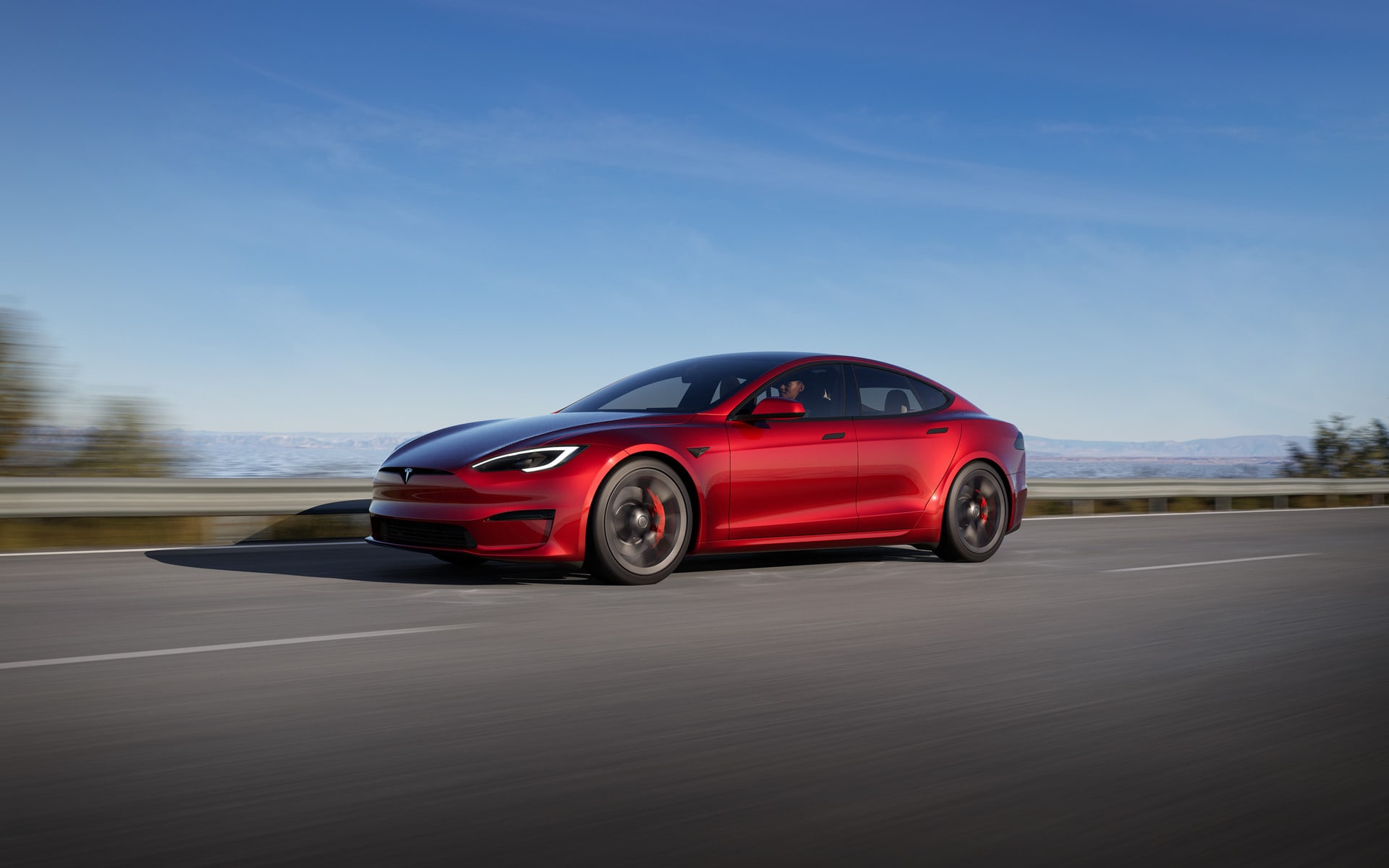
Image: Tesla
Double the list price and you double the tax. A £60,000 premium EV is not “a bit more” on BiK; it is 50% more than the £40,000 example on the same percentage. That is why the P11D line matters before anyone falls for the options list — the same discipline I have already set out in how to read a company-car EV quote without getting stung. Options and delivery packs that inflate the list price inflate the BiK base every month for the life of the assignment.
Against last year’s 3%, the step-up on £40,000 is another £400 of BiK value a year: £80 extra tax at basic rate, or £160 at higher rate. The real pressure is not that single step; it is the path to 5%, then 7%, then 9% if you stay in the scheme through the end of the decade.
Why 4% still leaves pure EVs ahead of the pack
Company-car tax is deliberately structured so lower-CO₂ cars carry lower BiK percentages. A pure EV at 4% in 2026/27 remains in a different universe from a petrol or diesel company car on a mid-band rate. That is why salary-sacrifice EV schemes have not evaporated overnight because of a one-point rise.
Where drivers go wrong is treating “EV BiK is low” as the end of the comparison. The fair fight is EV BiK plus electricity versus private ownership costs, or versus staying on the scheme for three more years while the percentage climbs. For a worked household comparison of scheme finance against private PCP, put these BiK figures next to PCP vs salary sacrifice for an EV in 2026.
My position is straightforward: if you are a higher-rate taxpayer offered a well-specified pure EV on a clean package, 4% BiK in 2026/27 is still a strong deal relative to buying the same metal privately with post-tax income. If you are locking a three-year assignment and the P11D is already at the top of your comfort zone, model 5% and 7% into years two and three of your mental budget — those rates are already published.
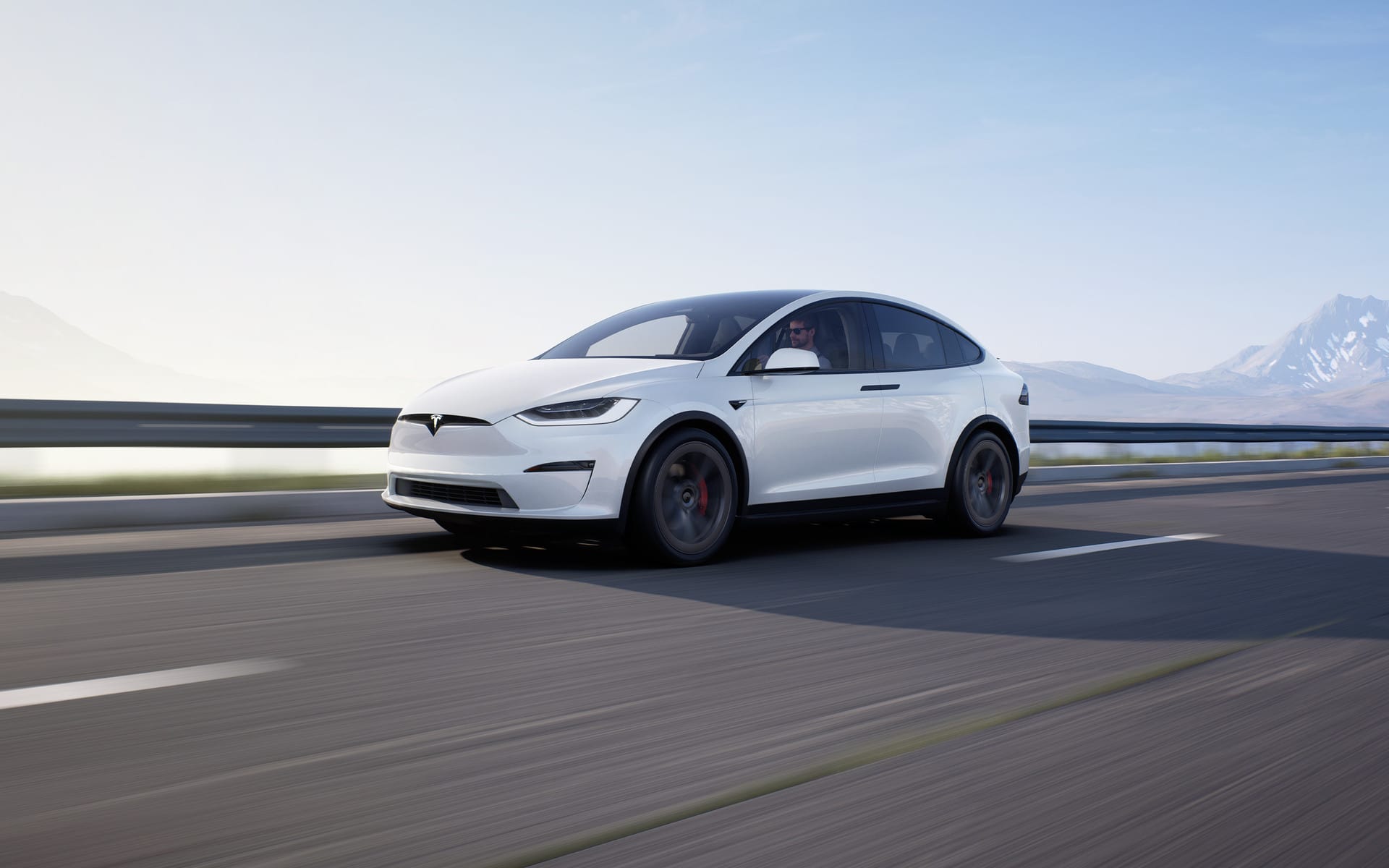
Image: Tesla
Electricity reimbursement: the other line on the payslip
BiK is not the only HMRC figure that touches an electric company car. For employees who charge at home or on the public network and claim mileage back, the advisory electricity rates matter as much as the percentage on the P11D.
HMRC now runs two advisory electricity rates, published on its advisory fuel rates page: 7 pence per mile for home charging and 15 pence per mile for public charging. Those rates sit alongside the wider advisory picture CarDealExpert has already covered — including the June 2026 note that petrol and diesel advisory rates rose while the EV home rate held at 7p.
If your employer reimburses at the advisory rates, the gap between home and public charging is more than double. Seven pence a mile at volume is real money; fifteen pence on public networks is convenience pricing — fine for the odd long run, expensive as a daily habit. I would rather a driver fix home charging and reimbursement than shave vanity options off the quote to save pennies of BiK.
Free fuel is a different trap — and the multiplier moved
One more figure belongs in this tax year even if most pure-EV drivers never meet it: the car fuel benefit charge multiplier. If free fuel is provided alongside a company car, the charge uses a fixed multiplier. For 2026/27 that multiplier is £28,200, up from £27,800 in 2025/26, as set out in Salary Tax’s company-car tax guide for 2026/27.
Image: Tesla
Pure EVs do not burn petrol, so classic free fuel is less common than on ICE fleets — but residual free-fuel policies and poorly worded packs still catch people. If your pack includes free fuel and you barely use it, ask for it to be withdrawn rather than paying tax on a benefit you do not need. That is the detail I would challenge on a quote review before the 4% EV BiK itself: an unexplained free-fuel tick-box next to a rising multiplier.
Still worth taking — if you price the whole ladder
Strip the decision to three figures: the P11D value of the car and options you will actually take; the BiK percentage for each tax year the assignment covers (4% in 2026/27, then 5% and 7% if it runs on); and your marginal tax rate. Multiply, divide by twelve, add electricity net of 7p or 15p reimbursement, then compare to the private alternative — not to a fantasy that company cars are free.
I would still take a properly priced pure EV on a salary-sacrifice or fleet package at 4% BiK in 2026/27 if the P11D is honest, electricity reimbursement is clear, and free fuel is either useful or removed. The tax cost on a £40,000 example remains modest against private finance on post-tax income. I would not, though, treat the rate as settled: the path to 5%, 7% and a 9% cap means a three-year assignment needs a three-year tax model. Use 4% for 2026/27, price the car you will actually order, check home versus public reimbursement, and refuse free-fuel tax if you do not need free fuel. For pure EVs, the late-2020s story is not whether the rate is still low — it is how long “low” stays low enough for your household.
Buyer action
Where to check next
Use this as the final check before paying a deposit, signing finance paperwork or relying on a headline monthly figure.
We use cookies to make this site work, measure how it is used, and (with your consent) personalise advertising. Strictly necessary cookies always run. Analytics and advertising cookies run only if you accept. See our Cookie Policy and Privacy Policy.
Car Deal Expert is a trading name of Greyline Technologies Limited. Registered in England & Wales, company no. 16673047. Registered office: 71-75 Shelton Street, London WC2H 9JQ.