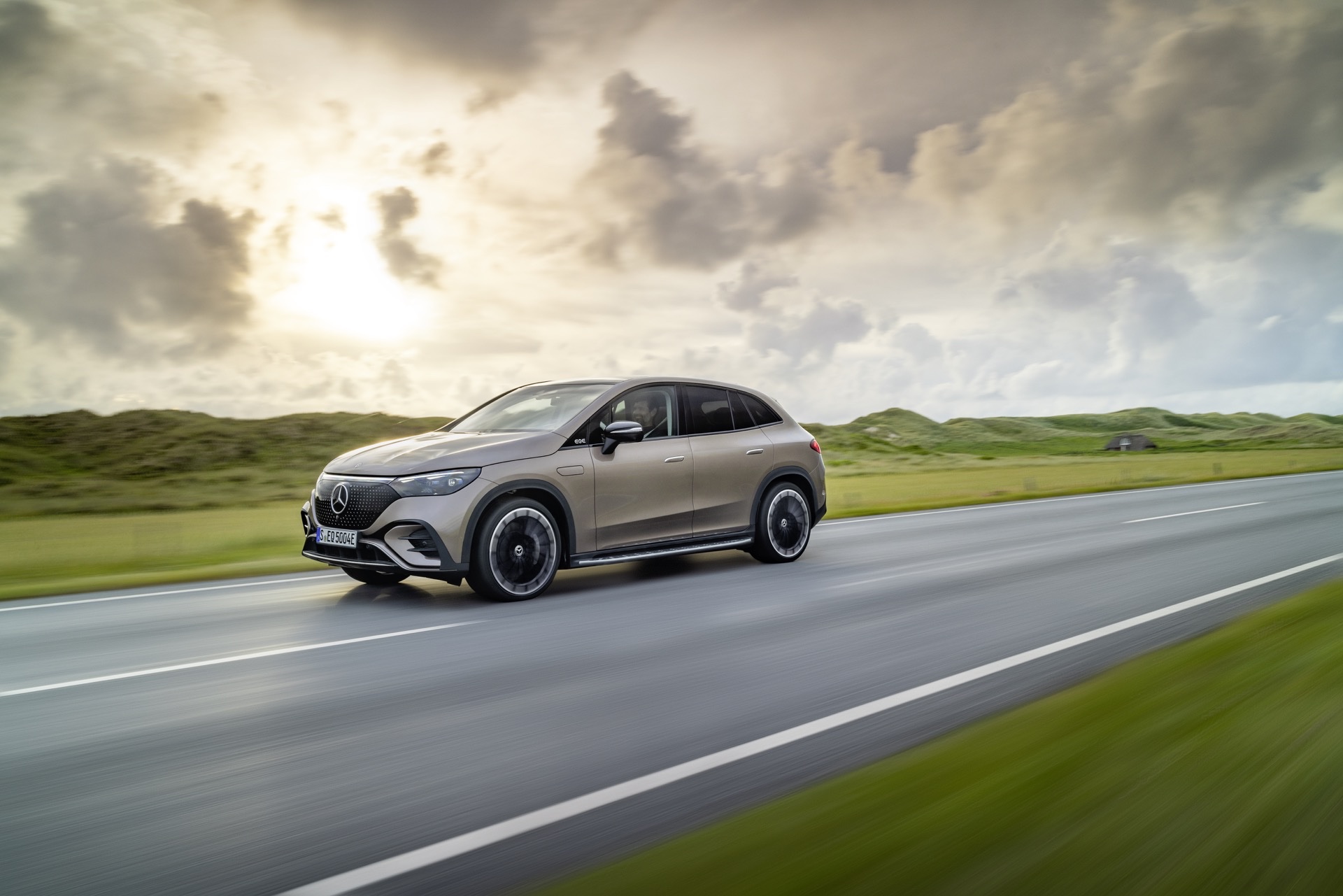
EQE SUV depreciation is the entire reason a 2024 Mercedes electric SUV that cost the best part of £75,000 new now sits on UK forecourts in the low forties. We have run the two-year numbers, and the first owner has absorbed close to half the car’s value. The question for you is whether that makes a used one a clever buy or a warning, and on the maths below it can genuinely be the smartest premium EV money on the market right now.
What real owners and the surveys say (CDE data)
CDE cross-referenced Honest John’s published EQE SUV verdict, the What Car? Reliability Survey brand result for Mercedes, and live Auto Trader asking prices checked on 10 June 2026. We have not driven this individual car; the themes below are owner and survey signals, not our own road test.
- Most-praised: comfort and refinement, the high-tech cabin and outright interior space. Honest John scores the EQE SUV 4 out of 5 and calls the cabin its standout.
- Most-criticised: high purchase price, fidgety low-speed ride, and range that trails the badge. Those are exactly the traits that drive the steep first-owner loss you are about to inherit at a discount.
- Reliability signal: the EQE had too few examples to score individually in the latest What Car? Reliability Survey, where Mercedes as a brand finished 22nd of 30 makers on 90.6%. Treat it as mid-pack, not bulletproof, and buy on history.
The two-year numbers: what £75k bought and what it is worth now
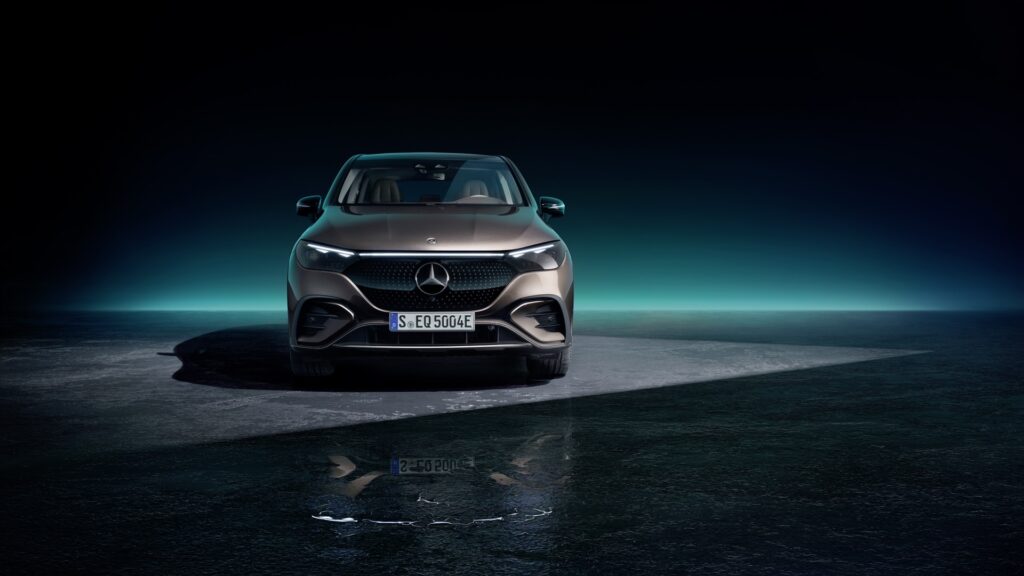
Start with the sticker. A 2024 EQE 350+ in AMG Line trim listed at around £74,635 new, a figure that lines up with the EV Database UK entry for the 350+ and with Auto Express’s pricing at launch. The 350+ is the single-motor, rear-drive version with the 96kWh usable battery, so it is the EQE SUV most private buyers actually ordered rather than the £90k-plus 500 and AMG cars.
Now the present. Checking Auto Trader on 10 June 2026, clean 2024-registered 350+ AMG Line examples with roughly 6,000 to 15,000 miles are advertised between about £40,000 and £45,000, with the bulk clustering near £41,000 to £42,000. Those are asking prices, not sold figures, and a cash buyer should expect to negotiate. Take a representative £41,000 against the £74,635 start and the car has shed roughly £33,600 in two years. That is our calculation, not a quoted industry stat, and it works out at close to a 45% loss of value before the second owner has turned a wheel.
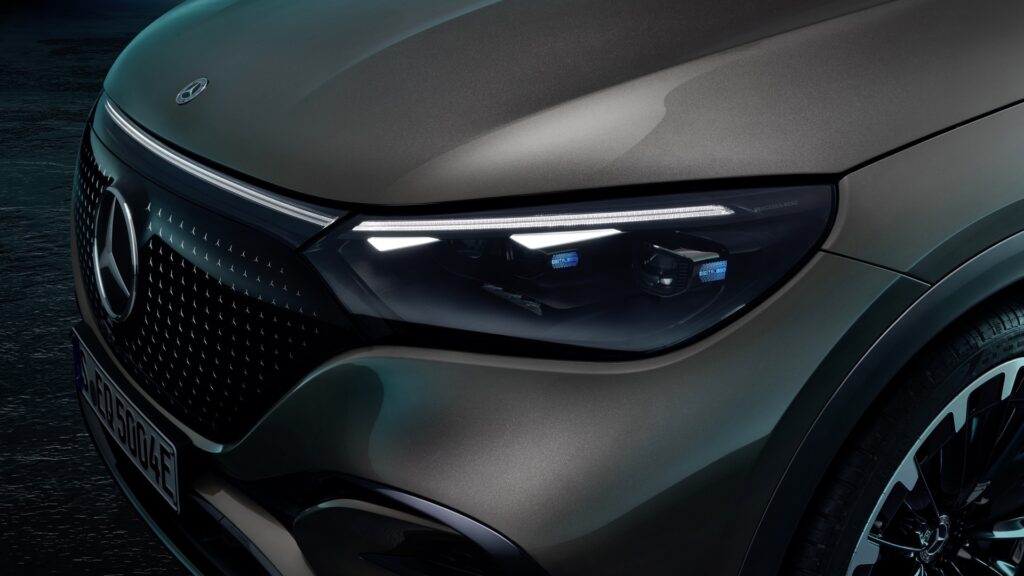
EQE SUV depreciation, the worked table
| Stage | Figure | Source |
|---|---|---|
| List price new, 2024 (350+ AMG Line) | ~£74,635 | EV Database UK / Auto Express launch pricing |
| Typical used asking, 2024-reg, 6k-15k mi | £40,000-£45,000 | Auto Trader listings, checked 10 June 2026 |
| Representative used value used here | ~£41,000 | CDE midpoint of the live range |
| Two-year value lost | ~£33,600 | CDE calculation (£74,635 minus ~£41,000) |
| Two-year percentage loss | ~45% | CDE calculation |
Why so steep? Big luxury EVs took the hardest residual hit of any segment through 2024 and 2025, and the EQE SUV carried three extra weights: a high list price, a real-world range that owners found short of the badge, and Mercedes itself confirming the EQE line is being wound down in favour of a future electric E-Class. A car the maker is replacing rarely holds money. We mapped the same pattern across the segment in our look at which premium EVs hold value and which crater in 2026, and the EQE SUV sits firmly in the crater half.
The cliff is already paid: why that flips the buying case
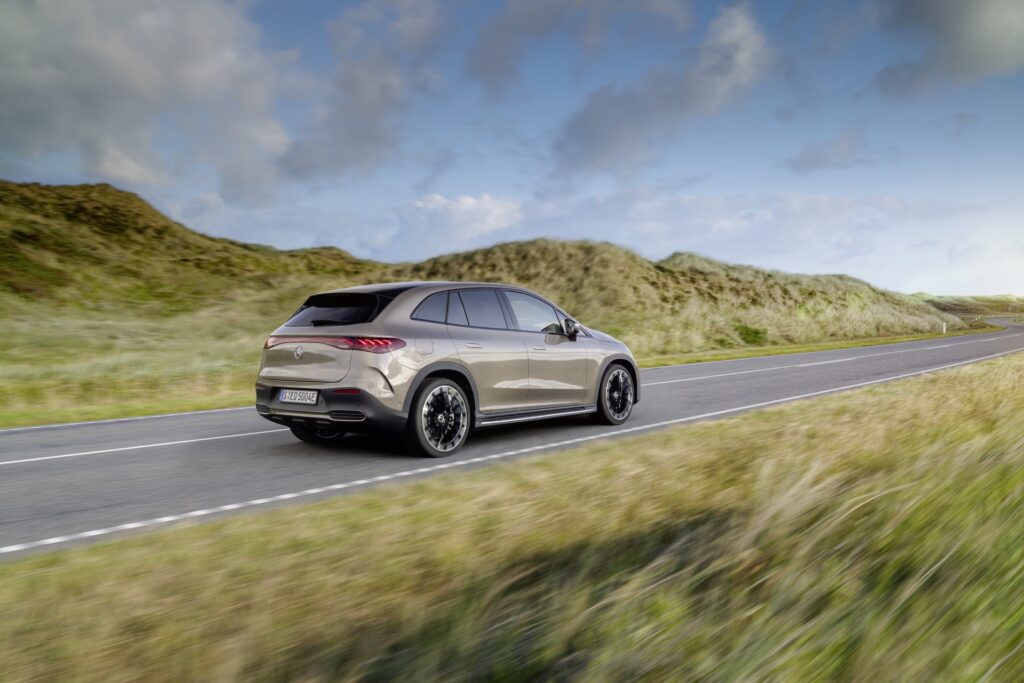
Here is the part most depreciation pieces miss. The brutal first-owner loss is a gift to the second owner, because the steepest part of any EV’s value curve is the first two years, and on a used 350+ that part is already absorbed. From £41,000, the car has far less left to fall in percentage terms than it did from £74,635. You are buying after the airbag has gone off.
That is the same logic we apply to prestige used buying generally, the kind of homework that sits behind our Range Rover Sport L494 used buying guide: let the first owner take the hit, then buy on condition. With the EQE SUV the discount is even sharper because the depreciation has been harsher. The risk simply moves: it stops being “how much value will I lose” and becomes “what will this 2.5-tonne EV cost me to run and insure”. So that is where the rest of this guide goes.
Battery warranty: the single most important box to tick
On a used EV the battery is the asset, and the EQE SUV’s cover is genuinely reassuring. Mercedes-Benz UK’s battery certificate runs for 10 years or 155,000 miles (250,000km) from first registration, whichever comes first, and it guarantees against the high-voltage battery dropping below a stated minimum capacity, not just outright failure. A 2024 car therefore still has the better part of eight years of battery cover left, which is the thing that should let you sleep at night on a six-figure-when-new EV bought for low forties.
The separate vehicle warranty is the weaker link. Mercedes covers new cars for three years with no mileage cap, so a 2024 car runs out of standard cover in 2027, often within months of you buying it. Buy through Mercedes-Benz Approved Used and you get a fresh warranty layered on top; buy privately or from a supermarket and you do not. We compared what the German makers actually cover in our BMW, Audi and Mercedes approved-used warranty breakdown, and it is worth reading before you sign.
Running a 2.5-tonne EV: charging, tyres and the bills that bite
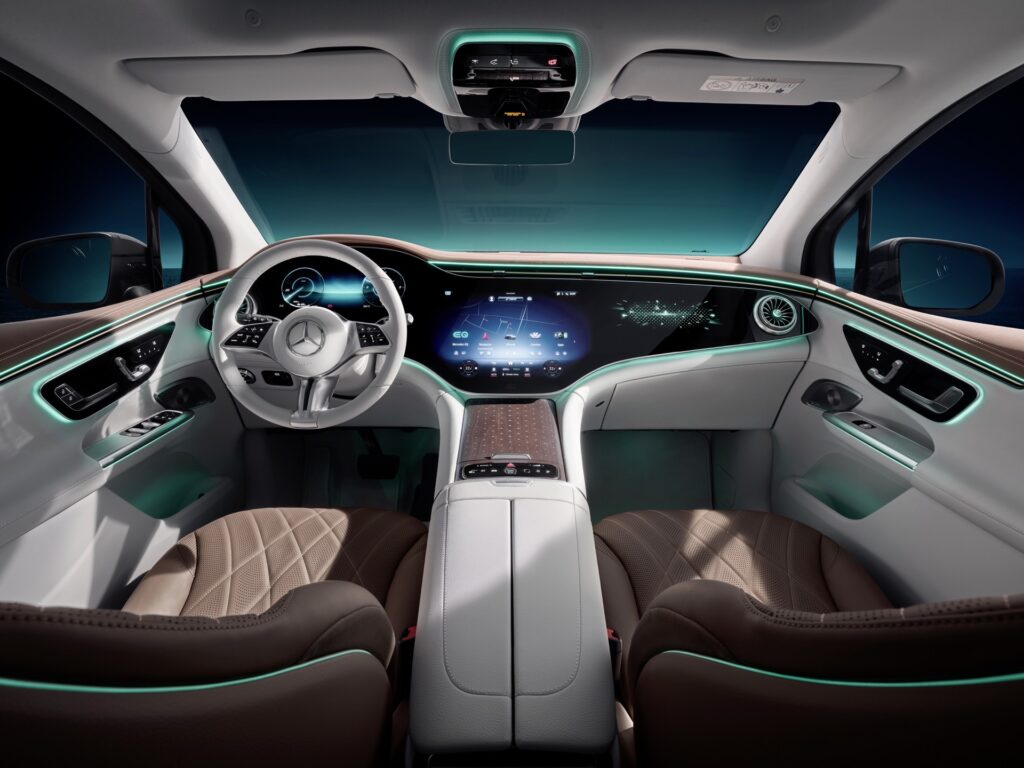
The 350+ carries a 96kWh usable battery and a WLTP figure of up to 390 miles, but the EV Database real-world estimate of around 295 miles is the number to plan your week around. It charges at up to 170kW, so a 10 to 80% top-up on a fast enough rapid charger takes a little over half an hour. Home charging on a cheap overnight EV tariff is where this car makes financial sense; lean on public rapids and a heavy SUV at motorway speeds will drink, so do the sums on your own mileage before you commit.
Then there is mass. The EQE SUV is a genuine 2.5-tonne car, and weight that high eats tyres and brakes faster than a combustion SUV of the same size. Budget for premium rubber, not budget remoulds, because a car this heavy on cheap tyres is a false economy and an MOT risk. Mercedes service intervals and the cost of any air-suspension or 12V-system fault should also be in your ownership maths, not a happy afterthought.
Insurance: group 50, so price it before you buy
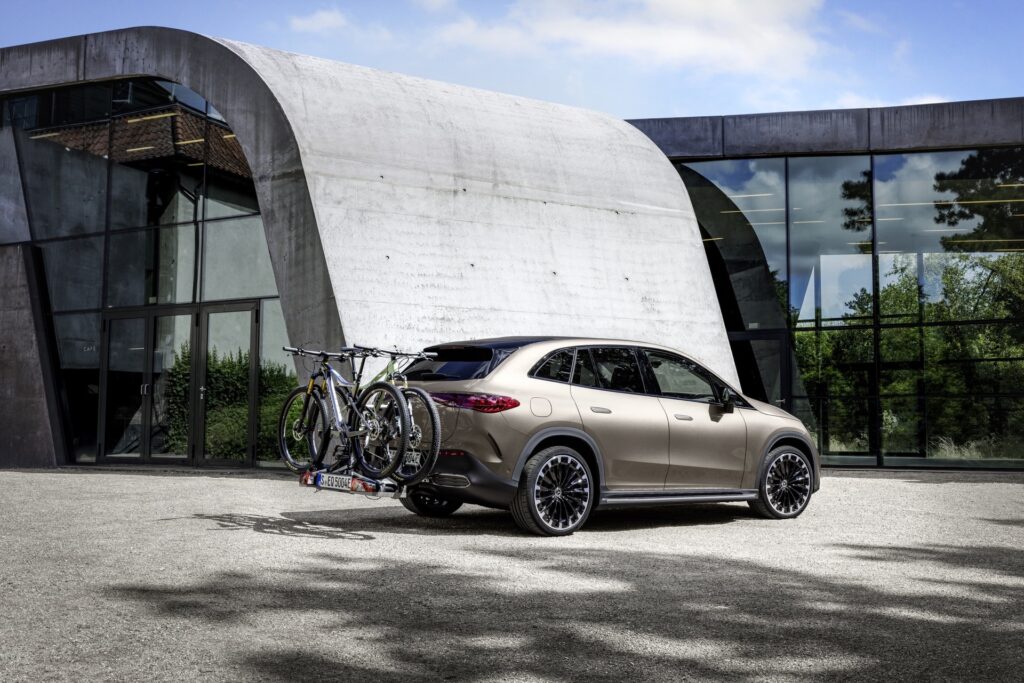
Honest John puts every version of the EQE SUV in insurance group 50, the very top of the scale, which means premiums to match. Heavy EVs cost more to repair after a knock because of bonded panels, sensors and battery-proximity damage, and that feeds straight into the quote. Price up the cover on the exact registration before you buy, not after, because a number that looks affordable on paper can change the monthly maths entirely. The same repair-cost reality drives prices across the segment, as we set out in our guide to why Audi and BMW repair costs inflate premium EV insurance.
One quiet win: company-car drivers still pay benefit-in-kind on the original list price, not the used price, but the EV rate is just 4% for 2026/27 per gov.uk, so even a £74,635 P11D lands a modest tax bill. If you are choosing through payroll rather than buying outright, our Mercedes EQE SUV salary sacrifice maths for 2026 runs the net monthly figures across the tax bands.
Used EQE SUV vs a new mainstream EV at the same money
At £41,000 you have a real choice: a two-year-old, six-figure-when-new luxury Mercedes, or a brand-new mainstream electric SUV with a full factory warranty. A new Kia EV9, Skoda Enyaq or top-spec Hyundai Ioniq 5 sits in or near that bracket and arrives with seven or five years of cover, zero unknowns and a known service history because there is none yet.
The EQE SUV wins on cabin quality, refinement, badge and the sheer sense of occasion you simply do not get from a mainstream EV. It loses on warranty runway, repair and insurance costs, and the fact that it is a discontinued model. If you keep cars for two or three years and value comfort over fewer ownership surprises, the used Merc is the heart-and-head pick. If you keep cars to 100,000 miles and hate surprises, the new mainstream EV is the safer call. It is the same crossroads we mapped in Polestar 4 versus Mercedes EQE on salary sacrifice, just framed for the cash-and-PCP buyer.
Where to check before you put down a deposit
A used EQE SUV rewards homework. Work through these before any money changes hands:
- Run the registration through the free GOV.UK MOT history check (early cars are now due their first MOT) and the DVSA vehicle recall lookup.
- Ask the seller for a recent battery state-of-health readout and confirm the Mercedes battery certificate transfers, including its 155,000-mile cap.
- Confirm whether any standard vehicle warranty remains, and whether a Mercedes-Benz Approved Used warranty is included or available.
- Compare the asking price against fresh Auto Trader EQE SUV listings so you negotiate from the live market, not the advert.
- Get a firm insurance quote on that exact car (group 50) and a charging-cost estimate for your real weekly mileage before you commit.
Our take: is a used EQE SUV worth buying?
EQE SUV depreciation has done the hard work for you. A car that cost about £74,635 new in 2024 now changes hands near £41,000, a loss of roughly 45% on our calculation, and that means the punishing part of the curve is behind the car rather than ahead of it. We would buy one, but only with conditions: a Mercedes-Benz Approved Used warranty or a clear plan to cover the gap when the three-year cover lapses, a battery health report in hand, premium tyres budgeted, and a group 50 insurance quote you have actually seen. Buy on history and paperwork, not on colour or wheel size. If you want certainty above all, a new mainstream EV at the same price is the rational alternative; if you want genuine luxury for mid-size-EV money and you keep cars a few years, the used 350+ is the smarter spend. Our score: 7.5/10.
This article is general guidance, not personalised financial or tax advice, and CDE has not driven this individual vehicle. Figures including BiK rates and used prices were last checked on 10 June 2026; verify current rates and offers before you commit.
How much does a Mercedes EQE SUV lose in two years?
Is a used EQE SUV a good buy in 2026?
What is the battery warranty on a used EQE SUV?
Why is EQE SUV depreciation so steep?
Used EQE SUV or a new mainstream electric SUV?
How we researched this guide
Every pick here is shortlisted from hands-on testing and time spent living with the hardware by the CDE desk, then sanity-checked against current UK pricing, manufacturer specs and real-world performance before it makes the cut. We never rank for commission — affiliate links don't change the order.
Editorial standards
Related coverage
Buying Guides
Used Tesla Model Y: buying a 2024 ex-lease in 2026
Buying Guides
VW Golf Mk8 approved used: is it safe to buy now?
Buying Guides