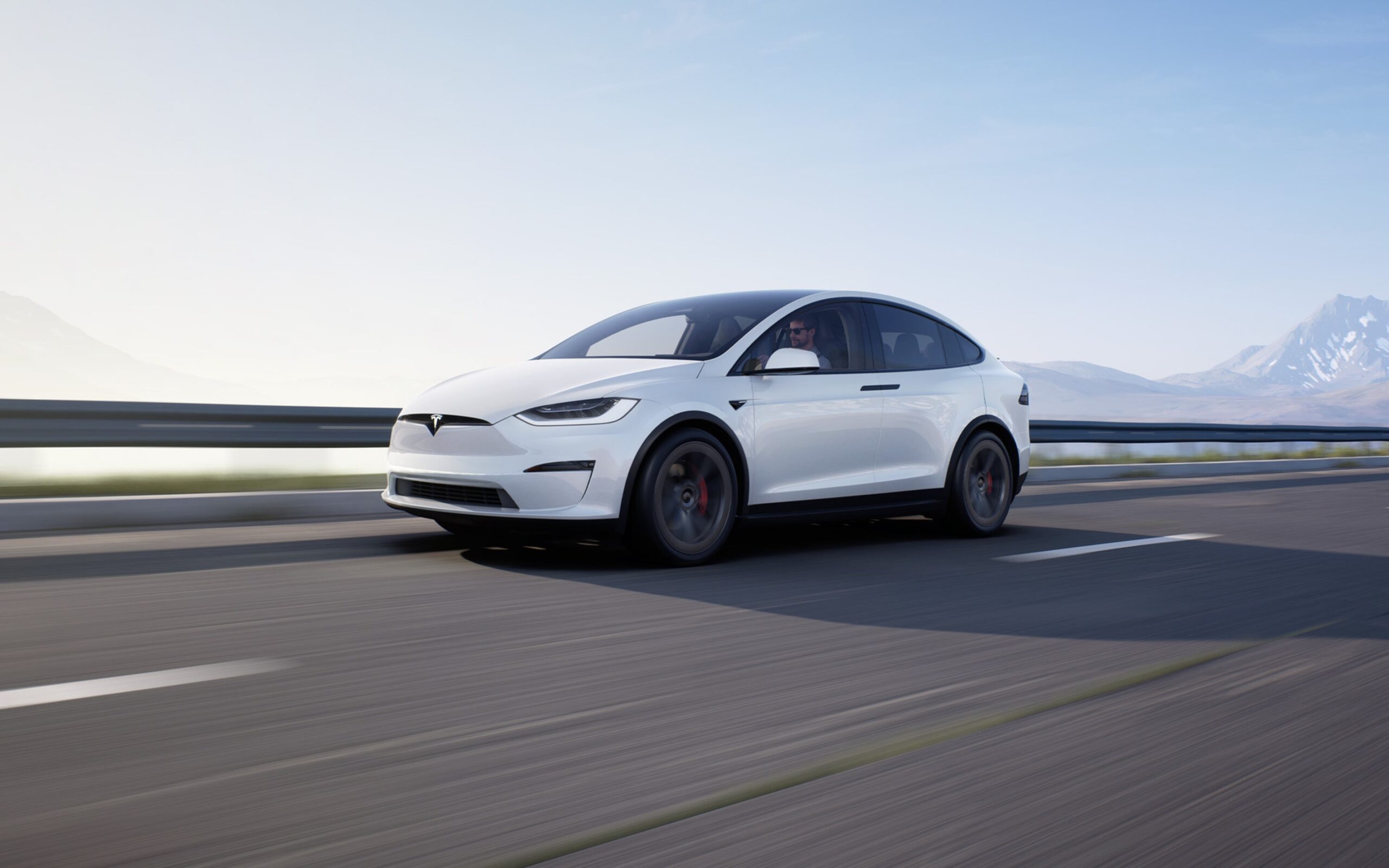
Tesla Model X salary sacrifice can net a 45% taxpayer a monthly cost well below a personal lease, because the benefit-in-kind charge on a zero-emission car is tiny. The catch is the wage floor, which quietly blocks mid earners. We have run the maths at all three tax bands.
What real owners say (CDE data)
CDE reviewed owner discussion of Model X running costs and sacrifice eligibility across PistonHeads and the Tesla Owners UK community, alongside HMRC company-car guidance, gov.uk National Minimum Wage rates and Tesla UK pricing (checked 5 June 2026). We did not count threads or invent a sentiment percentage; the notes below summarise the recurring themes.
- Most-praised aspects: the low benefit-in-kind charge versus a petrol equivalent, the space and seven-seat practicality, and Supercharger convenience for high-mileage drivers.
- Most-criticised aspects: the salary you need before the sacrifice clears the wage floor, tyre and insurance bills on a 2.4-tonne SUV, and confusion over what the monthly rental does and does not include.
- Reliability and tax signal: HMRC sets the zero-emission appropriate percentage at 4% for 2026/27, so the BiK on a circa £105,000 Model X is roughly £4,200 of taxable benefit a year, a fraction of the equivalent on a combustion car of the same value.
What salary sacrifice is, and the wage floor that can block it
Salary sacrifice swaps part of your gross pay for a non-cash benefit, here a fully insured, maintained lease car. Because the deduction comes out before Income Tax and National Insurance, you only pay tax on the smaller salary that remains, plus a small benefit-in-kind charge on the car. On an electric car that charge is currently trivial, which is why a premium EV through payroll undercuts a personal lease. The mechanics mirror our read on salary sacrifice versus a car allowance for a higher-rate EV buyer, and the wider CDE electric car coverage applies the same test to the rest of the premium range.
The limit most people forget is the wage floor. A sacrifice cannot drop your gross pay below the National Minimum Wage, which is £12.21 an hour for workers aged 21 and over from April 2025. On a 37.5-hour week that floor is about £23,810 a year. A Model X sacrifice can run close to £1,950 a month, roughly £23,400 a year, so you need a salary north of about £47,000 just to take that deduction and still clear the floor. That is why a £100k EV can quietly make payroll sense for a senior earner and be a non-starter for a mid earner on the same scheme.

How the tax actually works on a zero-emission car
Three numbers drive the benefit-in-kind charge: the car’s P11D value, the appropriate percentage for its emissions, and your marginal Income Tax rate. The formula is P11D value multiplied by the appropriate percentage multiplied by your tax rate. For a zero-emission car the appropriate percentage for 2026/27 is 4%, per HMRC’s company-car rules. We read that rate from our dated internal tax source and verified it against the HMRC appropriate-percentage table on gov.uk (checked 5 June 2026). The rate is legislated to rise in steps after that, so treat 4% as a current-year figure, not a fixed cost for the whole lease.
Take a Model X with a P11D of about £104,990. At 4% the taxable benefit is roughly £4,200 a year. A basic-rate employee pays £840 a year, about £70 a month; a higher-rate employee £1,680, about £140 a month; an additional-rate employee £1,890, about £157 a month. The bigger lever is the saving on the sacrificed salary itself: every pound you give up dodges Income Tax at your marginal rate and employee National Insurance, which is 8% up to the upper earnings limit and 2% above it.

Three worked case studies at 20%, 40% and 45%
The tables below use one illustrative gross sacrifice of £1,950 a month including VAT, the sort of figure a four-year, 10,000-mile Model X lease lands at with insurance and maintenance folded in. Exact rentals sit behind a scheme quote and move with stock and term, so treat the gross figure as the worked example and the savings columns as the mechanics. BiK cost uses the £4,200 taxable benefit at the 2026/27 rate. The pattern is the headline: the more tax you pay, the more the sacrifice saves you.
| 20% basic-rate band | Monthly figure |
|---|---|
| Gross sacrifice (inc VAT) | £1,950 |
| Income Tax saving | £390 |
| Employee NI saving (8%) | £156 |
| BiK cost | £70 |
| Net monthly cost | £1,474 |
| 40% higher-rate band | Monthly figure |
|---|---|
| Gross sacrifice (inc VAT) | £1,950 |
| Income Tax saving | £780 |
| Employee NI saving (2% above UEL) | £39 |
| BiK cost | £140 |
| Net monthly cost | £1,271 |
| 45% additional-rate band | Monthly figure |
|---|---|
| Gross sacrifice (inc VAT) | £1,950 |
| Income Tax saving | £878 |
| Employee NI saving (2% above UEL) | £39 |
| BiK cost | £158 |
| Net monthly cost | £1,191 |
Note the quirk in the National Insurance column: a basic-rate earner saves more NI (8%) than a higher earner (2%), because the higher earner is already above the upper earnings limit on the sacrificed slice. The Income Tax saving still swings the result the other way, which is why the 45% net is the lowest of the three. The same shape shows up across the premium range, including our Tesla Model Y salary sacrifice maths and the cheaper Tesla Model 3 on payroll, where smaller P11D values cut the absolute saving but keep the percentages.

How payroll compares with a personal lease
This is where the case is won. A personal contract hire on a six-figure Model X is paid from after-tax income, so a 45% earner needs close to £1,800 of gross salary to cover every £1,000 of net lease cost. Run the same car through payroll and that £1,950 gross sacrifice nets out near £1,191 a month, because the tax and NI relief plus the tiny BiK charge do the heavy lifting. The gap is the value of the tax relief, and on a high-P11D car at a high marginal rate it is large.
For a basic-rate earner the same arithmetic is much weaker: the relief is smaller, the net cost is higher, and the wage-floor problem bites first. If you are a 20% taxpayer eyeing a £100k EV on payroll, the honest answer is usually that a cheaper EV makes the sums work better, the way it does on the premium EV deposit strategy we set out for buyers weighing PCP, PCH and sacrifice. The Model X only really pays off when your marginal rate is 40% or, ideally, 45%.
Where a six-figure EV stops making payroll sense
The cut-off is salary, not appetite. With a sacrifice near £23,400 a year, you need a gross salary above roughly £47,000 to clear the National Minimum Wage floor at all, and realistically more before a scheme signs it off, because providers leave headroom for pension and other deductions. Plenty of employers cap the sacrifice at a share of salary for that reason. Below that line the Model X cannot go on your payslip, however good the BiK rate looks.

For company directors and very high earners there is a second twist: a large sacrifice can interact with the £100,000 threshold where the personal allowance tapers, so the effective relief on part of the sacrifice can be higher still. That is a planning point for an accountant. The structural rule stands: the Model X rewards a high marginal rate and punishes a low salary.
Common misconceptions that trip people up
The first is the early-exit risk. If you leave the employer or are made redundant mid-term, the lease usually has to be settled or transferred, and early-termination charges can be steep on a six-figure car. Most schemes carry early-exit protection for redundancy or maternity, but resignation is rarely covered, so read the scheme rules before you sign. We flag the same trap on the Porsche Taycan salary sacrifice risk and the BMW i7 on payroll, where the numbers are similarly large.
The second is the BiK rate. It is 4% for 2026/27, but it is legislated to climb in the years after, so the cheap benefit charge gets a little less cheap over a long lease. The third is what the rental includes. Insurance, servicing and tyres are usually bundled, but home charging and public charging almost never are; you pay for the electrons. On a 2.4-tonne SUV the tyres alone are a real line item, and insurance groups sit high, points we cover in our breakdown of Tesla insurance costs in 2026.
Model X specs and the tax facts behind the maths
The figures we have leaned on, with sources, are in the table below. Note the availability caveat: Tesla closed right-hand-drive Model X orders in the UK during 2025, so for many buyers this is now the maths on remaining stock or a used example rather than a fresh factory order. The principles are identical either way.
| Data point | Figure | Source |
|---|---|---|
| Model X OTR (range) | about £105,570 to £128,770 | Auto Express prices and specs, checked 5 June 2026 |
| P11D used in worked example | about £104,990 | Derived from Tesla UK list price (OTR less first-year VED and first registration fee) |
| Zero-emission appropriate percentage 2026/27 | 4% | HMRC company-car guidance, gov.uk, checked 5 June 2026 |
| Taxable benefit at 4% | about £4,200/year | P11D x appropriate percentage |
| Employee NI rates | 8% to UEL, 2% above | gov.uk National Insurance rates, checked 5 June 2026 |
| National Minimum Wage (21+) | £12.21/hour | gov.uk, from April 2025, checked 5 June 2026 |
Our take on a Tesla Model X salary sacrifice
A Tesla Model X salary sacrifice is one of the more extreme cases of a simple rule: the tax relief is worth the most to the people who pay the most tax. For a 45% earner the net monthly cost lands well below a personal lease, the BiK charge is trivial against a six-figure car, and the practicality of a seven-seat EV is real. We would do it, with two conditions: a salary comfortably clear of the wage floor, and scheme paperwork with proper early-exit protection. For a 40% earner the case is still strong. For a 20% earner it usually is not; the relief is thinner, the wage floor bites, and a cheaper EV nets out better. The risk that flips our view is job insecurity. If redundancy or a move is on the cards and the scheme does not cover voluntary exit, a six-figure lease is the wrong thing to tie to your payslip. Get the salary headroom and the exit terms right, and the Model X is a genuinely efficient way to drive a £100k EV.
Does a Tesla Model X salary sacrifice ever make sense for a basic-rate taxpayer?
How is the benefit-in-kind charge on a Model X calculated in 2026?
Can salary sacrifice take my pay below minimum wage?
What happens to a Model X salary sacrifice if I leave my job?
Is charging included in a Tesla Model X salary sacrifice?
Will the Model X BiK rate stay at 4%?
Buyer action
EV and salary-sacrifice checks
Use this as the final check before paying a deposit, signing finance paperwork or relying on a headline monthly figure.