
Octopus EV vs Loveelectric is the salary sacrifice question we get most from higher-rate taxpayers eyeing a premium EV, and the honest answer is that the tax saving is identical because HMRC sets the benefit-in-kind rate, not the provider. The real split is everything around the tax: who can join, what sits in the monthly figure, and what happens if you leave mid-term. Loveelectric leans on a cost-neutral fee tied to employer National Insurance savings and a 2-year-trading rule; Octopus EV is free for employers to set up and bundles charging miles. We unpick which suits whom below.
What CDE found in the scheme rules
CDE compiled this comparison by reading both providers’ own published scheme-rules and employer pages line by line, Octopus EV’s salary sacrifice page and Loveelectric’s how-it-works and employer pages, and cross-checking the tax mechanics against HMRC company-car guidance on gov.uk, all accessed 3 June 2026. Where a provider does not publish a figure (lease rates, exact lead times), we say so rather than estimate.
- Where they overlap: both bundle fully comprehensive insurance, servicing, maintenance, tyres and breakdown into one monthly deduction, and both let a 40% taxpayer pay for a premium EV from pre-tax salary.
- Where they differ most: employer eligibility (Loveelectric asks for 2 years’ trading and profitability; Octopus EV states no setup cost and no published minimum), the fee model, and how early-exit risk is handled.
- The clause that decides it: on both providers’ published terms, leaver protection is the real variable, what happens to the car if you resign, are made redundant or go on maternity leave, and it is bought by your employer rather than guaranteed by default.
The tax saving is the same, so stop comparing it
The headline both providers sell, “save up to 40%”, comes from the same place: salary sacrifice swaps gross pay for a non-cash benefit, so you dodge Income Tax and employee National Insurance on the sacrificed amount, then pay a small benefit-in-kind charge on the car. That benefit-in-kind rate is set by HMRC, not by Octopus EV or Loveelectric. Per HMRC’s company-car appropriate-percentage tables, a fully electric car sits at 3% for 2025/26 and 4% for 2026/27, checked 3 June 2026. So on a like-for-like premium EV, the income-tax-and-NI saving and the BiK cost are identical whichever provider you pick. The differences that actually move your decision are the scheme rules, not the maths. That is the opposite of how both companies market themselves, and it is the single most useful thing to understand before you sign.

Who can actually join each scheme
Eligibility is the first place the two part company. Loveelectric’s employer pages state your business needs to have been trading for at least two years and be profitable, with an eligibility checker for edge cases. Octopus EV pitches the opposite framing on its salary sacrifice page: it costs employers nothing to set up and publishes no minimum trading history or company size, which makes it the easier sell to a smaller or younger firm. For you as an employee, the practical test is the same for both: your employer has to run the scheme, and your sacrifice cannot drop your gross pay below the National Minimum Wage. That floor is a legal one, not a provider rule, and it bites hardest on lower earners taking a big premium-EV sacrifice; a higher-rate taxpayer rarely gets near it. If you are weighing payroll against an outright buy, our salary sacrifice versus car allowance comparison sets out when each wins.
What sits inside the monthly figure
Both schemes are genuinely all-inclusive, which is the point of sacrificing salary rather than running a personal lease. Loveelectric’s bundle lists a brand-new or “reloved” used EV, maintenance and servicing, MOT, breakdown assistance and recovery, replacement tyres and glass, accident management and fully comprehensive insurance, with home-charger installation offered through partners. Octopus EV’s package is described as servicing, insurance, tyres, maintenance and breakdown cover, plus either 4,000 free charging miles or a home charger as a launch sweetener. The meaningful difference for a premium-EV driver is charging: Octopus EV builds charging miles or hardware into the headline, while Loveelectric treats the charger as an add-on. On a £70,000-plus EV that detail is small against the tax saving, but it is real, and it is the kind of thing that is easy to miss when both monthly quotes look similar. Our guide to EV warranty cover explains what the bundled maintenance does and does not replace.
The fee and margin question
Neither provider publishes a public price list, because both quote per car and per employer, but their stated fee models differ in a way worth understanding. Loveelectric is explicit that its service fee is “the equivalent of the Employer’s NIC Savings”, so the employer keeps no National Insurance windfall and the arrangement stays cost-neutral to the business, with Loveelectric’s margin coming from that fee and the brokerage on the lease. Octopus EV markets the scheme as free for the employer to set up, recovering its costs inside the lease and bundled-services pricing instead. For you, the employee, the consequence is indirect: a leaner provider fee can leave more headroom in the monthly figure, but the only honest way to compare is to price the same car, same term and same mileage through both, because the bundled insurance and charging assumptions swing the number more than the fee does. Treat any “cheapest scheme” claim with suspicion until you have two like-for-like figures side by side.

Early exit: redundancy, resignation and maternity
This is where the comparison earns its keep, and where most owner anxiety lives. A salary sacrifice car is leased to your employer, not to you, so if you leave mid-term someone has to cover the early-termination cost. Loveelectric addresses this with an “Early Returns Service” as standard and an optional “Zero Risk Guarantee” that, in its own words, “ensures your company isn’t left with early termination fees if an employee leaves or something goes wrong unexpectedly”, with day-one cover. Octopus EV states it covers “a wide range of events, from resignations to sick leave”. Neither provider publishes a clause-by-clause breakdown of redundancy versus maternity versus resignation on its public pages, so the rule that matters is to read the specific protection wording your employer has signed up to, because the optional guarantees are bought by the employer, not automatically present. The pattern across rival schemes such as ElectriX, Tusker and OnTo is similar: protection exists, but the depth varies by the package your company chose.

Vehicle range and lead times
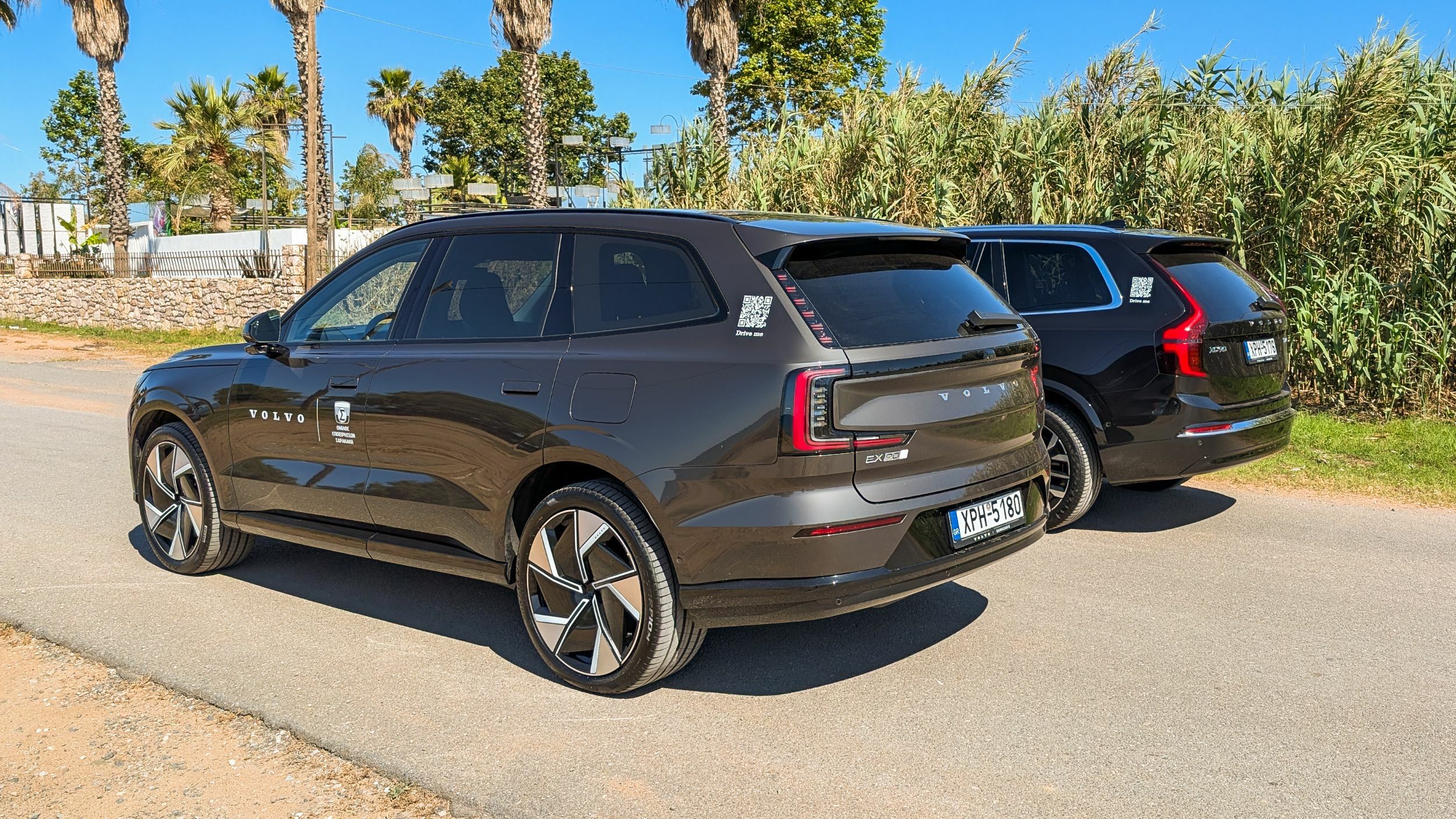
Both providers carry the premium EVs a higher-rate taxpayer actually wants, the Polestar 3 and 4, Volvo EX90 and EX40, BMW i-range, Tesla Model Y and 3, Mercedes EQ models and Audi e-tron cars, drawing on multiple funders rather than a single manufacturer tie-up. Loveelectric is unusual in also offering “reloved” used EVs through the same payroll mechanism, which can put a nearly-new premium car within reach at a lower sacrifice. On lead times, Loveelectric says employer setup “can take as little as 7 days”, though that is the scheme go-live, not your car delivery, which still depends on stock and funder approval. Octopus EV does not publish a standard delivery window. In practice, premium-EV lead times in 2026 are driven by the manufacturer’s order book far more than the scheme, so a popular configuration can take months regardless of provider. If you want the worked payroll maths on specific cars, our Polestar 4 salary sacrifice breakdown and Volvo EX90 salary sacrifice math show the month-one numbers.

Octopus EV vs Loveelectric: a like-for-like worked example on the BiK
Because the tax is provider-agnostic, here is the part that is identical whichever you choose, shown on a premium EV with a P11D value of about £70,000. The BiK cash value is P11D multiplied by the appropriate percentage multiplied by your marginal rate. At the 2026/27 EV rate of 4%, the taxable benefit is £70,000 x 4% = £2,800. A 40% taxpayer pays £2,800 x 40% = £1,120 a year, roughly £93 a month, in benefit-in-kind tax. An additional-rate (45%) taxpayer pays £2,800 x 45% = £1,260 a year. Those figures are read from the gov.uk appropriate-percentage table cited above and recomputed live, not copied from a provider quote. The income-tax and National Insurance relief on the sacrificed gross amount sits on top and is also identical between schemes. Our 2026/27 company-car tax explainer walks through how the EV rate rises by one point a year, so the BiK creeps up over a typical three or four-year term.
| Scheme rule | Octopus EV | Loveelectric |
|---|---|---|
| EV BiK rate (2026/27) | 4% (HMRC, identical) | 4% (HMRC, identical) |
| Employer eligibility | No setup cost, no published minimum | 2+ years trading, profitable |
| Insurance included | Yes, fully comprehensive | Yes, fully comprehensive |
| Charging | 4,000 free miles or a home charger | Charger via partner (add-on) |
| Servicing, tyres, breakdown | Included | Included (plus MOT, glass) |
| Used EV option | Not advertised | Yes (“reloved” used EVs) |
| Early-exit cover | Resignations to sick leave | Early Returns Service plus optional Zero Risk Guarantee |
| Stated fee model | Free for employer to set up | Fee equals employer NIC saving (cost-neutral) |
For the underlying tax mechanics, MoneyHelper’s guidance on salary sacrifice schemes is a useful neutral reference that neither provider controls, and it confirms the National Minimum Wage floor and the National Insurance interaction we describe above.
Misconceptions that catch premium-EV drivers out
Three myths recur. First, that one provider is “cheaper on tax”: it is not, because HMRC sets the BiK rate and both schemes use it. Second, that the bundled insurance is a like-for-like swap for a personal policy: it is comprehensive, but it is the scheme’s policy on the scheme’s terms, so check the excess and any business-use wording before you assume it matches what you have now. Third, that the car is yours: it is leased to your employer, so leaving the job, not just selling the car, is the event that triggers cost, which is why the early-exit clauses above matter more than the monthly headline. A fourth, quieter trap is the BiK rising over the term, the EV appropriate percentage climbs one point a year, so a three-year deal that starts at 4% will not stay there. None of these are reasons to avoid salary sacrifice; they are reasons to read the specific scheme your employer offers rather than the brochure. If you are comparing more than two providers, our three-way Octopus EV, Loveelectric and Tusker comparison widens the field.
Where to check the rules before you commit
Before you sign anything, run these checks. Read the live scheme rules on Octopus EV’s and Loveelectric’s own pages, because both update terms and the version your employer signed is what binds you. Confirm the current EV benefit-in-kind rate and the rising schedule on the HMRC company-car pages at gov.uk, and note the date you checked. Cross-read the National Minimum Wage floor and the National Insurance interaction on MoneyHelper, the government-backed service. Ask your payroll or HR team for the exact early-exit protection your employer bought, named clause by named clause, covering resignation, redundancy and maternity. Finally, price the identical car, term and annual mileage through each provider so the bundled insurance and charging assumptions are like-for-like. For a different angle on the same money, our BMW iX salary sacrifice math shows how the net figure lands on a flagship EV.
Updated: 3 June 2026. This is general guidance, not personalised financial, tax or legal advice; CDE has not driven this specific vehicle.
Our take
On Octopus EV vs Loveelectric, there is no universal winner, because the tax saving is the same and the right pick depends on your employer and your appetite for risk. Loveelectric suits an established, profitable business and a driver who values the standard Early Returns Service, the optional Zero Risk Guarantee and the unusual used-EV route, with a transparent cost-neutral fee tied to employer National Insurance. Octopus EV suits a younger or smaller employer that wants zero setup cost, and a driver who values the built-in charging miles or home charger on a brand-new premium EV. Walk away from either if your employer will not confirm, in writing, exactly what happens on redundancy, resignation or maternity, because that clause is bought by the company, not guaranteed by default. Before any deposit equivalent, we would price two like-for-like figures, read the live BiK rate on gov.uk, and check the insurance excess. Pick the scheme with the most boring, clearly-worded paperwork, not the cheapest-looking monthly figure.