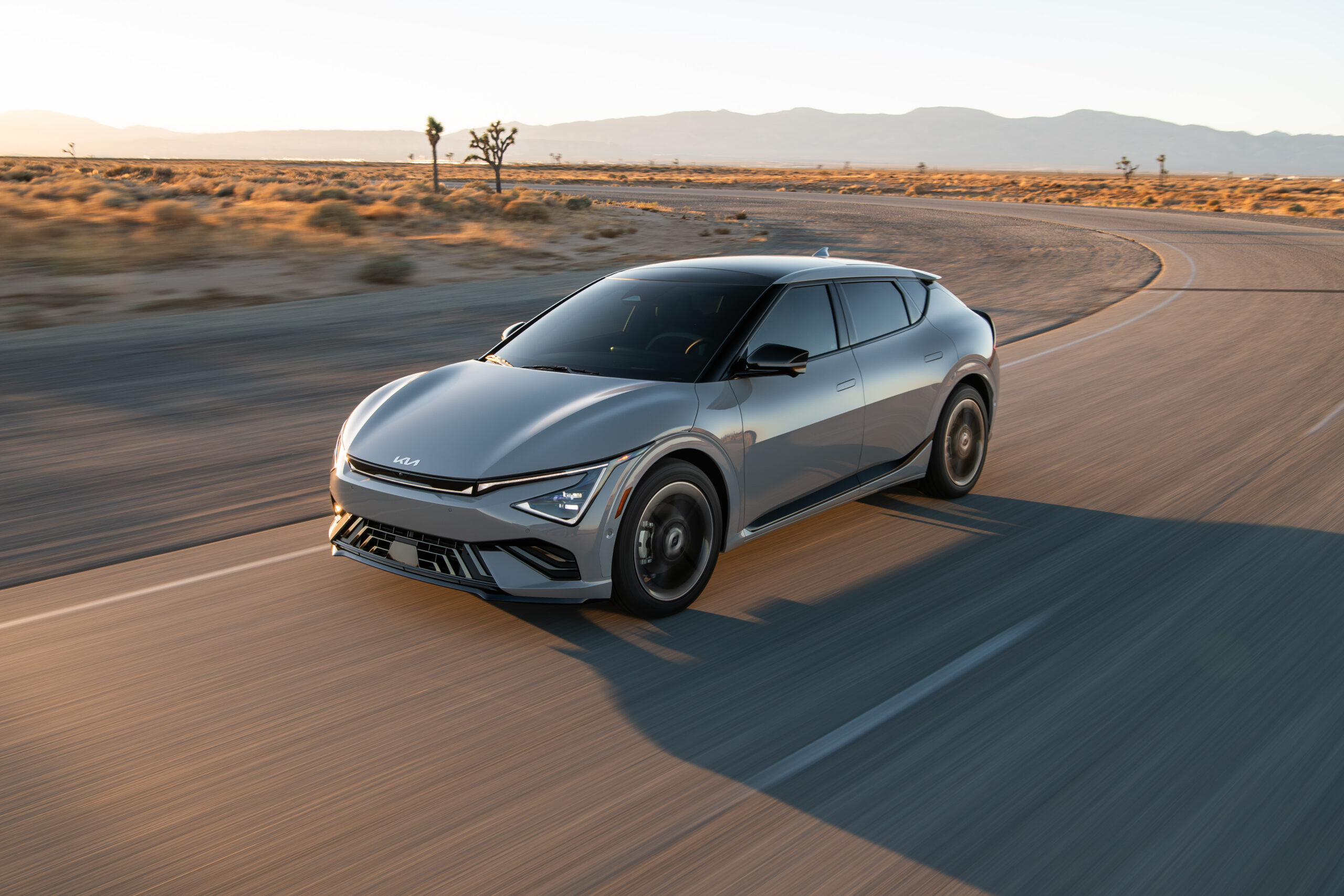
Kia EV6 salary sacrifice is one of the cleanest tax wins on the UK payroll market in 2026. With company-car Benefit-in-Kind on pure EVs at 4% for 2026/27, a higher-rate taxpayer can run the facelifted 84kWh EV6 for a net monthly cost well below a personal lease, and delivery now takes weeks, not the old multi-month wait.
What real owners say (CDE data)
- Most-praised: low net monthly cost versus a personal lease, genuine real-world range from the 84kWh pack, and rapid 10-80% charging on a suitable rapid charger.
- Most-criticised: early-exit and resignation clauses on some schemes, patchy public rapid-charger reliability, and firm low-speed ride on the larger wheels.
- Reliability signal: the EV6 carries Kia’s 7-year/100,000-mile warranty, and owner-reported faults skew to infotainment niggles rather than drivetrain failures, a reassuring profile for a salaried multi-year commitment.
Who qualifies, and the National Minimum Wage floor
Salary sacrifice is open to most UK PAYE employees whose employer runs a scheme through a provider such as Octopus EV, Loveelectric or Tusker. You give up an agreed slice of gross salary in return for a fully maintained EV, and because the deduction comes out before income tax and National Insurance, the Treasury effectively part-funds the car. The one hard limit is that sacrifice cannot drag your gross pay below the National Minimum Wage, which rules out the cheapest cars for lower earners but is irrelevant for the higher-rate professionals who benefit most. If your workplace does not yet offer a scheme, that is the single biggest blocker, and it is worth weighing the trade-offs we set out in our guide to salary sacrifice versus a car allowance for a higher-rate EV buyer before pushing HR to sign up.

The provider, not Kia, owns the lease. That matters because the gross deduction you sacrifice bundles in insurance, servicing, tyres, breakdown cover and often a charging tariff, so the figure looks higher than a bare personal-lease rental but covers far more. Loveelectric, for example, builds fully comprehensive insurance and all routine maintenance into the single monthly amount, which is why a like-for-like comparison against a personal contract hire quote flatters sacrifice once you add the extras a PCH leaves you to pay separately.
How the tax actually works in 2026/27
Two separate tax effects drive the saving. First, the amount you sacrifice escapes income tax and employee National Insurance at your marginal rate. Per HMRC’s income-tax rates, that is 20% for a basic-rate earner, 40% above the £50,270 higher-rate threshold and 45% above £125,140, with employee NI at 8% below the £50,270 upper earnings limit and 2% above it. Second, you pay a small Benefit-in-Kind charge on the car. Per HMRC’s company-car tax rules, the appropriate percentage for a zero-emission car is just 4% for 2026/27, rising to 5% in 2027/28, so the BiK cost stays tiny relative to the income-tax relief.
The BiK cash value is simple: P11D value multiplied by the appropriate percentage, taxed at your marginal rate. The EV6 Air 84kWh RWD has a P11D close to its £44,795 RRP (Kia UK pricing, checked June 2026), so at 4% the taxable benefit is roughly £1,792 a year. A higher-rate taxpayer pays 40% of that, about £717 a year or £60 a month, the only real cost the tax office takes back. Hold that figure in your head; it is the number that turns a £45k car into a sub-£400 monthly outgoing for a 40% earner. The mechanism is identical across the premium EV field, as our Octopus EV versus Loveelectric salary sacrifice comparison sets out in detail.
Kia EV6 salary sacrifice worked tables across the tax bands
Here is the Kia EV6 salary sacrifice maths laid out band by band. The figures use an illustrative gross sacrifice of around £560 a month, inclusive of VAT, insurance, servicing and tyres on a typical 36 to 48 month term for the EV6 Air 84kWh RWD. Your provider’s exact quote will move with term length, annual mileage and the charging package bundled in, so treat these as the shape of the deal rather than a binding quote.
| Step | Figure | Source |
|---|---|---|
| EV6 Air 84kWh RWD P11D (approx) | £44,795 | Kia UK pricing, Jun 2026 |
| Appropriate percentage (EV, 2026/27) | 4% | HMRC company-car tax rules |
| Taxable benefit (P11D x 4%) | £1,792/yr | Calculated |
| Illustrative gross sacrifice | £560/mo | Provider-bundled, all-in |
| Tax band | Income tax + NI saved on £560 sacrifice | BiK cost (per month) | Net monthly cost |
|---|---|---|---|
| Basic rate (around £35k salary) | 20% + 8% = £157 | £30 | about £433 |
| Higher rate (around £60k salary) | 40% + 2% = £235 | £60 | about £385 |
| Additional rate (around £130k salary) | 45% + 2% = £263 | £67 | about £364 |
Read the higher-rate row carefully, because it is where the scheme earns its reputation and where the common myth lives. A £60k earner does not save 8% NI on the sacrifice; they save only 2%, because the sacrificed slice sits above the £50,270 upper earnings limit. Income-tax relief at 40% still does the heavy lifting, which is why the net cost lands near £385 a month for the very buyer the scheme suits best. The same band logic underpins the trade-offs we cover in our look at salary sacrifice EV hidden costs for 2026.

Why the EV6 Air 84kWh is the range and P11D sweet spot
The facelifted EV6 grew its battery from 77.4kWh to 84kWh, lifting the rear-drive car’s official range to up to 361 miles WLTP while keeping the entry Air trim’s P11D below £45k. That combination is the sweet spot: the cheaper the P11D, the smaller your BiK bill, and the bigger the usable battery, the less the scheme’s bundled charging package gets eaten by winter range loss. Stepping up to GT-Line or AWD trims adds power and kit but pushes the P11D and the gross sacrifice higher for range you rarely need on a commute. For a salary-sacrifice buyer chasing the lowest defensible net cost, Air 84kWh RWD is the trim to spec.

Range security matters because it decides whether you lean on a home wallbox or public rapid chargers, and the gap in cost between the two is large. If you can charge at home overnight, the EV6 is genuinely cheap to feed; if you cannot, the scheme’s charging tariff and your local network reliability move from nice-to-have to deal-breaker. Our 2026 home EV charger comparison is the first thing to read before you sign, because the charging setup, not the car, is what most often disappoints EV6 owners.
Delivery times in 2026: weeks, not the old multi-month waits
The lead-time story has flipped since the supply crunch. Where EV6 buyers once faced waits stretching towards a year, current UK delivery now typically runs around 4 to 12 weeks depending on trim and colour (as reported by Electrifying, June 2026). That shorter horizon changes the salary-sacrifice decision: you can time the order to a scheme launch or a tax-year boundary without committing to an open-ended wait, and you are far less exposed to a BiK rate change landing between order and delivery. Do not let a salesperson quote you the stale 2022 to 2023 figures; ask for the dealer’s current build slot in writing and confirm it against the provider’s own quoted delivery window.

What to check before you sign the scheme agreement
The car is the easy part; the contract is where buyers get caught. The single most important clause is early exit: what happens if you resign, are made redundant, or go on extended unpaid leave mid-term. Some schemes offer early-termination insurance, some pass the full liability to you, and the difference can run to thousands. Confirm exactly what is bundled into the gross figure, insurance, servicing, tyres and charging, so you are comparing like with like against a personal lease. And remember the BiK rate rises to 5% in 2027/28, so model the cost across the whole term, not just year one, the same discipline we apply in our explainer on the 2028 BiK lock-in for salary-sacrifice EVs.
If you sit close to a tax-band edge, the sacrifice can also nudge your adjusted net income in useful ways, which is worth understanding before you fix the deduction. We unpack that interaction in our piece on the 60% tax trap and salary sacrifice, essential reading for anyone earning between £100,000 and £125,140. For company directors weighing payroll sacrifice against buying the car through the business, our director’s guide to salary sacrifice versus a company purchase runs the alternative numbers.
Our take: is the EV6 the smart payroll buy?
Our view on Kia EV6 salary sacrifice is straightforward: for a higher-rate taxpayer with a scheme at work and a home wallbox, it is one of the best-value ways to run a premium EV in 2026, full stop. The 4% BiK rate, the sub-£45k P11D on the Air 84kWh and the all-in monthly figure that lands near £385 net make the EV6 cheaper through payroll than almost any equivalent personal lease, and shorter delivery times remove the old reason to hesitate. We would spec the Air 84kWh RWD for the range-to-P11D balance, not the flashier trims. The buyer who should walk away is the one without home charging or with a wobbly job, because public-charging cost and a punishing early-exit clause can quietly undo the tax win. Get the boring paperwork right, confirm the early-termination terms in writing, and the EV6 is a genuinely smart payroll buy. The only number that should give you pause is the BiK climbing year on year, so cost it across the full term.
How much does a Kia EV6 cost per month on salary sacrifice in 2026?
What is the Benefit-in-Kind rate on the Kia EV6 for 2026/27?
How long is the wait for a Kia EV6 in the UK right now?
Does salary sacrifice on the EV6 include insurance and servicing?
Which EV6 trim is best for salary sacrifice?
What happens to my EV6 salary sacrifice if I leave my job?
Buyer action
EV and salary-sacrifice checks
Use this as the final check before paying a deposit, signing finance paperwork or relying on a headline monthly figure.