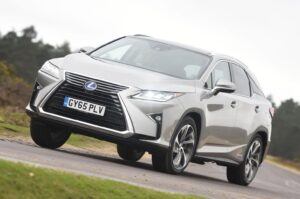
Here’s the figure that should stop you before you sign anything in 2026: on a Kia Sportage, like-for-like on the same forecourt, the car costs £359 a month on a personal lease and £518 a month on PCP, according to BestChargers’ 2026 leasing data. That’s £159 a month, nearly £5,700 over a three-year term, for what looks like an identical car on your drive. The gap isn’t a discount or a con: it’s the price of one structural difference between Personal Contract Hire and Personal Contract Purchase. Pick the wrong one for your situation and you can pour thousands into a balloon payment you never meant to swallow, and as I’ll show, that structural gap gets riskier still once the car under it is a full EV.
The monthly figures here are representative market examples, not finance offers. Your own rate, deposit and monthly payment will depend on your circumstances, mileage and term, and any agreement is subject to status.
Let me lay out where I’d actually sign, and where I’d walk.
The two products, stripped to what matters (PCP or PCH)
Personal Contract Hire (PCH) is a long rental, full stop. You pay a fixed monthly figure for a fixed term, then hand the keys back. There’s no option to own it and no final lump sum. Personal Contract Purchase (PCP) looks similar month to month, but it defers a chunk of the car’s value to the end, the Guaranteed Minimum Future Value, or balloon payment, which you settle only if you want to keep the car. As Octopus EV sets out, that single structural difference is the whole game: PCH is pure usage, PCP is a deferred purchase wearing a rental’s clothing.
| Factor | PCH (personal lease) | PCP |
|---|---|---|
| Monthly cost (Kia Sportage, BestChargers 2026) | £359 | £518 |
| Final balloon payment (GMFV) | None | Large lump sum to own |
| Who carries depreciation risk | Leasing company | You |
| Own the car at the end | No | Optional, if you settle the balloon |
| Best suited to | Drivers who’ll hand the car back | Buyers set on owning this exact car |
That £159-a-month premium on the Sportage is buying you one thing: optionality, the right to own at the end. The honest question is whether you actually want that right, because you pay for it every single month whether you use it or not. The Sportage is just the cleanest illustration of the gap; the principle is identical whether you’re financing a hybrid SUV or a £50,000 electric saloon, and on the EV the stakes are higher.
PCP is not “a lease you can keep” — it’s a purchase you’ve agreed to pay for twice over if you let the balloon catch you off guard.
Why PCP’s balloon is the part to interrogate, doubly so on an EV
Here’s what makes me uneasy about PCP on an electric car specifically. The balloon payment is fixed at the start, based on what the lender predicts the car will be worth years out. EV residual values have been the most volatile corner of the used market, far more so than the petrol and hybrid models the leasing tables are built on, and if the GMFV is set high to keep your monthlies down, you reach the end with a large, fixed sum to find and a car that may not be worth it. You’re not obliged to pay it; you can hand the car back. But then you’ve paid PCP-level monthlies for what was, functionally, a more expensive lease. That’s the trap: the higher monthly only pays off if you exercise the buy option and the car holds its value.

PCH sidesteps the entire residual-value gamble. The leasing company carries that risk, not you. For a technology still moving as fast as EV powertrains and battery chemistry, handing someone else the depreciation risk isn’t timidity, it’s reading the room.
What three years actually costs you
Run the Sportage figures out and the gap stops being abstract. On PCH at £359 a month, a three-year term is £12,924 in payments, then you hand the keys back and walk away owing nothing. On PCP at £518 a month, the same three years is £18,648 in payments, and you still face the balloon, the GMFV, if you want to keep the car. Decline the balloon and hand it back, and you’ve paid £5,724 more than the PCH driver for the same three years of motoring and the same empty driveway at the end. The PCP maths only comes good if you exercise the buy option and the car is genuinely worth at least its GMFV when you do. On a fast-moving EV, that’s the bet you’re personally underwriting. (Worked from the representative monthlies above; your figures will differ and are subject to status.)
What’s actually bundled, and the costs that aren’t
People underestimate how much a personal lease quietly covers. Per Let’s Talk Leasing’s guide, a typical PCH deal includes road tax (VED) for the term and the manufacturer’s warranty. What it does not include is the stuff that catches people out: insurance, your electricity, and the home charger. Budget those separately or the monthly headline flatters itself.

Mileage is where a “cheap” lease stops being cheap
Both products cap your annual miles, and overrunning is charged at, typically, 5 to 15p per mile on PCH in the current UK market. That sounds trivial until you’re 4,000 miles over on a long-commute year: at 12p that’s £480 you didn’t plan for. The discipline here is honesty at the application stage. Pick a realistic mileage band rather than a flattering low one to shave the monthly, because excess charges are exactly where a cheap-looking lease turns expensive.
The option that beats both, if you qualify
Before you choose between PCH and PCP at all, check whether you can sidestep both. If your employer offers salary sacrifice, the maths is in a different league. BestChargers puts salary sacrifice at 30 to 60% cheaper than PCH for an EV, and the reason is structural rather than promotional: the payments come out of pre-tax salary, and the Benefit-in-Kind rate on electric cars sits at just 4% for the 2026/27 tax year under HMRC’s published company-car tax bands (the EV BiK rate rises one point a year from here, so confirm the current figure on gov.uk before you commit). PCH and PCP are both paid from post-tax income, money HMRC has already taken its cut of.
The Electric Car Scheme’s comparison walks through the same hierarchy. The catch is access: salary sacrifice only exists if your employer runs a scheme, and it ties the car to your employment. Leave the job and the arrangement usually unwinds. For a settled employee with a participating employer, though, it’s the first place I’d look, and it makes the PCH-versus-PCP debate moot. None of this is a finance recommendation; it’s the order I’d check the options in.

So which would I sign?
If you have salary sacrifice, take it and stop reading: nothing here beats a 4% BiK rate funded pre-tax. Without it, I’d take PCH for almost everyone: lower monthlies, no balloon to ambush you, and the depreciation risk parked with the leasing firm where, on a fast-moving EV, it belongs. PCP earns its higher cost in one scenario only, when you’ve decided you genuinely want to own this specific car, you’ve stress-tested the balloon against realistic used values, and you’re confident you’ll exercise the buy option. If any of those is a maybe, you’re paying a premium for a choice you won’t use.
What would change my mind on PCP? A genuinely conservative GMFV, one set below where you think the used car will land, so the buy option is in the money rather than a coin toss. Lenders rarely offer that, because it pushes the monthlies up further. Until they do, I treat PCH as the default and PCP as the exception you have to justify. Run your real annual mileage, add insurance and charging to the headline figure, and let the pre-tax option win if you can reach it.
Buyer action
Where to check next
Use this as the final check before paying a deposit, signing finance paperwork or relying on a headline monthly figure.