Start with the number that frames everything: £101,865. That’s where the BMW i7 now opens in the UK, per What Car?’s 2026 review, and it climbs to £184,420 by the time you’ve reached the M70 xDrive. So the first question I want to answer isn’t “is it a good car” (a six-figure BMW had better be) but whether the electric limousine actually earns that money against the combustion 7 Series it’s quietly replacing, and against the Mercedes EQS it’s been chasing for three years. I’ve spent the week with the spec sheets and the road tests, and my view has hardened into something fairly blunt.
Here it is up front: I’d buy the entry eDrive50 and I’d walk straight past the M70. The i7 is at its best when it stops trying to be a supercar and leans into being the most serene way to cross the country on electrons. Everything above that is money spent solving a problem this car doesn’t have.
| Trim | Power | 0–62mph | WLTP range | UK price |
|---|---|---|---|---|
| eDrive50 (RWD) | 449bhp | 5.5s | 379 miles | £101,865 |
| xDrive60 (AWD) | 536bhp | 4.7s | 387 miles | Not listed |
| M70 xDrive | 650bhp | 3.7s | 343 miles | £184,420 |
The range figures are the real story
Battery first, because it’s the same across the board: a 101.7kWh usable pack, whichever trim you pick, according to What Car?. What changes is what BMW does with it. The rear-wheel-drive eDrive50 is rated at 379 miles WLTP, the all-wheel-drive xDrive60 at 387 miles, and the 650bhp M70 xDrive drops to 343 miles on paper, realistically nearer 300 once you factor in how it’s likely to be driven.
That last figure is the tell. You pay an £80k-odd premium over the base car to lose the best part of 40 miles of range and gain a 0–62mph time you will use approximately never in a 2.6-tonne saloon. The xDrive60 is the interesting middle: CityAM’s road test logged a real-world 372 miles from it, which is remarkably close to the official 387 and genuinely rare in an EV this heavy. If you regularly do long motorway runs and want the security blanket of four-wheel traction, that’s the one that makes the case.
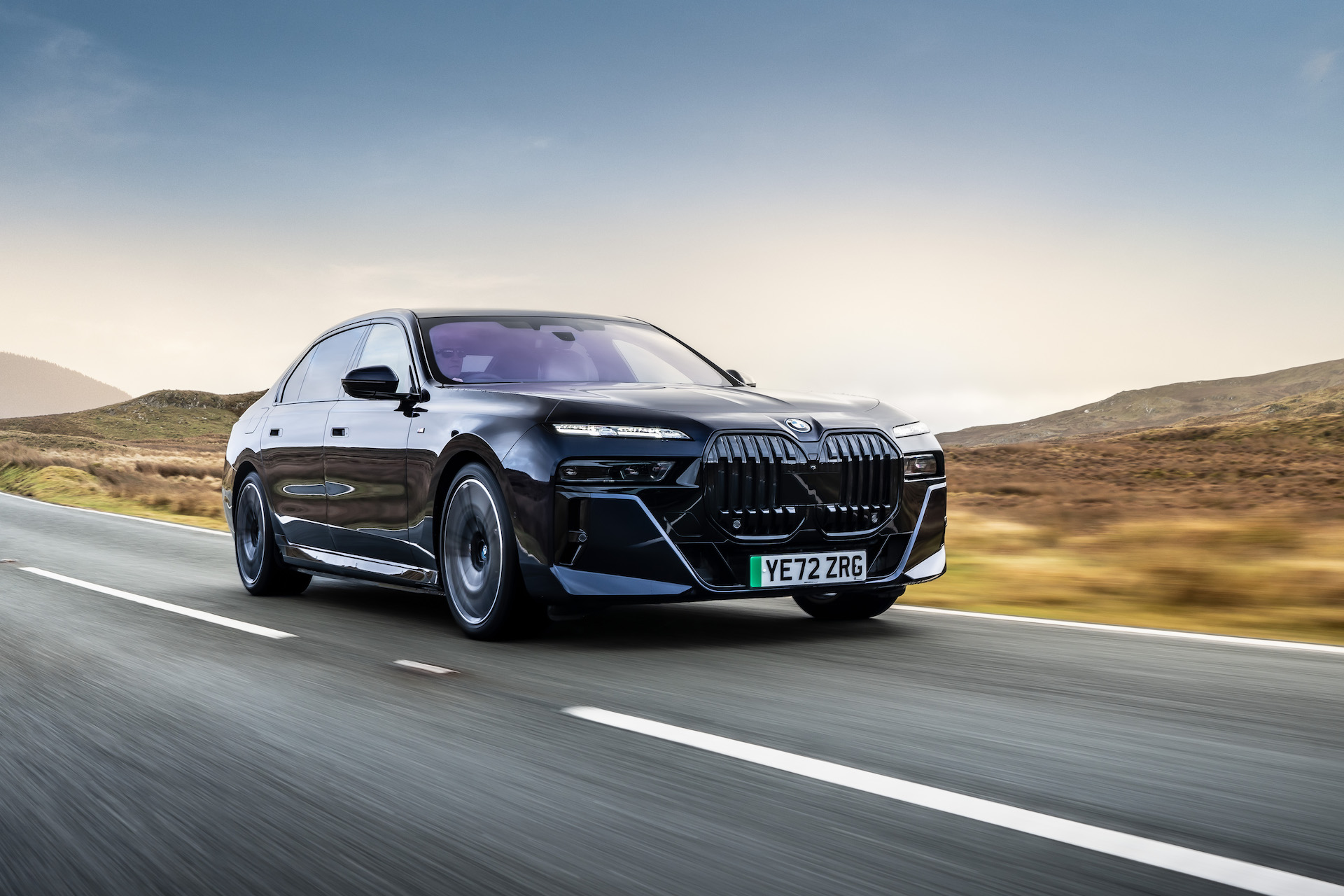
You pay an £80k premium over the base car to lose 40 miles of range and gain a 0–62mph time you will use approximately never.
Charging: quick enough, not class-leading
The i7 tops out at 195kW on a DC rapid charger, which CityAM translates to roughly 106 miles added in ten minutes. That’s perfectly good. It is not, however, the headline-grabbing figure some newer rivals now post, and at this price I think that’s fair to hold against it. On a long trip you’ll stop for a proper coffee, not a splash-and-dash. For most i7 buyers, who will do the overwhelming majority of their charging overnight at home on a wallbox, it’s a non-issue. For the handful who’ll live on public rapids, it’s worth knowing the ceiling before you sign.
Power you don’t need, in a car that doesn’t need it
Let me lay the trims out plainly, because the pricing logic only becomes clear when you do. The eDrive50 gives you 449bhp and 0–62mph in 5.5 seconds. The xDrive60 steps up to 536bhp and 4.7 seconds. The M70 xDrive throws 650bhp at it for a 3.7-second sprint, as listed by What Car? and lined up against Carwow’s UK pricing.
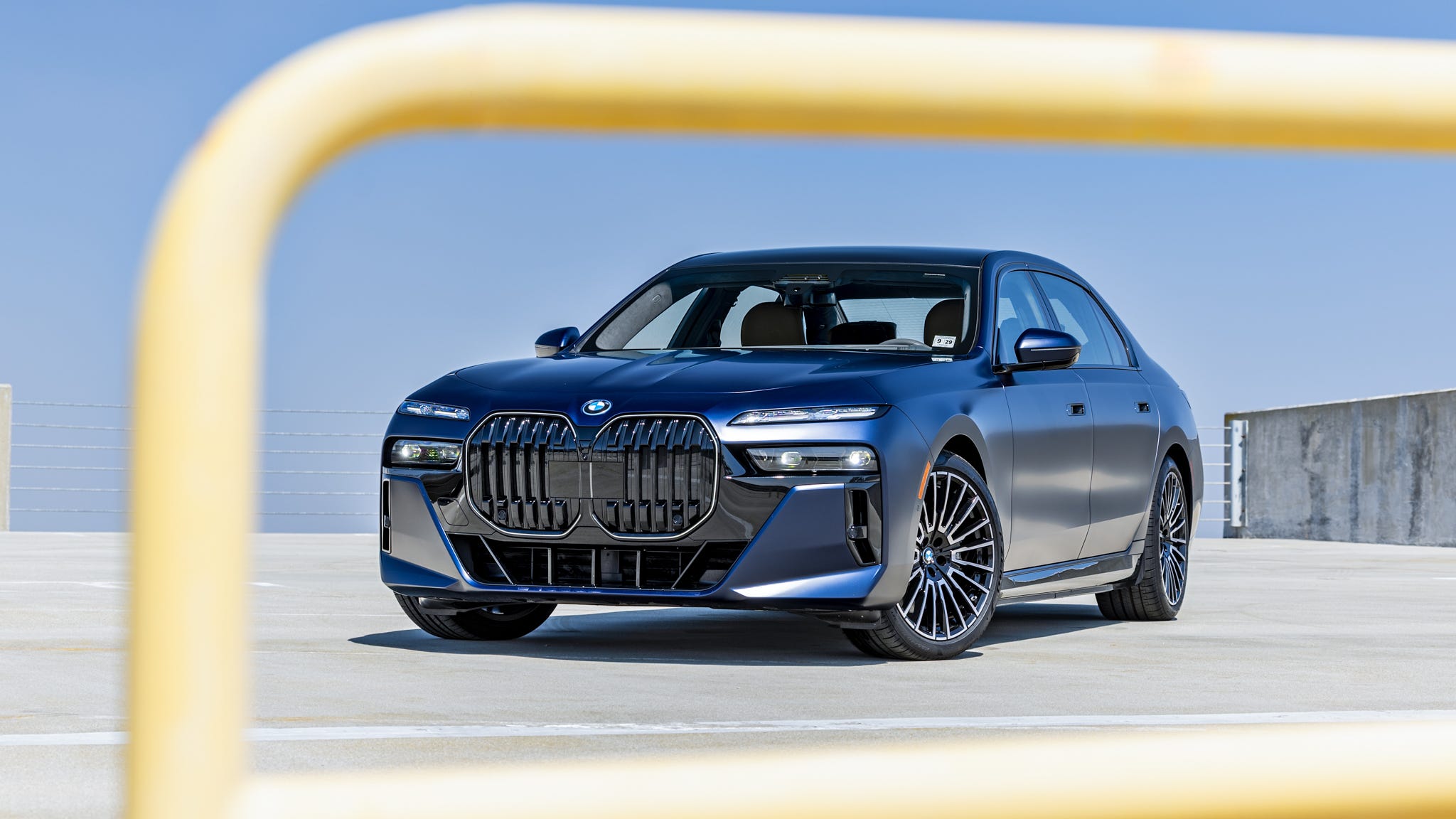
Here’s the thing that would stop me. In a car whose entire reason for existing is refinement (the rear-seat theatre screen, the near-silent cabin, the wafting ride) chasing a supercar 0–62 time is spending money against the grain of the product. The eDrive50’s 5.5 seconds is already faster than anyone needs to reach a motorway slip road. The M70 doesn’t make the i7 better at being an i7; it just makes it more expensive and shorter-legged.
What the numbers won’t tell you
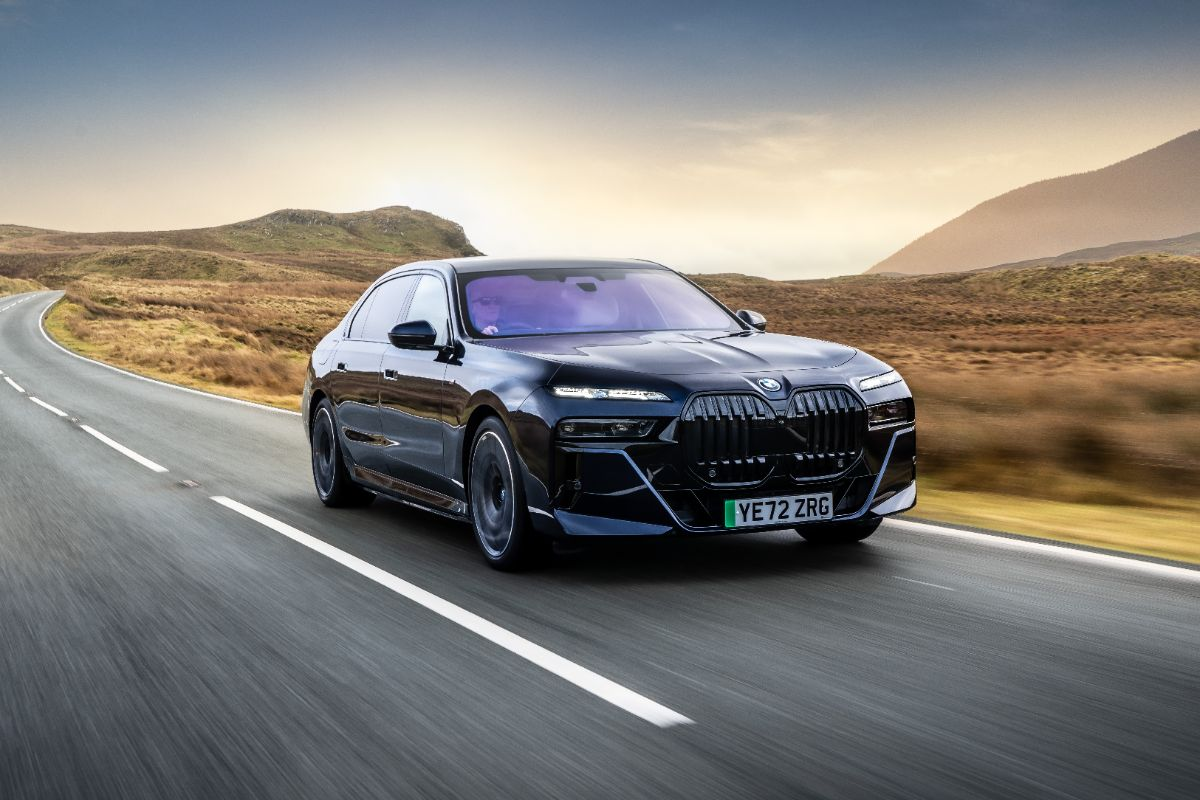
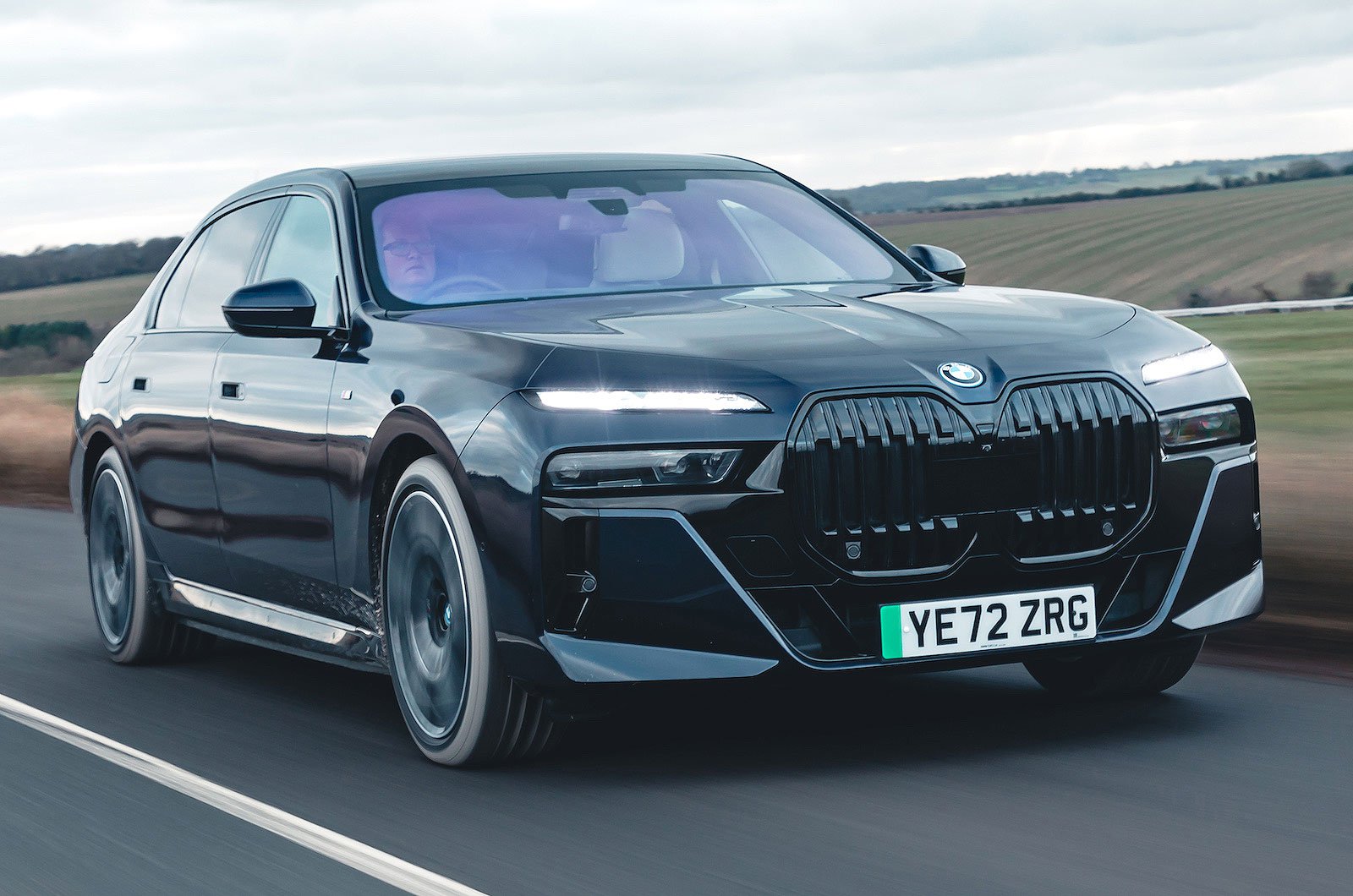
The spec sheet can’t capture the thing that actually justifies an i7 over, say, a very well-specified electric estate: presence. This is a car designed to be arrived in. Parkers is clear-eyed about the trade-offs: the sheer size makes it a handful in a British multi-storey, and the divisive front-end styling is something you either make peace with or you don’t. But on the move, the combination of that big battery, the low-slung weight and the hushed drivetrain produces a specific kind of long-distance calm that combustion luxury saloons, for all their polish, can’t quite replicate.
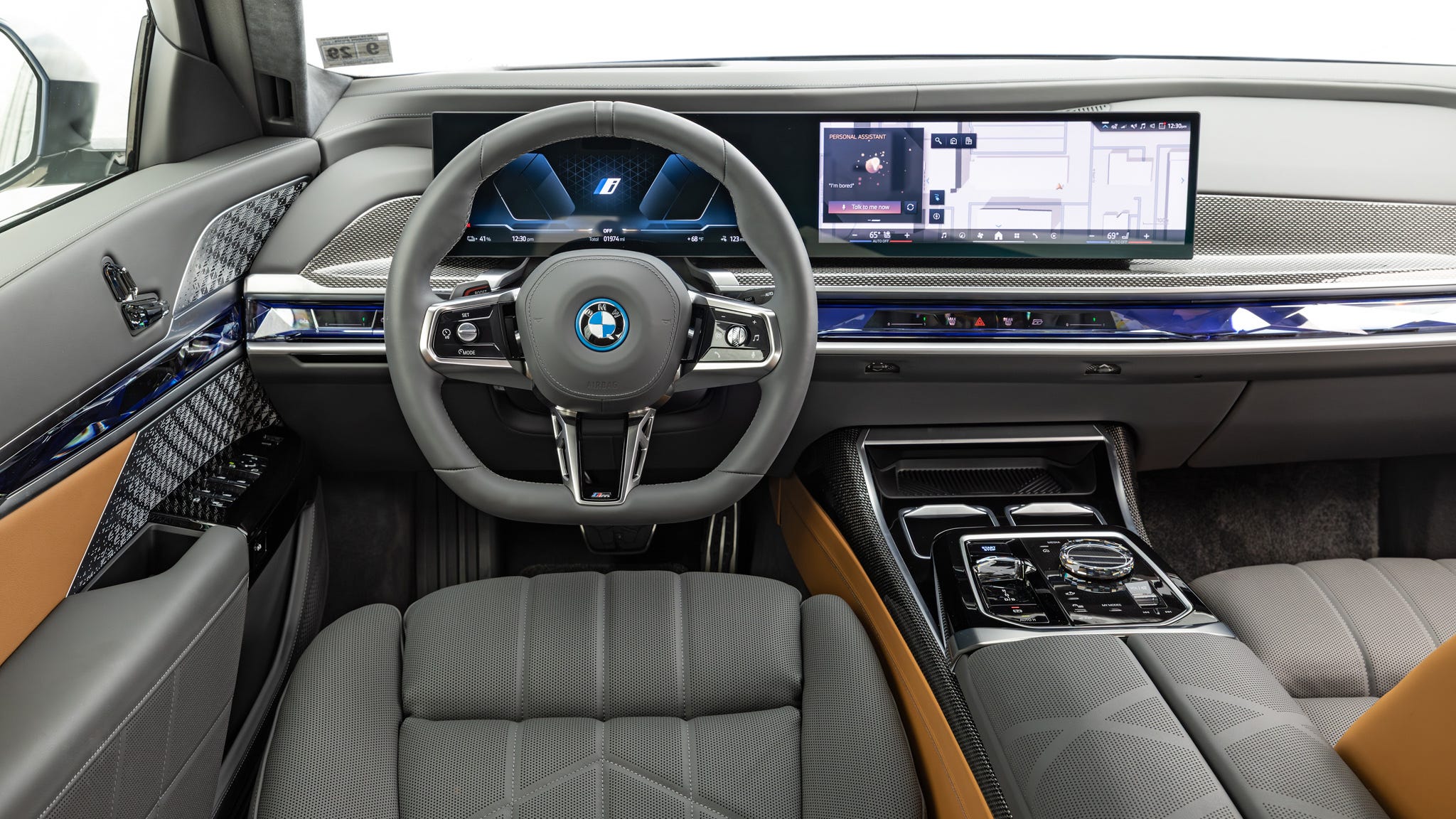
That’s the emotional case, and at six figures the emotional case matters. What tempers it is depreciation, which on large luxury EVs has been brutal, and the running-cost reality: the road-tax net has closed around expensive EVs, so from April 2025 cars over £40,000 attract the VED “expensive car supplement”, which every single i7 does, comfortably. Budget for that alongside the electricity, and remember the sub-2p-per-mile home-charging dream evaporates fast if you’re relying on public rapids at peak rates.
The on-sale detail worth knowing
The current UK cars have been available to order since 28 May 2026. That timing matters if you’re weighing a nearly-new used example against a factory order: the earliest of this generation are now cycling onto the used market, and a large luxury EV that’s shed its worst depreciation in the first owner’s hands is a very different value proposition to a £100k list price. That’s the buy I’d actually be hunting for.
If it were me hunting a used example, I’d treat the size and weight as the story the brochure won’t tell you: a 2.6-tonne saloon eats tyres and brakes, so I’d budget for a fresh set and check the wear is even rather than kerb-scuffed from those tight multi-storeys. I’d want the full charging history and a proper health check on how the battery has been treated, confirm the outstanding VED expensive-car supplement liability that applies in the 2025/26 window passes cleanly to me, and never sign without an independent pre-purchase inspection. On a car this complex, the checklist is the negotiation.
So would I sign for one?
If I were spending my own money, I’d order the eDrive50 and pocket the difference: it has long usable legs, all the cabin theatre, and none of the M70’s self-defeating compromises. If I did genuine motorway mileage and wanted four driven wheels, I’d stretch to the xDrive60, the one trim where the extra spend buys something real: that 372-mile tested range and the traction. The M70 I’d leave on the forecourt for someone who cares more about the badge than the brief.
What would change my mind on the whole thing? A used xDrive60 at a sensible discount, or a genuine charging-speed refresh that lifts it into the class-leading bracket. Until then, the i7 is a superb luxury EV that’s easy to over-order and easy to over-pay for, and the smartest money picks the trim that suits how you’ll actually drive it, not the one with the biggest number on the boot.
Buyer action
EV and salary-sacrifice checks
Use this as the final check before paying a deposit, signing finance paperwork or relying on a headline monthly figure.