
The Audi Q5 is the kind of car people choose with their heart and then pay for with their head, because the question that actually decides ownership is not the 0-62 time, it is the annual bill. Insurance groups span a wide range, the fuel figures flatter on paper, and every single Q5 trips the £40,000 tax trap. This is the honest UK running-cost picture for the latest Q5: what it costs to insure, what it really returns at the pump, and the VED surcharge nobody mentions in the showroom.
The annual bill, before you fall for the looks
CDE pulled the figures below from UK insurance-group data and current UK road-tax rules, cross-referenced against published UK reviews on 13 June 2026. We have deliberately ignored the US dollar quotes that dominate search results, because they tell a UK buyer nothing.
- Insurance: Q5 groups run roughly from 37 on the base 2.0 TFSI to the mid-40s for SQ5, e-hybrid and higher trims.
- Fuel: WLTP claims of up to 40.4 mpg petrol and 47.1 mpg diesel drop to roughly 32-38 mpg petrol and around 40 mpg diesel in real use.
- Tax: every Q5 exceeds £40,000, so all attract the expensive-car VED supplement in years two to six.
What the Audi Q5 really costs to insure
Insurance is where the Q5’s spread is widest, and it is the figure to get a quote on before you fall for a particular trim. Groups start around 37 for the base 2.0 TFSI quattro and 38 for the equivalent diesel, then climb with trim and power: S line and Edition 1 add groups, and the e-hybrid and the SQ5 sit higher again, typically into the low-to-mid 40s. That is a meaningful gap. A driver eyeing an SQ5 in a high-theft postcode will pay a very different premium from someone in a base TFSI in a quiet town, and the only way to know your number is to run your own postcode and profile.
Premium SUVs are also theft targets, so security matters to insurers. A Thatcham-approved tracker can help on a higher-group car, as we explain in our guide to Thatcham S5 trackers and keyless theft, and it is worth understanding how your excess choices move the premium, covered in our piece on voluntary and compulsory excess. For context on how the Q5 compares with rivals, our Lexus RX insurance and Porsche Macan EV insurance breakdowns are useful yardsticks.
Fuel: WLTP promises versus real-world mpg
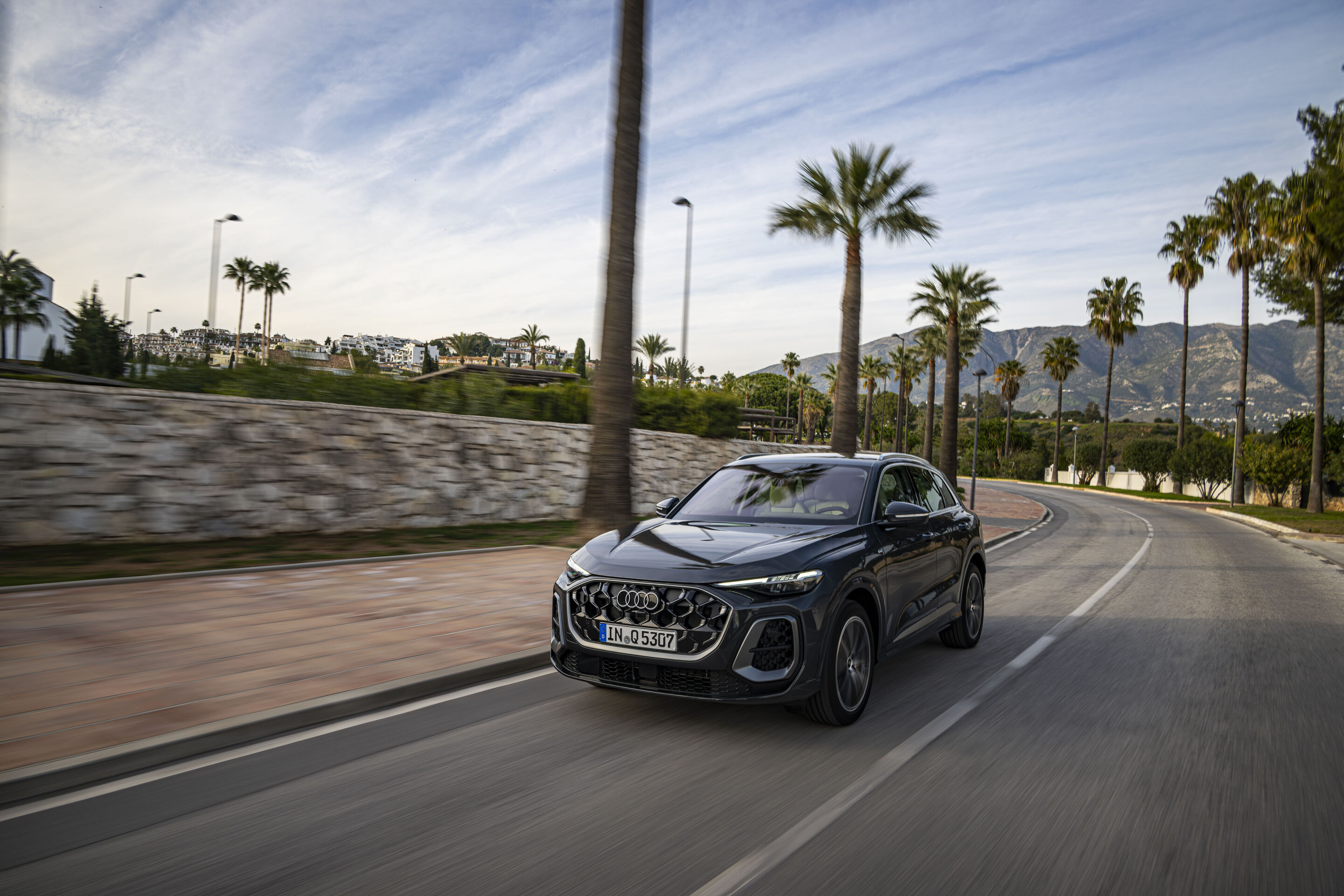
Audi quotes up to 40.4 mpg for the 2.0 TFSI petrol and up to 47.1 mpg for the 2.0 TDI diesel on the official WLTP cycle. Treat those as best-case laboratory figures. In mixed real-world driving, UK reviews put the petrol nearer 32 to 38 mpg and the diesel around 40 mpg, which is the gap that decides your annual fuel bill. For a higher-mileage driver the diesel’s real-world advantage is worth real money over a year; for a low-mileage urban owner it rarely is, and the petrol’s lower list price and group can win.
The e-hybrid muddies this usefully. With official CO2 around 56 to 75 g/km and up to roughly 62 miles of WLTP electric range, it slashes company-car tax and can be genuinely cheap to run if you actually plug it in for short trips. If you do not charge it, you are hauling a heavy battery around for nothing, so be honest about your routine before choosing it. The same caution applies to the depreciation an e-hybrid can suffer if used buyers are wary of battery condition, which is worth weighing against the tax saving over a typical ownership period rather than assuming the lower running cost settles the argument on its own.

The £40,000 VED trap every Q5 falls into
Here is the cost the showroom skips. Because every Q5 has a list price above £40,000, it attracts the expensive-car supplement on Vehicle Excise Duty. That means in years two to six you pay the standard annual rate plus the supplement, a combined figure often cited at around £620 a year, per Auto Express. Over those five years that is roughly £3,100 in road tax alone, on top of the first-year rate baked into the on-the-road price. It applies whatever the fuel type, so you cannot dodge it by picking the diesel or the hybrid. Confirm the current rates on the gov.uk vehicle tax tables before you budget.

Petrol, diesel or e-hybrid for an Audi Q5 buyer
Our running-cost steer is simple. If you cover big annual mileage on motorways, the diesel’s real-world economy makes it the cheapest to fuel and the easiest to live with. If you are a company-car driver or you can reliably charge at home, the e-hybrid’s low CO2 and tax treatment can make it the cheapest overall, but only if you plug it in. For everyone else, especially lower-mileage private buyers, the 2.0 TFSI petrol is the sensible default: lowest list price, lowest insurance group, and real-world economy that is acceptable if not spectacular. The SQ5 is the heart-over-head choice, with the highest group, the thirstiest real-world figures and the same VED hit.
What the warranty does and does not cover
Audi’s standard cover is three years and 60,000 miles, which is class-typical rather than generous: Volvo matches the term, BMW offers the same period with unlimited mileage. The e-hybrid’s high-voltage battery carries longer cover at eight years and 100,000 miles. For a high-mileage buyer the 60,000-mile cap on the main warranty is the detail to watch, because you may run out of mileage before time, which is where an extended warranty or a careful used purchase changes the maths. If you are considering used instead of new, our look at the used Audi Q7 and the used Audi Q4 e-tron shows how depreciation can do more for your wallet than any economy figure.
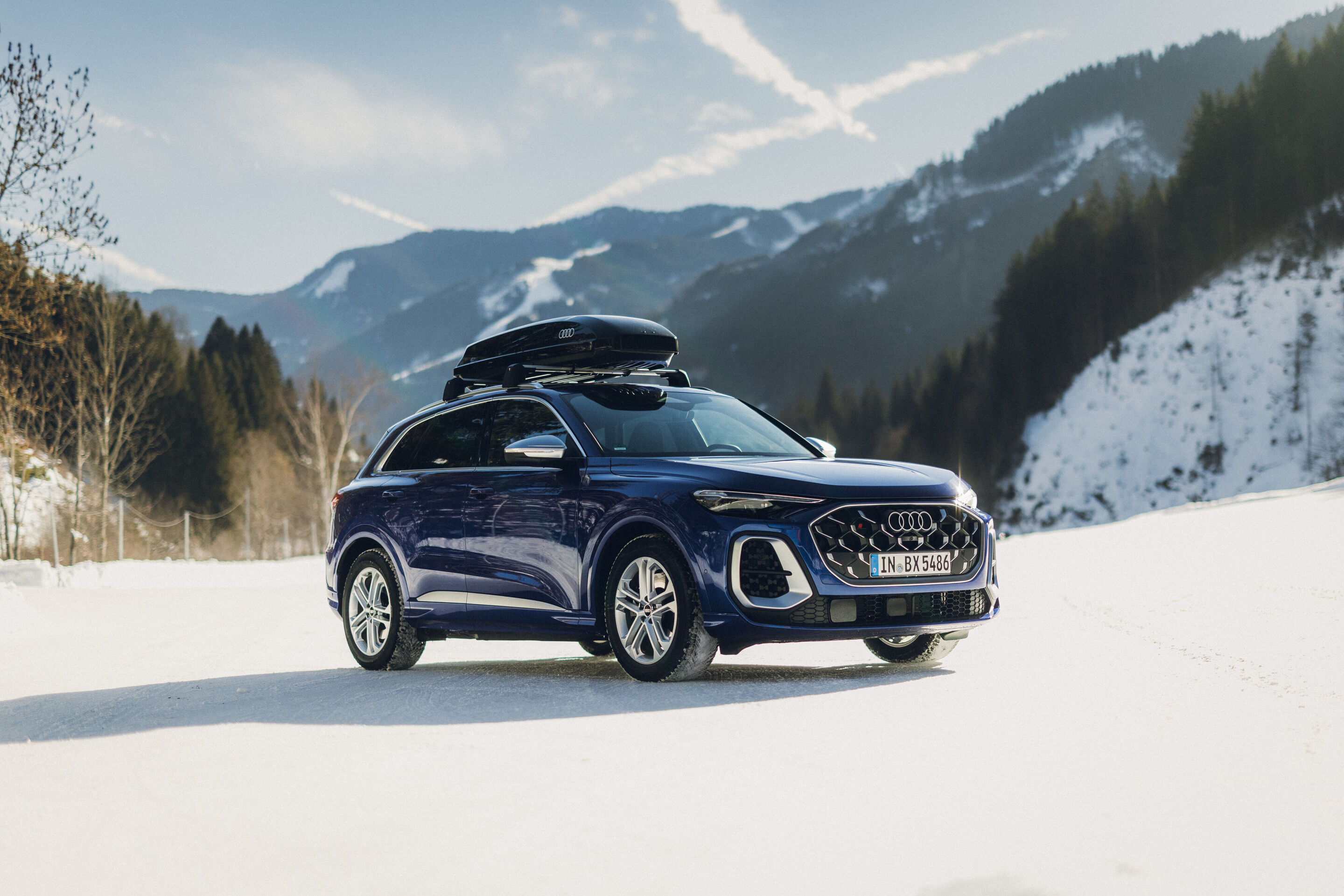
Before you commit, it is worth seeing how the latest Q5 actually presents and drives; the review below is a useful companion to the cost picture above.
Where to check before you buy
- Run an insurance quote for the exact trim and your postcode; the group gap between base and SQ5 is large.
- Confirm the VED rates, including the expensive-car supplement, on the gov.uk vehicle tax tables.
- Be honest about whether you will charge an e-hybrid; if not, choose petrol or diesel.
- Match the engine to your real mileage: diesel for motorway miles, petrol for low-mileage town use.
- If buying new, weigh the 60,000-mile warranty cap against your annual mileage.
- Compare a used Q5 or Q7 on total cost; depreciation often beats economy for savings.
Our take
The Audi Q5 is an easy car to want and a slightly expensive one to run, and the smart buyer chooses the variant that matches their actual life rather than the badge on the boot. For most private buyers we would take the 2.0 TFSI petrol for its lower group and list price; for genuine high-mileage drivers the diesel pays back its premium; and the e-hybrid only makes sense if you will plug it in. Whatever you choose, budget for the insurance group you actually fall into and the expensive-car VED supplement that every Q5 carries, because those two numbers, not the brochure mpg, decide what the car really costs. Get the quotes first, then enjoy the car.