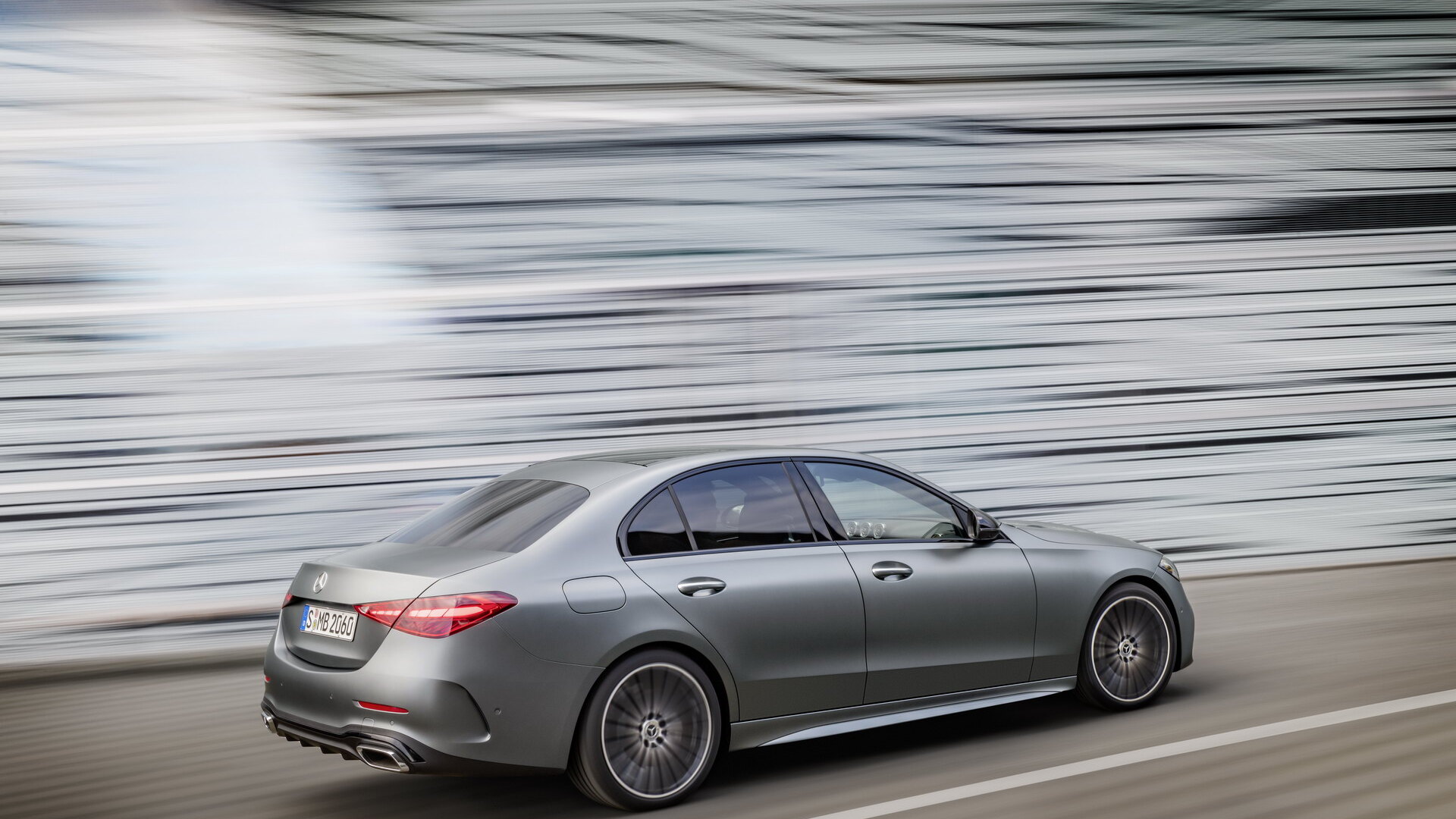
The Mercedes C-Class W206 arrived in 2021 with one big simplification under the bonnet: every combustion version is now a four-cylinder, either 48-volt mild-hybrid petrol or diesel, or the C300e plug-in hybrid. That makes the used decision less about which engine to fear and more about which body, trim and battery suits you. Our view is that a 2-3 year-old C200 or C300d on full Mercedes-Benz approved-used history is the sensible buy at roughly £28,000 to £40,000, with the early MBUX software and a couple of cabin niggles the things to check before you pay a deposit.
What real owners say (CDE data)
CDE reviewed owner discussion on MBClub UK and PistonHeads alongside the published Honest John and DrivingElectric long-term reports (June 2026). Reliability data on this generation is still emerging, so we separate confirmed manufacturer facts from owner-reported themes throughout this guide rather than quote a fault rate the sample cannot support.
- Most-praised aspects: ride refinement and motorway hush, the portrait MBUX screen and cabin design, and real-world diesel economy on the C220d and C300d.
- Most-criticised aspects: the steering-wheel touch controls (the single most common gripe), occasional 9-speed gearbox hesitation from low speed, and some cheaper-feeling lower-dash plastics and the odd creak over bumps.
- Reliability signal: owner-reported themes centre on MBUX software glitches and 12-volt battery drain on early 2021-2022 cars rather than drivetrain failures; treat this as emerging owner sentiment, not a confirmed defect rate, and rely on a full history check and MOT record per car.
Why the Mercedes C-Class W206 is now an all-four-cylinder car
The headline fact for a used buyer is that Mercedes dropped six-cylinder C-Class options for this generation. Every combustion car uses a 2.0-litre four-cylinder, the M254 petrol or the OM654-derived diesel, each paired with a 48-volt integrated starter-generator that smooths stop-start and adds a small boost. Mercedes confirmed the four-cylinder-only approach at the February 2021 reveal. For you that means no fragile complex V6 to budget around: the choice is petrol mild-hybrid, diesel mild-hybrid, or the C300e plug-in hybrid. If you have shortlisted the older car, our Mercedes C-Class W205 used buyer’s guide explains how the previous generation’s wider engine range compares on running costs.
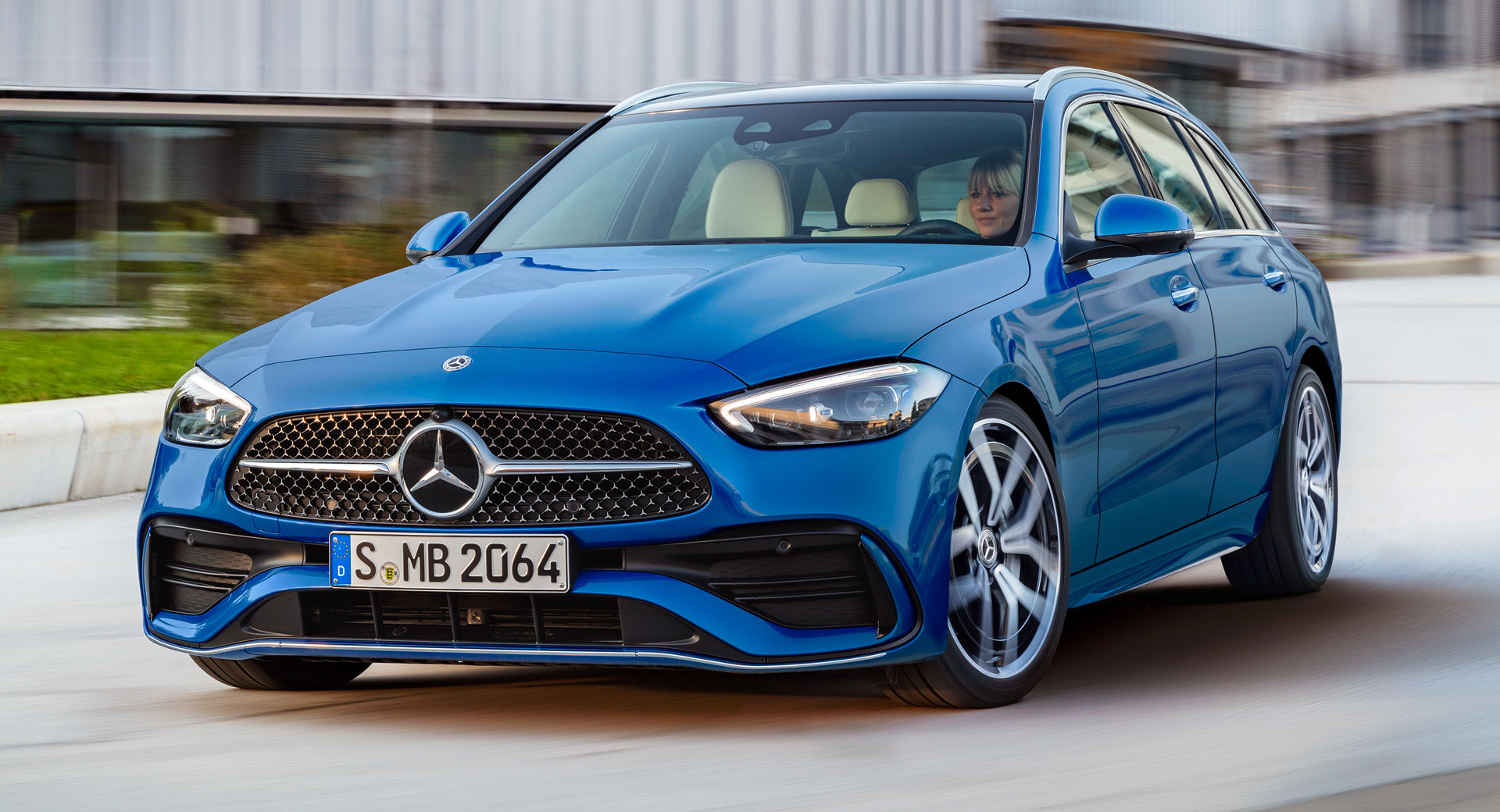
C200 or C300d: which engine to buy
For mixed mileage, the petrol C200 is the easy default: a smooth four-cylinder mild-hybrid petrol that suits town and suburban use and avoids the cost questions that hang over a complex diesel after-treatment system. If you cover serious motorway miles, the diesels make more sense, and the C300d is the standout. Honest John’s testers recorded 60-plus mpg in real-world running from the C-Class diesels, and the C300d uses a revised version of Mercedes’ OM654 unit producing around 262bhp with the same 48-volt assistance. The C220d sits below it on power but matches the economy. Diesel still earns its keep if your annual mileage is high, much as it does on the larger Mercedes E-Class W213.
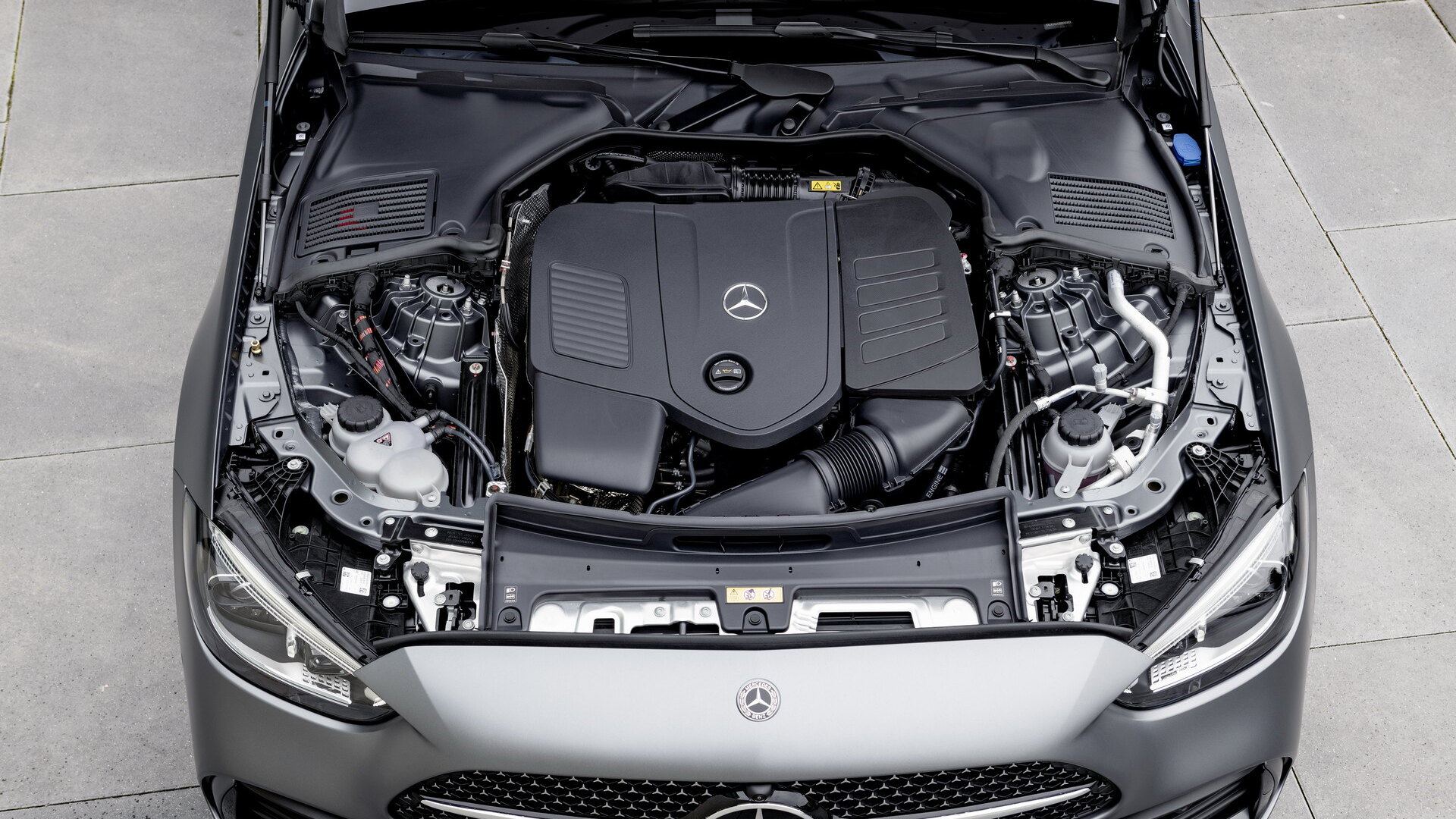
The C300e PHEV: long electric range, smaller boot
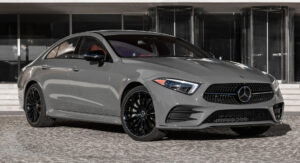
The C300e is the most interesting and the most situational. Its large 25.4kWh battery (around 19.5kWh usable) gives a WLTP electric range of roughly 62 to 68 miles depending on wheels and body, which is genuinely usable for a commute if you can charge at home. Per DrivingElectric’s C-Class plug-in review, that battery can run the car alone at motorway speeds, so many owners drive it as an EV most weeks. The trade-off is boot space: the PHEV drops to about 315 litres against roughly 455 in the petrol and diesel saloons. If the badge and a larger Mercedes saloon tempt you instead, our Mercedes CLS used guide covers the petrol alternative.
| Spec | W206 C-Class (2021-) | Source |
|---|---|---|
| Combustion engines | 2.0-litre four-cylinder petrol (M254) and diesel (OM654-derived), all with 48V mild-hybrid | Honest John |
| C300d power | around 262bhp | Parkers |
| C300e PHEV battery | 25.4kWh total (about 19.5kWh usable) | Parkers |
| C300e WLTP electric range | around 62 to 68 miles | Parkers |
| Euro NCAP | 5 stars (2022) | Honest John |
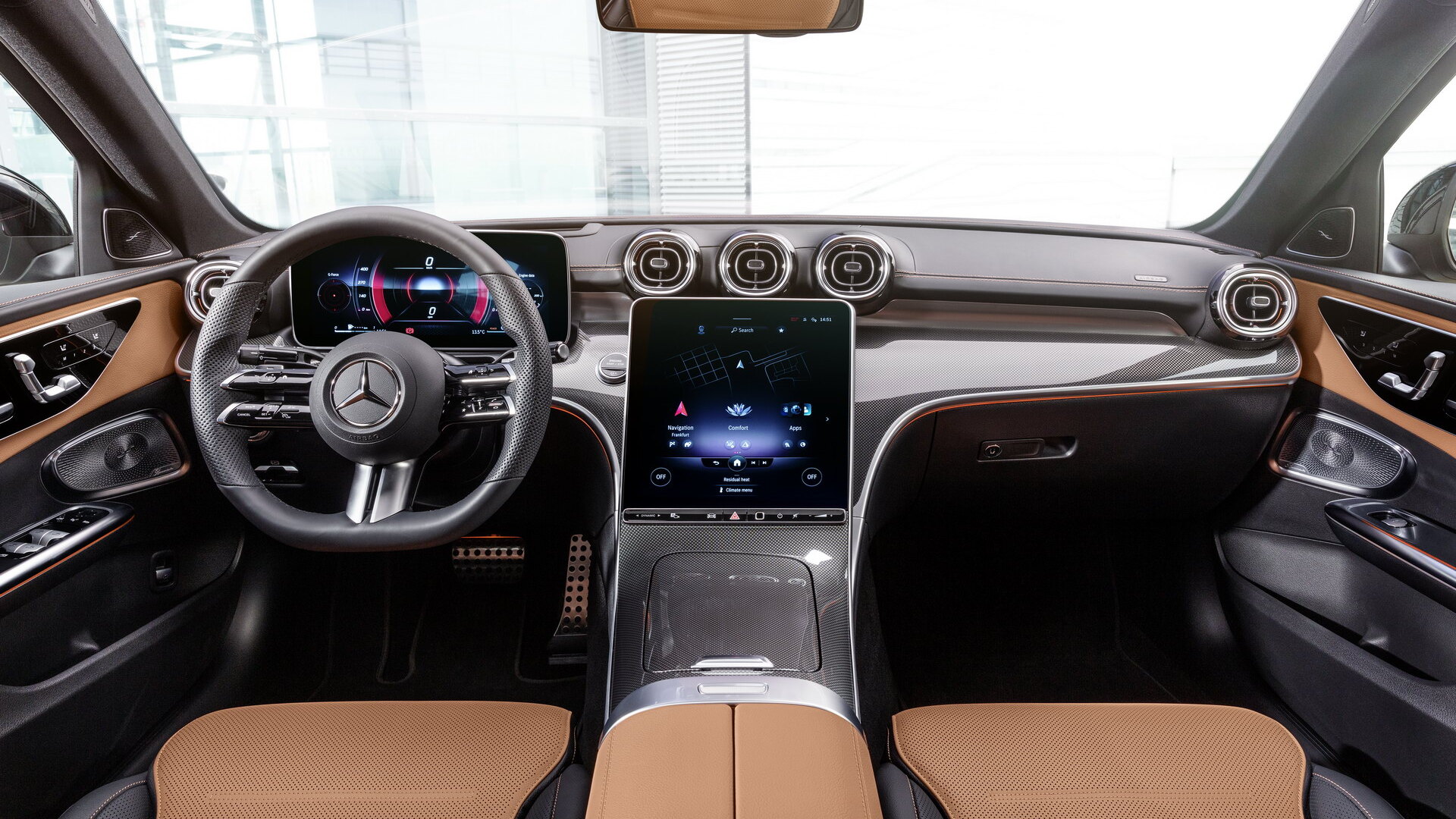
MBUX, AMG Line and the early-build niggles to check
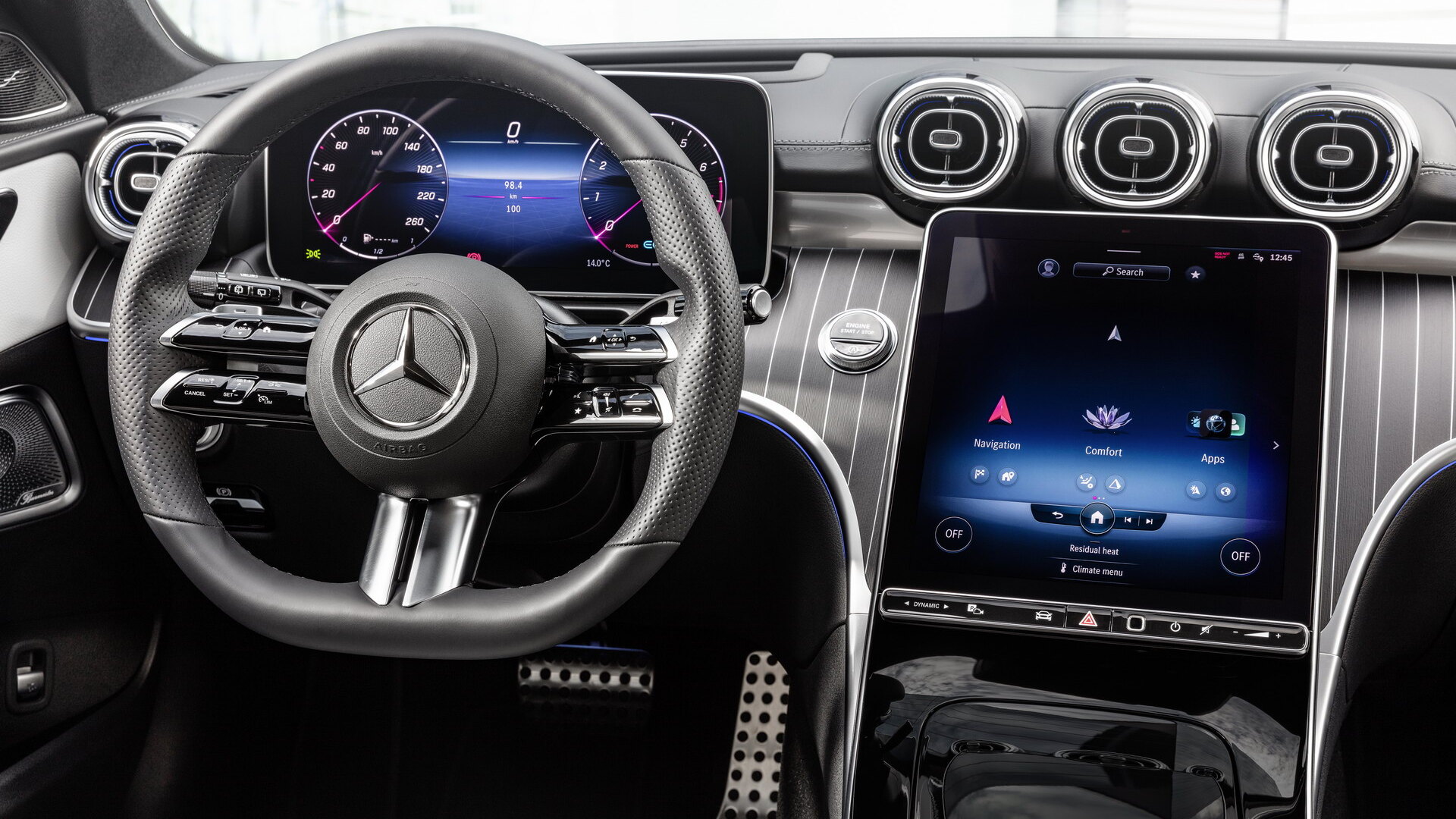
The cabin is the car’s calling card, built around a portrait MBUX touchscreen lifted in spirit from the S-Class. It looks the part, but the second-generation system on the earliest 2021 and 2022 cars is where owner complaints cluster: software freezes, the odd reboot and 12-volt battery drain when the car sits. These are widely owner-reported rather than a confirmed manufacturer defect, so on any specific car check that the software has had dealer updates and that the screen behaves on a cold start. Honest John’s owner reports also flag the steering-wheel touch controls as frustrating in use, and note some cheaper plastics low in the cabin and the occasional creak. None of that is a dealbreaker, but it should shape what you pay.
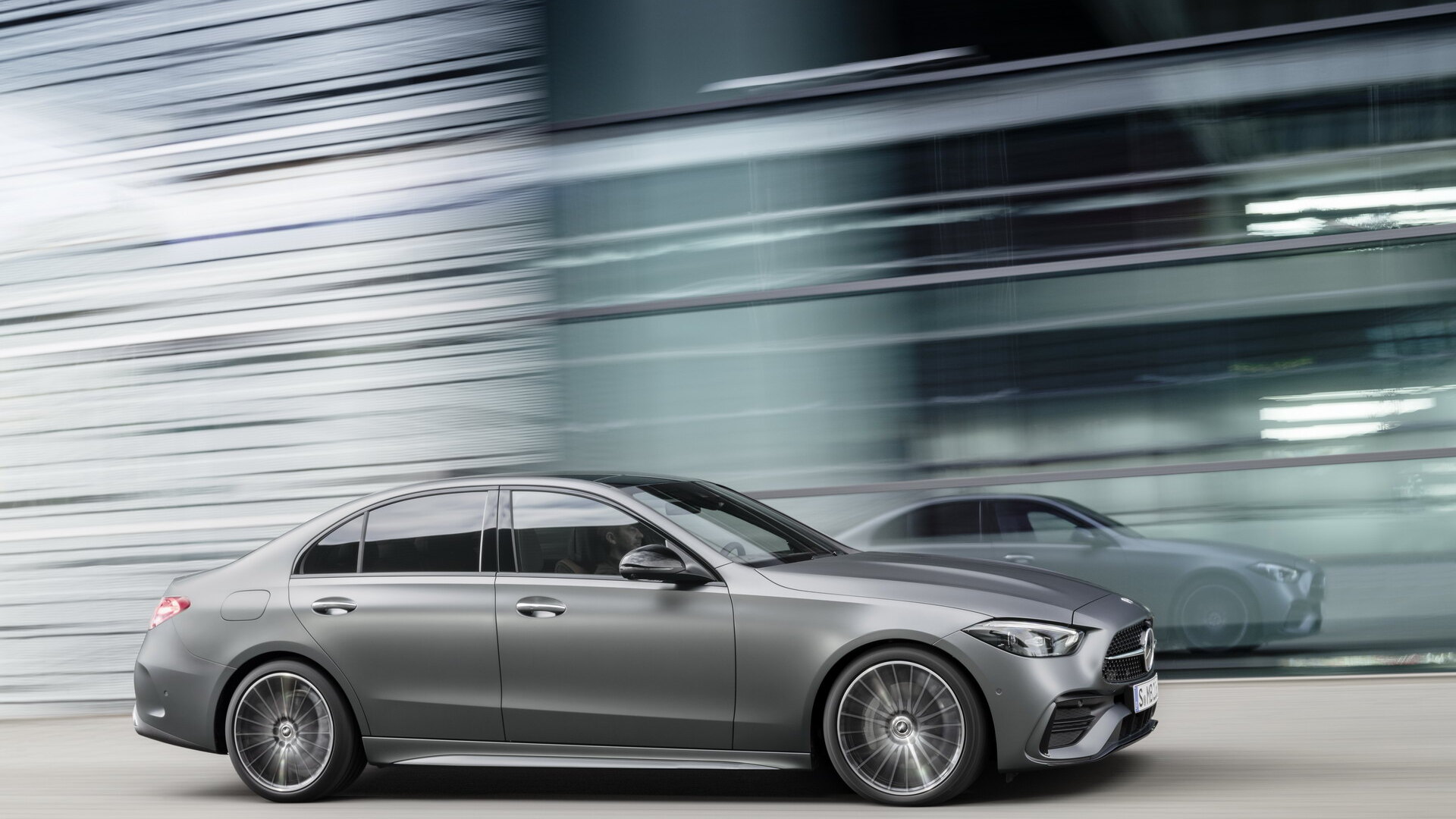
On trim, AMG Line is the volume choice and the one most buyers want, with the sportier body styling, larger alloys and lowered suspension. We would weigh the bigger wheels against ride comfort and tyre cost: the standard suspension on a non-AMG-Line car rides more sweetly on UK roads, and replacement tyres for 19-inch rims are not cheap. A sensible compromise is AMG Line Premium on smaller wheels with the comfort suspension where it was offered.
What a £28,000 to £40,000 example should have
At the time of writing, clean 2-3 year-old C200 and C220d saloons in AMG Line sit roughly in the high £20,000s to mid £30,000s, with low-mileage C300d and C300e examples and estates pushing toward £40,000 (UK classified scan, June 2026). For that money insist on full Mercedes-Benz main-dealer or specialist service history, a clean MOT record, and evidence the MBUX software has been updated. Check tyres and brakes have life left, because AMG Line wheels and pads add up, and on a PHEV confirm the charging cable is present and the battery still holds a sensible charge. The same pre-deposit discipline applies across premium German saloons, including the rival BMW 3 Series G20, where service history and software state separate the good cars from the cheap ones.
Run the registration through the gov.uk MOT history service before you travel to view, and check for any outstanding DVSA recall. A worthwhile car will have a documented history and no mystery gaps; a suspiciously cheap one usually has a reason hiding in the paperwork.
Approved Used versus a private sale
Because this is a newer car with thin long-term reliability data, the warranty wrapper matters more than usual. Mercedes-Benz Approved Used cars come with a manufacturer-backed warranty and a multi-point check, exactly the cover you want on a car whose main risk is electronic rather than mechanical, so pay the premium on an early 2021-2022 car. On a later 2023-2024 example with remaining original warranty, a clean independent car can make sense for less. Our comparison of approved-used warranty cover from BMW, Audi and Mercedes shows what the manufacturer scheme includes, and our guide to used-car warranty exclusions sets out what aftermarket policies tend to leave out.
Running costs: insurance, tax and mileage
The W206 scored the maximum five stars in Euro NCAP testing under the tougher 2022 protocol, with autonomous emergency braking and blind-spot monitoring standard, which helps on insurance. Servicing is main-dealer money, and on AMG Line cars factor in tyre and brake costs sooner. If you are buying on finance and might change before the term ends, watch the mileage terms: the maths in our guide to PCP mileage limits and excess charges shows how an honest mileage estimate keeps you out of a four-figure end-of-contract bill. The diesels are cheapest over big distances; the PHEV is cheapest only if you charge it religiously.
Our take
Our view on the Mercedes C-Class W206 is that it is a strong used buy once you accept it is a four-cylinder car and price the early software risk in. The C200 suits mixed mileage, the C300d is the long-distance star with real 60-plus mpg potential, and the C300e earns its keep only if you can charge at home and can live with the smaller boot. We would pay extra for Mercedes-Benz Approved Used on a 2021-2022 car, because the genuine risk on this generation is electronic and a manufacturer warranty covers exactly that. We would walk away from any car with patchy history, an un-updated MBUX system or a tired 12-volt battery on an early example. What would change our view is firmer long-term reliability data as these cars age past warranty: for now, buy the history and the warranty, not just the badge.
A note on scope: CDE has not road-tested this specific car. Our guidance draws on manufacturer data, UK regulator records, owner-reported faults and our used-buyer inspection checklist rather than a hands-on test of an individual vehicle. Commission an independent inspection and a full history check before you pay a deposit.
Is the W206 C-Class reliable?
Which W206 engine should I buy used?
Are all W206 C-Class engines four-cylinder?
How much should a used W206 C-Class cost in 2026?
What is the electric range of the C300e plug-in hybrid?
Should I buy AMG Line or standard trim?
Where to start your search and the checks before deposit
Work through these before you commit money:
- Browse Mercedes-Benz Approved Used stock first for the manufacturer warranty and multi-point check, then compare with independent specialist cars on the main classifieds.
- Run the registration through the gov.uk MOT history service and read every advisory and failure on the record.
- Check the DVSA recall lookup for any open recall against the VIN.
- Confirm full Mercedes-Benz main-dealer or specialist service history and that the MBUX software has had dealer updates.
- On a cold start, watch the screen boot cleanly and check for any 12-volt battery warning on an early 2021-2022 car.
- Inspect tyres and brakes for remaining life, especially on AMG Line wheels, and budget for replacements.
- On a C300e, confirm the charging cable is present and ask for a recent charge to verify the battery holds a sensible range.
How we researched this guide
Every pick here is shortlisted from hands-on testing and time spent living with the hardware by the CDE desk, then sanity-checked against current UK pricing, manufacturer specs and real-world performance before it makes the cut. We never rank for commission — affiliate links don't change the order.
Buyer action
Where to check next
Use this as the final check before paying a deposit, signing finance paperwork or relying on a headline monthly figure.