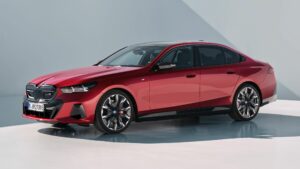
Manufacturer finance versus broker finance is the decision that quietly sets how much your next premium car really costs, and most buyers never properly compare the two. This guide explains how captive finance from the likes of BMW Financial Services differs from a broker or independent lender, where each one wins, and how to judge the genuine total cost on a new premium car rather than the headline monthly figure. Our short answer: a subsidised manufacturer deal can be unbeatable when it bundles a deposit contribution and low APR, but a broker funding a discounted car sometimes wins outright, so you have to price both.
What the finance data shows on captive versus broker
CDE looked at how the two routes are structured and where the money moves, drawing on lender and broker guidance and the FCA’s framework for motor finance. The headline: the cheapest route depends entirely on the deal of the moment, which is why comparing total cost matters more than loyalty to either channel.
- Manufacturer (captive) finance: often pairs a subsidised or 0% APR offer with a deposit contribution, but usually assumes you pay close to list price.
- Broker and independent finance: can fund a car you have negotiated a discount on, and gives access to a panel of lenders and product types, but typically at a standard market APR.
- Where buyers lose: judging a deal on the monthly payment alone, instead of the total amount payable including the discount, deposit contribution and any balloon.

How manufacturer finance actually works
Captive finance is the lender owned by, or tied to, the carmaker, such as BMW Financial Services or the equivalent at Audi, Mercedes and Land Rover. Its job is to sell cars, so it leans on incentives: subsidised or zero-percent APR campaigns, dealer deposit contributions worth a few thousand pounds, and sometimes free servicing thrown in. The trade-off is that those offers usually apply at or near list price, and they steer you towards PCP with a balloon at the end. When a manufacturer is pushing a particular model, the combined value of a low APR and a deposit contribution can be very hard for any broker to beat. The skill is recognising when the incentive is real and when it is just dressing on a full-price car.

How broker and independent finance differs
A broker sits between you and a panel of lenders, finding finance from banks and finance houses rather than the carmaker. The big advantage is separation: because the finance is not tied to the dealer’s price, you can negotiate or source a genuine discount on the car, including through online new-car marketplaces, and then fund it however suits you. Brokers also offer the full spread of products, hire purchase as well as PCP, which matters if you want to own the car outright with no balloon. If you are funding the deposit on a card, our best credit cards for a car deposit guide is worth a look too. The catch is that a broker rarely matches a subsidised manufacturer APR, so on a heavily incentivised car the captive deal can still win. Always check the broker is FCA-authorised, and read our PCP versus HP guide to decide which product fits before you shop lenders.
Worked comparison: financing a new premium saloon
Picture a new £60,000 premium saloon. The manufacturer offers PCP at a subsidised 4.9% APR with a £3,000 deposit contribution, but at full list price. A broker can fund the same car at a negotiated £55,000, but at a standard 8.9% APR with no contribution. Which wins is not obvious from the monthly figure, and it flips depending on the numbers. The £5,000 discount plus the cost of the higher APR over the term must be weighed against the £3,000 contribution plus the saving from the lower APR. On a strongly subsidised manufacturer campaign the captive deal often wins; on a car with a big real-world discount and a weak finance offer, the broker route can be cheaper overall. The only way to know is to put both on the same total-cost basis.
| Factor | Manufacturer (captive) | Broker / independent |
|---|---|---|
| Car price | Usually near list | Can fund a discounted car |
| APR | Often subsidised or 0% | Standard market rate |
| Deposit contribution | Common on promoted models | Rare |
| Product choice | Mostly PCP | PCP, HP and more |
| Best when | Incentives are strong | The car discount is large |

How to judge the genuine total cost
The monthly payment is the most misleading number in car finance, because it can be flattered by a longer term, a bigger balloon or a low mileage limit. Judge a deal on the total amount payable, which every FCA-authorised lender must disclose: the car price, less any discount and deposit contribution, plus all interest and fees over the term, plus the balloon if you intend to keep the car. Put the manufacturer and broker offers side by side on that single figure and the winner usually becomes obvious. Watch the term length too, because stretching a deal to four or five years cuts the monthly figure but raises the total and the risk of negative equity, a trap we cover in our PCP versus HP comparison on a £55,000 Range Rover.

For a feel of the kind of new premium car these deals usually fund, this independent UK review is a useful watch.
Where to check your premium car finance next
Before you sign either way, run these checks:
- Get the manufacturer’s current PCP and HP quotes in writing, including the APR, deposit contribution and balloon.
- Get a broker quote on the same car at a negotiated or marketplace discount, and confirm the lender’s APR.
- Compare both on the total amount payable, not the monthly figure, including any balloon if you plan to keep the car.
- Decide PCP or HP first, because a broker can offer HP for outright ownership where a captive deal may not.
- Check every lender and broker is authorised on the FCA register before you commit.
- Use neutral guidance from MoneyHelper on your rights and the questions to ask.
Our take
Our view is that there is no permanent winner between manufacturer and broker finance, only the better deal on the day, and the buyers who overpay are the ones who never compare the two. We would always price the captive offer and a broker quote side by side on total amount payable, decide PCP or HP up front, and treat a deposit contribution and a subsidised APR as real money rather than marketing. On a strongly incentivised model the manufacturer deal is often unbeatable; on a car with a big real-world discount and a thin finance offer, a broker funding the cheaper car can win outright. Do the comparison properly and you will rarely go far wrong; take the first monthly figure the showroom quotes and you almost certainly will.