
The most useful number on a used Audi e-tron GT is not the one on the windscreen, it is the one the first owner already swallowed. New, this car lists from about £88,605; three years on, clean examples trade between roughly £29,000 and £43,000, which means owner one has absorbed a depreciation hit that can reach £50,000 on a heavily-optioned car. For a second buyer that is either the bargain of the premium-EV market or a warning, depending on how you read the battery, the warranty and the 2025 facelift. Here is the honest version.
What the resale data shows (CDE data)
CDE cross-referenced UK used-listing aggregates for the 2022 to 2024 e-tron GT quattro, Audi UK’s new pricing and warranty pages, and the battery-warranty terms, checked in June 2026.
- The drop: 2022 to 2024 cars commonly list between £29,000 and £43,000, with 2023 examples averaging around £40,284 against an £88,000-plus new price, so many are retaining only about 40% at three years.
- The spread: the steepest pound losses are on RS and Vorsprung cars that were £110,000 to £140,000 optioned when new; a base quattro is a smaller pound drop but the same brutal percentage.
- The safety net: the high-voltage battery carries an 8-year or 100,000-mile warranty to 70% capacity, transferable to you as the second owner.
The depreciation cliff, and what “up to £50k off” really means
The eye-catching “£50,000 wiped off” figure is real, but it is not universal, and a careful buyer needs the distinction. It applies to a well-specified original car: an RS or a Vorsprung that wore a six-figure price when new and now sits in the mid-£30,000s to low-£40,000s. A base quattro that listed nearer £88,000 falls by closer to £40,000 to £45,000 in pounds, which is still a savage drop but a smaller headline. Either way the percentage is the same story, and it is the reason the e-tron GT is one of the most cost-effective ways into a Porsche Taycan platform car. If you want the cousin’s numbers, our used Porsche Taycan CPO guide tracks the same depreciation curve on the shared underpinnings.
The logic behind that cliff is worth understanding, because it tells you where the floor sits. Premium electric cars depreciate fastest in their first three years for three compounding reasons: the original list prices were inflated by heavy options most second buyers will not pay for, the technology moves quickly enough that each new generation makes the last one look dated, and the early-adopter pool willing to pay top money is small. Once a car like this lands in the high-£30,000s, the percentage losses slow sharply, because the next buyer is value-driven rather than badge-driven. That is the sweet spot you are aiming for: a car that has already shed the punishing first-owner loss and now sits on a flatter part of the curve. Buying before that flattening, on a one-year-old example still priced in the £50,000s, means you take a slice of the same drop the first owner did. Patience pays here.
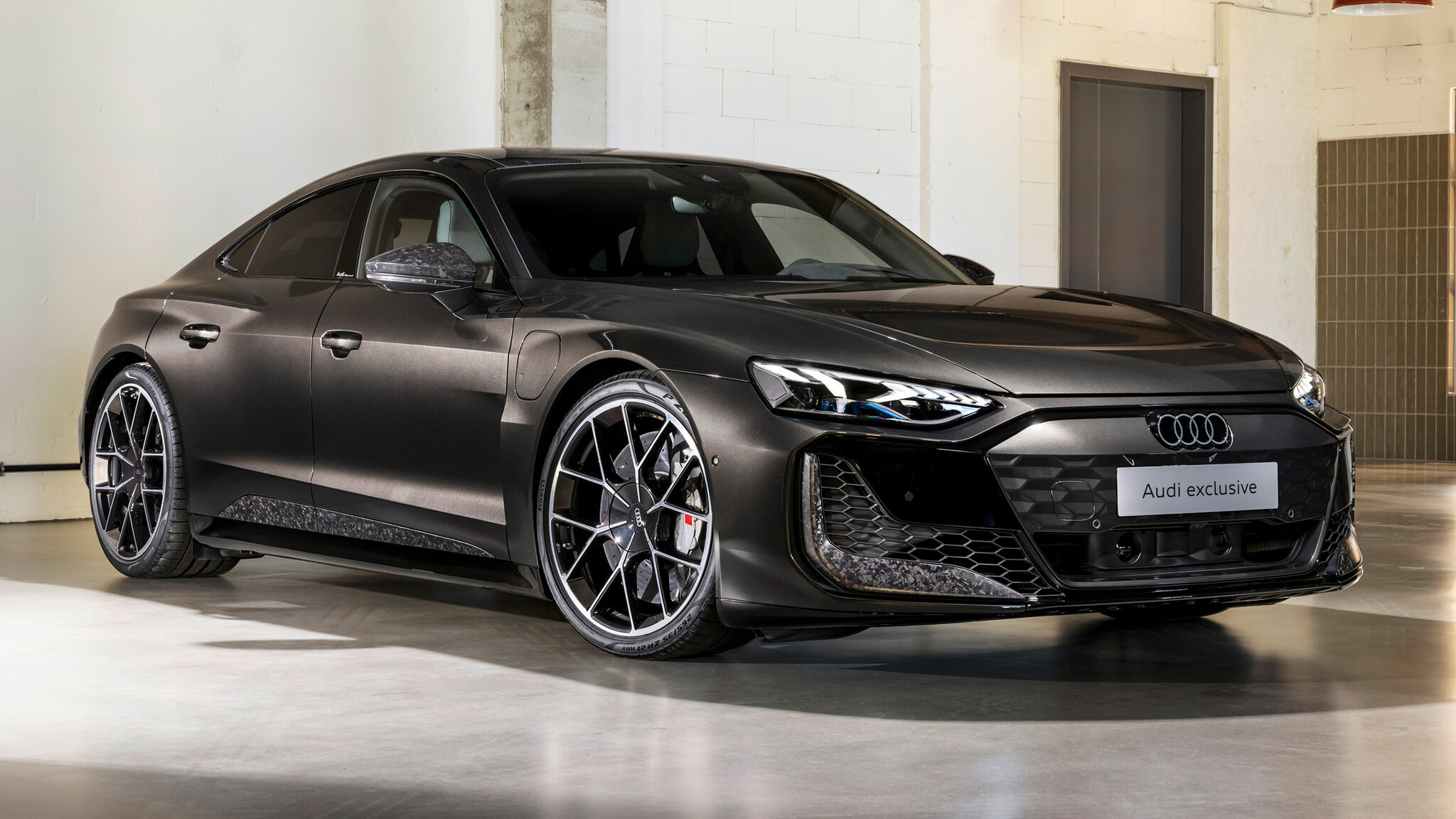
The 2025 facelift changed the maths
This is the detail most depreciation pieces miss. Audi facelifted the e-tron GT in 2025, with a bigger battery, more range and a sharp power jump: the new base S model produces around 670hp and the RS climbs to roughly 912hp. That matters to a used buyer in two opposite ways. The good news is that the pre-2025 cars you are looking at are the cheap ones, precisely because the newer car outguns them. The catch is that you are buying the lower-range, lower-power generation, so do not pay a near-facelift price for a pre-facelift car. Know which side of the 2025 line your prospect sits on, and price it accordingly.
Used Audi e-tron GT prices in 2026
Here is the lie of the land for a 2026 buyer, based on current UK listings.
| Spec | Figure (2026) | Source |
|---|---|---|
| New e-tron GT quattro OTR | from about £88,605 | Audi UK |
| Used 2022 to 2024 quattro | roughly £29,000 to £43,000 | UK used listings, June 2026 |
| 2023 average | around £40,284 | UK used listing aggregate |
| Battery warranty | 8 years / 100,000 miles to 70% capacity | Audi UK |
| Audi Approved Used warranty | min 12 months, unlimited mileage; extensions from £129 | Audi UK |
The battery warranty that makes a used one safer than it looks
The single biggest fear with any used EV is the battery, and on the e-tron GT that fear is largely covered. The high-voltage battery is warranted for 8 years or 100,000 miles, guaranteeing at least 70% of capacity over that period, and the cover transfers to you as a subsequent owner. On a 2022 or 2023 car that leaves years of protection on the most expensive component, which is exactly why a depreciated premium EV with a transferable battery warranty can be a smarter buy than the headline depreciation suggests. We would still ask for a battery state-of-health readout at purchase, but the warranty does the heavy lifting on risk.

A state-of-health figure matters because it tells you how close the car already sits to that 70% warranty floor, and how fast it has degraded so far. A three-year-old example that has lost only a few percentage points of usable capacity is behaving normally; one that has dropped further suggests hard fast-charging habits or heavy use, and gives you leverage on price. Ask whether the previous owner relied on rapid public charging as their main top-up, since frequent high-power DC sessions stress a pack more than steady home charging does. Just as important is real-world range. The official lab range is a best-case ceiling reached in mild conditions at gentle speeds, and a UK owner on a cold motorway run will see meaningfully less. Judge the car on the range you will actually get in February, not the headline number, and you will not be disappointed in ownership.
Charging hardware worth confirming
Charging kit is easy to overlook and annoying to replace after the fact. Confirm that the car comes with its full set of cables, including the granny lead for occasional three-pin top-ups and the Type 2 cable you will use at public AC posts and on a home wallbox. Missing cables are a real cost and a quiet negotiating point. Ask whether the seller had a home charger fitted and whether any installation paperwork or warranty travels with the car, since a documented home-charging history is reassuring on battery care. If you do not yet have a wallbox, factor the install into your budget rather than assuming you can live on public chargers, because for a car of this size and battery capacity, regular public rapid charging is both slower in practice and far more expensive per mile than charging at home overnight.

Audi Approved Used: what you get and what to check
Buying through Audi Approved Used adds a battery health certificate, a multi-point check, the balance of the manufacturer warranty and a minimum 12-month Approved Used warranty with unlimited mileage, with extensions available from around £129. That is a meaningful layer on a £40,000 used performance EV. Beyond the badge, we would check tyre wear (these cars eat rubber if driven hard), confirm the charging cables and any home-charger history, and make sure software and recall work is up to date. The maths only works if the car is honest, so demand the Approved Used paperwork rather than a dealer’s own warranty, the same discipline we apply across approved-used warranties from BMW, Audi and Mercedes.
Service history carries its own warning signs on a car like this. A patchy or non-franchise record is a bigger worry on a complex performance EV than on an ordinary used car, because software updates, recall work and high-voltage system checks are best evidenced by main-dealer stamps. Look for unexplained gaps, a sudden change of servicing dealer, or paperwork that does not match the mileage on the clock. Heavy kerbing on the large alloys, uneven or near-worn tyres, and signs of track use all point to a hard life that the battery and brakes may share. Crucially, check that any outstanding recalls have been completed and that the latest software is installed; a genuine Approved Used car should have this signed off, but a private or independent sale may not. None of these is automatically a deal-breaker, but each one should either be fixed before you buy or reflected in a lower price.
Where to check a used e-tron GT before you buy
Run these before you part with a deposit on a £40,000 used EV.
- Confirm whether the car is pre or post the 2025 facelift, and price it for the right generation.
- Get a battery state-of-health reading and confirm the 8-year / 100,000-mile battery warranty transfers.
- Insist on genuine Audi Approved Used cover, not a dealer in-house warranty, and read the extension terms.
- Check the MOT and service record at gov.uk MOT history and run the registration through the DVSA recall checker.
- Budget for insurance and tyres: this is a heavy, fast EV, and our premium EV insurance guide explains why quotes run high.
- If you could run it through a scheme instead, compare the sums in our e-tron GT salary-sacrifice maths before buying outright.
Our view on a used Audi e-tron GT: this is one of the best-value ways into a genuine Porsche-platform performance EV, provided you buy with your eyes open on the facelift and the battery. We would target a 2022 or 2023 quattro with low-to-moderate miles, a clean battery health reading and transferable warranty, bought through Audi Approved Used, and we would refuse to pay near-facelift money for a pre-facelift car. Who should wait? Anyone who needs the longest range or the newest power figures, because the 2025 car genuinely moved the game on, and anyone who cannot absorb premium tyre and insurance costs. For the buyer who can, letting owner one take the depreciation hit on a car like this is exactly how the used premium-EV market is supposed to work.
How much does a used Audi e-tron GT cost in 2026?
Is a used Audi e-tron GT battery safe to buy?
Should I buy a pre-2025 or post-2025 e-tron GT?
What does Audi Approved Used add on an e-tron GT?
Is the e-tron GT the same as a Porsche Taycan?
How we researched this guide
Every pick here is shortlisted from hands-on testing and time spent living with the hardware by the CDE desk, then sanity-checked against current UK pricing, manufacturer specs and real-world performance before it makes the cut. We never rank for commission — affiliate links don't change the order.