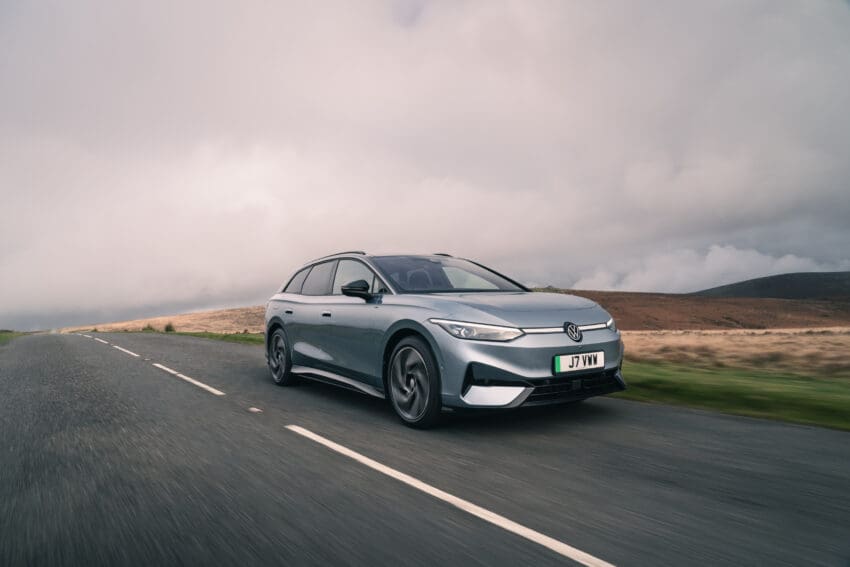
Six hundred and five litres. That is the boot figure Volkswagen wants you to fixate on with the new ID.7 Tourer, and after a week spent with the numbers and the early UK reviews, EV Powered’s June 2026 verdict chief among them, I think they are right to. This is the electric estate that finally stops asking British families to compromise. The question is whether £52,225, the list price as of June 2026, buys you enough car to forgive the badge on the bonnet rather than a Munich one.
Let me be plain about where I stand before I walk you through it: for the school-run-and-skiing household that genuinely needs a load-lugger and has talked itself into an SUV by default, the ID.7 Tourer is the more honest answer. It is also the more interesting one.
The ID.7 Tourer line-up at a glance
Before the detail, here is how the range stacks up on the figures that actually decide it, drawn from the official WLTP claims and the UK pricing confirmed by Electrifying and EV Powered.
| Version | Battery | WLTP range | Peak DC charge | Price (June 2026) |
|---|---|---|---|---|
| Pro Match Plus | 77kWh | 357 to 371 miles | n/a confirmed | £52,225 |
| GTX Plus | 86kWh | 422 to 424 miles | 200kW | £62,270 |
The 86kWh battery also sits in the Pro S between those two, on the same 422 to 424 mile claim; VW had not pinned a firm Pro S UK list price at the time of writing, which is part of why the entry Match Plus is the cleaner buy for now.
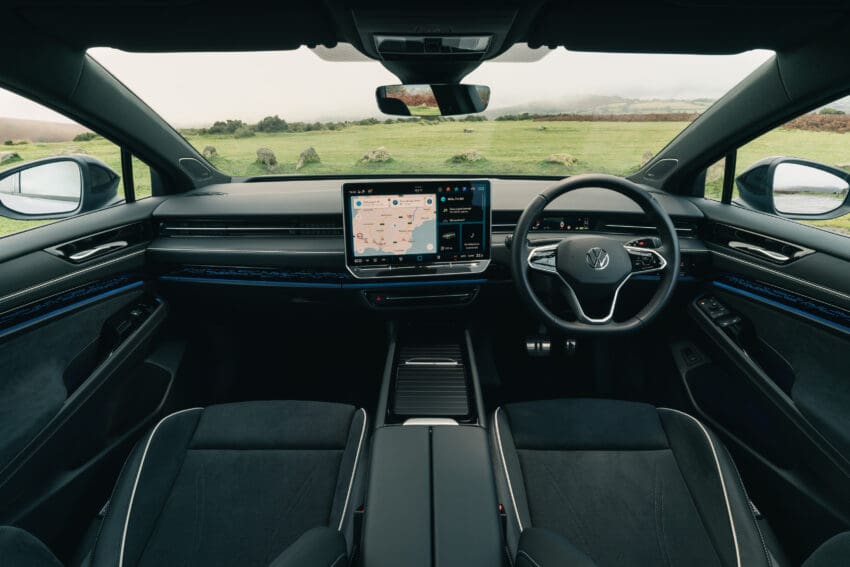
The boot is the headline, and it earns it (electric estate)
Estates live or die on what you can throw in the back, and here the ID.7 Tourer does something I did not expect at this money. That 605 litres with the seats up swells to 1,714 litres folded, and as EV Powered notes, that is more than the BMW i5 Touring can muster. Sit with that for a second. A Volkswagen, undercutting the BMW on price by a wide margin, also out-carries it. For anyone who has spent a bank holiday playing Tetris with a buggy, a Labrador and a fortnight’s luggage, that is not a spec-sheet curiosity. It is the entire reason to buy the thing.
Be clear about what that headline does and does not claim, though. The boot is the one hard, sourced number where the ID.7 walks past the i5; on cabin polish and the way it drives, the BMW still holds the cards, and I come back to that at the end. But for the buyer whose deciding question is “what fits in the back”, the VW wins the only round that matters to them, and it does so for thousands less.
The long roofline does the work the ID.7 saloon’s tapering tail could not, and it does it without the high-riding compromise of an SUV: lower load lip, lower centre of gravity, less of that wobble through a roundabout that crossovers never quite shake off. If your daily reality is bikes, flat-pack and a dog guard, this is the body style that was always going to make more sense than yet another tall electric crossover.
Range that finally matches the brochure ambition
There are two batteries, and the gap between them matters more than VW’s marketing lets on. The 77kWh Pro Match Plus opens the range at £52,225 with a claimed 357 to 371 miles WLTP. Step up to the 86kWh pack in the Pro S and GTX and the official figure stretches to 422 to 424 miles, per both Electrifying and EV Powered.
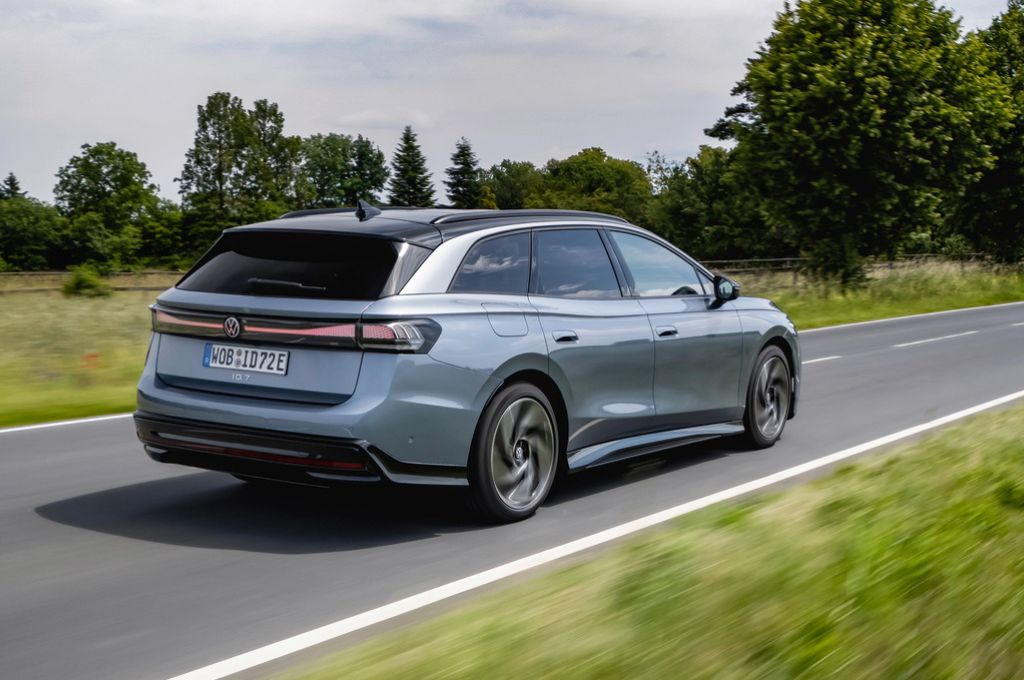
WLTP figures are optimistic by nature, so the number I trust most comes from Autotrader’s long-term test, which saw roughly 340 miles from the 86kWh car in cold weather. Cold weather. That is the caveat that usually deflates an EV’s real-world range, and 340 miles in those conditions is the most reassuring statistic in this whole story. It means 300-plus on a grim January motorway run is realistic, not aspirational, and that is the line between an EV you plan trips around and one you simply get in and drive.
A real-world 340 miles in the cold is the figure that turns this from a clever second car into a genuine one-car-does-everything proposition.
Charging keeps pace. The 86kWh car peaks at 200kW DC, which Electrifying clocks at a 10 to 80% top-up in around 30 minutes. That is a coffee and a comfort break on the M6, not a strategic re-planning of your entire day. Charge at home overnight and you would realistically touch a public rapid only on the longest trips, which is exactly where a household-friendly estate wants to land.
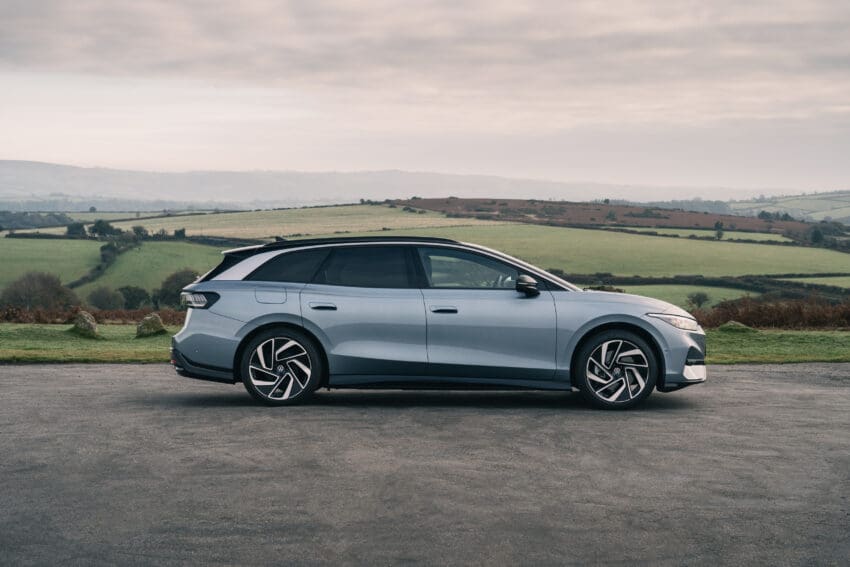
The trims, and where the money stops making sense
The £52,225 Pro Match Plus is the one I keep coming back to. It does perhaps 90% of what the range-topper does for thousands less, and its 357 to 371 mile claim is plenty for a household that charges at home. The GTX Plus at £62,270 is the one I would think hard about. That is a premium of roughly £10,000 over the entry car, and what it buys you is more power and the bigger 86kWh battery rather than a different class of vehicle. Unless you regularly drive the length of the country without stopping, the maths gets harder to justify with every mile of that extra range you never call on.
Put that £10,000 in monthly terms and the gap sharpens. Whatever representative rate a dealer quotes, ten grand of extra list price is ten grand you either find up front or finance across the whole contract, and on a typical three- or four-year PCP that is the sort of money that lifts the payment by a noticeable chunk every single month, for power and a battery you may rarely stretch. Any PCP figure a dealer quotes will be a representative rate that depends on your circumstances, deposit and annual mileage, is subject to status, and is not a finance offer, so treat the headline monthly as a starting point and sanity-check it against neutral guidance such as the published specs and MoneyHelper before you sign. Personally, I would rather have the entry car’s lower capital outlay working for me, not against me.
That is the GTX’s problem in a sentence: it is a very good car asking you to spend BMW i5 money on a Volkswagen, at which point the badge question returns with interest. The Match Plus never raises that question. It simply gets on with being the most sensible electric estate on sale.
Who should buy it, and who should walk past
If you are a UK family that actually uses an estate, the dog, the bikes, the flat-pack, the airport runs, and you charge at home, the ID.7 Tourer Pro Match Plus is the car I would steer you towards over almost any electric SUV at the price. It is roomier where it counts, calmer to drive, and the cold-weather range removes the last real excuse.
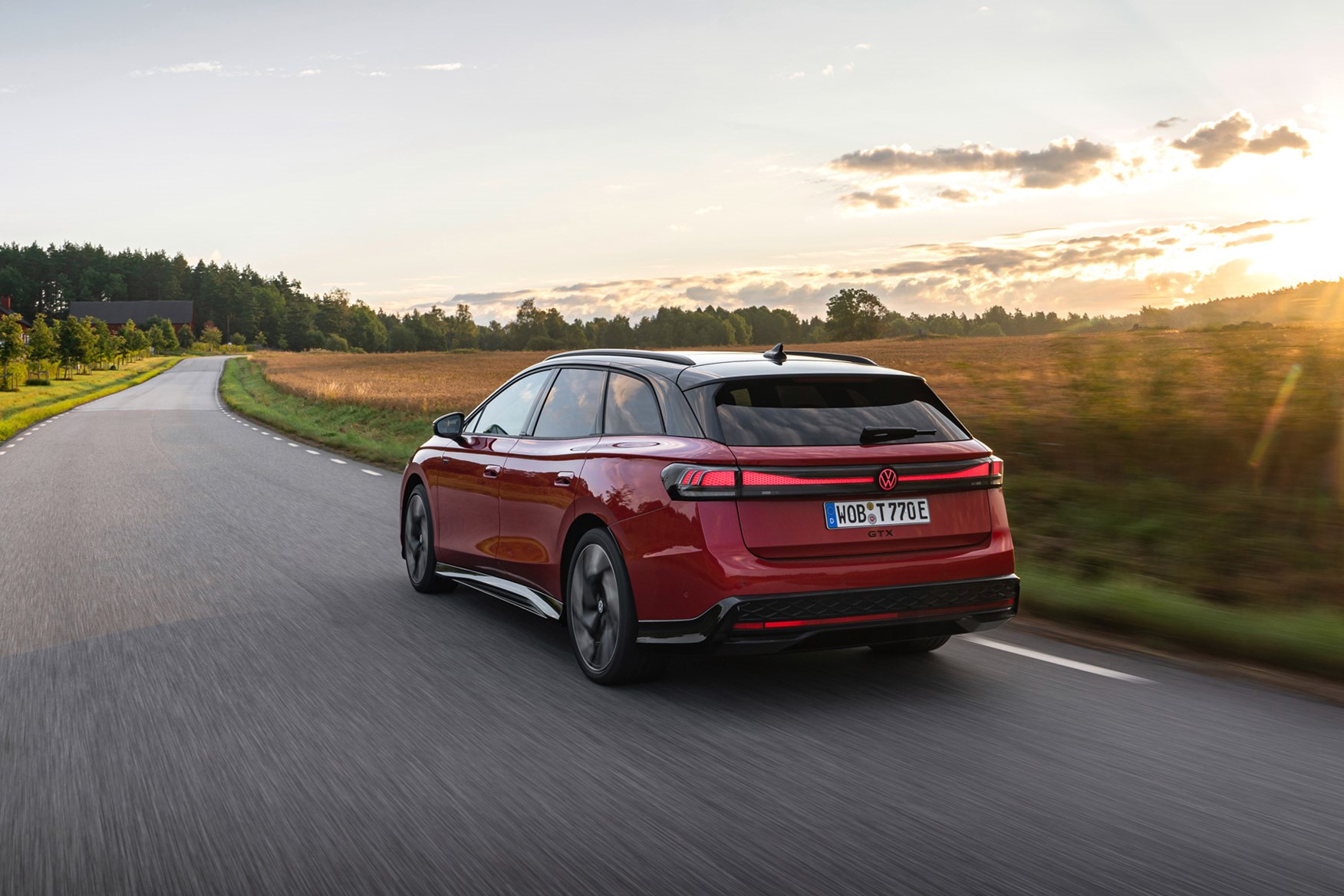
Who should walk past? Anyone seduced by the GTX badge without the mileage to justify it; you are buying performance you will rarely deploy. And anyone whose heart is set on the way a BMW i5 Touring drives should test both back-to-back. The VW gives away some polish for its space and value, and you should know that going in. The wider picture is worth a read too: Parkers’ breakdown of the powertrains is a useful sanity check before you sign.
What I would actually do
I would order the Pro Match Plus, in a colour that hides the dirt, and I would not look back. Stock is available now with immediate delivery, which in an EV market still plagued by wait lists is its own quiet selling point. The thing that would change my mind is a sharp PCP offer on the 86kWh Pro S: if Volkswagen narrows the monthly gap on a like-for-like representative deal, the extra real-world range becomes the easy upgrade rather than the indulgent one. Until then, the entry car is the clever buy, and the clever buy here happens to be one of the best electric estates British families can put on the drive in 2026.
Buyer action
EV and salary-sacrifice checks
Use this as the final check before paying a deposit, signing finance paperwork or relying on a headline monthly figure.