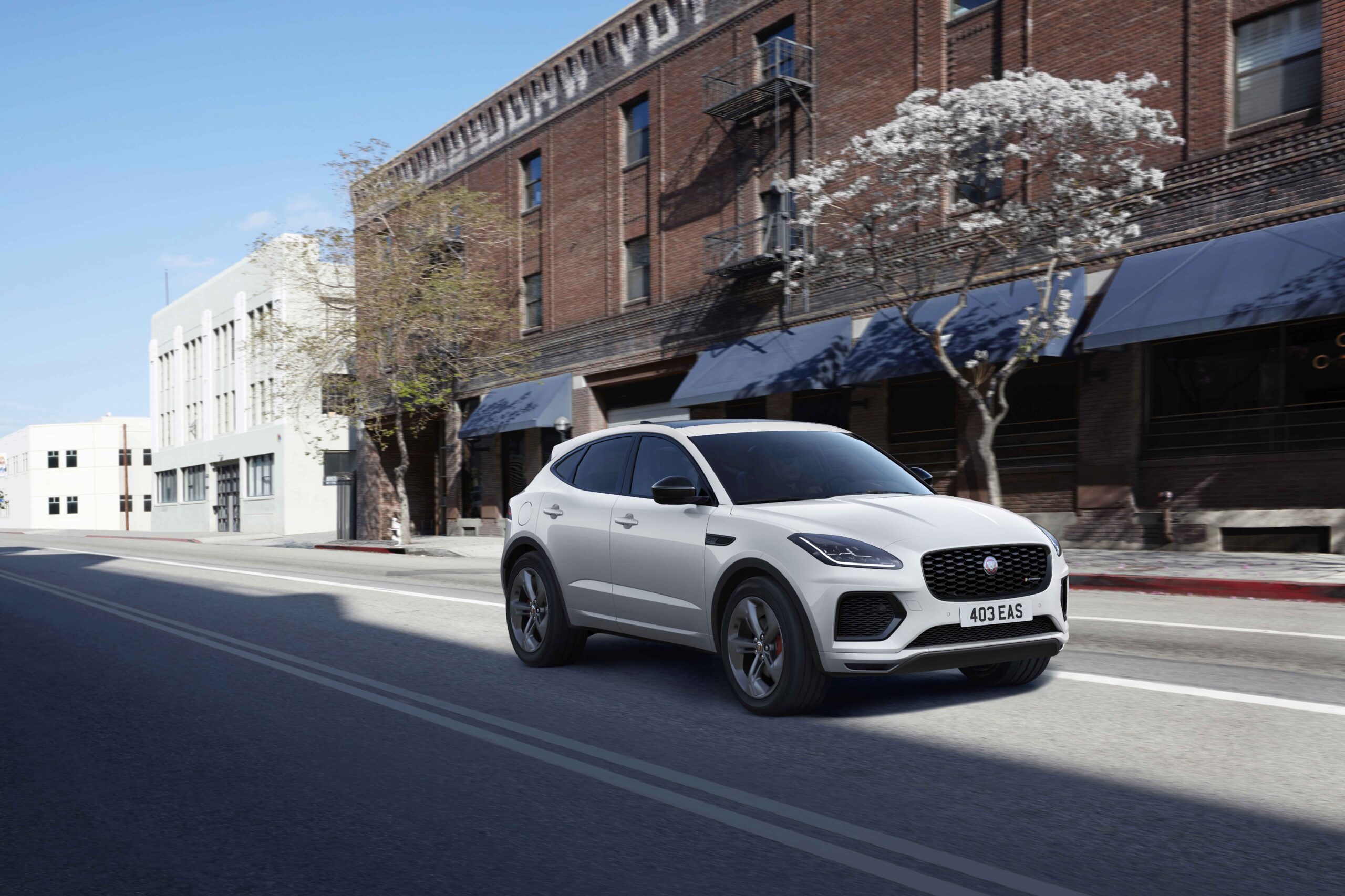
A Jaguar E-Pace used buy is the cheapest way into a premium-badge compact SUV, with clean 2018-2020 examples now from around £18,000, but the badge hides ordinary JLR Ingenium hardware that punishes a careless purchase. We rate it a cautious buy: pick the right engine, demand a stamped service history, and the E-Pace makes sense as a £18k to £28k value play. Buy on the badge alone and you inherit DPF, oil and electrical bills that wipe out the saving.
What real owners say (CDE data)
CDE reviewed owner discussion on PistonHeads and the Jaguar E-Pace owners’ forum alongside the Honest John Real MPG data, the What Car Reliability Survey and DVSA recall records, June 2026.
- Most-praised aspects: the looks and road presence for the money, the post-2021 Pivi Pro infotainment upgrade, and the supportive seats and high driving position.
- Most-criticised aspects: firm low-speed ride, real-world fuel economy well short of the brochure, and a cabin that owners feel does not match the price the car cost new.
- Reliability signal: Honest John owners report the E-Pace returns 83% of its official MPG (152 submissions), and flag DPF limp-mode on 2020 diesels, tappet rattle and transmission whine as the recurring themes to check.
What the E-Pace actually is, and where it sits
Launched in 2017 on the X540 platform, the E-Pace is Jaguar’s smallest SUV: a five-seat compact crossover that shares its bones, its Ingenium engines and much of its switchgear with the Range Rover Evoque and the Land Rover Discovery Sport. You are not buying bespoke Jaguar engineering, you are buying the same transverse-engined JLR family hardware in a sharper suit. New, it was anything but cheap, with list prices running from £40,010 to around £54,260 for a loaded P300e (Honest John, 2026), which is exactly why depreciation now works in a used buyer’s favour. The trade-off is honesty about what you get: a stylish, badge-rich small SUV with mainstream running costs and well-documented JLR foibles. If the same money could stretch to a larger Jaguar, our Jaguar XF X260 used guide is worth a look first.

Which Jaguar E-Pace used engine to buy
The engine choice is the whole decision here. The diesels are the four-cylinder 2.0-litre Ingenium units, badged D150, D165 and D180 by power output; the petrols run from the P200 through P250 to the hot-ish P300, and the plug-in hybrid P300e arrived with the 2021 facelift. For most used buyers covering real mileage, a D165 or D180 with the smooth ZF nine-speed automatic and all-wheel drive is the sweet spot: it pulls cleanly, returns a usable 40 to 53mpg official (Honest John), and suits motorway and rural use where a diesel DPF stays happy. Avoid a diesel that has only ever done short urban hops, because that is how the diesel particulate filter clogs and triggers the limp-mode owners report on 2020 cars. The petrols are sweeter and quieter but thirsty, with official figures of just 32.8 to 34.4mpg, so they only make sense for low-mileage town buyers. The P300e is a different proposition entirely, covered below.
The P300e plug-in hybrid pairs a 200PS 1.5-litre three-cylinder Ingenium petrol with an 80kW rear-axle motor for 0-60mph in 6.1 seconds and an official 44g/km CO2, plus up to 34 miles of electric range on the WLTP cycle (Jaguar, 2021). It is the company-car and short-commute pick because the low BiK and £10 first-year VED transform the running-cost maths, but it carries the newest and least-proven hardware, so a documented battery and software history matters more than on the diesels. If you are weighing electric Jaguar running costs more broadly, our Jaguar I-Pace used guide sets out where the full-EV maths lands.

The nine-speed auto and AWD quirks worth knowing
Nearly every E-Pace worth buying uses the ZF nine-speed torque-converter automatic driving all four wheels. It is a strong gearbox, but it can feel hesitant and slow to kick down at low speed, and owners on PistonHeads describe an occasional transmission whine worth listening for. Treat any harsh, clunky or delayed shifts as a negotiating point, not background noise: a fluid-and-filter service is not cheap, and a neglected box is a future bill. Drive the car from cold, warm it fully, and try both a low-speed manoeuvre and a firm overtake. The all-wheel-drive system is largely fit-and-forget, but check for clonks on full lock that point at worn driveline joints. The mechanically-related Land Rover Discovery Sport L550 used guide covers the same transverse JLR driveline in a larger body.

Common faults and the pre-purchase checks that matter
The Ingenium engines carry two specific concerns. The first is oil and timing: early 2.0 Ingenium diesels across the JLR range developed a reputation for wet-belt and timing-chain wear when oil changes were stretched, so a short, evidenced service interval is your single best protection. The second is the DPF on diesels used mainly in town, which Honest John owners link to limp-mode events on 2020 cars. Beyond the engine, owners report tappet rattle and fuel-pump noise, suspension harshness, windscreen-wiper faults, a boot that can unlatch, and the odd accelerator-response delay. Infotainment is the other watch item: pre-2021 cars ran the older Touch Pro system that lagged and crashed, while the 2021 facelift brought the much-improved Pivi Pro. Confirm every screen function, camera and electrical switch works, because JLR electrical gremlins are tedious and expensive to chase. Jaguar’s three-year, unlimited-mileage warranty (Carwow) will have lapsed on most cars now, so factor independent cover into the sums.

Service history, MOT and the DVSA recall lookup
On a JLR product, paperwork is not a nicety, it is the asset. Insist on a full Jaguar or specialist service history with the oil-change dates visible, and treat a thin or gap-filled book as a reason to walk. Pull the car’s MOT history free on the gov.uk MOT history service and read the advisories as a maintenance diary: repeat advisories for the same item, or a mileage that jumps oddly between tests, are red flags. Then run the specific registration through the gov.uk vehicle recall checker, because recall status is per-VIN and the only reliable way to know whether outstanding safety work has been completed on that exact car. Do the standard HPI-style provenance check for outstanding finance, write-off markers and a VIN that matches the V5C. The E-Pace shares the same Halewood-built heritage as the rest of the small JLR range, and our Range Rover Evoque L551 used guide shows how closely these sister cars track each other on faults and checks.

Running costs: insurance, tax and depreciation
This is where the badge-entry value play is won or lost. Insurance lands in Thatcham groups 28 to 42 depending on engine and trim (Honest John), so a D165 in a lower group is far kinder to a premium than a P300 in the forties. Road tax is the bigger surprise: petrol and diesel E-Paces fall into the £645 to £1,565 first-year VED bands on 166 to 200g/km CO2, whereas the P300e PHEV pays just £10 in year one and a low standard rate thereafter (Honest John). Servicing follows a 7,500 to 21,000-mile pattern, and an independent JLR specialist will undercut a main dealer comfortably. Depreciation, the used buyer’s friend, is steep: a three-year-old diesel front-wheel-drive R-Dynamic with 45,000 miles sat around £22,000 (Honest John) against a £40,000-plus list, and the floor is lower still. For how these bills add up across the range, our Jaguar F-Pace X761 used reliability guide is a useful comparison, and the broader CDE buying guides hub collects the rest of the premium-used shortlist.
| Data point | Jaguar E-Pace (X540, 2017-2024) | Source |
|---|---|---|
| Used price from | around £18,180 (observed June 2026) | Carwow |
| 3yr/45k diesel FWD value | around £22,000 | Honest John |
| Official MPG (diesel / petrol) | 40-53 / 32.8-34.4 mpg | Honest John |
| Real MPG achieved | 83% of official (22-52 mpg, 152 owners) | Honest John Real MPG |
| P300e EV range / CO2 | up to 34 miles WLTP / 44 g/km | Jaguar |
| Insurance groups | 28-42 | Honest John |
| First-year VED (non-PHEV) | £645-£1,565 | Honest John |
Before you hand over a deposit on an E-Pace
Narrow the shortlist with the engine and history rules above, then do the legwork in order. Confirm the service book shows short, evidenced oil-change intervals; cold-start the car and listen for tappet rattle, fuel-pump noise and any transmission whine; drive it long enough to warm the gearbox and feel the shifts; and click through every infotainment and electrical function. Read the MOT advisories as a story, run the registration through the gov.uk recall checker, and complete a provenance and finance check before any money changes hands. Price independent warranty or extended cover into your budget, because most factory warranties have now expired. If a seller is cagey about the service history or rushes you past the test drive, walk: there are plenty of E-Paces on the market, and patience is the cheapest insurance you can buy. For aftermarket cover specifically, our Warranty Direct vs MotorEasy vs ALA comparison sets out what each provider actually pays for on a premium used car.
Our take
A Jaguar E-Pace used buy earns a place on the premium-compact shortlist for one reason: depreciation has turned a £40,000-plus SUV into an £18,000 to £28,000 car with a Jaguar badge and genuine kerb appeal. Our view is that it is a buy, but a conditional one. The right car is a post-2021 D165 or D180 with the Pivi Pro screen, full evidenced history and a clean recall record, bought for the value rather than the prestige. The wrong car is a town-only diesel with a stretched service book, or a thirsty petrol bought on looks alone, where DPF, oil-system and electrical bills quietly erase the saving. The P300e is the smart pick for a low-tax company-car driver who can charge at home, provided the battery and software history stack up. Buy on the paperwork, not the panache, and the E-Pace is a sensible way into the badge. Skip the checks and it becomes the most expensive cheap SUV you will ever own.
Is a used Jaguar E-Pace reliable?
Which Jaguar E-Pace engine should I buy used?
How much is a used Jaguar E-Pace in 2026?
What are the common faults on a Jaguar E-Pace?
How do I check a used E-Pace before buying?
Is the E-Pace P300e plug-in hybrid worth it used?
How we researched this guide
Every pick here is shortlisted from hands-on testing and time spent living with the hardware by the CDE desk, then sanity-checked against current UK pricing, manufacturer specs and real-world performance before it makes the cut. We never rank for commission — affiliate links don't change the order.
Buyer action
Where to check next
Use this as the final check before paying a deposit, signing finance paperwork or relying on a headline monthly figure.
Editorial standards
More on Used Buying Guide
Buying Guides
Lexus LS 500h used: the overlooked V6 hybrid limo


Buying Guides