Audi Q7 4M common faults at 60-80k miles: what to inspect on a used buy and how to spot a clean one.
What real Q7 4M owners say at 60-80k miles
Cross-referenced Honest John Real MPG and owner reviews for the Q7 (2015 on), Audi-Sport.net Q7 owner threads, PistonHeads Audi forum owner posts, and the DVSA / gov.uk vehicle recall database. Accessed 25 May 2026. Sample is enthusiast-skewed and not representative of the full UK parc.
- Most praised: ride and refinement on adaptive air suspension, the 3.0 TDI’s effortless motorway torque, seven-seat practicality, build feel inside, and the MMI Virtual Cockpit’s clarity on facelift cars.
- Most criticised: AdBlue sensor and tank-pump faults (Volkswagen Group-wide on the 3.0 TDI), DPF regeneration issues on short-trip cars, EGR cooler clogging, occasional air-suspension levelling faults, B-pillar trim rattles, and a pre-facelift MMI that feels its age in 2026.
- Reliability signal: Auto Express’s used-Q7 review notes documented front-camera and radar-sensor faults on early cars triggering codes B11CE15 and B1630-02, with replacement around £1,600 inc VAT, plus reports of a rear coil-spring failure at around 47,000 miles on a 2015/65 car. Always run the VIN through gov.uk/check-vehicle-recall before viewing.
The Q7 4M in two sentences: 2015-present, facelift 2019
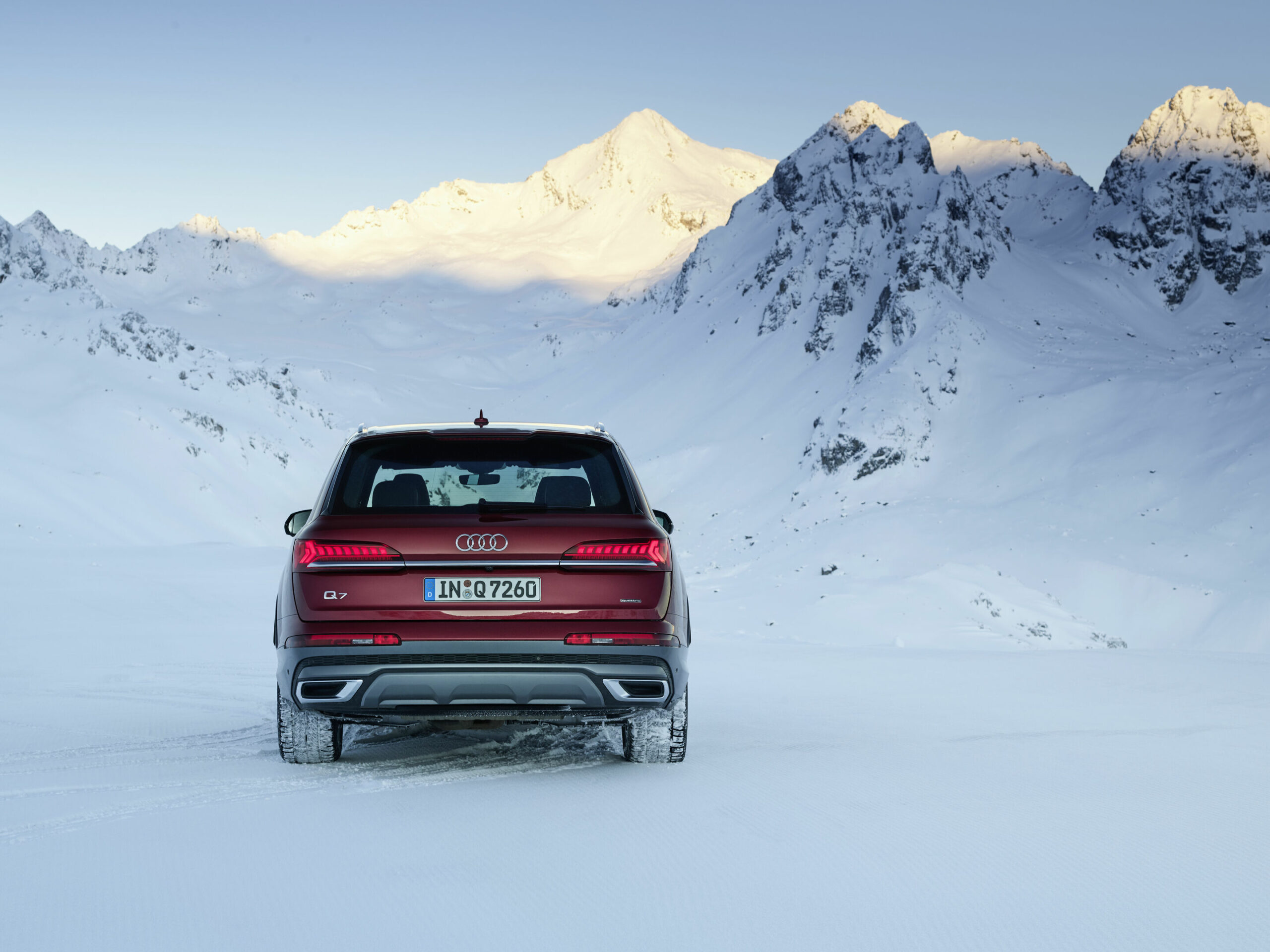
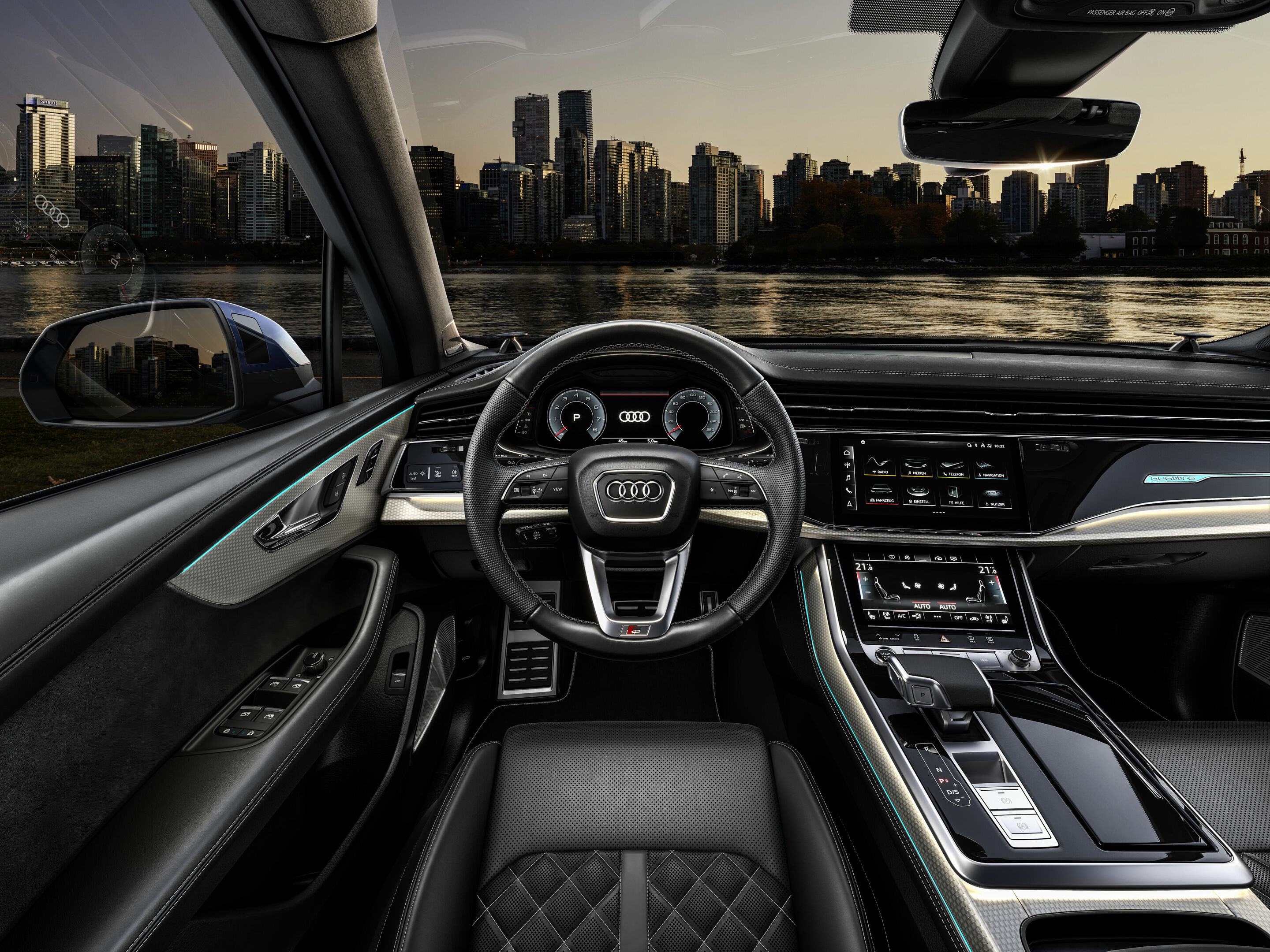
The 4M is the second-generation Audi Q7, launched late 2015 on the Volkswagen Group MLB Evo platform that it shares with the Bentley Bentayga, Porsche Cayenne 9YA and Lamborghini Urus. UK importers split it into three model-year clusters: the pre-facelift 2015-2018 (MMI Touch with a retractable centre screen), the 2019 facelift (new front and rear styling, dual-touchscreen MMI with haptic feedback, mild-hybrid 48 V on most engines, the “50 TDI” / “55 TFSI” power-output badges), and the 2024 “MY24” second facelift with revised lighting and software.
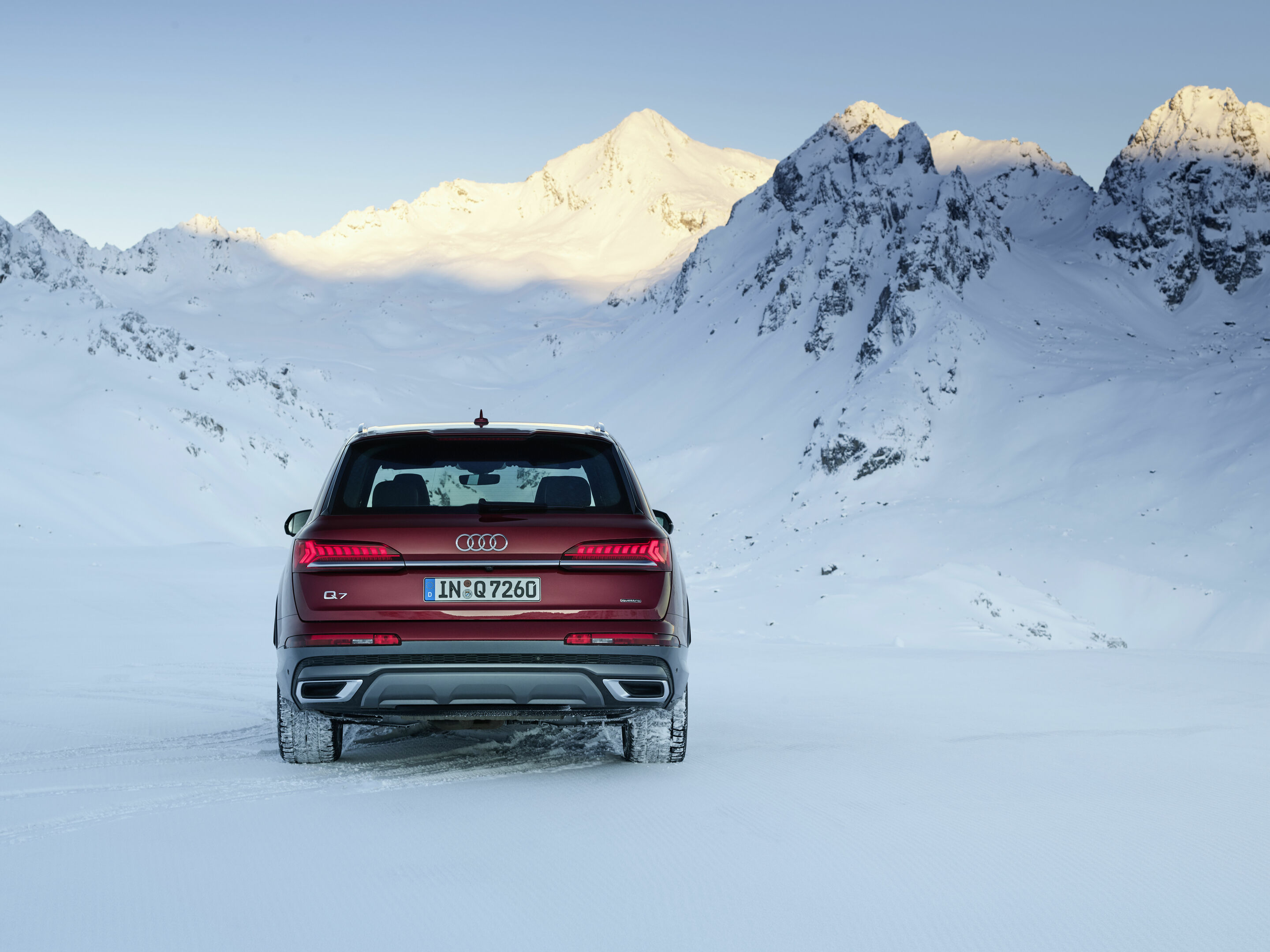
For a P1 used buyer with £25,000-£40,000 in 2026, the 2019 line matters more than any other. Audi Approved Used eligibility, MMI software longevity, AdBlue system maturity and resale curves all swing on that cut-off, which is why this guide leans on the 2019-2021 facelift 3.0 TDI as the smart-money buy.
Engines compared: 3.0 TDI vs 3.0 TFSI vs e-tron vs SQ7
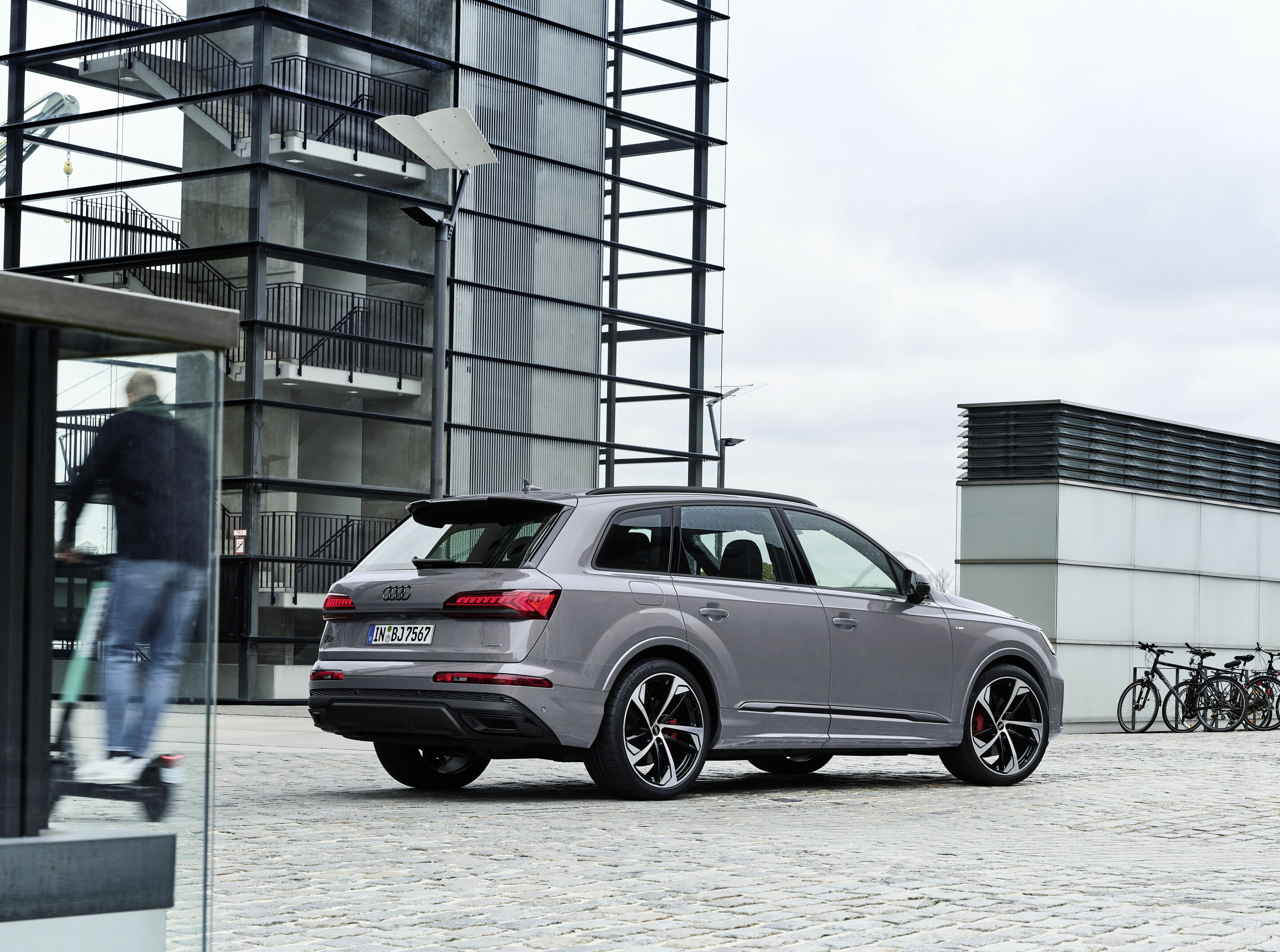
The UK volume seller is the 3.0 TDI V6 diesel, sold initially in 218 PS and 272 PS forms (2015-2018), then rebadged on the facelift as the 45 TDI / 50 TDI / 55 TDI tier-system aligning with the Audi power-output convention. Honest John Real MPG records 37.8 mpg owner-submitted average for the 218 PS (78% of the 48.7 mpg NEDC claim) and 34.0 mpg for the 272 PS (74% of the 44.1-47.9 mpg NEDC range).
The 3.0 TFSI V6 petrol (250-340 PS in various tunes) was a niche UK choice; running costs are 30-40% higher on fuel and it loses to the diesel for towing torque. The Q7 e-tron 3.0 TDI quattro plug-in hybrid (combined 373 PS) was sold 2016-2019 only and returns 47.7 mpg in Honest John owner submissions against a 156.9 mpg NEDC claim – that ratio (30% of official) tells you the WLTP/NEDC PHEV figures are theatre if the pack is not charged daily. The SQ7 arrived in 2016 with a 435 PS 4.0 TDI V8 featuring electric-powered compressor tech, and from 2019 switched to a 4.0 TFSI V8 petrol (507 PS). Honest John records 32.4 mpg for the diesel SQ7 (109% of the 37.2-39.2 mpg NEDC claim, an unusually high real-world number that reflects gentle owners) and 23.4 mpg for the petrol 4.0 TFSI (101% of the 22.8-23.3 mpg WLTP claim).
Q7 4M engine comparison (UK market data, owner-submitted Real MPG)
| Engine | Official MPG | Real MPG (Honest John owner-submitted) | % of official achieved |
|---|---|---|---|
| 3.0 TDI 218 PS (Q7 45 TDI from 2019) | 48.7 (NEDC) | 37.8 | 78% |
| 3.0 TDI 272 PS (Q7 50 TDI from 2019) | 44.1-47.9 (NEDC) | 34.0 | 74% |
| 3.0 TDI 258 PS e-tron PHEV | 156.9 (NEDC) | 47.7 | 30% |
| SQ7 4.0 TDI V8 (2016-2019) | 37.2-39.2 (NEDC) | 32.4 | 109% |
| SQ7 4.0 TFSI V8 (2019 on, 507 PS) | 22.8-23.3 (WLTP) | 23.4 | 101% |
Source: Honest John Real MPG database, Audi Q7 (2015 on) entries, 179 owner submissions, overall average 35.2 mpg. Accessed 25 May 2026. Real MPG is owner-submitted and skews toward enthusiast use patterns; the e-tron figure assumes patchy charging, not optimal use.
The year to buy: 2019-2021 facelift 3.0 TDI 272 bhp
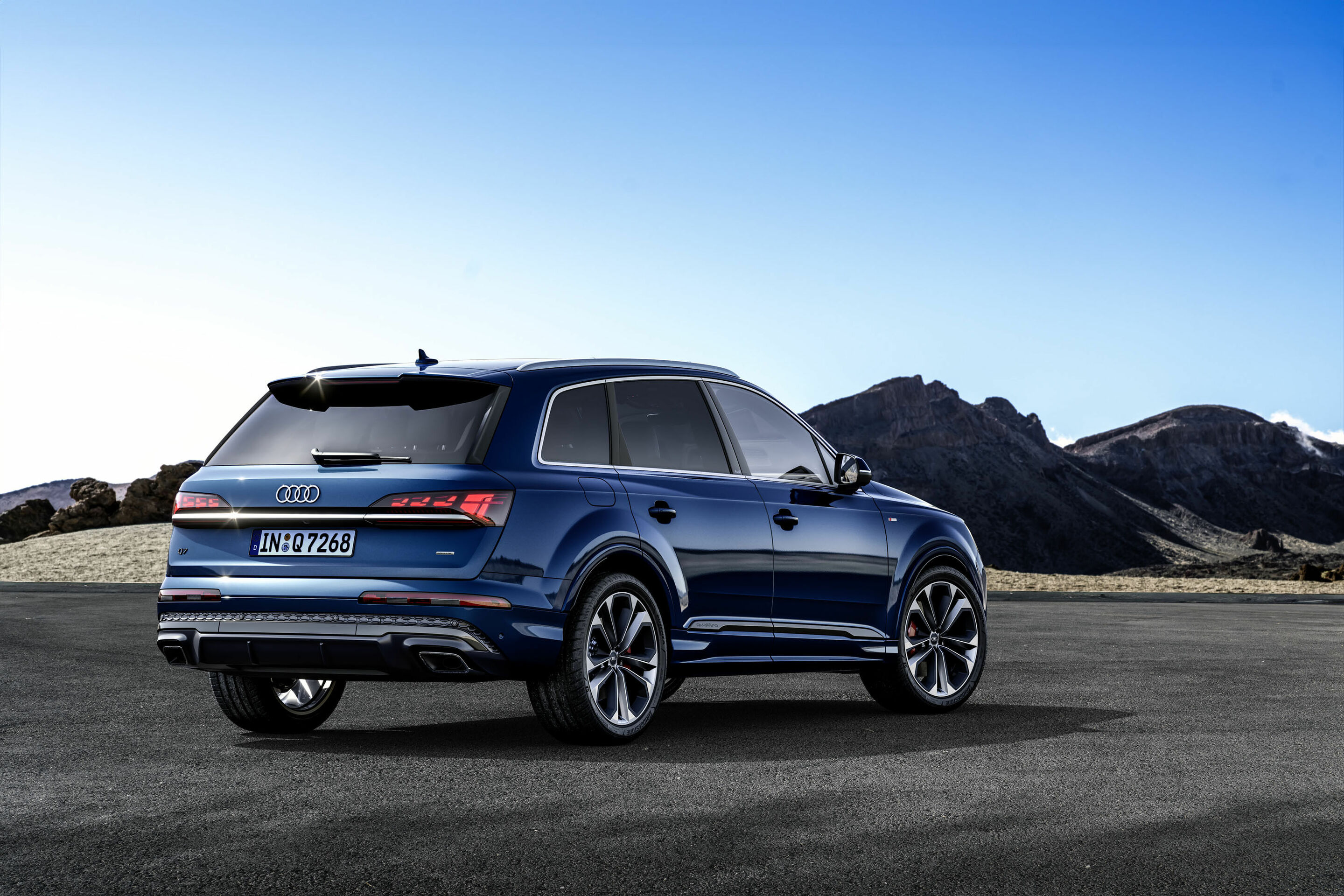
For a £28,000-£40,000 budget in May 2026 the best Q7 4M is a 2019-2021 facelift 50 TDI (3.0 TDI 286 PS / 272 bhp in early UK trim, with 48 V mild-hybrid assistance) in S line Black Edition with Audi Approved Used cover or full independent specialist history. The facelift brought a dual-touchscreen MMI, refreshed front and rear styling, the 48 V mild-hybrid stop-coast system that improves real-world economy by 1-2 mpg, and a more mature AdBlue / SCR control strategy after the early-car teething.
Auto Express’s review identifies the 3.0 TDI as “the sensible entry point”, noting it “still comes with enough power and kit to provide an upmarket experience, while TDI diesel power means you’ll see somewhat sensible running costs (at least by large SUV standards)”. The reviewer recorded a real-world 33 mpg across mixed driving in the higher-output diesel, which lines up with Honest John’s 34.0 mpg owner-submitted figure. Avoid the 2015-2016 218 PS with patchy service history; the AdBlue tank and pump on early MLB Evo diesels is the issue you do not want to inherit. The e-tron PHEV is rare, expensive to fix out-of-warranty, and only makes sense if the battery pack health is documented. Treat the SQ7 (both V8 generations) as an enthusiast pick that needs a specialist budget.
Inspections at 60-80k miles: AdBlue, DPF, air suspension, EGR
Work through this list at the viewing. AdBlue tank and sensor: the SCR system on the 3.0 TDI is the headline cost. Symptoms include a “no restart in X miles” warning on the dash, repeated top-ups not being recognised, or fault codes for the AdBlue pump or quality sensor. Replacement at a main dealer runs £1,500-£2,500 once you factor in tank, sensor and labour; independents do it for less but the part costs hold. Ask for the AdBlue service history specifically, not just the generic stamps.
DPF regeneration status: any half-decent independent specialist will plug in an OBD-II scan tool that reads soot grams, ash grams and time-since-last-regen. A car that has not completed a passive regen in the last 300 miles, or has triggered an active regen recently, is telling you it does short trips. Walk away from cars that have done less than 8,000 miles a year for the last three MOTs – the DPF, EGR and AdBlue all suffer at low-mileage low-load use.
Air suspension: cycle through all four ride-height modes (offroad, allroad, auto, dynamic, lift) and let the car sit overnight before the test drive if possible. A car that has sagged on one corner by morning has a leaking air-spring bag – replacement is £600-£900 per corner including labour at an independent specialist, more at the main dealer. Auto Express notes a rear coil-spring failure documented at around 47,000 miles on a 2015/65 car; on air-sprung cars the failure mode is the bag, not the spring.
EGR cooler: the 3.0 TDI EGR cooler clogs with soot and on rare occasions leaks coolant internally; check the expansion tank cold for oily film and pull the coolant cap to sniff for combustion gases. MMI infotainment: confirm the software version on the diagnostics page (Menu – Settings – System Information). Pre-facelift MMI Touch cars lose Apple CarPlay polish in 2026; facelift dual-touchscreen MMI is much better-aged but suffers occasional ghost-touch faults. Service history: insist on the Audi service portal printout from the seller. Audi Approved Used cars come with this as standard; independent-specialist-stamped cars are fine but verify each invoice references genuine OEM AdBlue, oil and DPF parts. Cambelt: the 3.0 TFSI petrol uses a timing chain on most years but check the engine-code specifically; the 3.0 TDI is chain-driven. Brakes: the Q7 is 2,100-2,300 kg, so discs and pads wear hard. Budget £400-£600 per axle at an independent specialist on the 3.0 TDI; £600-£900 on the SQ7. Finally, run the VIN through gov.uk/check-vehicle-recall.
What it costs to run: insurance, servicing, fuel
Servicing on the Q7 4M follows Audi UK’s fixed-interval or flexible plan (every 12 months / 9,000 miles for short trips, up to 24 months / 18,000 miles for motorway-heavy use). Main-dealer minor service in 2026 lands at £350-£450; major (every 4 years or 38,000 miles) around £600-£800. Independent Audi specialists do a minor for £250-£320 with OEM oil and filters. The Q7 takes around 8 litres of 5W-30 longlife and a separate ZF 8-speed Tiptronic fluid service is recommended at 60,000 miles for £350-£500.
Fuel at 34 mpg real-world on the 272 PS diesel and £1.55/litre diesel in May 2026 works out at about £2,400 for a 12,000-mile year. Insurance for the 50 TDI sits in group 41-46 depending on trim: £700-£950 fully comp for a 45-year-old with 9+ years no-claims. VED is the painful line – 3.0 TDI cars registered after 1 April 2017 pay the standard £190 plus a £410 expensive-car supplement for years 2-6 (over £40k list when new, which catches every S line and above). Tyres on 20-inch S line wheels are £180-£240 each; on 21- or 22-inch optional wheels, £280-£400. If you finance, our PCP vs HP UK guide walks through how an Audi Approved Used finance offer compares against high-street HP. The new MOT rules in the UK for 2026 piece flags what testers now check on older premium SUVs, and our update on GAP insurance after the FCA pause covers whether the dealer’s GAP top-up is worth taking.
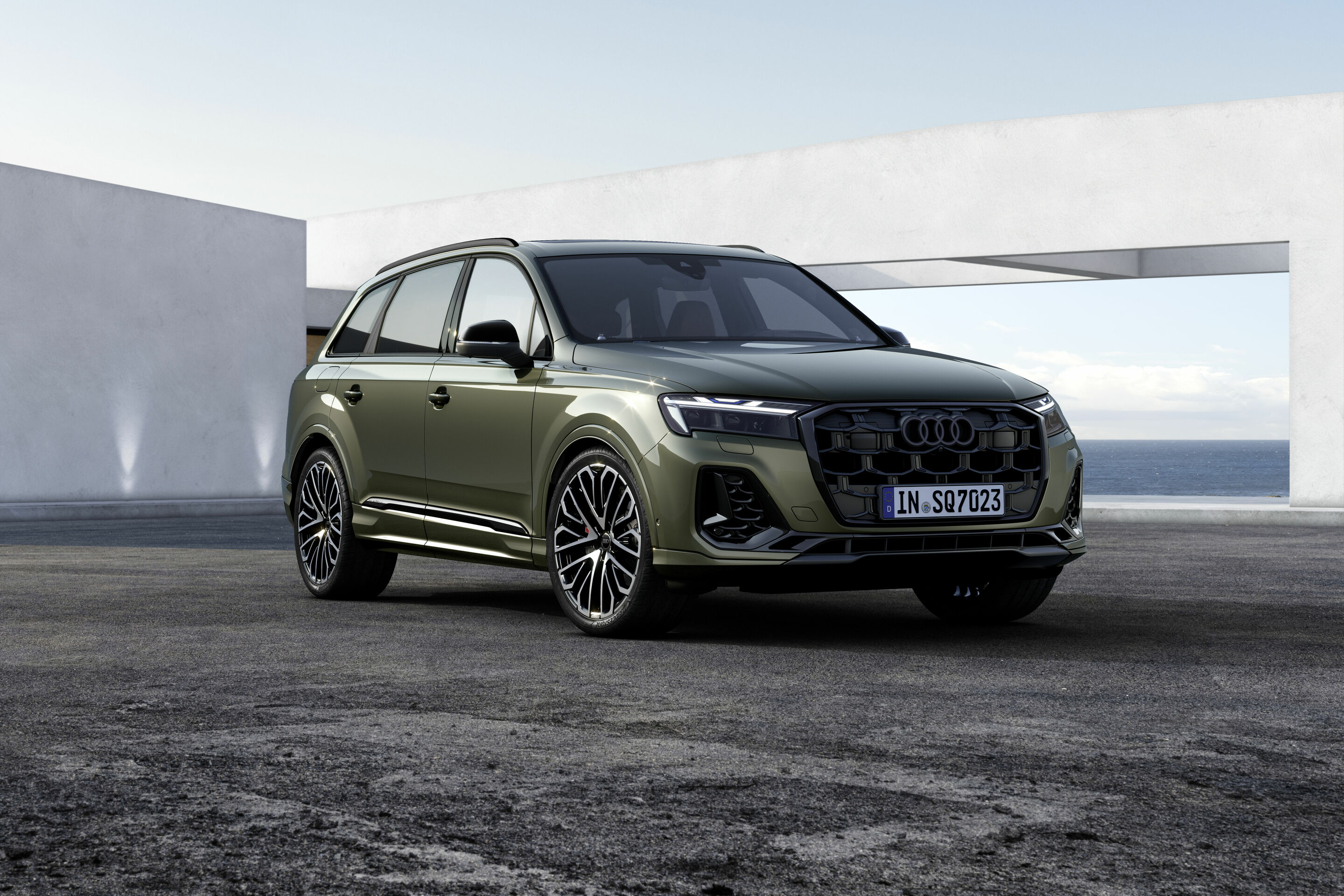
Q7 4M vs Range Rover Sport L494 vs Porsche Cayenne 958
At £28,000-£40,000 the Q7 4M’s natural rivals are the Range Rover Sport L494 (2013-2022) and the Porsche Cayenne 958 (2010-2017). The Audi is the most practical of the three – seven seats as standard, the squarest boot, the cleanest in-cabin tech once you are on the facelift dual-touchscreen MMI. The L494 hits back with proper off-road ability and the richer cabin atmosphere, but the SDV6 timing-belt-in-oil story makes the diesel a known cost trap; we cover the Land Rover end of the segment in our best diesel SUV for UK towing 2026 piece.
Against the Cayenne 958 (full breakdown in our buying guides hub), the Q7 wins on cabin space, three-row practicality and servicing cost – Porsche main-dealer rates are 40-60% higher than Audi’s. The Cayenne fights back on driving feel, the better steering and a richer sense of occasion. Net: Audi if you carry people and care about tech longevity, Porsche if you drive it for the sake of driving it, Range Rover Sport if you actually go off-road. For a P1 used buyer doing 10-15,000 miles a year of mixed driving with school runs and motorway pulls, the Q7 50 TDI is the easiest car to live with of the three.
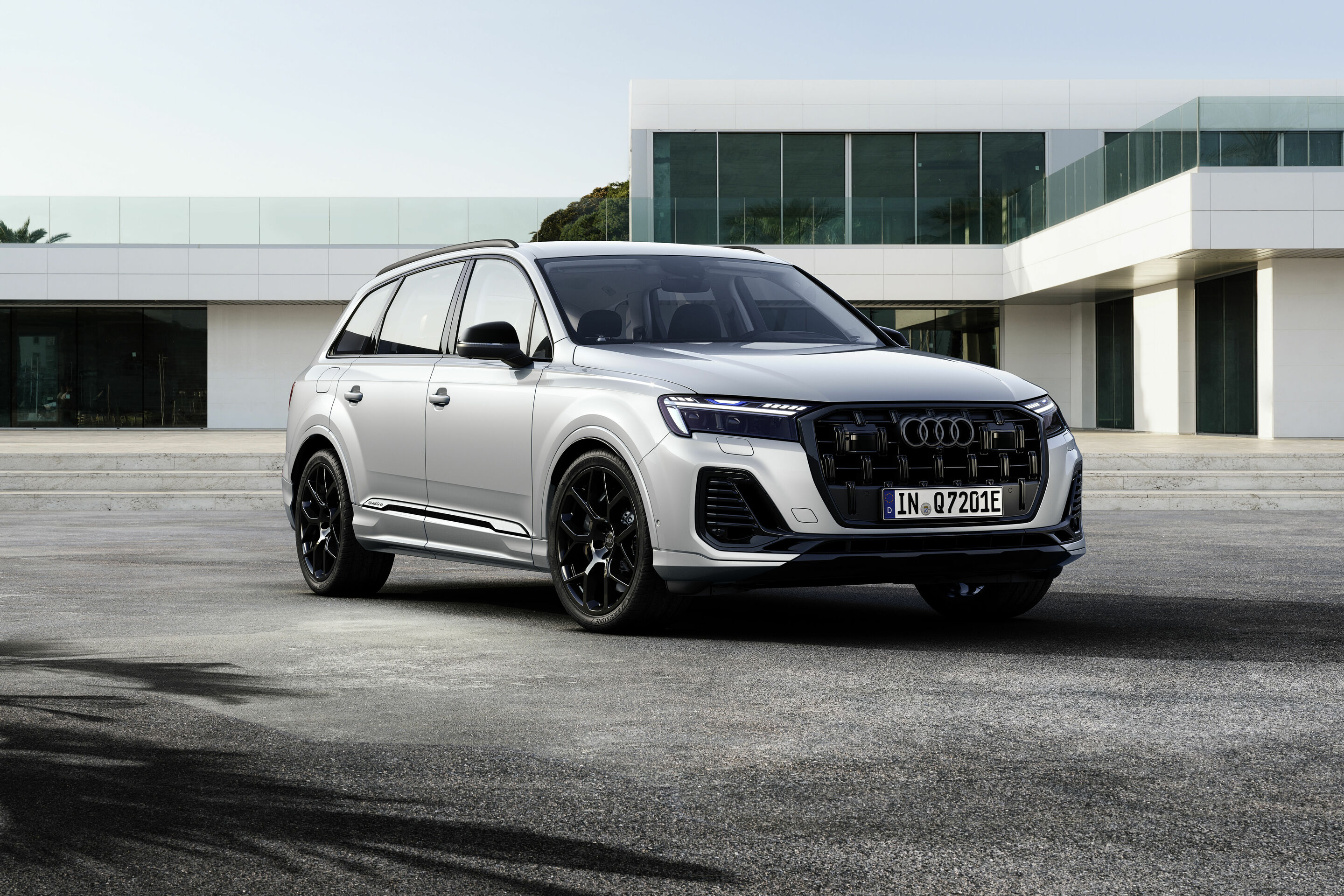
Our take
The Q7 4M is sitting in a sweet spot for P1 used buyers in 2026. Depreciation has done its worst on the 2019-2021 facelift cars, the AdBlue and DPF teething from the 2015-2017 launch has flushed through with software updates and replacement parts, and what is left is a Volkswagen-Group MLB Evo SUV that drives better than its 2,200 kg suggests for £30,000. The smart-money buy is a 2019-2021 50 TDI in S line Black Edition with Audi Approved Used cover or, failing that, a comprehensively documented independent specialist history that explicitly mentions AdBlue and DPF service work. Walk away from any 2015-2016 218 PS car without a complete AdBlue tank-and-sensor paper trail; budget £2,000-£2,800 a year for service, tyres, brakes and consumables on top of fuel and insurance; and treat the e-tron PHEV and SQ7 as enthusiast picks that need a specialist on retainer. Most importantly, plug an OBD scan tool in at the viewing and run the VIN through the gov.uk recall checker before a deposit changes hands.
Is the Audi Q7 4M reliable at 60,000 miles?
Generally yes, with caveats. A 2019-onwards facelift 50 TDI with full Audi service history is a fundamentally robust everyday SUV – Honest John Real MPG records 34.0 mpg owner-submitted average and motorway returns in the high-30s are realistic. The known weak points are the AdBlue tank and sensor (£1,500-£2,500 to fix at a main dealer), DPF regen issues on short-trip cars, air-suspension bag wear, and early front-camera or radar-sensor faults documented by Auto Express on 2015-onwards cars at around £1,600. Budget £2,000-£2,800 a year above fuel and insurance and the Q7 is daily-driveable to 150,000-180,000 miles.
Which Audi Q7 4M engine is the best used buy?
The 3.0 TDI 272 PS (badged 50 TDI from 2019) is the smart-money pick for a UK used buyer. Honest John Real MPG records 34.0 mpg owner-submitted, the engine has the right torque profile for a 2,200 kg SUV, AdBlue and DPF teething is mature by the 2019 facelift, and parts and specialist support are widely available. The 3.0 TFSI petrol is a niche choice with 30-40% higher fuel cost; the e-tron PHEV is rare and battery-pack risk is the killer cost out of warranty; and the SQ7 (4.0 TDI V8 or 4.0 TFSI V8) is an enthusiast pick with specialist-level running costs.
How much does AdBlue tank replacement cost on a Q7?
Expect £1,500-£2,500 at an Audi main dealer including tank, pump, NOx and quality sensor, and labour. Independent Audi specialists typically charge £900-£1,500 for the same job using OEM parts. Replacement is needed when the dashboard warns of “no restart in X miles”, when AdBlue top-ups aren’t being recognised by the system, or when fault codes for the pump or quality sensor are stored. Always ask for AdBlue-specific service history before buying a 2015-2018 3.0 TDI Q7; cars without a documented AdBlue work history at 60-80k miles are a known cost trap.
Does the Q7 4M have a cambelt or chain?
The 3.0 TDI V6 diesel and the 4.0 TDI / 4.0 TFSI V8 in the SQ7 are timing-chain driven, so there is no scheduled cambelt change. The 3.0 TFSI petrol uses a chain on most engine codes but check the specific code (CRE-, DCB- and CVZ- variants are the main UK codes). Either way, a 60-80k-mile inspection should listen for cold-start rattle from the chain tensioner area, which is the first symptom of a stretched chain or a weak tensioner.
Should I buy approved used from Audi or private?
For a Q7 4M in the £28,000-£40,000 facelift bracket, Audi Approved Used carries a genuine premium for a reason: a multi-point inspection, a minimum 12-month warranty with European cover, complimentary roadside assistance and a 30-day exchange policy. Expect to pay £1,500-£3,000 more than a comparable private car. The private route makes sense only if the car has a complete Audi or independent specialist history with explicit AdBlue, DPF and air-suspension paperwork, an HPI clear status, and you accept the warranty risk. For most P1 used buyers, Audi Approved Used is the lower-stress purchase.
Related reading
- Best diesel SUV for UK towing in 2026 – how the Q7 stacks up against the X5, L494 and GLE on tow ratings and real-world torque.
- PCP vs HP in the UK in 2026 – structuring finance on a £28,000-£40,000 Audi Approved Used car.
- New MOT rules in the UK for 2026 – what changed for older premium SUVs and what an MOT tester now flags.
- UK GAP insurance after the FCA pause lifted in 2026 – whether the dealer’s GAP top-up still makes sense.
- Company car tax 2026-27 in the UK – the BIK band that catches PHEV and ICE Q7 drivers.
- All CDE buying guides.
How we researched this guide
Every pick here is shortlisted from hands-on testing and time spent living with the hardware by the CDE desk, then sanity-checked against current UK pricing, manufacturer specs and real-world performance before it makes the cut. We never rank for commission — affiliate links don't change the order.
Buyer action
Where to check next
Use this as the final check before paying a deposit, signing finance paperwork or relying on a headline monthly figure.